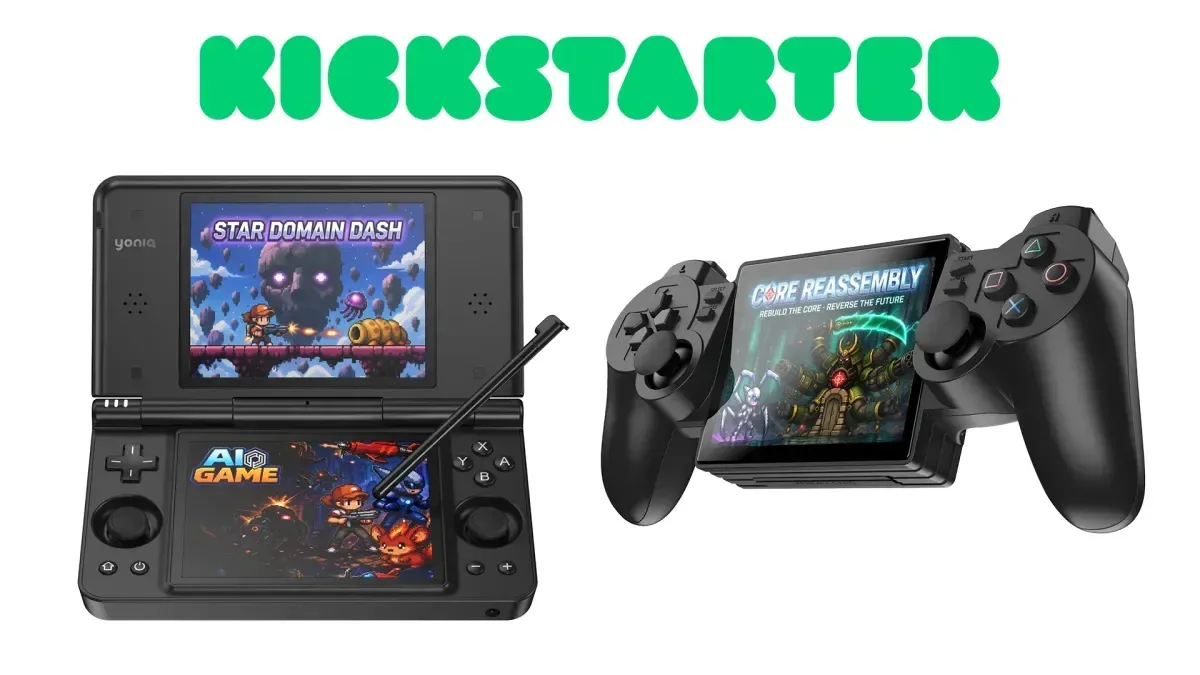
Yoniq’s planned crowdfunding launch for the Duo, a dual-screen handheld, is no longer expected to arrive on its original late-October timetable. The company says it has encountered manufacturing challenges and wants to resolve them before putting the project in front of backers.
That is a frustrating update for anyone hoping that a campaign page would finally answer the big remaining questions around the device. But it is also a more useful answer than a silent schedule change. Hardware crowdfunding is not merely a promise to manufacture something eventually: it asks customers to place trust, and often money, behind a product before its final production process has proved itself. A company identifying production concerns before launch is preferable to pretending they do not exist.
Yoniq has not given a revised campaign date, a detailed description of the manufacturing problems, or a firm delivery timetable. Its wording is that the launch may be delayed a little, so the scale of the slip remains uncertain. The sensible position is to treat the original timing as superseded and wait for a formal date rather than infer whether the delay will be short or substantial.
Yoniq says it has faced challenges during the manufacturing process and wants to make sure the product is right before the crowdfunding campaign begins.
What has changed for the Yoniq Duo
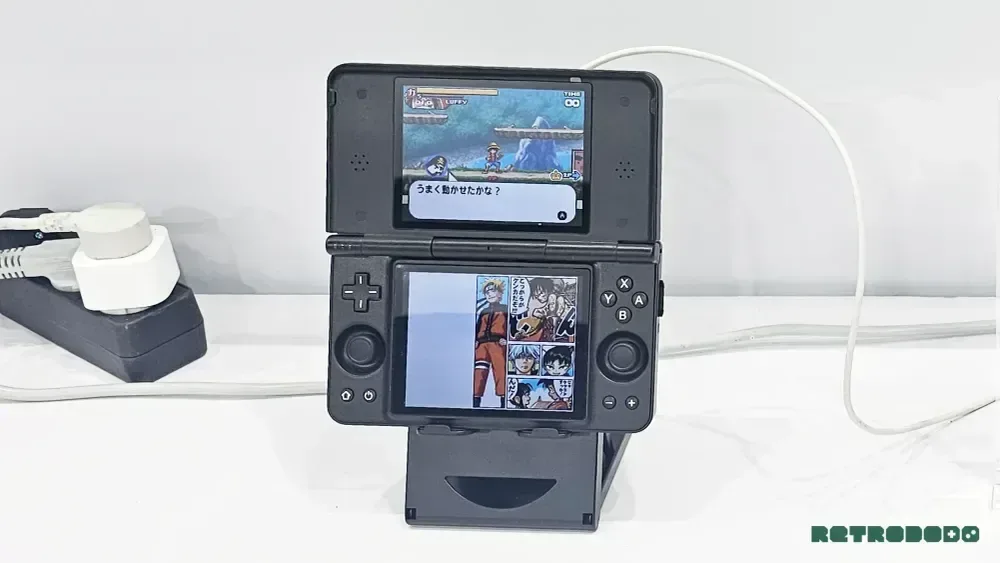
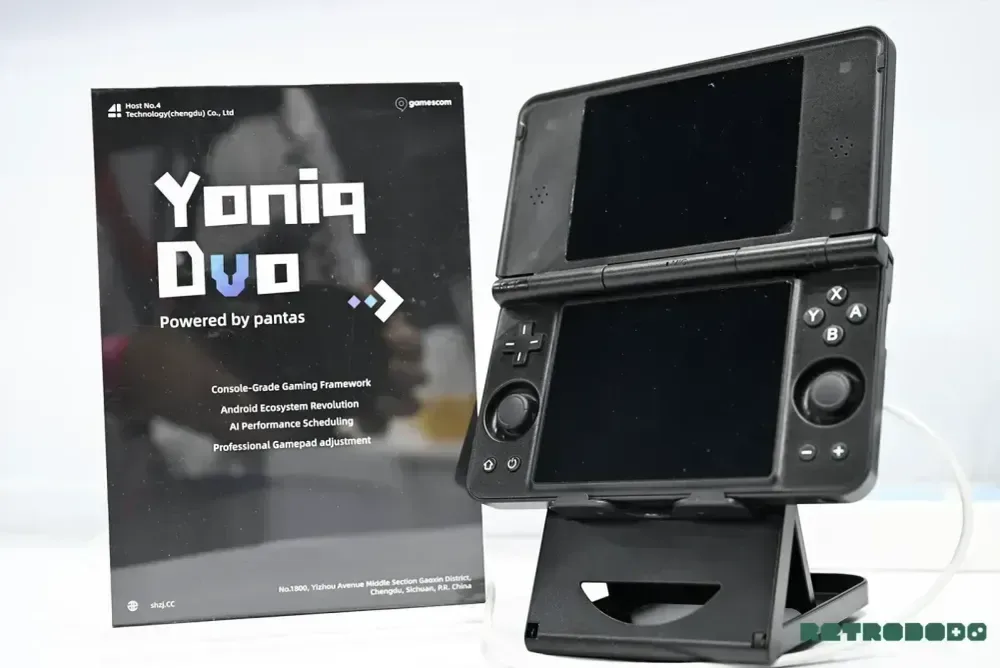
The concrete update is straightforward: the Duo’s crowdfunding push has been delayed beyond its previously indicated late-October window. The handheld has also appeared in prototype form at Gamescom, but that should not be confused with confirmation that the retail hardware, campaign specification or manufacturing plan is finalized.
“Manufacturing” covers a broad part of bringing consumer electronics to market. It can involve component supply, assembly consistency, physical fit, display integration, quality-control checks, packaging, or the ability to build units reliably at the intended scale. Yoniq has not said which of these areas is responsible here. That absence matters: it would be speculation to attribute the delay to a particular component or wider supply trend.
For prospective backers, the practical takeaway is equally broad. A delay is not evidence that the Duo will fail, nor is it proof that every issue is resolved. It is a signal that the campaign is still dependent on production work. Backers should judge the eventual campaign on the specifics it provides—final hardware details, production plan, delivery estimates, refund terms and communication commitments—rather than treating an early prototype or a colour listing as a finished retail promise.
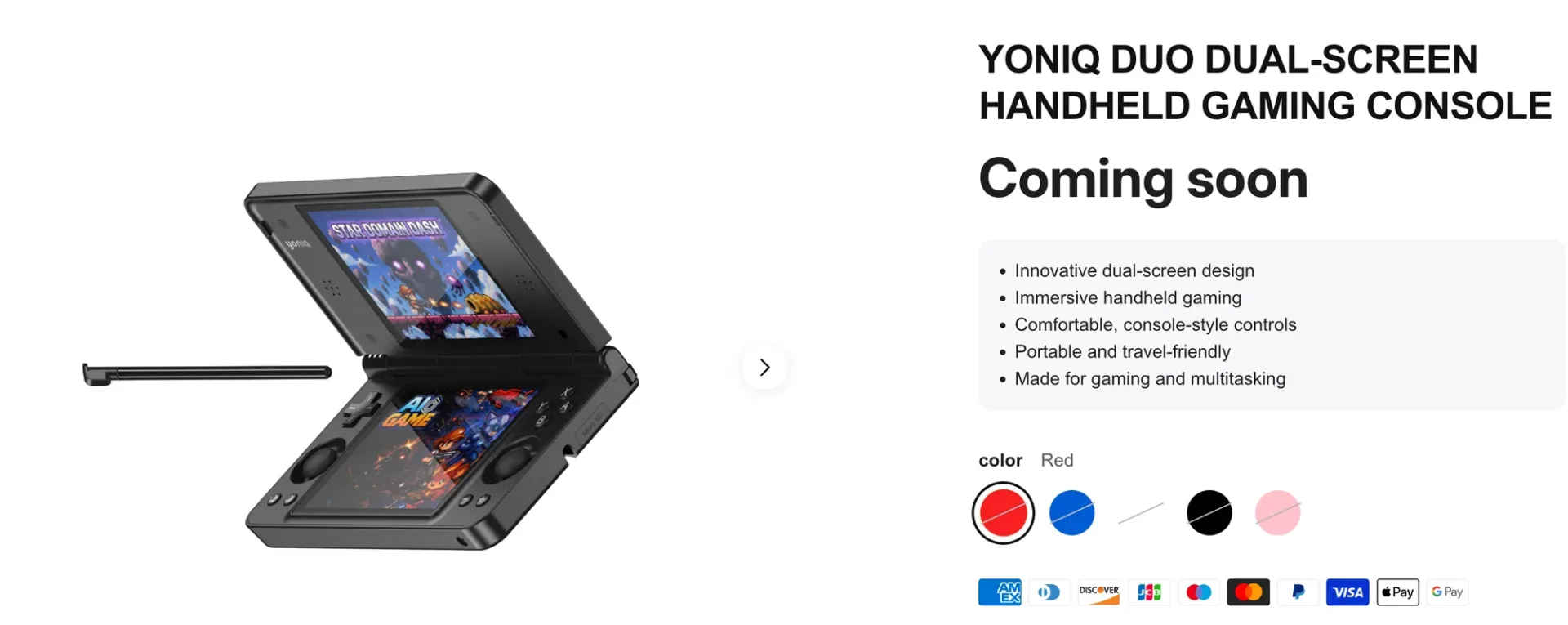
Five colour choices are planned, but they are not locked
Alongside the delay, Yoniq has indicated that the Duo is planned to launch in five colourways:
Related coverage includes Yoniq Duo Kickstarter Delayed as Dual-Screen Handheld Gets New Colour Options.
- Red
- Blue
- White
- Black
- Pink
Those choices give the project a visibly wider range than a typical single-colour hardware reveal, although buyers should keep an important qualification in mind: Yoniq says its factory is still making final colour adjustments, and final colour images have not yet been completed. In other words, these are planned colour options, not necessarily the exact final shades, finishes or product renders that will appear on the campaign page.
That distinction can sound minor, but colour production in hardware is more complicated than selecting a name from a menu. Surface treatments, paint or plastic pigments, lighting, photography and display calibration can all make a final unit look different from an early image. Until Yoniq publishes finalized visuals, it is best to regard Red, Blue, White, Black and Pink as the intended palette rather than make purchasing decisions based on an assumed finish.
There has been no confirmation of transparent versions or other variants beyond those five colours. It would be premature to read the expanded list as a promise of further shells, limited editions or accessories.
Why the pre-launch delay matters more than a missed month
For a handheld maker, choosing to pause before crowdfunding can have benefits and costs. On the positive side, manufacturing preparation before taking orders can reduce the risk that a project discovers a basic production problem only after it has collected backer money. It may also give the company time to show more representative imagery and clarify what supporters are actually pledging for.
The cost is uncertainty. Without a revised date, interested customers have no reliable way to plan around the campaign, and a delay naturally creates more questions about the state of the device. The strongest response will be a clear follow-up: a confirmed launch window, finalized product presentation and details that distinguish current prototypes from the eventual production model.
That is particularly important for a dual-screen handheld. The term simply means a portable device with two displays, but the arrangement increases the number of physical and software decisions that must work together. The screens, enclosure and controls need to feel coherent as a single device, while the manufacturing process must reproduce that setup consistently. The available update does not identify any Duo-specific fault, and it should not be interpreted as one. It does, however, explain why a manufacturer may want more confidence before opening a public campaign.
What is known—and what is still missing
Yoniq’s parent company is said to have experience producing handhelds for other companies over the past decade. That background may be encouraging, but it is not a substitute for campaign-level information about the Duo itself. The details that usually matter most to potential supporters have not been established in this update.
Known at this point
- The Yoniq Duo is a dual-screen handheld project.
- Its crowdfunding campaign was previously planned for late October.
- The launch has been delayed because Yoniq says it is addressing manufacturing challenges.
- Yoniq has not committed to a replacement launch date in this update.
- Red, Blue, White, Black and Pink are planned launch colour choices.
- Final colour imagery is still being adjusted.
Not confirmed in this update
- A final crowdfunding launch date.
- The exact manufacturing issue behind the delay.
- Final product images for the new colours.
- Whether any transparent or additional colour variants will be offered.
- Campaign pricing, delivery timing or a final production specification.
That last list is not a criticism of features the device does or does not have; it is a reminder of the difference between an early hardware project and a fully documented offer. A campaign page should be where uncertainty narrows into specifics.
What interested buyers should watch next
Until the campaign appears, patience is the only sensible action. There is no public basis here for predicting an exact launch day or assuming that the original schedule will be restored. If and when the crowdfunding page goes live, potential backers should check whether the listed colours have final images, whether the project clearly labels prototype material, and whether its manufacturing and delivery language explains what remains to be completed.
It is also worth separating excitement about the wider handheld market from confidence in an individual campaign. More companies entering the category can create more choice, but every device still has to earn trust through clear product information and credible execution. That broader conversation is already active across portable gaming hardware, including the shifting controller and mobile-device approaches discussed in this look at mobile controller designs.
For Yoniq, the immediate task is less about expanding the colour chart and more about turning an in-progress dual-screen concept into a campaign that is explicit about its final form. The five planned colours give interested buyers more personality choices. The manufacturing delay, meanwhile, makes the quality and clarity of the next update far more important than the precise number of days that have passed since the original target.