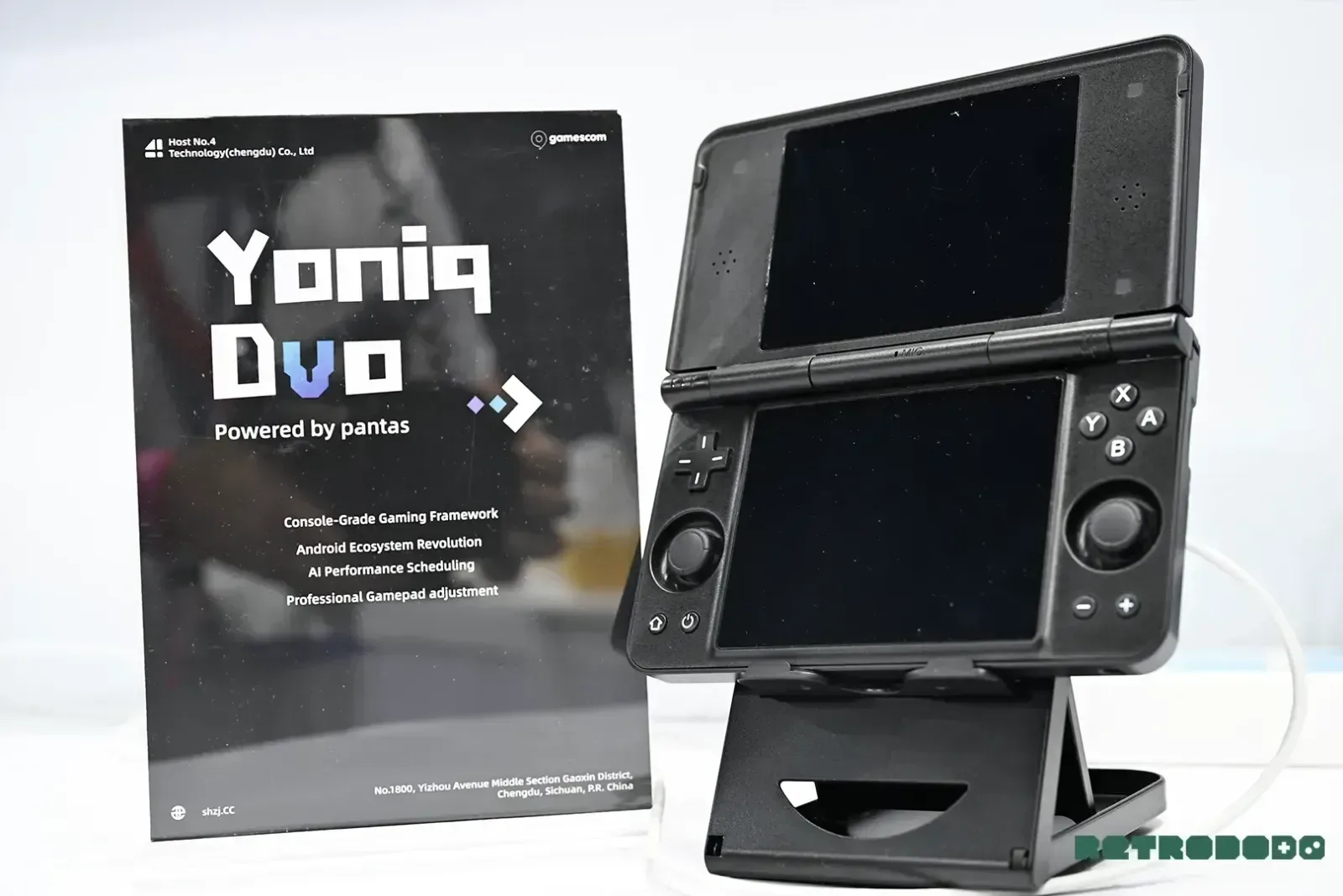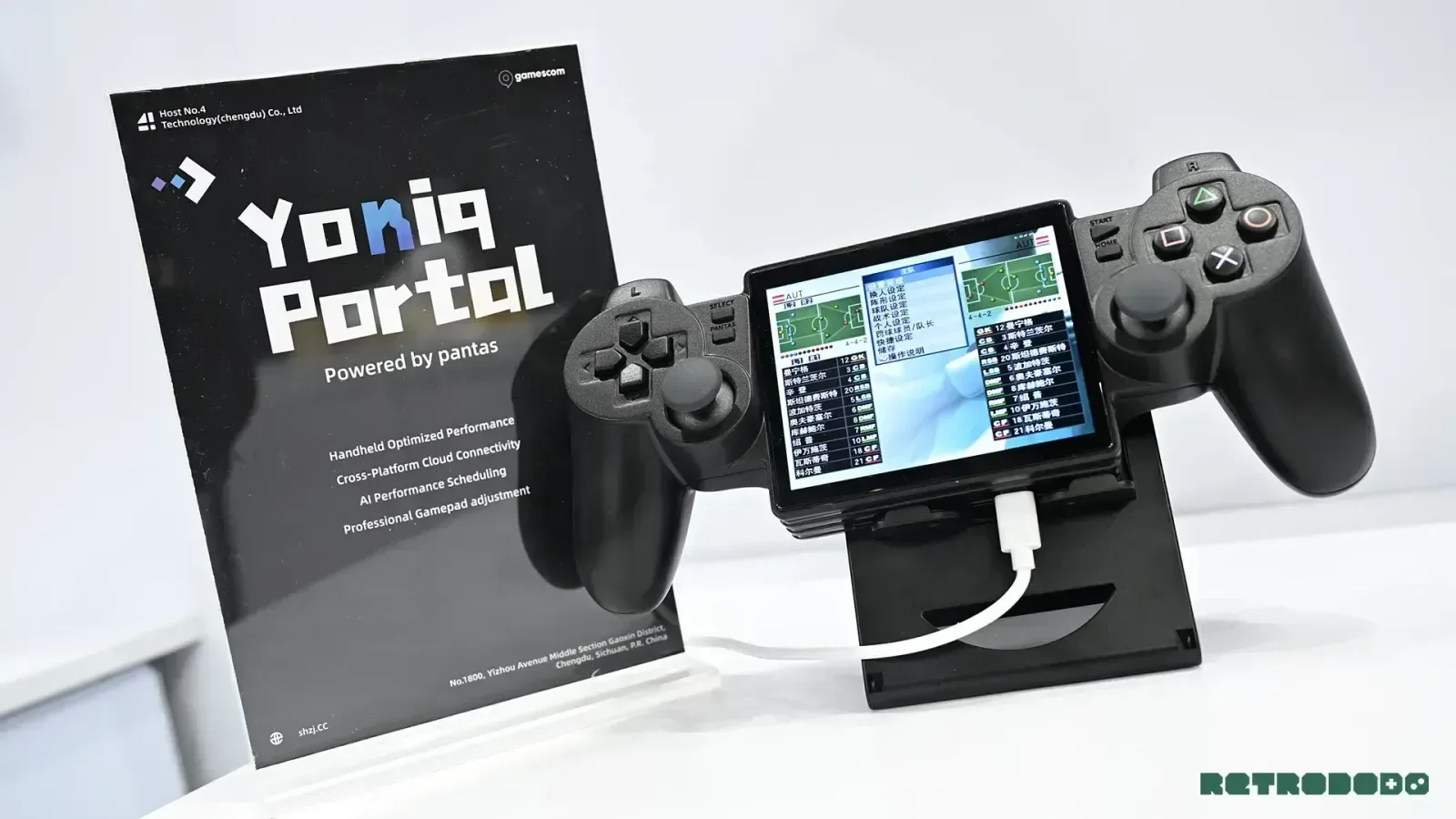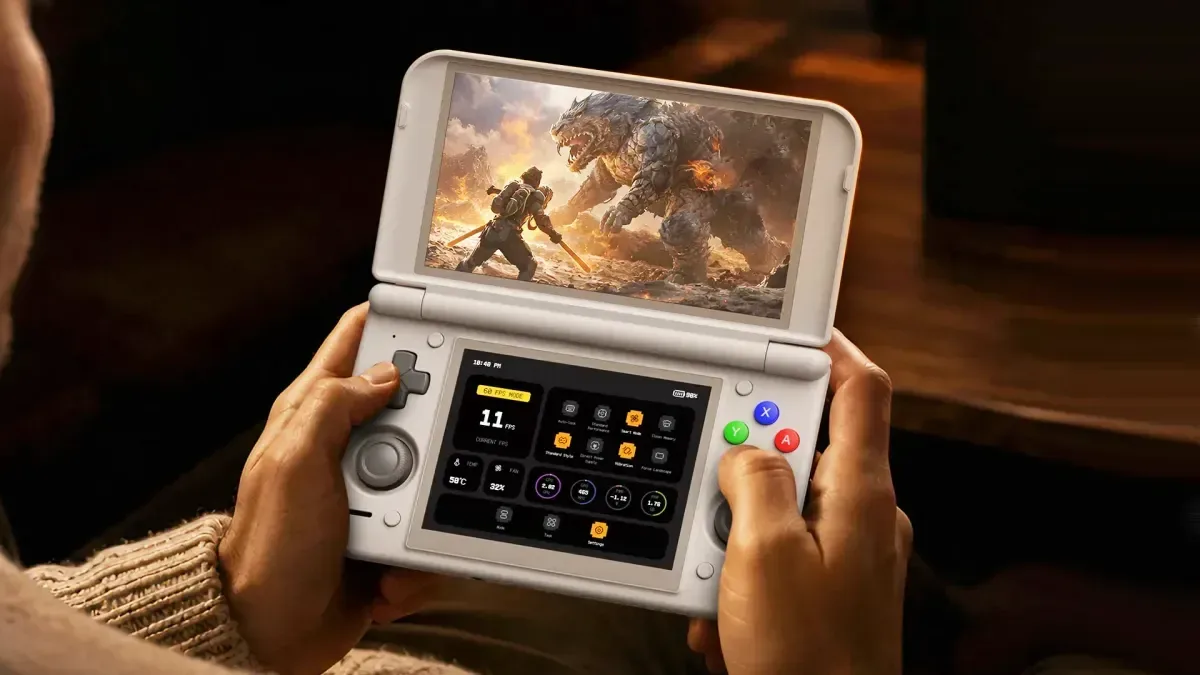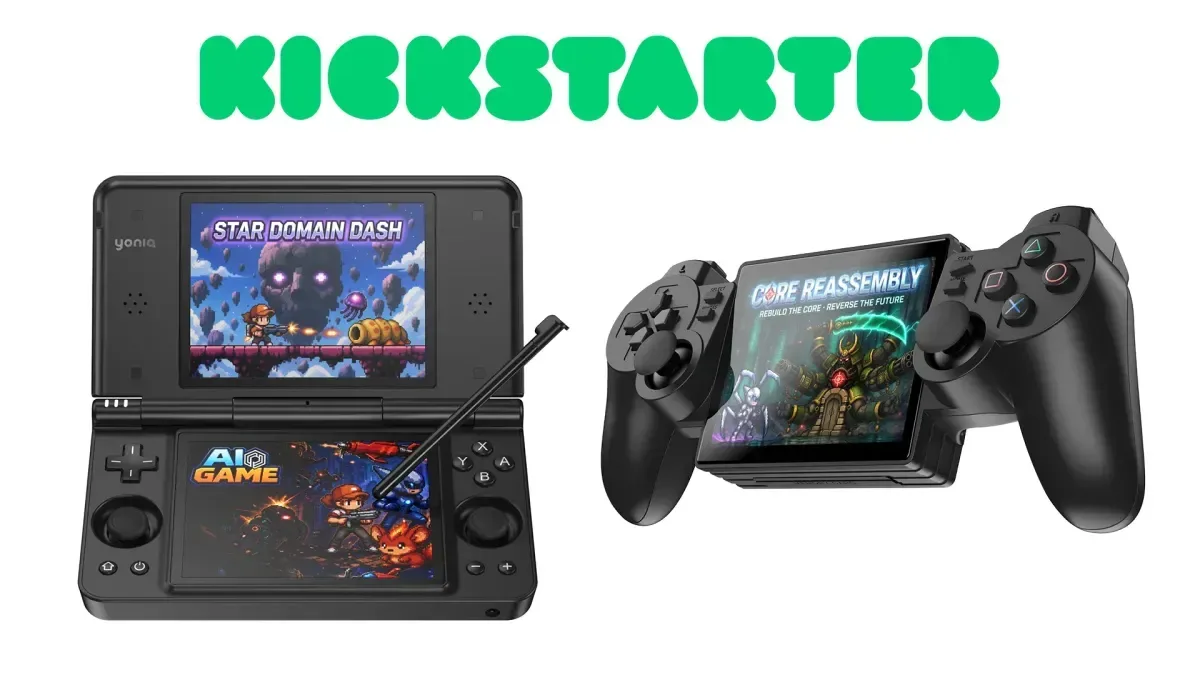
Yoniq is planning to take its two newly shown handhelds to Kickstarter later this quarter, potentially as soon as next month. The proposed campaign would feature both the Yoniq Duo, a dual-screen handheld, and the Yoniq Portal, following their appearance at this year’s Tokyo Games Show.
That is the clearest indication yet of how Yoniq expects to move its hardware from showcase units toward production. The company says the level of campaign support will help it establish its initial manufacturing quantity, while feedback gathered from creators and players in Tokyo is still being used to refine and optimize details across the devices.
What Yoniq has confirmed
The important word in Yoniq’s update is planning. A Kickstarter has not been presented as live, and a firm launch date has not been confirmed. “Later this quarter” is the stated window, with next month offered only as a possibility. That distinction matters for anyone watching the handheld market closely: the campaign itself, its final product pages, reward tiers and timing remain to be revealed.
Yoniq has indicated that both the Duo and Portal will be included in the crowdfunding effort. It has not established whether they will appear as separate campaigns, as separate choices within one campaign, or as a bundle. Those are materially different propositions for prospective backers, especially if the devices target different uses or price points.
What is known is that Yoniq intends to use demand registered during the campaign to inform its first production run. In practical terms, that means crowdfunding is not just a storefront for the company. It is also a demand-measuring tool: the number and type of commitments can influence how many units it initially builds.
Duo and Portal remain light on confirmed specifications
The Duo’s defining confirmed description is its dual-screen design. That makes it the more readily identifiable of the pair, but it does not answer the questions that tend to determine whether a handheld is a good fit for a buyer: processor, operating system, display characteristics, battery capacity, controls, storage, software support and the intended game library have not been detailed here.
The Portal has likewise been shown, but Yoniq has not supplied a substantive public specification breakdown in this update. The company’s focus is currently on the campaign plan and the fact that it is continuing to tune the devices after conversations at Tokyo Games Show.
That makes the eventual Kickstarter page especially important. Crowdfunding pages can clarify what a maker considers final versus provisional. For a hardware project, prospective supporters should look for explicit, device-by-device information rather than treating an early product display as a final retail specification.
There is also an unavoidable naming wrinkle: “Portal” is a familiar word across games and hardware, and it is used in unrelated contexts elsewhere in gaming, including Nomori’s portal-based puzzle concept. In this case, Yoniq Portal refers to Yoniq’s own handheld device, not that game or another similarly named product.
Reported price indications need confirmation
New listings have pointed to a price range of $159 to $199 for the devices. However, Yoniq has not yet set out confirmed Kickstarter pricing, which device corresponds to which price, or whether that range represents campaign pricing, a later retail price, variations in configuration, or something else.
Until the campaign is published, it is best to treat the range as an indication rather than a settled purchasing decision. A crowdfunding total can be affected by shipping, taxes, optional accessories, regional availability and tier structure, none of which has been established in the information currently available.
Why Kickstarter changes the buying decision
Kickstarter is a crowdfunding platform, not a conventional retail checkout. A campaign enables supporters to pledge toward a project while the maker uses that backing to finance or gauge production. That structure can be useful for smaller hardware brands because it gives them a clearer picture of demand before committing to a large initial run.
For buyers, though, it changes the questions worth asking. A normal launch generally centers on a finished product’s listed price and shipping date. A crowdfunding campaign adds another layer: how far along is the project, what is still being finalized, how is the production quantity being determined, and what timetable is presented for manufacturing and fulfillment?
Yoniq’s statement provides one encouragingly specific piece of context: it says the devices are still being fine-tuned following discussions with people who saw them in Tokyo. That implies an active feedback phase rather than an assertion that every element is already locked. It also means that campaign materials may prove more informative than the show-floor presentation.
The company has been described as having 50 years of experience producing handhelds for other clients. Even so, production experience does not turn a proposed crowdfunding schedule into a guarantee. The campaign’s own disclosures will be the proper place to assess Yoniq’s manufacturing plan for these particular products.
Production timing remains uncertain
There is no confirmed delivery date for either handheld. A suggested sequence—campaign completion before Christmas, manufacturing after Chinese New Year and deliveries later in the first quarter—has been framed as speculation, not as a Yoniq commitment.
The same is true of concerns around supply conditions. Memory and screen shortages have been cited as potential factors that could slow production, but Yoniq has not announced a manufacturing schedule or said that either component category has already delayed the Duo or Portal.
That uncertainty is not trivial in a hardware crowdfunding story. A campaign can establish enthusiasm and determine an initial quantity, but its publication does not by itself confirm component allocation, manufacturing completion, final shipping windows or retail availability. The most meaningful next step will be a live campaign with clear terms, technical details and fulfillment information.
What to watch for when the campaign appears
- Campaign structure: whether Duo and Portal are separate projects, separate reward choices or available as a bundle.
- Final specifications: detailed hardware and software information for each model, rather than broad product labels.
- Pricing clarity: how the reported $159–$199 range maps to individual devices, configurations and any early-backer offers.
- Production plan: the anticipated order of manufacturing, quality control and fulfillment.
- Delivery estimates: dates presented by Yoniq itself, with the understanding that hardware schedules can change.
- Regional terms: shipping destinations, shipping costs, taxes and any territory-specific limitations.
For now, Yoniq has provided a direction rather than a complete purchase plan. The Duo and Portal are headed toward a Kickstarter-led launch strategy, potentially soon, and the company says support will shape the size of its first run. Everything else that turns interest into an informed backing decision—full specifications, final pricing, campaign format and delivery timing—still awaits the campaign’s publication.