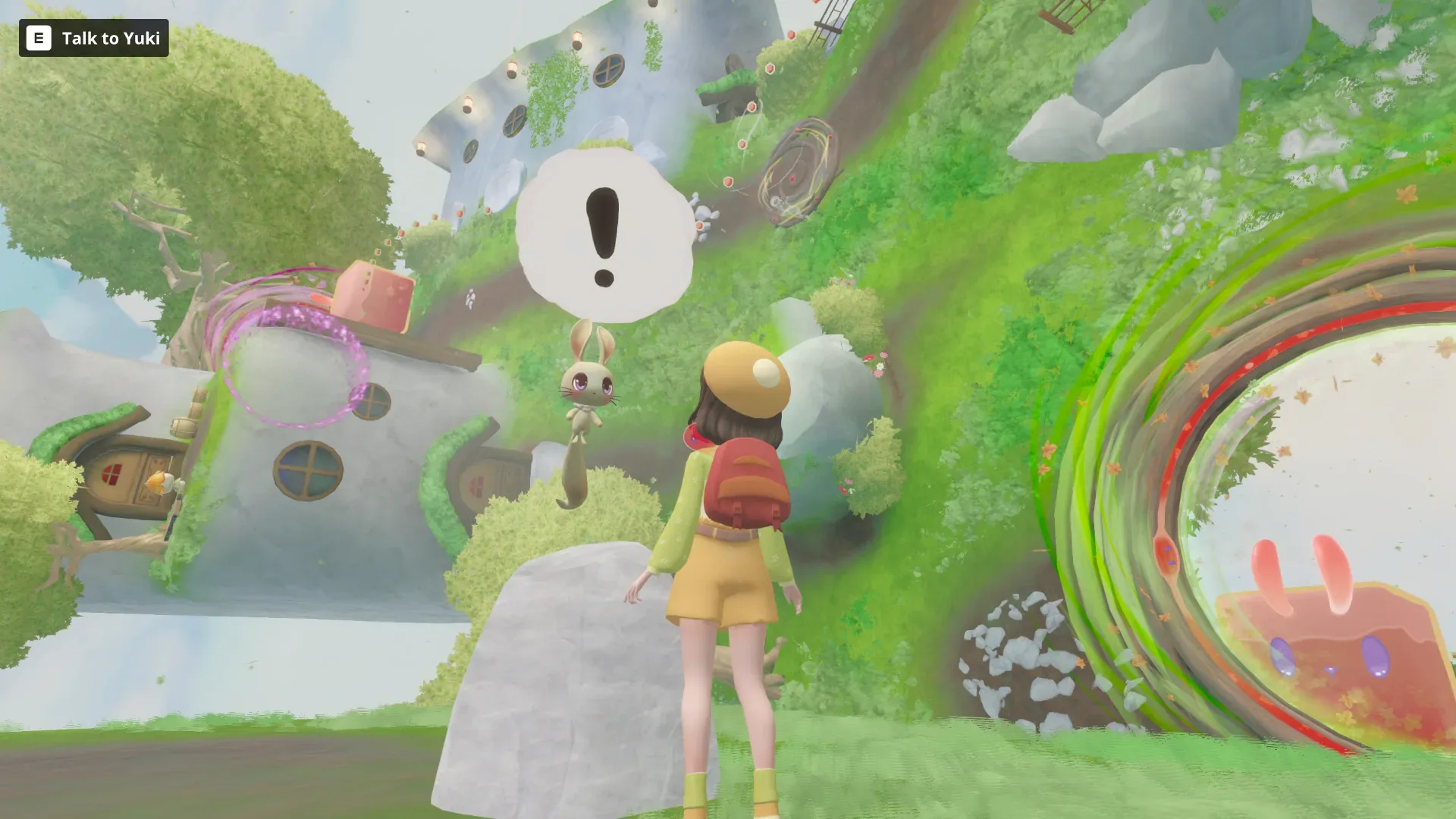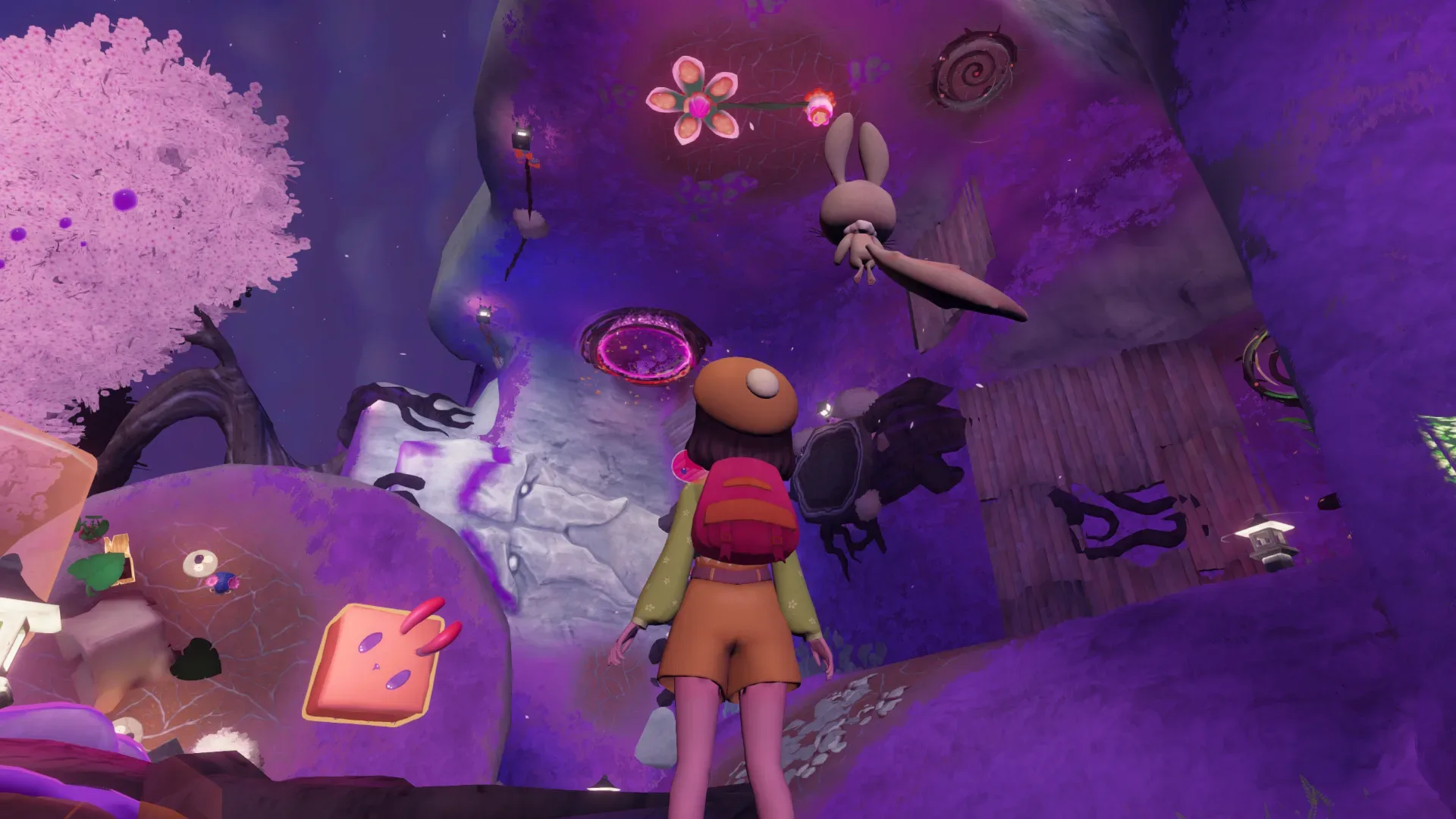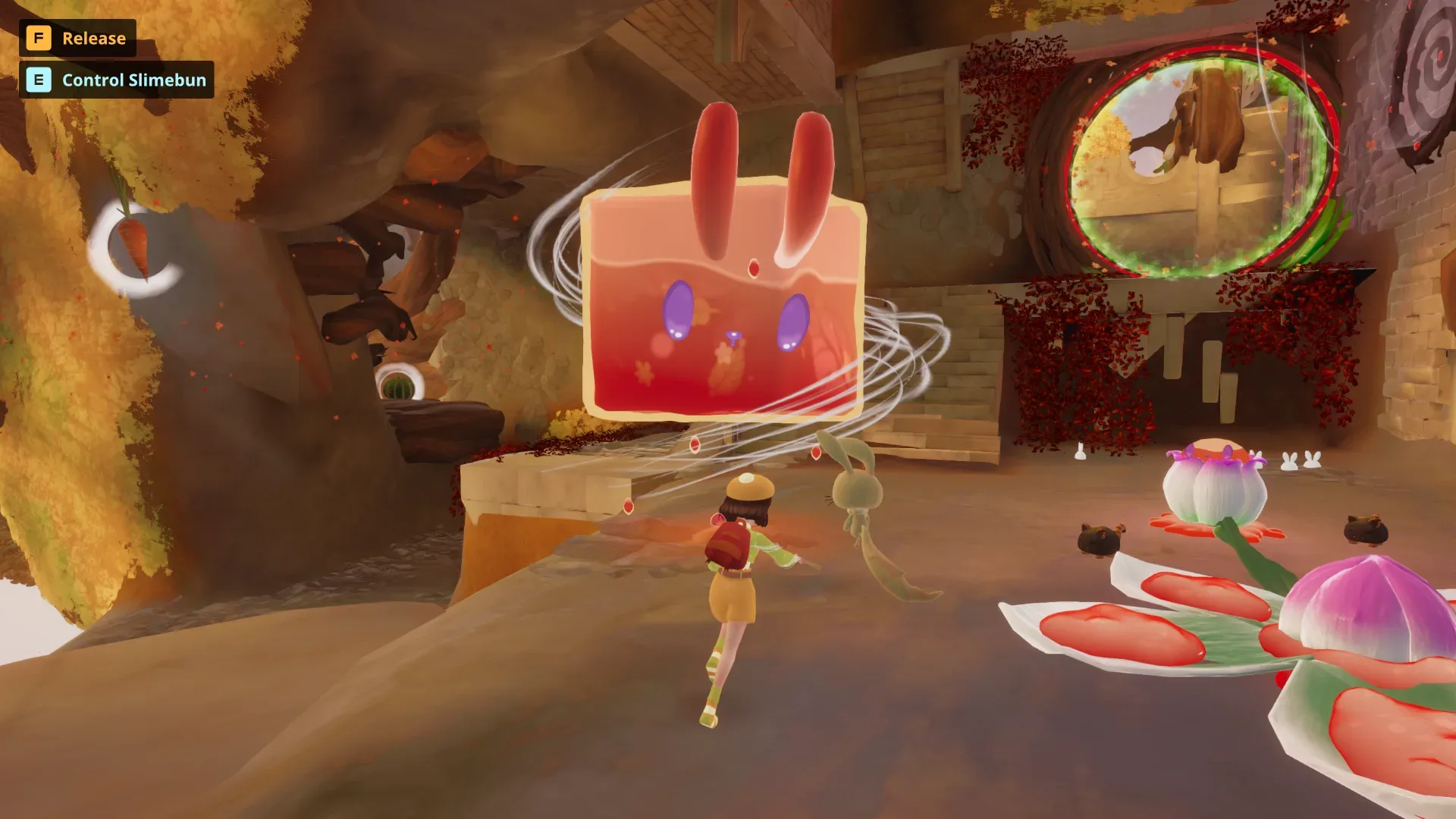
Nomori, the adventure-puzzle game from Enchanted Works, is now available on Steam and Xbox. Released on September 23, 2026, the game follows Kiko through a colorful fantasy setting populated by eccentric spirits, with puzzle-solving built around portals, shifting viewpoints and control over the flow of time.
Its premise is not simply to move through a series of scenic islands. Kiko’s growing relationships with the Spirits are tied to the story’s larger goal: seeing beyond reality’s usual limits and saving Nomori. That setup gives the game’s central mechanical ideas a fitting narrative role. When the world stops obeying a straightforward sense of direction, distance and sequence, the player is expected to rethink the route rather than merely hunt for a hidden switch.
Enchanted Works describes Nomori as a seven-to-10-hour journey across brain-challenging islands. The stated playtime offers a useful expectation for players looking for a self-contained puzzle adventure rather than an open-ended game with indefinite side activities. No further details on pricing, Xbox versions or specific Steam features were provided.
A puzzle adventure built around changing perspective
The headline mechanic is the use of portals that can be rotated. In practical puzzle-game terms, a portal is an opening that connects one location or spatial orientation to another. Rotation adds a further complication: the connection may not remain fixed in the direction a player first expects. A path that appears to lead away from an objective could become the useful route once the portal’s orientation changes.
This is where the game’s M.C. Escher-inspired approach comes into view. The reference points to visual logic in which spaces can seem to fold, loop or contradict conventional expectations about up, down and adjacent rooms. It does not necessarily mean every area is a literal impossible drawing; rather, it signals that perspective itself is part of solving the environment.
That distinction matters. A conventional navigation puzzle asks, “Which route reaches the destination?” A perspective-based puzzle can instead ask, “What counts as the route after the space has changed?” Nomori’s rotating portals appear designed to make that second question central. Players may need to identify a shortcut, alter the portal arrangement, then reconsider where a familiar doorway or island edge now leads.
The game also gives Kiko time-control powers. Time manipulation is a broad term, and the available details do not specify whether Nomori lets players rewind actions, pause objects, change the order of events or use another method. What is clear is that time control is presented as a progression tool alongside portals and perspective shifts. In other words, it is part of the puzzle language rather than a detached spectacle feature.
What the game’s mechanics suggest
Analysis: Portal rotation and time control can work especially well together because they ask players to track two different kinds of change. Spatial change concerns where something is and how locations connect. Temporal change concerns when an action happens and what state the environment is in at that moment. A puzzle that combines the two can turn a seemingly simple obstacle into a multi-step problem: arrange the path, establish the right moment, then use the route before the conditions change.
That is a useful frame for prospective players because “mind-bending” is often an imprecise label. Here, the supplied feature list indicates that the intended challenge comes from relationships between place, orientation and time. The game’s puzzles are likely to reward observation and experimentation more than speed.
The islands are also described as soothing and colorful, an important tonal counterweight to mechanics that could otherwise feel abstract or severe. Puzzle games with altered geometry can become difficult to read if visual design does not help players distinguish meaningful elements from decoration. Nomori’s emphasis on a vivid world and colorful spirits suggests an effort to make its surreal ideas welcoming rather than clinical.
That visual warmth is matched by a heartfelt story inspired by Japanese folklore. The available information does not identify particular stories, figures or traditions used in the game, so it would be premature to draw direct connections to any one folkloric tale. Still, the influence is relevant to the game’s overall identity: Nomori presents a fantasy world of spirits and unusual rules, with Kiko’s bonds with those beings positioned as central to the adventure.
Kiko and the Spirits at the center
Kiko is the player character, and her journey takes her through Nomori’s fantasy locations as she encounters a cast of eccentric Spirits. The relationship element is more than a decorative story beat in the premise. As Kiko bonds with the Spirits, she gains the ability to look beyond reality’s limits. This places character connections alongside the game’s spatial and temporal systems, giving the story an apparent reason for the rules of the world to expand.
For players, that may make Nomori appealing beyond its pure puzzle structure. The game promises a cast rather than an empty sequence of environmental challenges, and its stated emphasis on a heartfelt story suggests that progress is meant to have emotional stakes as well as mechanical payoff. Whether those characters become allies, guides, puzzle catalysts or narrative anchors is not detailed, but their presence is clearly fundamental to the game’s pitch.
The game’s name is also the name of the world Kiko is trying to save. That creates a tight focus: the setting is not presented as a stop on the way to a separate destination, but as the subject of the adventure itself. Each island can therefore serve both roles—a puzzle space to understand and a part of a larger realm in need of rescue.
Who should keep Nomori on their radar
Nomori is positioned for players who enjoy puzzle adventures where mastering the environment matters as much as advancing the story. Its stated features point toward an experience for people comfortable with pausing, examining a space from a new angle and revisiting assumptions after a mechanic changes the rules.
- Perspective-puzzle fans: The rotating-portal design and Escher-inspired mechanics put altered spatial logic at the forefront.
- Players who prefer purposeful powers: Time control is specifically tied to progressing through challenges, rather than being described as a combat-focused ability.
- Story-minded puzzle players: Kiko’s connections with Spirits and the objective of saving Nomori give the adventure a character-led frame.
- Those seeking a defined-length game: Enchanted Works estimates a seven-to-10-hour run across its islands.
Conversely, the information currently available frames Nomori as an adventure-puzzle experience first. There is no provided indication of combat systems, competitive modes, procedural content or a sprawling open world. Players seeking those features should treat the game as a focused, authored journey built around its puzzle concepts.
Steam and Xbox availability
Nomori is out now on Steam and Xbox as of September 23, 2026. The cross-platform release means PC and Xbox players can both enter Kiko’s world at launch, though the provided details do not break down which Xbox hardware is supported or describe differences between versions.
For PC players following smaller and technically distinctive releases, Joking Joystick also recently covered a KytyPS5 update focused on directory-handling overhead. Nomori sits in a very different corner of the PC landscape, but its release adds another puzzle-led option to Steam alongside its Xbox availability.
The game’s core proposition is concise: explore a colorful realm, meet its Spirits, and solve problems by changing how space and time behave. For an adventure built around the idea of seeing past reality’s limits, rotating portals and time-based powers are not just obstacles to overcome—they are the lens through which Kiko, and the player, will come to understand Nomori.