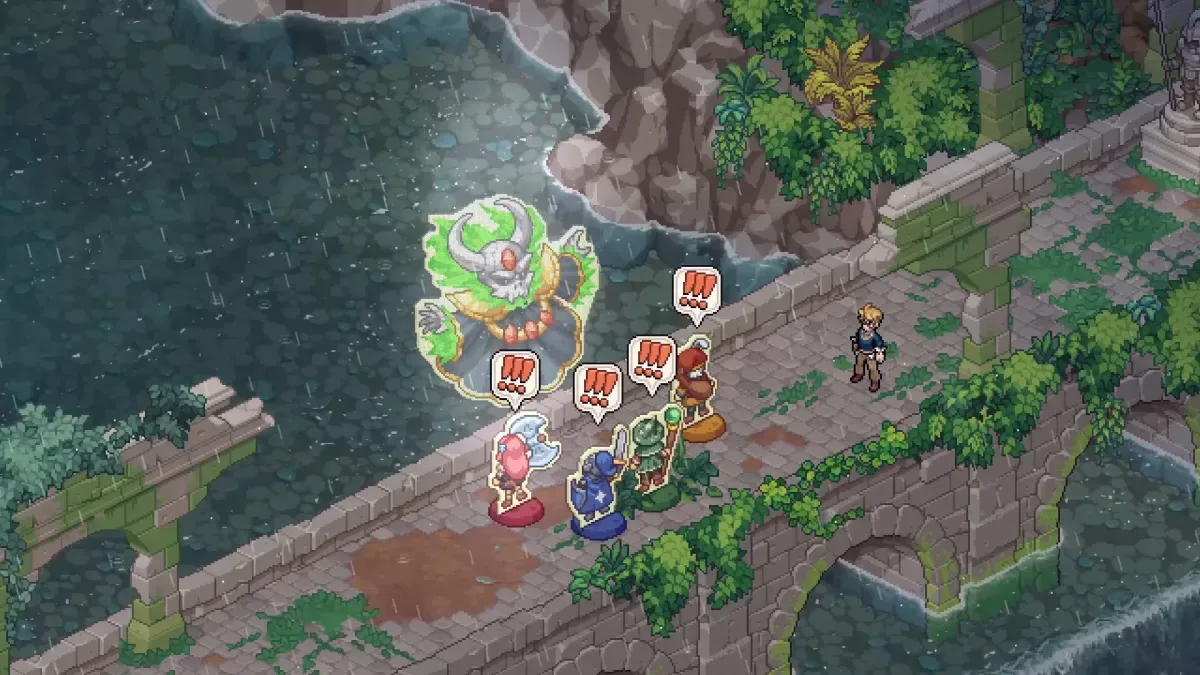

Witchbrook has gone gold across all platforms, marking a major milestone for the long-awaited magical life simulation game. Developer Chucklefish says the game is now complete and ready to move into platform certification ahead of its scheduled January 28 launch.
For a project first teased in 2017 and followed by lengthy quiet periods and delays, the update is particularly meaningful. Going gold does not make a release date mathematically unbreakable, but it is a concrete sign that the main development build has been finished and is being prepared for the approval processes required by console and PC storefronts.
“We’re delighted to announce that Witchbrook has GONE GOLD ALL PLATFORMS!”
What “gone gold” means for Witchbrook
“Gold” is an industry term used when a game’s release candidate is complete enough to be submitted for certification. Certification is the platform-holder review process that checks whether a game meets technical and operational requirements before it can ship on a given system. Those requirements can cover areas such as how the game functions with the hardware, system software, accounts, menus, and other platform-specific features.
In practical terms, the milestone suggests Witchbrook has reached the point where its core release build is no longer waiting on open-ended production work. It is now being processed for release across its planned platforms: PlayStation 5, Xbox Series X/S, Switch 2, Xbox One, Switch, and PC.
That all-platform wording matters. Multi-platform launches require developers to account for several hardware families and storefront ecosystems rather than simply completing one version of a game. The gold announcement indicates the team considers each announced version ready for the next stage.
It is still sensible to preserve the distinction between a gold status and an already-released game. Certification is part of the road to launch, and developers can continue to address issues or prepare post-launch updates. But for players who have watched Witchbrook’s extended journey, this is a far stronger signal than another early look, teaser, or broad development update.
A magical life sim in the seaside town of Mossport
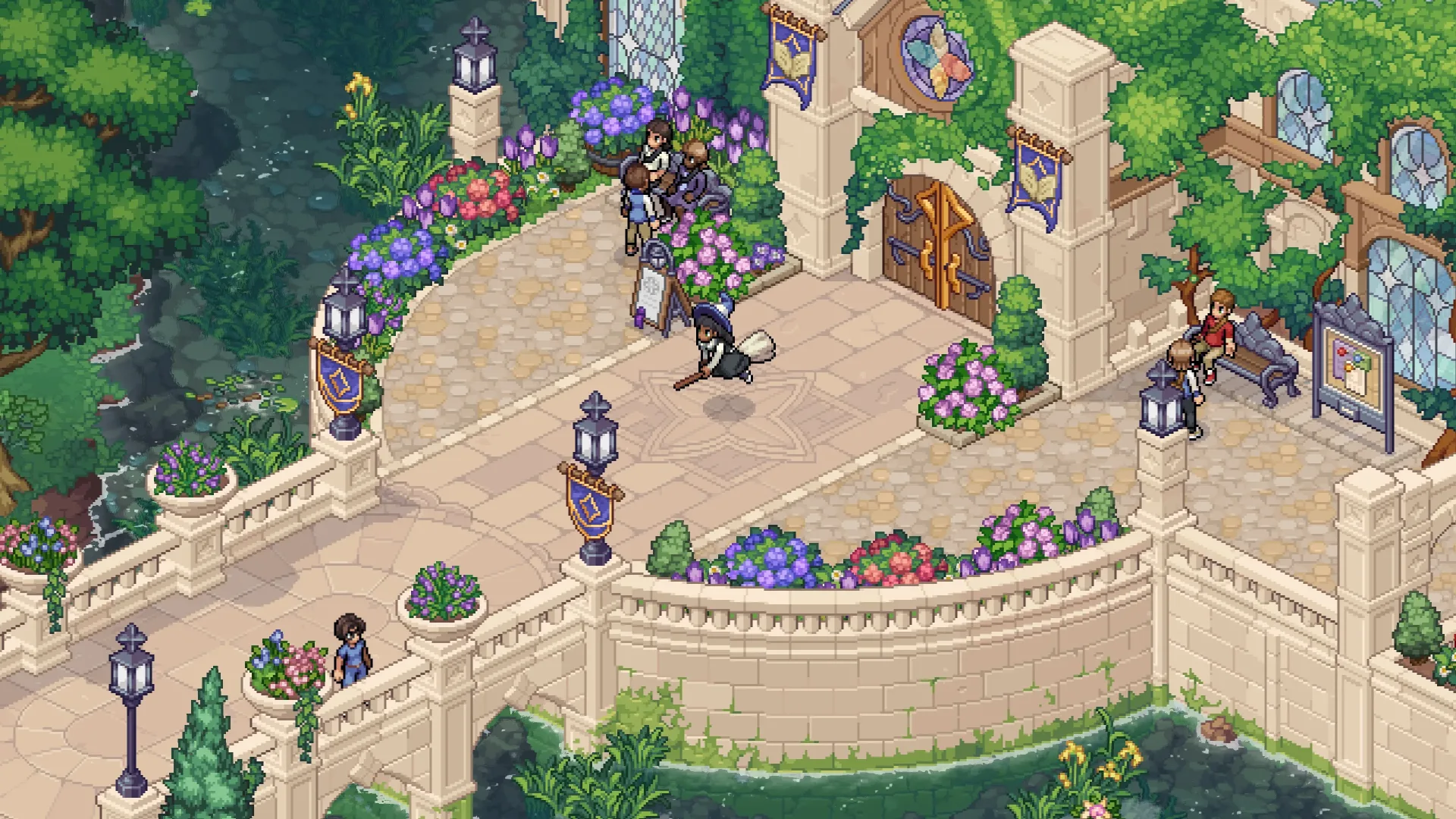
Witchbrook places players in Mossport, a seaside town where their character begins a new life as a witch. The game’s central premise blends everyday community life with magical education: players can form friendships, pursue romance, enroll at Witchbrook College, attend classes, and complete assignments on the path to mastering magic.
Related coverage includes Witchbrook Goes Gold Ahead of January 28 Release.
The word life sim describes games built around day-to-day routines, relationships, activities, and player-directed goals rather than a narrowly linear campaign. In Witchbrook’s case, the available details point to a setting where school life is one major structure, but not the only one. Players will also be able to start and operate businesses, take part in seasonal events, and interact with local citizens.
That combination gives Mossport two overlapping rhythms. One is academic: studying magic through classes and assignments at the college. The other is social and civic: getting to know the town, making a place within its community, and taking part in events that change with the seasons.
The citizens are described as fully realized characters with their own schedules and routines. That detail is important in a life sim because it implies that interaction is not simply a list of characters waiting in fixed positions for the player. A routine-driven town can make planning, timing, and repeat encounters part of how players build connections. It also helps make the setting feel like a community continuing its day whether or not the player is at the center of every moment.
College is not just background decoration
Magic-school fiction often treats classes as scenery for a broader adventure. Witchbrook’s announced structure gives college a more direct role: the player enrolls, takes classes, and completes assignments in order to learn magic. That makes education one of the game’s stated progress paths, rather than merely a visual theme.
There is no detailed breakdown yet of individual subjects, spells, assignment formats, grading, or how magic will be used outside the college. Those are the kinds of specifics worth waiting to see in the finished game. What is clear is that the player’s magical growth is tied to participating in Witchbrook College, while the rest of Mossport supplies the relationships and activities surrounding that school experience.
Business management is another notable piece of the premise. Starting and running a business potentially gives the player a role in the town beyond being a student, friend, or event attendee. The announced information does not specify the kinds of businesses available or the systems used to operate them, so it would be premature to assume a particular economy or management depth. Still, its inclusion reinforces that Witchbrook is designed around multiple forms of everyday engagement.
Why the milestone carries extra weight
Witchbrook’s development has stretched for close to a decade from its 2017 tease. Long development cycles can create unusual uncertainty for audiences: a game may remain memorable because of its concept and artwork even as concrete release information arrives only intermittently. Delays can also make every new date feel provisional, especially when a project has spent years in anticipation.
That is why a gold announcement changes the texture of the conversation. It does not reveal every unanswered detail about Witchbrook, nor does it replace the eventual experience of playing it. It does, however, move the game from a long-running promise toward a defined launch process.
The timing is also encouraging for its January 28 target. A gold build arriving in advance of release leaves the game in the certification phase rather than presenting the date as a distant goal. Players should still treat the planned release as a scheduled date rather than an absolute guarantee, but the chance of another delay is meaningfully lower once a project has reached this stage.
For broader context on how long-term development expectations can shape discussion around major games, see this look at the expectations surrounding ambitious generational leaps in game development. Witchbrook is a very different kind of game, but the underlying lesson is similar: development timelines and platform ambitions affect how audiences interpret progress updates.
Platforms and release date
Witchbrook is scheduled to launch on January 28 for:
- PlayStation 5
- Xbox Series X/S
- Switch 2
- Xbox One
- Switch
- PC
Supporting both current-generation and older console hardware alongside PC gives the game a broad planned audience. It also makes the all-platform gold milestone especially relevant, since the game is not being framed as a staggered release with one device family arriving later than the others.
What players can reasonably take from the update
The most reliable takeaway is straightforward: Witchbrook has cleared one of the final major development milestones before release. Its magical-school life sim concept remains intact, with Mossport, Witchbrook College, relationships, businesses, seasonal events, and schedule-driven townspeople all part of the announced package.
Players looking forward to the game should not read more into the update than it promises. Going gold does not by itself answer questions about performance, the scale of individual systems, controls on every platform, or the full range of magical activities. Those will be judged when the game is available. But it does provide tangible reassurance that the long wait is nearing its end.
After years of anticipation, Witchbrook now has a completed release build headed toward certification and a January 28 launch date across PlayStation, Xbox, Nintendo, and PC platforms. For Mossport’s prospective witches, the school term finally appears close at hand.