Witchbrook is scheduled to launch on January 28, 2027, ending a long wait for the pixel-art magical life sim. The date was confirmed during a Nintendo-focused presentation, but the game is not a Nintendo exclusive: it is also planned for PC, PlayStation 5 and Xbox Series X/S, alongside Nintendo Switch and Switch 2.
For a game first announced in 2017, a firm release date matters more than a fresh puff of enchanted smoke. Witchbrook has spent years as an appealing but distant prospect: a school-life fantasy in which players attend a college for witches while building a day-to-day existence in the surrounding town. The newly dated release turns that broad idea into a much clearer calendar commitment.
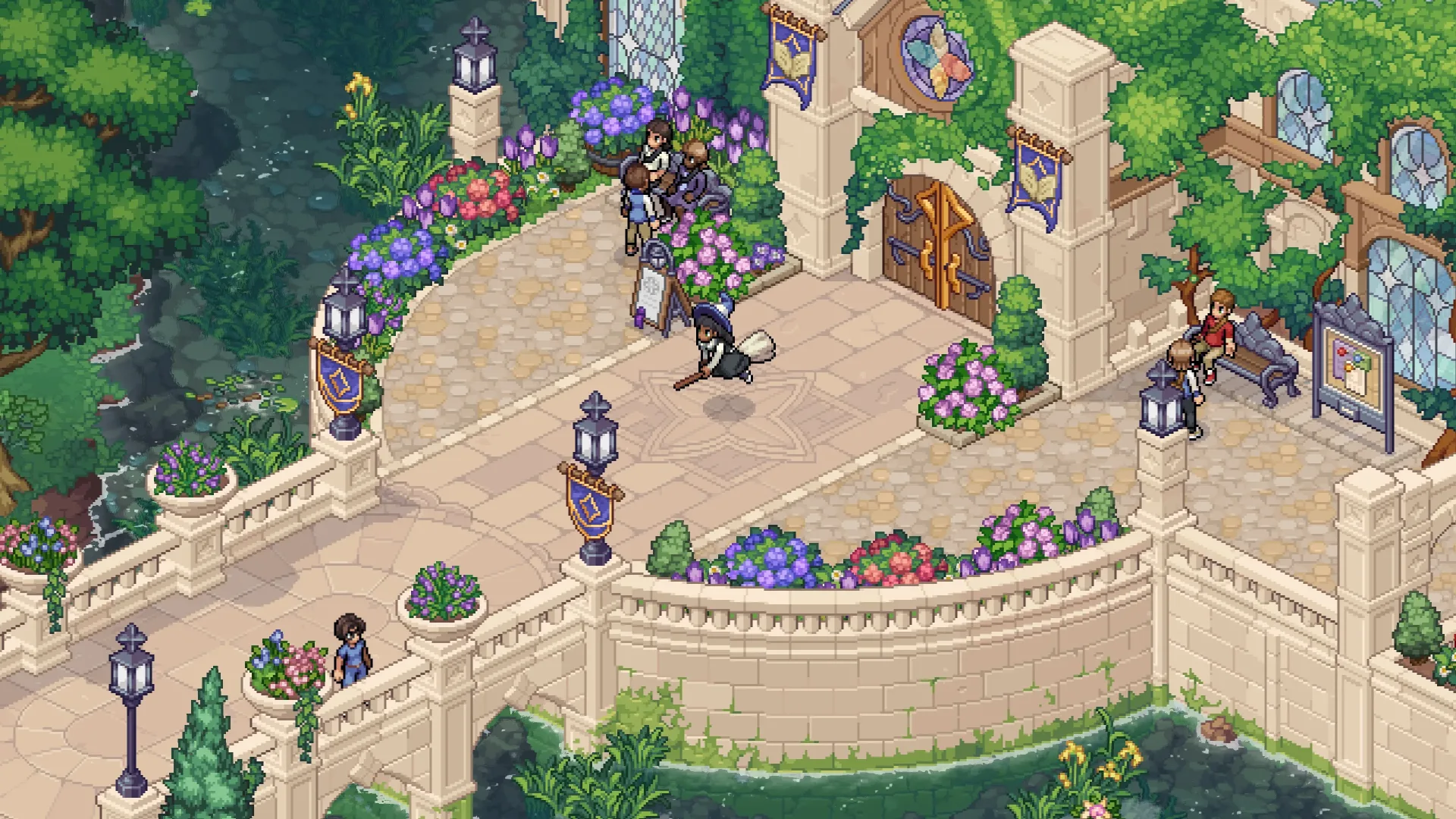
The central setup combines magical education with familiar life-simulation activities. Players will learn spells at witch college, but school is only one part of the intended routine. The game also includes making friends, taking jobs and decorating a home in town. That structure places Witchbrook in the cozy-sim space, where the appeal comes from balancing several low-pressure pursuits rather than chasing one narrowly defined objective.
A magic-school sim with a town life attached
“Life sim” is a broad term, but the details confirmed for Witchbrook point to a game organized around a character’s everyday rhythms. School provides a clear fictional premise and a reason for spellcraft, while town activities give players social, work and domestic dimensions beyond lessons. In practical terms, that means progression is expected to encompass more than simply unlocking new magic.
Spell learning is the most obviously fantastical element. It gives the game its witch-college identity and suggests that magical systems will be a meaningful part of the experience. At the same time, friendship-building, jobs and home decoration are equally important to the pitch. Those systems make the setting feel like a place to inhabit, not merely a sequence of classes to complete.
Home decoration, for example, generally refers to arranging and customizing a player-owned living space. Its significance here is not that a particular catalogue, building tool or furniture system has been detailed—those specifics have not been confirmed—but that Witchbrook intends to let players establish a personal presence in its town. Likewise, working jobs implies that time outside class will have structure and purpose, though the available work and its rewards have not been outlined.
The friendship component is another reason the premise has remained compelling during the extended wait. Social interaction is a key ingredient in games built around community and routine. Witchbrook’s confirmed framing promises relationships in the town, but it does not yet establish the exact mechanics, the number of characters, romance options, multiplayer features or how any relationships affect the magical school experience. Keeping those distinctions clear is important: the release date has been confirmed, while many finer gameplay particulars have not.
Pixel art and a broad magical toolkit
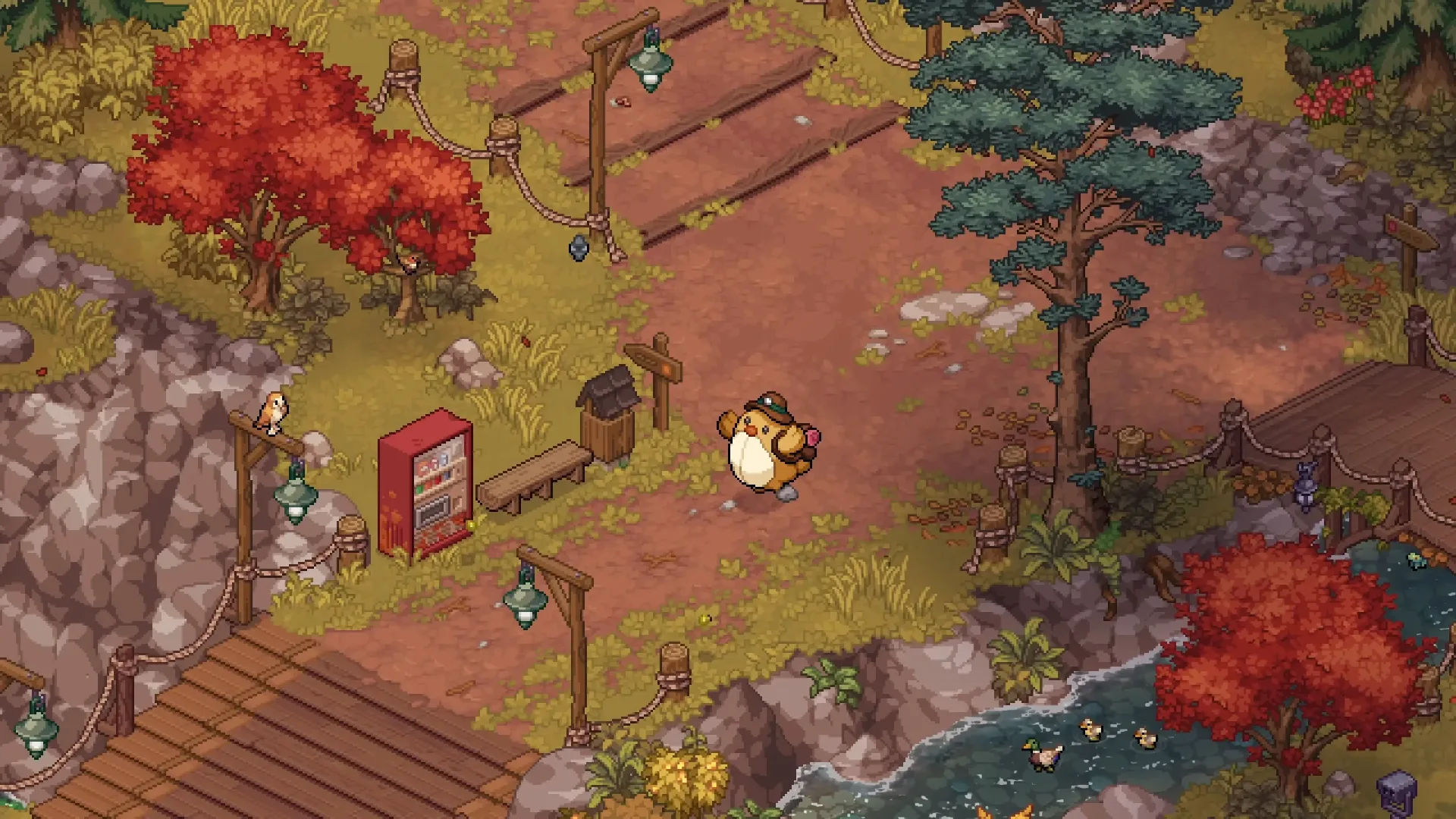
Witchbrook uses a cute pixel-art presentation, pairing deliberately blocky, sprite-based visuals with a world centered on spells and campus life. Pixel art is an aesthetic approach that uses visible individual pixels as part of the image design, rather than trying to conceal them in a high-resolution, realistic style. It can support expressive environments and readable characters without changing the underlying scope of a game’s systems.
In Witchbrook’s case, the visual style is paired with what has been described as a robust collection of magical gameplay systems. That wording establishes an ambition for magic to be more than decorative background flavor. However, it does not define individual spells, crafting, combat, class schedules, resource loops or other mechanics. The useful takeaway is straightforward: magic is positioned as a major activity, and the exact shape of that activity remains something the game will need to show in greater detail closer to launch.
The combination of cozy town life and a magical curriculum is also a practical differentiator. A conventional school setting can create a fixed routine; a town sim can become directionless without strong hooks. Witchbrook’s concept attempts to link both. College supplies a thematic reason to learn and improve, while jobs, friends and decorating offer players choices over what their character’s life looks like beyond campus.
That does not mean every player will approach it identically. Someone mainly interested in spell learning may prioritize the college side, while another player may be drawn to personalizing a home or getting to know the townspeople. The confirmed feature list supports those distinct interests, even if it does not yet explain how freely they can be mixed or how rapidly any one path can be pursued.
Why the date is notable after a long development path
Witchbrook was announced nearly a decade before its planned release, in 2017. It later carried a 2026 launch window, but that target was not met. The January 28 date therefore reflects a delay from that earlier plan, while also providing a specific target after a lengthy period with relatively little public information.
For prospective players, a dated release is useful because it replaces an open-ended wait with concrete platform planning. This is particularly relevant because Witchbrook is coming to both generations of Nintendo hardware currently named in its release plans: Switch and Switch 2. It also has confirmed versions for PS5, Xbox Series X/S and PC. The multi-platform approach means people interested in the premise will not need to treat the Nintendo presentation as a sign that it is limited to one ecosystem.
There is one caveat worth keeping in mind with any title that has traveled through an earlier launch window: a scheduled date is a plan, not a guarantee of every remaining detail. The currently confirmed information establishes January 28, 2027 as the release date, but does not provide pricing, pre-order plans, edition details, technical specifications or platform-by-platform performance targets. It is better to treat those as unanswered questions than to fill in the gaps with assumptions.
For readers tracking the announcement, our Witchbrook release-date coverage has the confirmed date and platform overview. The important point now is that the game’s long-standing promise—a pixel-art witch-college experience with spells, work, friendship and a customizable home—has a defined destination on the calendar.
What players can reasonably expect—and what remains unconfirmed
The available information supports a fairly clear high-level picture. Witchbrook is a magical life sim set around attendance at a witch college and life in a nearby town. Players can expect spell learning, socializing, jobs and home decoration as core pillars. Its visual identity is cute pixel art, and it is headed to five platform families: PC, PS5, Xbox Series X/S, Switch and Switch 2.
Beyond that, caution is warranted. No specific spell list has been confirmed. No details have been established about combat, if any, or about progression requirements, co-op, online features, accessibility options, controller support, save transfers or cross-platform play. There is also no confirmed information in the available announcement about regional release timing or physical editions.
Those omissions are not unusual for a release-date announcement. What makes this update valuable is its clarity on the bigger questions that have surrounded Witchbrook for years: it is still coming, it has a January 28, 2027 date, and it is planned for a wide range of current platforms. After such a long gestation, that is a meaningful spell to finally have written in the diary.