Entertainment has always had a healthy appetite for coincidence. One season brings two asteroid movies. Another delivers dueling volcano disasters. The modern version, however, is bigger than a scheduling accident: one story can now arrive as a podcast, documentary, dramatic feature, limited series, short-form video and perhaps another adaptation waiting in the wings. Instead of merely competing for the same ticket buyer, these projects may be trying to reach entirely different habits of attention.
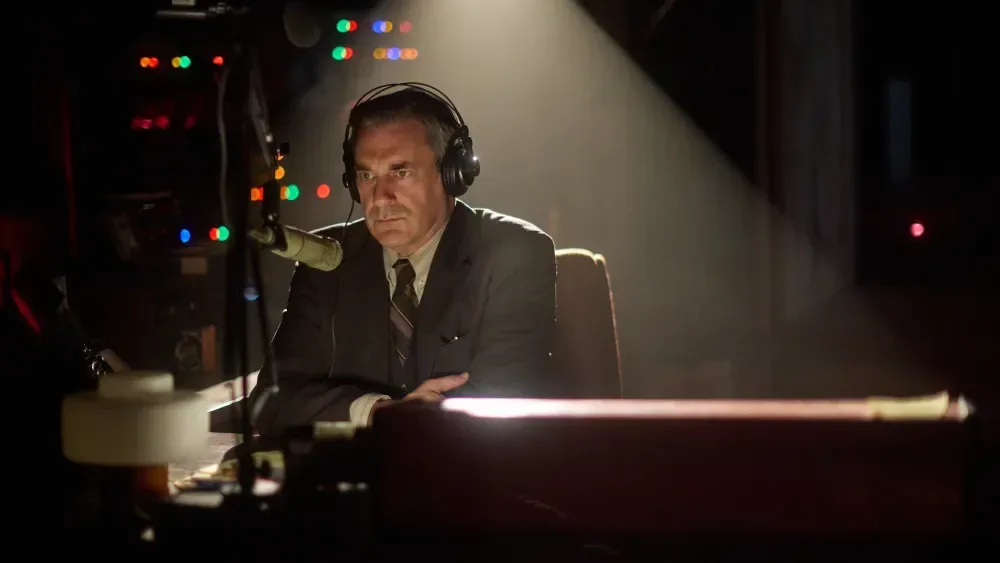
The 1977 Indianapolis hostage crisis is a particularly vivid current example. It has inspired the 2018 documentary Dead Man’s Line, the 2022 podcast American Hostage featuring Jon Hamm, Gus Van Sant’s thriller Dead Man’s Wire, and MGM+’s limited anthology series American Hostage, also starring and executive produced by Hamm. The series premiered at Toronto on September 12, one year and five days after the September 7 Toronto premiere of Dead Man’s Wire. The directors of Dead Man’s Line served as consultants on Dead Man’s Wire.
That is an astonishing amount of creative traffic around one event, but it also illustrates why the phrase “duplicate project” can be misleading. A documentary and a scripted thriller do not promise the same experience. A podcast can make room for reporting and immersion in ways a feature cannot; a series can linger on characters and consequences; a documentary has its own claim on evidence and participants. Same headline, different controller layout.
One story, several doors into the franchise
For audiences, the major question is simple: does a crowded field dilute attention, or does every new version create a new point of entry? The available evidence does not support a universal answer. Timing, release patterns, genre, platform access and the distinction between formats all matter. Still, there are compelling signs that a well-managed cluster of related projects can generate curiosity rather than exhaustion.
True crime is the clearest case. Research cited in the current discussion found that 61% of true-crime podcast listeners also watch true-crime television shows or movies. Half of those listeners also watch true crime on YouTube. That overlap suggests that a listener who finishes an audio series is not automatically done with the subject. They may be actively looking for a visual retelling, additional reporting, archival footage or another perspective.
It is also a reminder that “audience” is not one single crowd sitting in one giant multiplex. Some viewers live in the podcast ecosystem. Others primarily browse YouTube. Some want a polished prestige drama, while others are more likely to choose a documentary. A project in one format may have little effect on a project in another because their core groups barely intersect. Or, with the right subject and timing, it can make the next format feel like the natural next level.
As rights holders look beyond a one-off adaptation, the key is not simply repeating a story. It is giving each version a distinct reason to exist.
Spider-Man shows the power of a new release moment
The most conspicuous example of a major release energizing older material comes from Spider-Man: Brand New Day. In the week before the film’s July 31 debut, major platforms’ back catalogs registered between 26 million and 32 million hours of viewing for Spider-Man franchise content. During the week after the new film opened, that number rose to 98 million hours.
Related coverage includes Why Overlapping IP Is Becoming Entertainment’s New Audience Test.
Those figures do not prove that every connected title benefits equally, and they should not be treated as a guarantee for smaller properties. They do show the powerful gravitational pull of a new chapter in a well-known universe. Viewers often respond to a fresh release by revisiting earlier entries, filling in gaps, or simply extending their time with a character they already know.
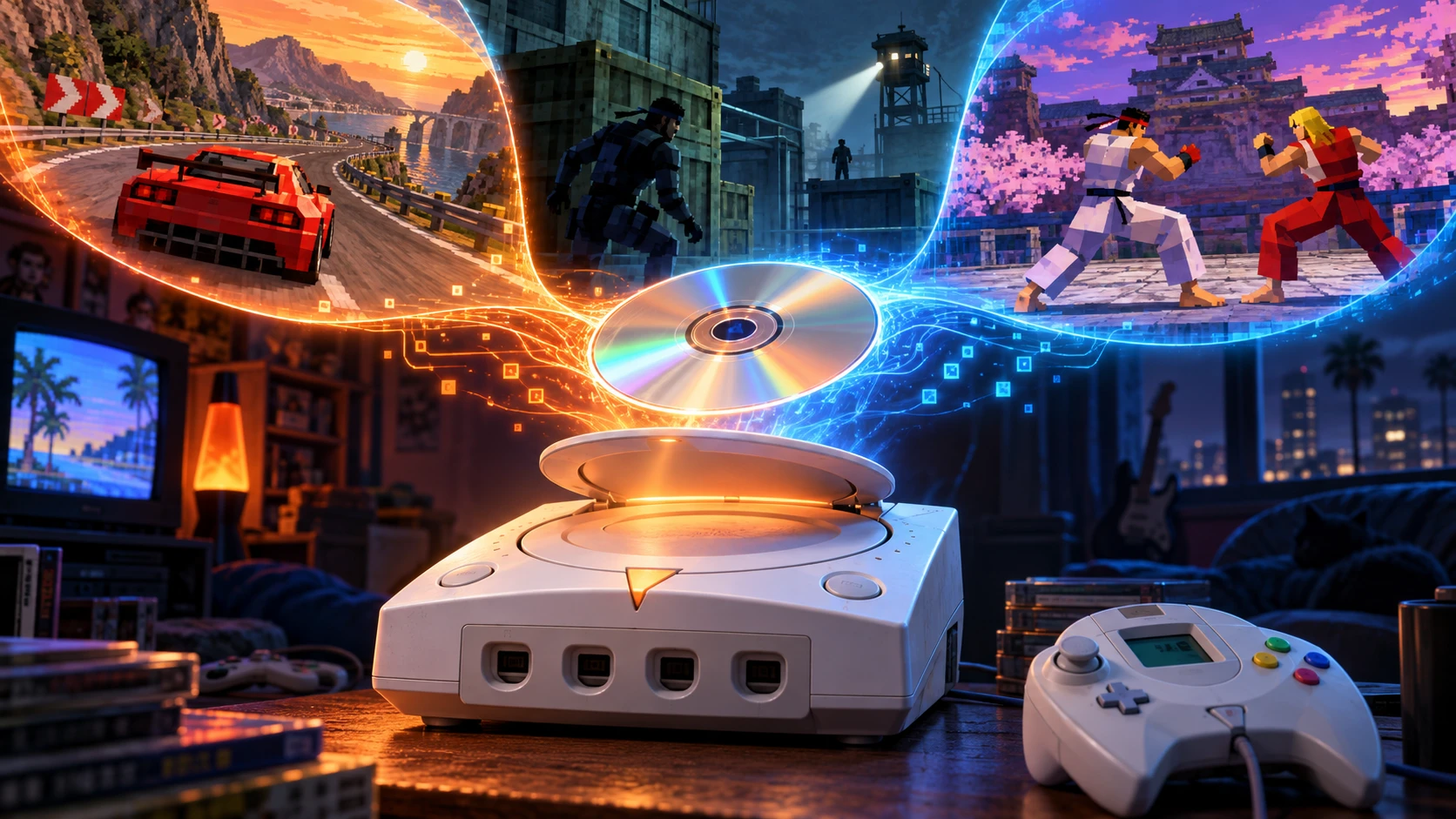
Games have long taught a comparable lesson. A sequel, remake, compilation or a newly accessible version can make players revisit older chapters, walkthroughs and community history. The mechanics of that revival are different, but the instinct is familiar: a current release makes the catalog feel current again. Even technical bridges between platforms can preserve attention for an older library, as the history of bleemcast! bringing three PlayStation games to Dreamcast demonstrates. Format changes do not erase the original; they can give it another route to an audience.
Expansion works best when the formats actually expand
The most promising strategy is an escalation of formats rather than a stack of near-identical retellings. A podcast might introduce the facts and voices behind a story. A documentary can organize its evidence visually. A scripted series can widen the emotional canvas. A feature can offer a concentrated, star-led version built for a different kind of attention. The audience does not necessarily need every installment to enjoy one of them, but a successful piece can make the rest more discoverable.
Netflix’s four-part March docuseries Dynasty: The Murdochs arrived before the company picked up Danny Boyle’s Murdoch-family biopic Ink, which is adapted from James Graham’s 2017 play. In a case like that, the documentary and biopic are not inherently substitutes. One is a multi-part nonfiction treatment, while the other is a filmmaker’s dramatic interpretation rooted in a stage work. Their proximity can instead signal that the larger subject has multiple angles worth exploring.
That possibility matters to producers and rights holders. A life story may no longer be viewed as material for only one film. It might support a feature, a documentary series, scripted television and short-form work. Securing the appropriate rights early is therefore not just legal housekeeping; it affects whether a story can move across media without leaving the eventual audience with a tangled map.
Not every overlap is a shared universe
There are limits. Two major Mount Everest projects arriving weeks apart provide a useful stress test: Apple Original Films’ location-shot drama Tenzing is scheduled for theaters on October 9, while National Geographic Documentary Films’ Everest: The Other Side is due October 30. Their proximity may create extra interest in Everest stories, but it could just as easily force viewers to decide which treatment best matches their preferences. The results will depend on execution, marketing and precisely how much the projects overlap in subject and appeal.
There is also an important distinction between a shared subject and a shared universe. Spider-Man has decades of characters, continuity, imagery and preexisting audience familiarity. A real-world event has a finite body of known facts, even if its human stories can be interpreted in many ways. The closer two works are in premise, tone, release window and intended viewer, the greater the risk that they are asking the same person to make the same choice twice.
Some categories may be reaching saturation sooner than others. Sports documentaries, for example, appear less plentiful than they were a few years ago, unless the project has unusually strong characters and a natural narrative engine. That does not mean sports stories are finished. It means the label alone may no longer be enough to make a crowded audience pause scrolling.
The durable advantage belongs to a specific angle
Documentaries remain attractive partly because they can be assembled and brought to market relatively quickly. Boardwalk Pictures’ documentary Cheyenne, about cowgirl bronco riders, was set for a September 13 Toronto appearance. For nonfiction producers, speed can matter when public attention is moving toward a topic, but distinctiveness matters more. A documentary cannot thrive solely because viewers recognize the subject; it needs access, an angle, a person or a question that feels necessary.
The same rule applies to the unexpected extensions that can follow an adaptation. American Hostage writer and executive producer Eileen Myers has indicated that a spoken-word album and a Broadway musical are planned, despite the multiple existing versions of the underlying hostage story. It is an almost comically ambitious illustration of the current mindset: a story is no longer automatically a single product. It can be a framework for several experiences.
For buyers, creators and fans, the smart question is not whether overlapping IP will disappear. It plainly will not. The more useful question is whether each adaptation has found something its siblings cannot do. When the answer is yes, duplicate stories may function less like a collision and more like a relay—each medium carrying the same spark to a different crowd.