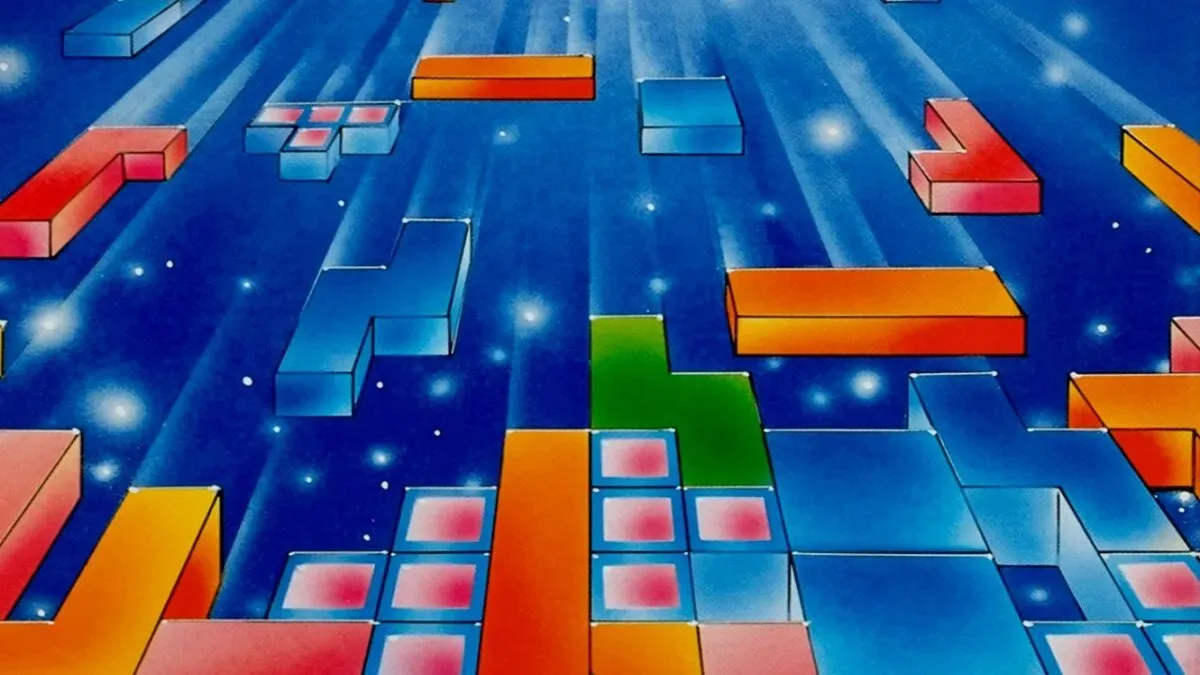
A Tetris-inspired browser game titled Build the Wall has been removed from the White House’s web-game portal. The game was absent as of the morning of September 8, only days after the portal’s September 4 launch and after The Tetris Company publicly said it was not involved with the project.
The company’s response did not explicitly say that it had taken legal action or sent a formal demand. It did, however, emphasize that it regards copyright infringement seriously. Given the timing, the disappearance of Build the Wall appears consistent with the White House responding to that public warning, although the reason for its removal has not been confirmed.
That distinction matters. A game going offline is an observable change; a behind-the-scenes legal letter, settlement, or direct instruction is not established by the available information. Still, the episode puts a spotlight on a recurring friction point in games: the difference between being “inspired by” an established work and using an unmistakable identity, format, or presentation associated with a protected brand.
A political message delivered through a familiar puzzle-game frame
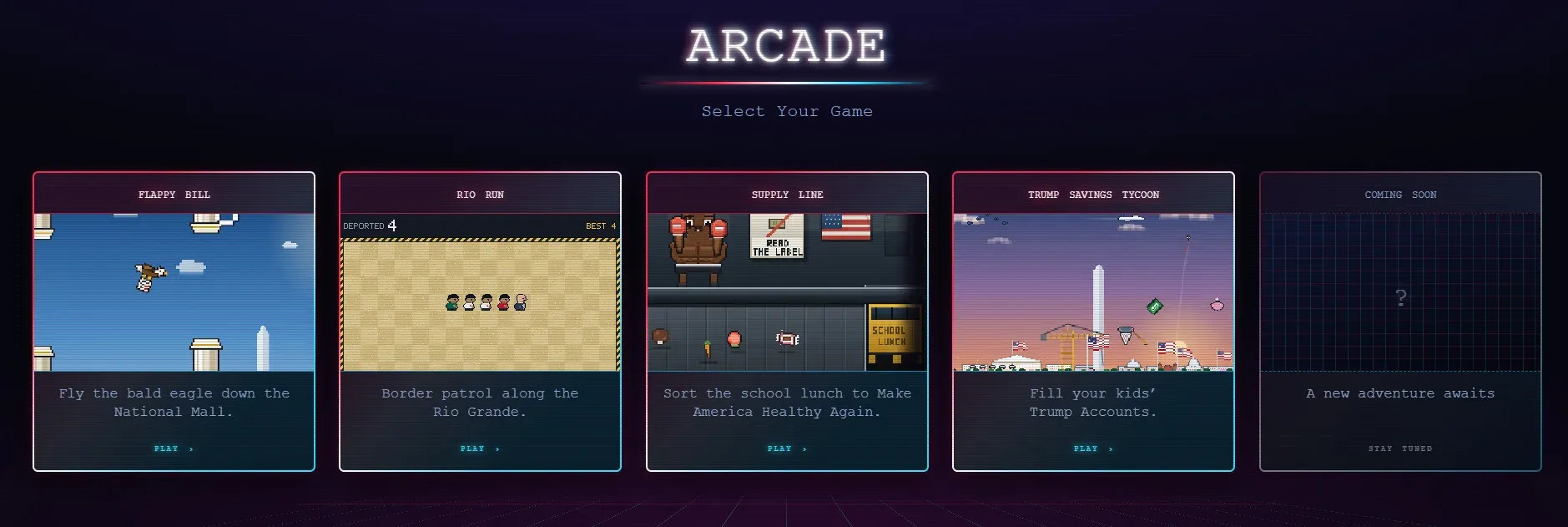
Build the Wall was one of several simple web games placed on the White House portal. Its premise used falling-block puzzle mechanics in service of constructing a wall at the U.S.–Mexico border. The portal also included games modeled after other recognizable videogame formats, with messaging focused on immigration and tariffs.
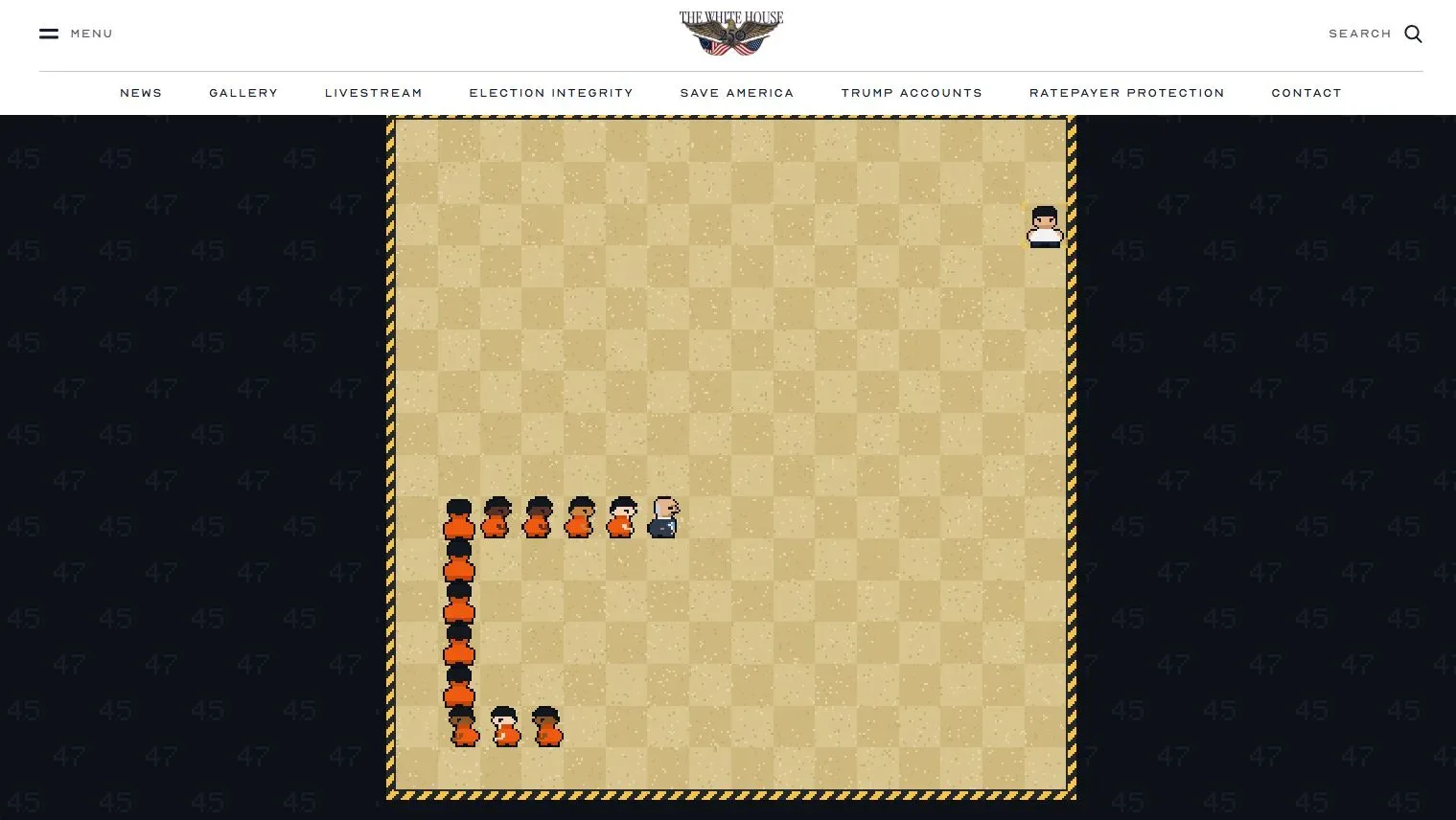
One of the other games reportedly resembled Snake, but replaced the usual abstract collection mechanic with an immigration-enforcement scenario: players guided a white officer while immigrants joined a chain behind the character. Critics described the portal’s content as racist, hostile, and poorly made. The games were also criticized for using familiar game language to package contentious political messaging.
Politics in games is hardly a novel idea. Games can be satire, propaganda, persuasion, art, parody, or all of those things at once. What makes this situation unusual is that the material appeared on an official government web portal while borrowing heavily from the visual and mechanical associations of major commercial game properties and genres.
For players, a block-stacking game immediately carries the cultural weight of Tetris. That recognition is precisely why it is tempting shorthand for designers who want a fast, legible rule set. It is also why a project can attract attention quickly when it leans too directly on the game’s distinctive identity. A government-backed page is not an obscure hobby upload that disappears into the wider web; it is highly visible, politically charged, and likely to receive scrutiny from both audiences and rights holders.
The Tetris Company’s public distancing was unusually direct
Shortly after the portal went live on September 4, The Tetris Company stated publicly that it had no affiliation with the game. It also framed Tetris as a property meant to connect people and underscored its serious view of copyright infringement.
Related coverage includes White House Pulls 'Build the Wall' Tetris-Style Game After Tetris Company Copyright Warning.
That is a meaningful choice of language, even without a disclosed legal filing. Companies frequently deny involvement when their names, characters, or imagery appear in political communications they did not authorize. A denial protects the public from assuming endorsement. A statement that specifically invokes infringement signals an additional concern: that the use may have crossed from an unwanted association into a possible intellectual-property dispute.
The Tetris brand has long been protective of its rights, and its corporate history includes legal efforts involving clones and knockoffs. That history does not, by itself, establish that a lawsuit was imminent here. It does explain why observers interpreted the company’s message as more than a routine “we were not involved” clarification.
The central confirmed points are comparatively narrow: The Tetris Company said it was not affiliated with the game and highlighted copyright infringement, while Build the Wall was no longer playable by September 8.
It is not known whether the White House contacted The Tetris Company, whether lawyers communicated privately, or whether the title was removed for a different reason. No public account of those details is established here. The rapid sequence nevertheless gives this a different shape from a vague online argument: a rights holder made a public objection, then the disputed game vanished from the portal.
Why the removal stands out among recent game-image disputes
The White House has previously used videogame-related imagery in edited or AI-generated political material involving franchises including Halo, Pokémon, Call of Duty, and Animal Crossing. In several cases, associated companies made clear that they were not participants in the messaging. Those responses did not necessarily include a public suggestion that legal enforcement could follow.
That broader context makes the Tetris response notable. The question was not merely whether an image or reference created a misleading appearance of endorsement. The issue was tied to a playable game whose core concept was presented in a format strongly associated with a famous puzzle property. The distinction between an edited image and a functioning game does not automatically decide a copyright claim, but it changes the practical stakes and the public perception of the use.
For anyone following videogame industry news, this is also a reminder that game companies do not all respond to brand misuse in the same way. Some will issue a brief correction. Some will say nothing publicly. Some will prioritize a quiet resolution. Others will make their position conspicuous, particularly when an association risks affecting how people view the brand’s values or the company’s role in a political message.
The industry’s wider interest in web-based game experiences has not disappeared, either. Browser games remain a simple way to reach large audiences quickly, even as major platform news dominates attention. For a sense of how rapidly the wider game calendar can turn, see the coverage of the Nintendo Direct scheduled for September 9. The White House portal incident operates in a different arena, but it shows that even a lightweight browser project can become a major story when it intersects with an internationally recognizable game property.
Mechanics, branding, and the limits of “clone” as a casual label
Players often use “clone” as a loose descriptive term. A game may be called a clone because it has falling pieces, a grid, a chasing mechanic, or a familiar visual style. Legally, however, the question is rarely resolved by a single casual label. General game ideas and rules can be treated differently from particular expression, such as branding, art, music, interfaces, presentation, or other distinctive elements.
That complexity should not obscure the practical reality. A project that is conspicuously patterned after a globally recognized game can provoke a response even when its creator believes it is merely borrowing a genre convention. The more an audience is likely to say “that is obviously Tetris,” the more likely the trademark, copyright, reputation, and consumer-confusion issues become part of the conversation.
In this case, the political framing amplified those risks. The game’s wall-building concept was tied directly to a divisive real-world policy issue. The Tetris Company’s emphasis on bringing people together positioned its brand identity against that framing, rather than allowing the title to be read as an approved use of Tetris-associated concepts.
What is known, and what remains unanswered
- Known: The White House launched its web-game portal on September 4.
- Known: The portal included Build the Wall, a Tetris-style game centered on building a border wall.
- Known: The Tetris Company publicly said it was not involved and said it takes copyright infringement seriously.
- Known: Build the Wall was no longer playable on the portal by the morning of September 8.
- Unconfirmed: Whether a lawyer’s letter, direct contact, or any other formal legal step prompted the removal.
- Unconfirmed: Whether the title will return in altered form or remain unavailable permanently.
For now, the visible outcome is simple: the Tetris-style game is gone. The larger significance is less tidy. It may be an early example of a videogame rights holder publicly drawing a harder line when its work is repurposed in government political media. It may also encourage closer attention to the difference between an unaffiliated reference and a use that a company believes threatens its protected identity.
Either way, the removal demonstrates an old digital-era lesson in a very modern setting: using a recognizable game as instant cultural shorthand can produce instant scrutiny. When the game in question is Tetris, the rights holder’s response can arrive almost as quickly as a clean four-line clear.