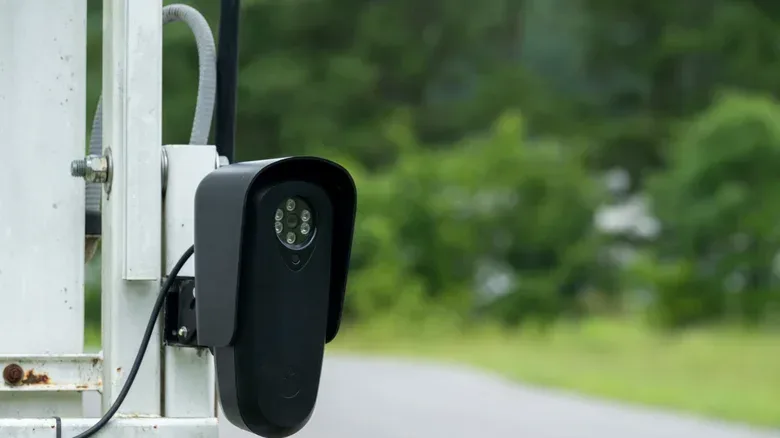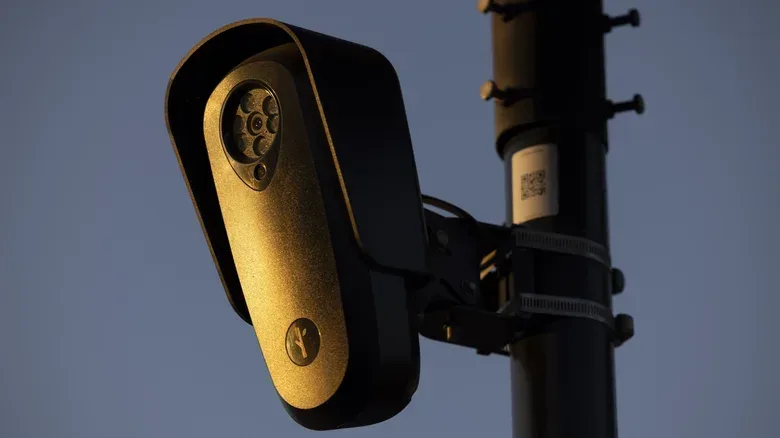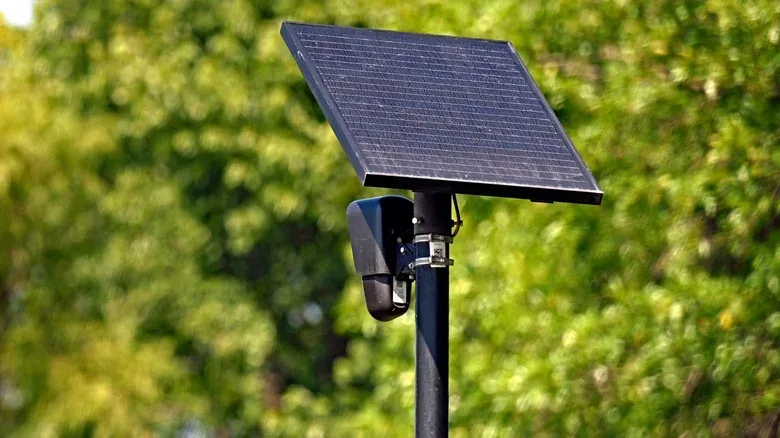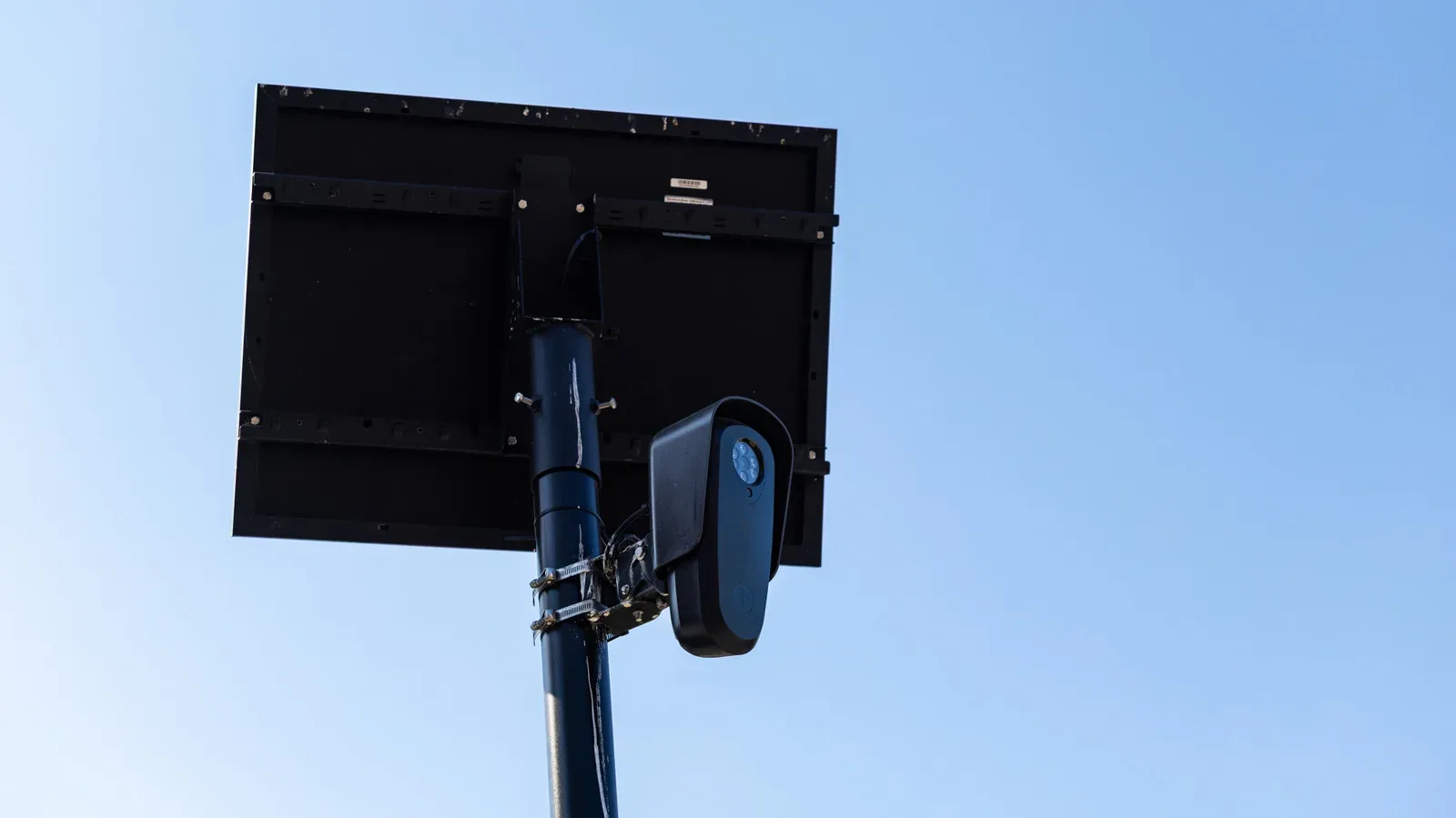
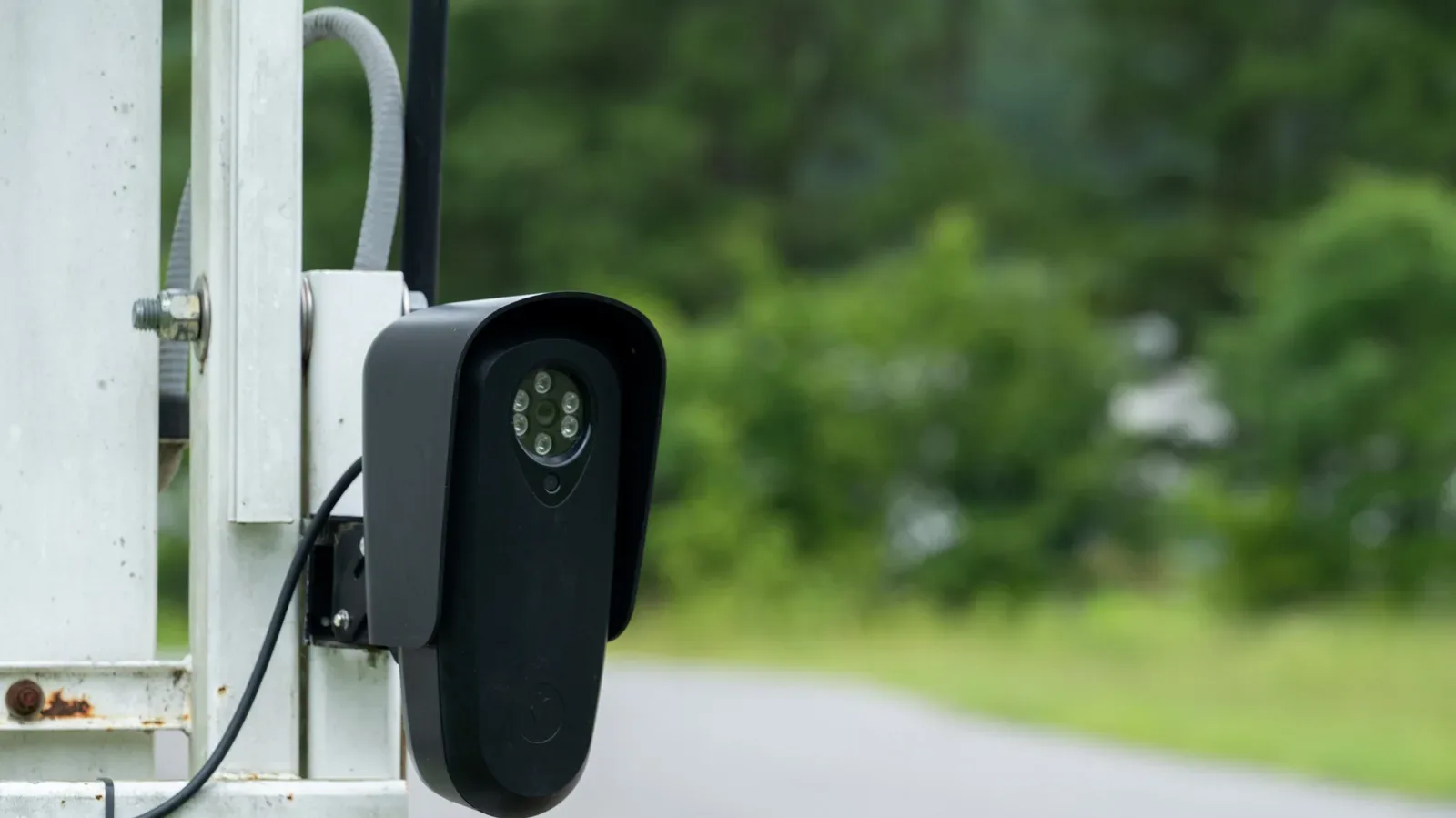
A small, dark camera on a pole with a solar panel nearby has become a familiar sight at roads, neighborhood entrances and shopping areas. Many people call every device of that type a “Flock camera,” but that shorthand can obscure an important distinction: Flock is a company, while automated license plate readers, or ALPRs, are a category of technology made by numerous vendors.
That distinction matters for anyone trying to understand what is installed nearby. A camera may look like a Flock device but come from Motorola, Leonardo, Genetec or another supplier. Conversely, a camera that does not fit the expected silhouette may still be part of a system that logs vehicles. Visual recognition can provide a useful clue, not a definitive answer.
The practical question is therefore less “Can I identify every Flock camera at a glance?” and more “What kind of camera am I looking at, what is it aimed to capture, and how can I verify whether local agencies or private organizations use plate-reading technology?”
Start with the term: Flock camera versus ALPR
An ALPR is a camera system designed to capture a vehicle’s license plate and associate that observation with information such as the time and location. “Automatic license plate reader” and “automated license plate reader” are commonly used for the same basic category. The key function is not simply recording a wide view of a street; it is collecting vehicle-identifying information from traffic passing through a particular point.
Flock Safety, formally Flock Group Inc., is closely associated with the term because its products are widely discussed in connection with these systems. But it is not the only company selling them. Treating “Flock” as a generic label risks both false positives—mistaking another vendor’s device for one of Flock’s—and false negatives, where a system is overlooked because it lacks Flock’s familiar appearance.
The broader point is that hardware branding does not change the central purpose of a typical plate-reader setup. If a device is positioned to view a lane or vehicle entry point and is configured as an ALPR, it can log passing vehicles regardless of which company manufactured the unit.
What a likely plate-reader setup looks like
Many plate-reading cameras share a few visual traits. A common design is compact, narrow and vertically oval, roughly hand-sized, and mounted on a pole. A solar panel is often installed above or near the camera. The panel is a meaningful clue because many systems are self-powered and may not need the more obvious wiring seen on larger roadside equipment.
But none of those traits proves a device is an ALPR. Camera designs vary, and camera-like road equipment has many purposes. The most useful observation is often where the lens is pointed. A plate reader needs a view that makes a vehicle plate readable, so it is likely to face approaching or departing traffic rather than point randomly across a broad space.
When a visible Flock bird logo is present, that is a stronger identifying sign. Its absence is not conclusive, however. The device could be another company’s reader, the label may not be visible from the ground, or it may be an unrelated camera altogether.
Common shapes, with an important warning
- Flock-style units: Often narrow and vertically oval, frequently accompanied by a solar panel.
- Leonardo units: Can appear more rectangular or block-like, including elongated versions.
- Genetec units: May appear horizontally oval—similar in narrow profile to a typical Flock-like device, but turned sideways.
- Motorola units: May use a mixture of visual approaches rather than one immediately recognizable shape.
These are identification hints, not an exhaustive field guide. A camera’s model, installation angle and surrounding hardware can change how it looks from a sidewalk or moving vehicle. It is better to describe a device as a possible plate reader than to declare certainty from shape alone.
Locations where cameras are most likely to appear
ALPR systems tend to be placed at traffic chokepoints: intersections, busy roads and entrances where many vehicles must pass through a predictable route. That makes a neighborhood entrance especially plausible. Homeowners associations are significant customers for Flock systems, so a camera at an HOA-controlled entrance may be there to observe vehicles entering or leaving rather than to operate a traffic signal.
Shopping centers are another plausible location. So are areas where traffic converges before entering a parking lot or commercial corridor. In each case, the same logic applies: a camera has more value to a plate-reading system when there is a clear, reliable view of vehicles passing the installation point.
Location remains evidence of possibility, not confirmation of ownership or use. A camera on a pole could be installed by a local government, police department, HOA, retailer or another entity. The public nature of the road does not reveal who purchased or operates nearby equipment.
How to avoid confusing ALPRs with other road cameras
Roadside cameras are not all doing the same job. A careful look at power, placement and aiming can help distinguish likely plate readers from a few frequent lookalikes.
- Red-light and speed-enforcement cameras: These are often larger and may be wired into traffic-signal infrastructure or dedicated enforcement poles. Some states also place identifying signs near speed cameras.
- Traffic-flow sensors: White, elongated cameras can help traffic signals respond to vehicle flow. Their role is generally tied to signal management rather than reading plates.
- General security cameras: A conventional security camera may watch a broad area, doorway or parking lot. A plate reader is more likely to be situated and aimed around a specific vehicle path.
The solar panel clue deserves caution, too. It is useful because self-powered equipment often has little extra hardware around it, but solar power alone does not reveal what a camera records. A camera attached to roadside infrastructure may be visually inconspicuous precisely because it does not require conspicuous wiring.
Flock equipment can extend beyond plate reading
Reducing the subject to a single pole-mounted plate reader also leaves out other products. Depending on the system and customer configuration, technology associated with Flock can log vehicle characteristics beyond a plate, including roof racks and bumper stickers. Some configurations can include microphones, while others can recognize visible characteristics such as clothing and beards.
That does not mean every small camera on a road is collecting every one of those details. It does mean that a simple description like “it reads license plates” may not fully explain the capabilities a customer has selected for a particular deployment.
Flock also offers the Condor, a mounted spherical camera that rotates 360 degrees and tracks people. This is a substantially different visual form from the narrow roadside reader and is more likely to appear in places with heavy pedestrian movement. The company’s other offerings include a mobile security trailer, a gunshot detector and a drone-as-first-responder.
These variations make an appearance-only approach less dependable over time. Video-integration tools can also convert standard IP cameras into plate readers. An IP camera is a network-connected camera that sends video over internet-protocol networks. If software can use footage from an ordinary-looking IP camera for plate-reading purposes, then the physical shell tells an observer even less about the function of the overall system.
Why public camera maps should be treated as leads, not proof
Community-built maps can help residents notice possible cameras in their area, but their limits are fundamental. A volunteer may correctly notice a device yet misidentify its manufacturer or function. Another device may never be submitted at all. A pin missing from a map is therefore not evidence that no plate reader exists at that location.
This is particularly relevant to DeFlock, which uses volunteer-contributed OpenStreetMap data to identify possible Flock cameras. There is no centralized public verification system capable of independently confirming every sighting. The problem is not limited to any one map: visual overlap between plate readers, traffic cameras and security equipment makes certainty difficult when an entry is based solely on what a passerby can see.
Maps are most useful as a prompt for a better question: “What is this device, and who operates it?” They are weaker as a final answer. Residents should also avoid drawing conclusions about monitoring, data collection or ownership from a single crowdsourced marker.
Ways to check what is used locally
For a wider view of law-enforcement technology, the Electronic Frontier Foundation’s Atlas of Surveillance is a searchable database that can show technologies used by agencies in a town or county, including plate readers. It is a more useful starting point for understanding agency adoption than trying to classify every pole-mounted device by sight.
Verification still takes local legwork. A public-records request can seek information from a city, county or other public body. Attending a city council meeting may surface procurement or policy discussions. For cameras at neighborhood entrances or commercial property, an HOA or local business may be the relevant organization to ask.
- Record only basic, non-invasive observations: the general location, visible branding, whether a solar panel is present and the direction the camera faces.
- Check whether a local agency appears in the Atlas of Surveillance as using plate readers.
- Use crowdsourced maps as pointers, while assuming both omissions and mistakes are possible.
- Ask the entity most likely to control the site, such as the HOA, retailer or local government body.
- Where public agencies are involved, pursue public records or public meetings for a more authoritative answer.
The same caution applies across everyday consumer technology. A device’s visible interface or hardware tells only part of the story, whether the subject is a surveillance camera or a service such as a digital wallet arriving on a new phone platform. What the system can do, who controls it and what features are actually active are separate questions.
Ultimately, a camera pointed at a road, entrance or pedestrian area may be observing activity there, but it cannot be reliably classified from appearance alone. Looking for logos, solar panels, vehicle-facing angles and infrastructure connections can narrow the possibilities. Confirming its owner and purpose requires records, direct questions or documented local policy—not just a confident guess from the curb.