There is a particular kind of video-game magic that does not show up neatly in a screenshot. A guard hears a bottle shatter in an empty corridor. A locked door becomes a puzzle with three possible solutions. A shadowy room turns into a player-made escape route because someone noticed a window, a stack of crates and a conveniently unattended rope arrow. Those are the small, interconnected moments that immersive sims have traditionally lived or died by—and veteran designer Randy Smith Evergreen believes they are also the reason the genre does not necessarily need an AAA-sized graphics bill.
Smith Evergreen, whose work includes multiple games in the Thief series, has made the case for a more restrained approach to building modern immersive sims. His central point is not that games should look bad, or that players do not appreciate a lavishly realized world. Rather, it is that visual fidelity can become a financially punishing arms race, one that risks taking money, time and attention away from the systems, level design and authored details that make this kind of game special.
For a contemporary project in the Thief or Deus Ex mold, Smith Evergreen suggested a budget of roughly $3 million to $10 million. That is a tiny figure next to the budgets commonly associated with major blockbuster productions, but it is purposeful. He is unconvinced that an immersive sim with a $250 million budget would sell enough additional copies over a much less expensive version to justify that gulf in spending.
“It’s not clear to me that the $3-million Thief or Deus Ex-style immersive sim that you want to make in the year 2026 is going to sell disproportionately different amounts of copies than the $250-million one that comes out of a big studio.”
Immersive sims sell possibility, not just pixels
The argument lands because immersive sims are an unusually demanding genre in ways that have little to do with polygon counts. A convincing immersive sim needs spaces that accommodate improvisation, objects that respond consistently, characters with readable routines, tools that interact in surprising ways and missions robust enough to survive the player doing everything “wrong.” A huge art budget can make a city street look extraordinary, but it does not automatically make that street fun to sneak through, bypass, sabotage or turn upside down.
That is not a complaint about visual art. Atmosphere is foundational to Thief-style play. Darkness needs to be legible. Architectural sightlines need to tell players where risk and opportunity are hiding. Sound needs to create tension and provide meaningful information. The difference is that these visual and audio choices serve the game’s decision-making. A player does not need a marble wall to display every pore of its texture; they need to understand whether it offers cover, reflects light, leads to an open balcony or sits near a guard patrol.
Smith Evergreen’s position is therefore less “graphics do not matter” than “graphics have a point of diminishing returns.” Once a game effectively establishes place, mood and the practical information players need, every additional push toward realism carries a cost. More detailed assets can require more production labor. More elaborate environments can take longer to build and optimize. The resulting budget can make publishers more cautious, which is an awkward outcome for a genre celebrated precisely because it lets players experiment.
Why the original Thief budget still matters
Smith Evergreen pointed to the original Thief, which cost about $3 million to make. He believes a comparable effort could potentially cost less today in certain respects, thanks in part to readily available digital assets. That observation should not be mistaken for a claim that making games has simply become easy. Modern games face expectations around accessibility, localization, support, platform requirements, security and production polish that can be expensive in their own right.
Related coverage includes Veteran Thief Designer Argues Immersive Sims Do Not Need AAA Graphics Budgets.
Still, off-the-shelf tools and assets can reduce the pressure to create every brick, chair and candlestick from zero. For a smaller studio, that can free a focused team to spend its energy on what cannot be purchased from a marketplace: mission structure, AI behavior, sound design, distinctive mechanics and a coherent creative identity.
That approach matters especially for a genre whose players tend to remember situations rather than technical specifications. Fans talk about the route they discovered, the guard they accidentally alerted, the secret entrance that changed the whole plan, or the strange solution that should not have worked but did. A spectacular skyline may help sell a game’s premise. The lasting story often comes from the chain reaction inside one well-designed room.
Smaller does not mean careless
The phrase “smaller game” can invite the wrong interpretation. It does not have to mean a rushed project, sparse design, low standards or a retreat from ambition. Smith Evergreen’s recommendation is for a smaller scope delivered by knowledgeable, passionate developers working efficiently. The target is high-quality content without enormous production budgets.
In practice, that can mean fewer locations with greater density; a shorter campaign with missions worth replaying; a stylized art direction instead of a relentless hunt for photorealism; or a toolset built around a few deeply considered interactions rather than a warehouse of shallow features. Constraints are not automatically virtues, but smart constraints can keep a project centered on its strongest ideas.
That is a familiar lesson from the history of games. Limited technology has frequently inspired memorable artistic decisions, whether in visual style, interface design, music or world structure. It is also relevant to a current market where escalating costs can make every release feel like it must become an all-consuming event. Not every game needs to be everything. A stealth game can be a stealth game. An immersive sim can prioritize clever spaces and reactive systems over a map large enough to require a holiday itinerary.
Alan Wake as a useful visual threshold
Smith Evergreen used Alan Wake to describe the practical threshold he has in mind. When that game arrived, its setting already communicated the essentials: a ferry, an island and the recognizable character of the Pacific Northwest. For him, that ability to establish a believable location raised a pointed question: why is still more graphical advancement necessary when it costs so much?
It is a fair question, though the answer will vary by game. Some projects are built around technological spectacle, and some audiences genuinely seek that showcase. Beautiful, dense vistas can provide real value. Smith Evergreen acknowledged that players would enjoy the kind of grand visual spectacle associated with Arkane Lyon-quality environments. The issue is whether that spectacle is mandatory for the immersive-sim experience players came for.
His answer is uncertainty rather than an absolute rejection. The genre can certainly benefit from impressive art, but the defining appeal may lie elsewhere: agency, discovery, tension and consequence. If a studio must choose between another expensive layer of surface detail and more responsive gameplay, the latter may be the choice that keeps the game’s identity intact.
The indie case: creativity with a survivable budget
Smith Evergreen sees this as particularly urgent for independent development. He cited FTL as an example of a beloved game that succeeded through creativity and excellent gameplay rather than extravagant production. Its presentation was effective because it supported the choices players had to make. It did not need to mimic the visual scale of a blockbuster to generate drama, pressure or stories people wanted to share.
That does not mean every indie developer should make a minimalist strategy game or a retro-looking stealth adventure. The broader principle is financial proportionality. A project should be built around what its audience can realistically support, rather than around a hypothetical need to compete with the visual output of the largest studios. For immersive sims, that can be a liberating proposition: make the strange, systemic, replayable game that a smaller but dedicated audience wants, instead of attempting to imitate the economics of a global blockbuster.
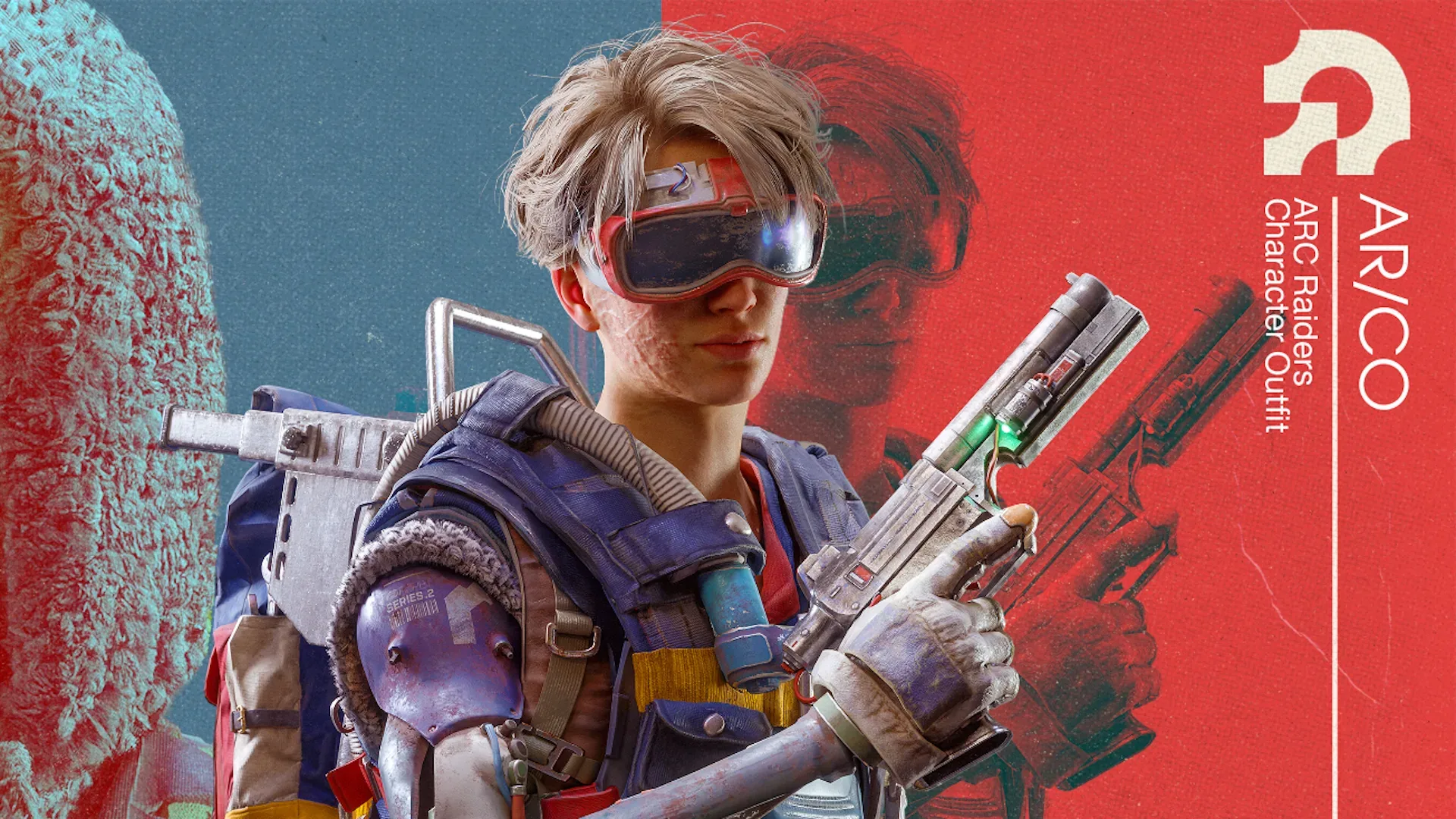
The wider industry has repeatedly shown how difficult it is to sustain ever-growing budgets. The pressure is not limited to immersive sims, and it affects everything from greenlighting decisions to creative risk. Even projects with major audiences can see their plans revised when costs and long-term support become difficult to balance; recent changes to Arc Raiders’ Expeditions plans are a reminder that scope, systems and ongoing development are always subject to hard production realities.
A defense of the right kind of ambition
Smith Evergreen’s perspective is ultimately a defense of ambition, just not the kind measured exclusively in asset density. Designing a world that meaningfully reacts to a player is ambitious. Making stealth readable through sound, light and level geometry is ambitious. Creating missions that welcome multiple play styles without collapsing into chaos is ambitious. Those achievements require talent and time, but they do not inherently require a $250 million budget.
For developers hoping to make the next great immersive sim, the message is encouragingly direct. Do not treat reduced scale as a creative defeat. Build around strong ideas, assemble a skilled team, use available tools wisely and invest in the parts players will actually inhabit through their decisions. If the result makes someone pause in a dark hallway, listen for footsteps and decide that their absurd plan might just work, it may already have the most important kind of fidelity.