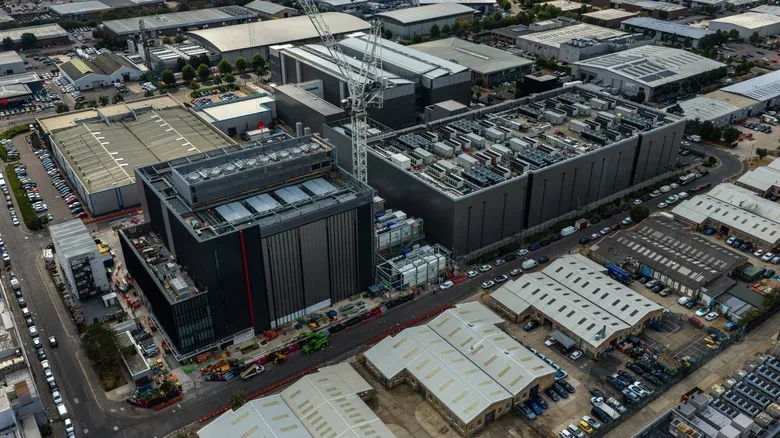
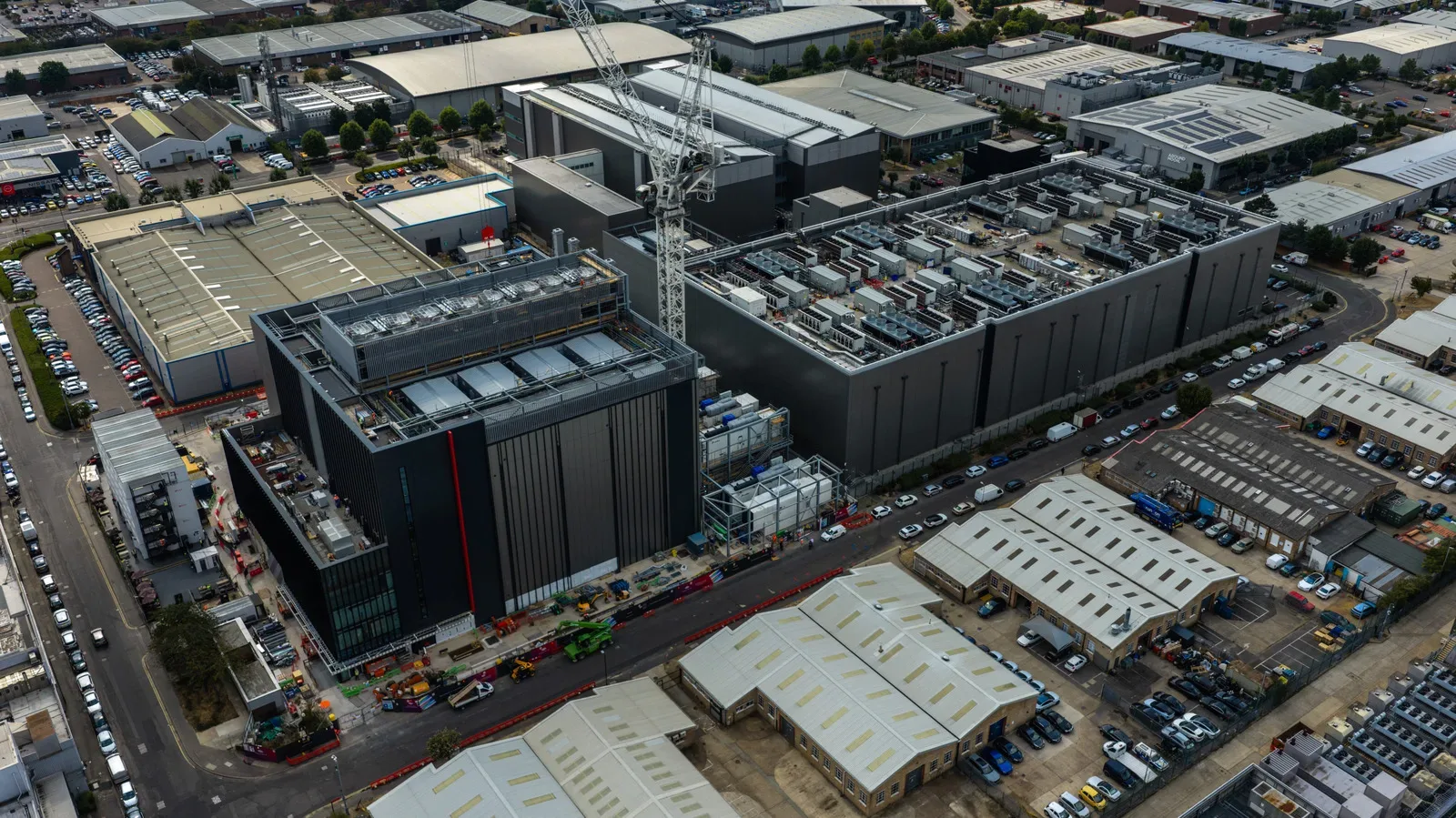
The UK is not signaling a retreat from AI data-center construction. Instead, the government’s growth minister, Dan Tomlinson, has characterized these projects as essential infrastructure and argued that broader AI adoption across the economy will require more computing capacity.
That is an important framing choice. Calling something essential infrastructure places it in the same broad policy conversation as the systems an economy depends on to function and expand. It does not erase the practical disruption a large construction project can cause in a particular area, but it does indicate that the government sees sufficient computing capacity as a national economic priority rather than a niche technology-sector concern.
The target is substantial: the UK Compute Roadmap sets out a need for at least 6GW of data-center computing capacity by 2030. “GW,” short for gigawatt, is a unit used to express power at a very large scale. In this context, the figure communicates the size of the electricity-and-compute challenge facing an AI-focused buildout. It is not merely about putting up more buildings; the data centers must be supported by the power capacity required to run the hardware inside them.
Why AI puts data centers at the center of policy
A data center is a site designed to house and operate computing equipment. For AI, that equipment supplies the processing capacity behind systems that create, analyze or respond to information. As AI becomes more widely used, the demand for that underlying compute can rise alongside it.
The political question is therefore no longer simply whether AI products are useful. It is also whether the country has enough physical infrastructure to support their use at scale. The Compute Roadmap’s 6GW objective makes that connection explicit: AI ambitions have a material foundation in servers, sites, power and planning approvals.
For readers who encounter “compute” mainly as a specification on a phone, console, or PC, the policy use of the term is worth separating out. Computing capacity broadly means the ability of systems to perform computational work. At the national level, it points to the resources available to run workloads, rather than the storage space of a particular device or the performance of one game. The distinction matters because AI’s growth is often discussed in software terms while its capacity requirements are physical.
That material side of the technology also helps explain why data centers have become a contentious issue. A new AI service can seem intangible to the person using it. The infrastructure supporting it is not: projects need locations, construction and power. The UK has seen residents protest at planned data-center sites, demonstrating that a national capacity goal does not settle local questions about where individual facilities should be built.
A faster approval path, but not a blank cheque
The UK had already moved to make approvals easier through the AI Growth Zones initiative, introduced in 2025 under former prime minister Keir Starmer. The initiative is relevant because planning and approvals can determine how quickly an infrastructure strategy becomes actual capacity. A national target without a workable path to develop projects would remain largely aspirational.
But the current position is not presented as an unrestricted push to build everywhere. Tomlinson said projects will need to invest in local communities and create jobs to receive government support. That condition places a tangible expectation on developers: public support should be connected to local benefits, not only to the nationwide case for AI expansion.
There is an important difference between government support and a guarantee that every proposal will proceed. The information available establishes that community investment and job creation are conditions for support; it does not lay out the detailed criteria, identify particular projects, or specify how each site will be assessed. That uncertainty is significant. The real-world force of the policy will depend on how those requirements are defined and applied when projects move from broad plans to individual locations.
Still, the direction is clear. The government wants more capacity, yet it also wants data-center construction to demonstrate a benefit beyond the machines housed within each facility. That is an effort to connect a macroeconomic strategy—building the computing base for AI—to the concerns of communities asked to host the infrastructure.
What “better oversight” could mean in practice
Tomlinson contrasted the UK approach with what he described as a freer-for-all style of development in parts of the United States and said the UK would pursue a more nuanced approach with better oversight. The statement is a policy intention, not a full rulebook. No additional oversight mechanism is specified here, so it would be premature to treat it as a complete answer to the conflicts surrounding major data-center development.
Even so, the language identifies the balancing act. A country can seek rapid construction because it wants the economic opportunities associated with AI, while also recognizing that speed alone is not a sufficient measure of success. Oversight suggests that the route to 6GW is expected to involve scrutiny and conditions, rather than treating the capacity number as the only outcome that matters.
For local residents, that distinction may be central. Opposition at planned sites shows that the debate is not abstract. Communities may judge a proposal through its effects in their own area, whereas national policymakers are weighing aggregate compute capacity and the role of AI in the economy. Requiring local investment and jobs is an attempt to bridge those perspectives, although it does not guarantee agreement.
For companies developing AI tools, meanwhile, the policy signal is broadly supportive: the UK intends to keep building the facilities that make large-scale AI use possible. But support comes with a stated expectation that projects deliver community value. The message is not simply “build data centers”; it is “build them as infrastructure projects that can justify public backing.”
The 2030 target creates a near-term test
The 2030 deadline gives this debate urgency. Reaching at least 6GW of capacity requires progress within a defined period, while public objections and demands for oversight introduce issues that cannot be resolved by a headline target alone. The harder work is aligning those aims: speeding the infrastructure needed for AI without treating local participation and economic benefits as afterthoughts.
This also puts AI policy in a more concrete light. Consumers often meet AI through apps, search tools, devices and online services. It can be easy to focus on the interface while overlooking the data-center capacity that enables the underlying computation. As AI becomes more embedded in the economy, policy makers are increasingly forced to address that gap between a seemingly weightless digital experience and its substantial infrastructure requirements.
The same reality should temper simplistic conversations about AI expansion. More capacity may support wider adoption, but capacity is not the entire policy challenge. It must coexist with decisions about planning, local consent, employment and the standards attached to government backing. Similar questions about the practical trade-offs beneath AI hype also shape consumer technology, as explored in the debate around whether AI glasses offer enough purpose to outweigh concerns about privacy and comfort.
The UK’s approach now appears to be defined by two commitments that will need to work together: data centers are necessary to meet rising AI demand, and their development must be subject to more than a race for construction speed. The 6GW aim supplies the measurable destination. Job creation, community investment and better oversight are the principles the government says should shape the journey there.