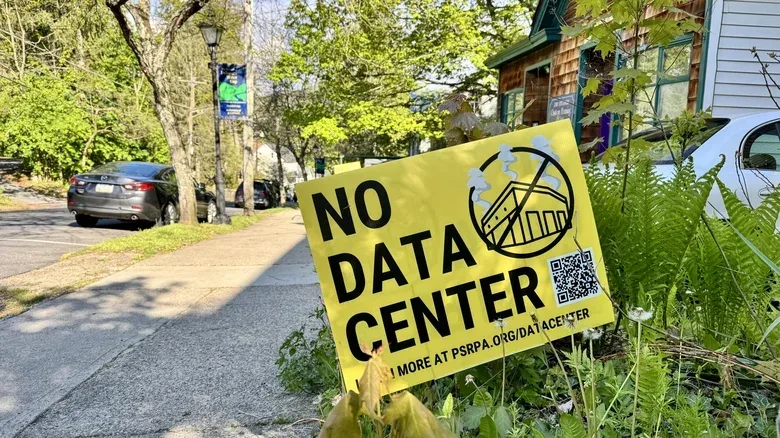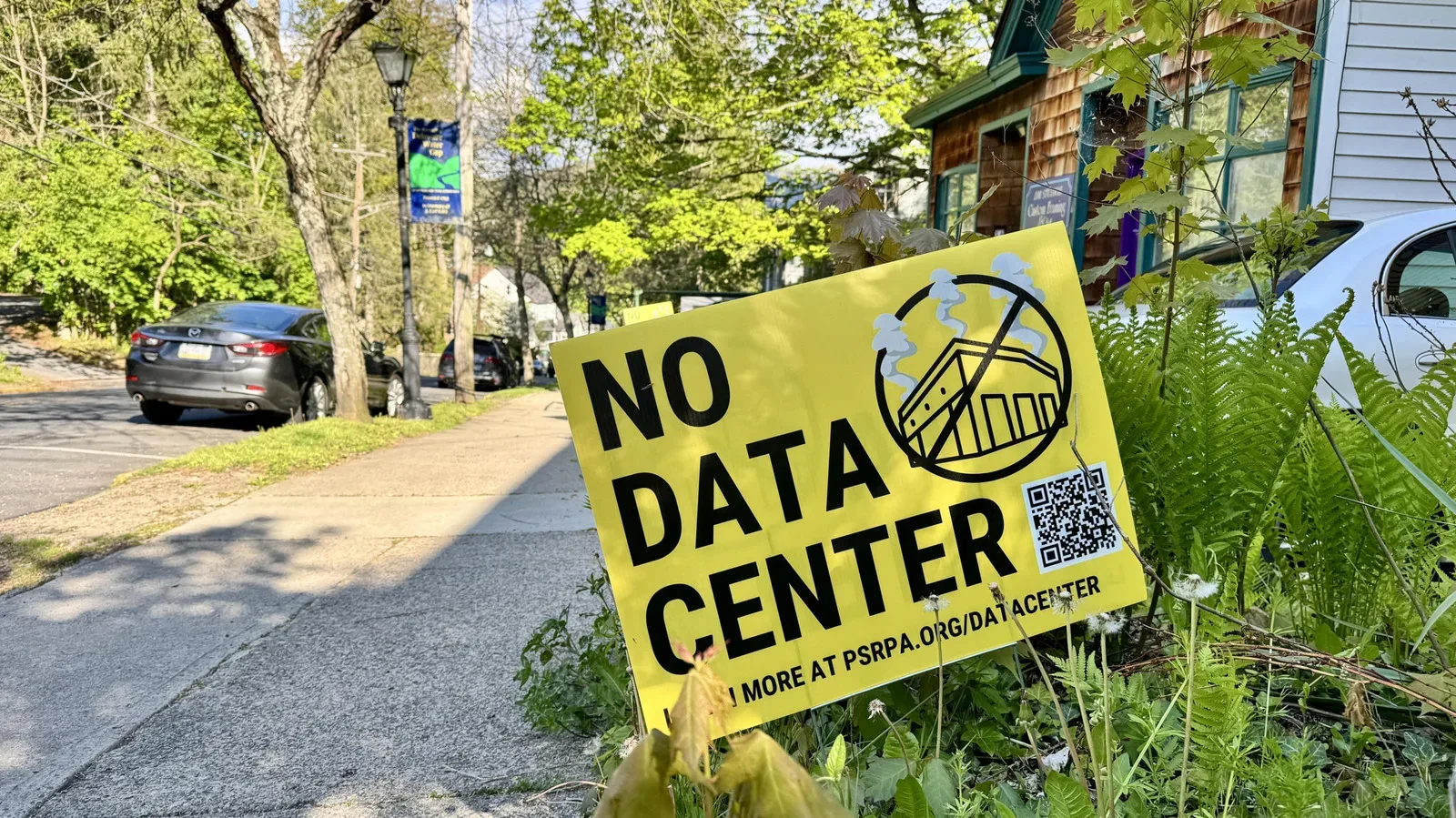
Data centers became an unusually visible local-election issue this week, and the available results point overwhelmingly in one direction: voters favored putting new limits on the facilities.
Across 45 ballot measures in 10 states, 33 proposals restricting data centers had passed as of early Wednesday. Six more were projected to pass. The measures were not all identical, but their shared message was clear: communities want a bigger say over projects tied to the expanding AI and data-center buildout.
The strongest concentration of opposition came in Ohio, where data-center questions appeared on 20 ballots. Restrictions had either won or were projected to win in every one of those contests. Two cities, Urbana and Hubbard, considered outright bans. Both passed by wide margins, with 76% and 77% of voters respectively backing a prohibition on data centers in their communities.
For a technology story, this is a very local result. It is also a reminder that infrastructure is not merely an abstract backdrop for AI, cloud services, games, streaming, and the wider internet. Buildings, electrical demand, planning rules, public meetings and municipal votes are all part of the machinery behind the online services people use every day.
A broad vote for more control, not one single policy
The ballot measures did not offer one universal anti-data-center rule. Instead, localities considered several kinds of restriction:
- Outright bans: rules that would prevent data centers from being built in the jurisdiction.
- Temporary moratoriums: pauses on new projects, giving a local government time to decide what permanent standards, if any, should apply.
- Energy-use limits: restrictions aimed at the scale of power a facility may use.
- Public-approval requirements: procedures requiring elected officials or voters to approve a project before it proceeds.
- Mandatory public hearings: requirements that create a formal opportunity for residents to weigh in before approval of large industrial developments.
Those distinctions matter. A ban is a categorical answer: a community does not want this kind of development within its borders. A moratorium is different. It does not necessarily reject data centers permanently; it delays approvals while rules are considered. A public-hearing or public-approval requirement is different again, focusing on who gets to decide and what scrutiny a project must receive.
Grouping every passed measure under a single label would flatten what voters actually chose. Still, the collective pattern is hard to miss. Whether the question was a ban, a cap, a pause or a new approval process, most of the counted and projected outcomes favored more constraint rather than less.
Ohio became the defining battleground
Ohio is already home to 257 data centers, making the state’s result especially significant within this set of local elections. The 20 ballot questions there represented almost half of the 45 measures tracked across the country. Every Ohio restriction on the ballot had either prevailed or was projected to prevail.
Urbana and Hubbard supplied the clearest numbers. Their votes were not narrow procedural calls. In Urbana, 76% of voters supported a ban; in Hubbard, the corresponding figure was 77%. Those margins indicate decisive support for keeping data centers out of those cities, though the results by themselves do not establish a single reason every voter made that choice.
That distinction is important when interpreting election outcomes. A ballot result shows what policy option won. It does not automatically reveal every concern, priority or trade-off considered by each voter. The scope of restrictions varied from place to place, and so did the local circumstances. What can be said with confidence is that Ohio voters were presented with data-center limits repeatedly and, in these contests, sided with them repeatedly.
The issue also reached statewide politics. Democrat Sherrod Brown made opposition to data centers central to his US Senate campaign, targeting Senator Jon Husted over the growth of the industry in Ohio. Brown won the contest after it was called on election night. Separately, an exit poll found that 56% of voters said AI and data centers were either a crucial or major factor in their congressional vote.
That exit-poll figure should be read precisely. It says AI and data centers mattered to a substantial share of respondents; it does not isolate whether those voters supported, opposed or held mixed views about individual facilities. Nor does it prove that the issue alone determined any specific race. But alongside the local returns, it does show that the data-center boom had become an electoral factor rather than a niche planning debate.
What a 100-megawatt threshold means in this debate
One of the defeated proposals came from Harwood, North Dakota. Voters there rejected an amendment that would have required public hearings before local approval of large industrial projects such as 100-megawatt data centers. Harwood was the only municipality reported to have voted against this type of restriction among the results available at the time.
A megawatt is a measure of power. In the context of these local debates, citing a 100-megawatt project establishes that the proposals were concerned with large-scale industrial infrastructure, not a modest office installation with some servers in a closet. The number acts as a threshold: a way for a municipality to specify the size of project that triggers added review or requirements.
The Harwood result also demonstrates that this was not a uniform national referendum with an inevitable outcome in every community. Its voters rejected a hearing requirement, while voters elsewhere adopted a range of restrictions. Five localities had not yet posted voting data, so the complete tally was still pending.
Even so, the early count was lopsided. With 33 passed measures and another six projected to pass, restrictions were favored in 39 of the 45 tracked questions if those projections held. Only Harwood had voted down a measure in the results described, while the remaining five contests awaited data.
Why the result matters beyond a zoning headline
“Data center” can sound remote, especially when the public discussion is framed around AI models or online tools. But these votes put the physical part of computing directly before residents. The central political question was not whether digital services exist. It was whether, where and under what rules major facilities may be approved locally.
For people who follow games and technology, that distinction is worth keeping in view. Modern digital culture often makes infrastructure feel invisible. A game download, an online match, a cloud save, a video clip or an AI-powered feature appears on a screen without making the buildings and systems behind it obvious. The ballot measures bring the other side of that relationship into public view: the permits, energy questions, development scale and municipal oversight attached to facilities built in real places.
This does not mean the election results establish an immediate outcome for any one game platform, service or company. No such direct effect is identified by the ballot results. It does mean that expansion plans for large data centers may face more local checkpoints, more limits, or an outright no in communities that adopt these measures.
That is the practical difference between the policy tools on the ballot. A hearing mandate can add a required stage before approval. Public approval provisions can place decision-making more directly in the hands of elected officials or voters. An energy limit can constrain the form a project takes. A moratorium can stop new approvals for a period. A ban can close the door altogether within a city’s boundaries.
Each approach changes the path from proposal to construction in a different way. The vote did not produce a single nationwide rule, because local ballots do not work that way. Instead, it produced a patchwork of local decisions, with Ohio standing out as the place where voter resistance was most comprehensive.
An infrastructure issue enters the political mainstream
The wider political significance lies in the issue’s visibility. Data centers were the subject of 45 local ballot measures across 10 states, while AI and data centers registered as a crucial or major congressional-vote factor for 56% of respondents in the cited exit poll. Whatever comes next for individual proposals, that is evidence that the subject has moved into ordinary electoral politics.
There is a useful parallel here with another technology debate: questions about the physical and digital foundations of games tend to become much more concrete once a supply chain, product format or long-term access is at stake. The uncertainty around physical Nintendo Switch games and ROM supply is a separate issue, but it similarly shows how the infrastructure beneath entertainment technology can become impossible to ignore.
For now, the central takeaway from the ballots is narrower and more solid than any sweeping prediction. Voters in a large majority of the reported local contests chose restrictions on data centers. Ohio was the clearest example, pairing 20 successful or projected-successful ballot restrictions with decisive city-level votes for bans in Urbana and Hubbard. The final picture could still change as the five outstanding localities report results, but the direction of the early returns is already unmistakable.