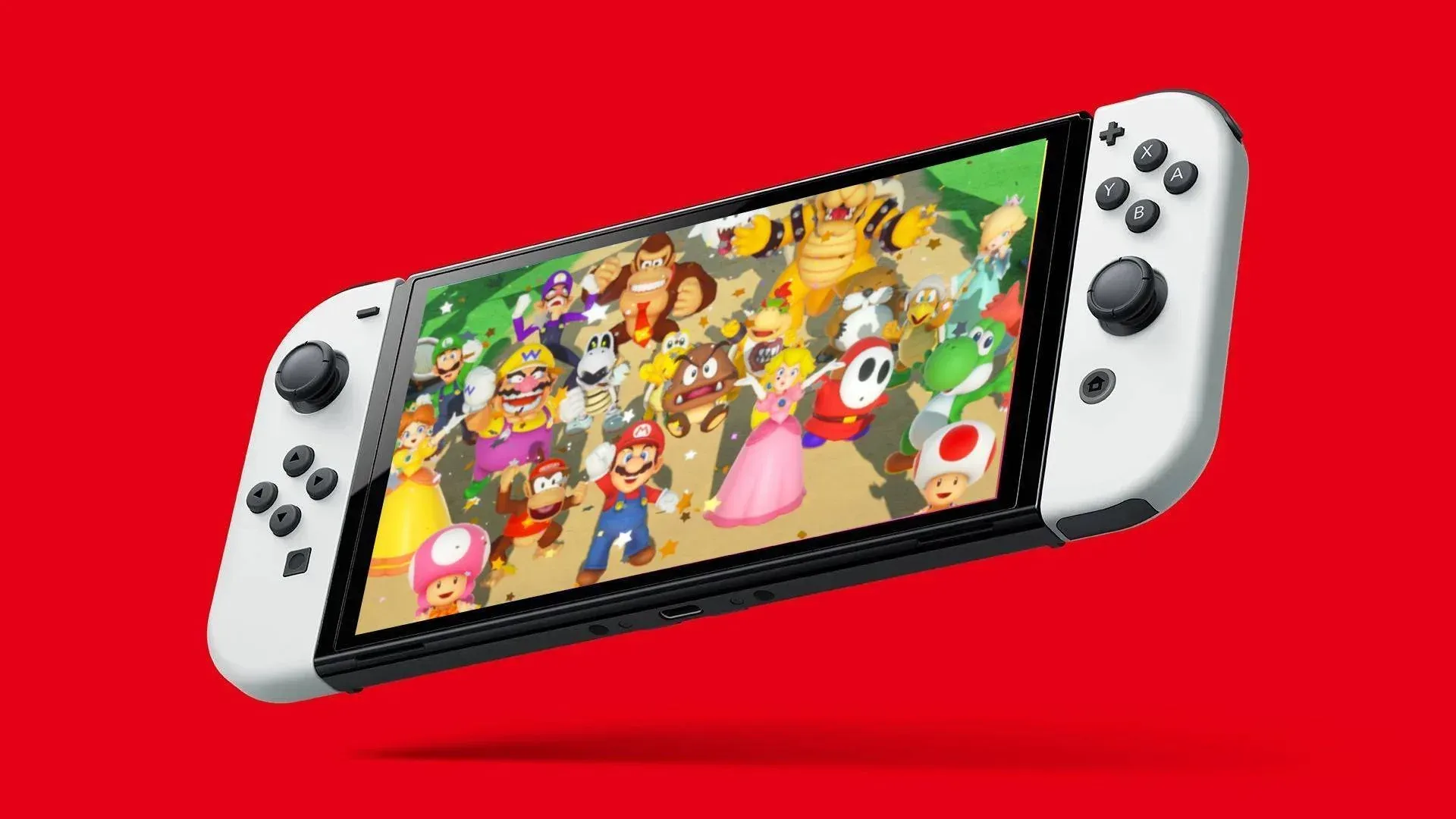
A semiconductor decision in Taiwan has put an unwelcome spotlight on the supply chain behind Nintendo Switch cartridges. Macronix, identified as Nintendo’s main ROM supplier for Switch game cards, is gradually phasing out ROM production while moving capacity toward data-center-oriented NOR flash and NAND memory.
That does not mean Nintendo Switch cartridges are suddenly disappearing, nor does it establish that current or future Switch releases cannot be manufactured. Macronix is not the only producer of Switch ROM chips. Nintendo Switch 2 cartridges also appear to sit outside the immediate issue, with those cards using NAND flash memory supplied by ROHM Semiconductor.
Still, the development is meaningful. A major supplier walking away from the kind of memory used in the original Switch cartridge ecosystem is a reminder that physical games depend on more than a publisher deciding it wants a disc, card, box, or shelf presence. They depend on a specialized industrial chain continuing to view that format as worth serving.
What Macronix said about its changing business
Macronix chairman and CEO Miin Wu discussed the shift in the company’s third-quarter 2026 results, shared October 27. The company reported record-high net profit of about $337 million for the period. Wu attributed the result primarily to customer demand for NOR memory used in data centers.
At the same time, ROM sales had fallen 39% over the prior year. The relative importance of that business had fallen even more starkly: ROM represented 5% of Macronix sales in Q3 2026, compared with 26% in Q2 2025. Wu said the company had already begun gradually winding down ROM production, while focusing on more NOR flash solutions for data centers and assigning capacity to NAND, which Macronix regards as a long-term growth area.
Those numbers explain the business logic without making the consequence any less awkward for physical-media fans. Manufacturers allocate equipment and production capacity toward the products that bring demand and growth. If a legacy segment contracts to a small fraction of revenue while data-center memory demand strengthens, maintaining ROM output becomes a much harder case to make.
The technical distinction: ROM, NOR and NAND
The terminology can sound interchangeable because all three terms concern non-volatile memory: memory that retains stored information when power is removed. In this situation, though, the labels matter because Macronix is describing a transition between different parts of its business.
- ROM, or read-only memory, is the category tied here to Nintendo Switch game cartridges. In practical terms for players, it is the storage medium carrying the game data on a physical card.
- NOR flash is the memory category Macronix says is being pulled by data-center demand. The company has identified it as a priority as it reduces ROM production.
- NAND flash is another non-volatile memory category that Macronix calls a high-growth segment. It is also the type of flash said to be used by Nintendo Switch 2 cartridges, supplied by ROHM Semiconductor.
The most important takeaway is not that one acronym is universally “better” than another. It is that Nintendo’s two cartridge generations are described as relying on different memory supply arrangements, and Macronix’s decision concerns ROM rather than every kind of flash-memory manufacturing.
Why this is not an immediate cartridge crisis
The cautious reading matters. Macronix may be Nintendo’s main ROM supplier for Switch cartridges, but it is not the sole manufacturer. That leaves Nintendo with alternatives and means a production decision by one company should not be treated as a confirmed end date for original Switch physical releases.
There is also no stated Nintendo response here, no announced discontinuation of original Switch game cards, and no established change to cartridge availability. Treating the news as proof that every remaining Switch physical release will become scarce would go beyond what the available information supports.
Likewise, the Switch 2 should not be folded into the same warning by default. The available information says its cartridges use NAND flash provided by ROHM Semiconductor, rather than the ROM supply relationship at the center of Macronix’s pivot. “Seemingly unaffected” is the sensible description: the supplied facts point away from an immediate Switch 2 impact, but do not amount to a broad forecast of all future hardware and manufacturing conditions.
For an example of the continuing flow of Nintendo-related release news, Gunboat God’s planned Nintendo Switch and mobile launch shows why it is important to separate one supplier’s strategy from an assumption that software support has vanished.
Why the shift still matters to collectors
Physical-game collecting is not only about whether a title exists in a box. It is also about whether a publisher can source the card that goes in that box at a scale and cost it accepts. Supply options, manufacturing capacity, and component specialization can all affect the long tail of a platform’s physical library.
Macronix’s move therefore matters even without an immediate shortage. Its ROM business is being de-emphasized precisely as physical Switch games increasingly occupy a smaller place in a market where digital purchases are already dominant. Digital Switch sales represented 61.5% of Nintendo software sales from April through June 2026, up 2.2 percentage points from Nintendo’s year-on-year figure at the end of 2025.
That figure does not say physical copies have no audience. A 61.5% digital share also means a substantial portion of software sales remained outside digital sales. Nor can it tell us which games players buy physically, why they do so, or whether demand differs by region. But it does show the direction of the overall balance, and it helps explain why a component maker might find data-center memory more compelling than a shrinking ROM line.
For collectors, the practical implication is less “panic-buy every cartridge” and more “recognize that physical formats have dependencies.” The condition, completeness, and preservation of a purchased card remain relevant to an individual collection, but so does the broader fact that new physical supply relies on manufacturers whose priorities can change.
What collectors can reasonably watch
- Nintendo’s manufacturing choices: Any official comment on original Switch cartridge production, suppliers, or release-format policy would be more informative than speculation based solely on one supplier’s transition.
- Publisher format decisions: Whether new original Switch releases continue arriving on cartridges is a concrete signal of how the physical market is functioning.
- Availability rather than rumor: Retail stock, print runs, and confirmed regional releases matter more than assuming a supplier pivot automatically makes every card rare.
- The split between original Switch and Switch 2: Their cartridge memory arrangements are described differently, so they should not be analyzed as a single supply-chain story.
Data centers are the real pull in this story
The headline concern is physical media, but Macronix’s stated motivation is data-center demand. Its record profit was linked primarily to NOR used in data centers, while NAND is being positioned as a growth driver. That is the commercial force reshaping the company’s production plan.
In other words, this is not presented as a company singling out game cartridges for removal. It is a capacity-allocation decision in which ROM has become a far smaller slice of sales while other memory products offer a clearer expansion path. That distinction matters because it frames the event as a wider semiconductor-market shift, with gaming affected as one customer category among many.
For Nintendo and publishers, supplier diversity is the immediate buffer. For physical-media supporters, the longer-term lesson is that a format can remain popular with a dedicated audience while becoming strategically minor to the companies that make its specialized components.
An early warning, not an obituary
Macronix’s gradual ROM phaseout is an early warning about the infrastructure supporting original Nintendo Switch cartridges, not confirmation of their sudden demise. The company’s ROM sales have declined sharply, ROM now accounts for a relatively small portion of its revenue, and its investment focus is moving to NOR for data centers and NAND. Those are real changes with real relevance to physical games.
But the safeguards in the available facts are just as important: Macronix is not Nintendo’s only Switch ROM-chip manufacturer, and Switch 2 cartridges are described as using a different NAND-based supply arrangement through ROHM Semiconductor. There is no basis here for declaring a cartridge shutdown or a Switch 2 physical-media emergency.
The clearer signal is broader: as digital sales take a larger share and semiconductor companies chase faster-growing memory markets, the physical-game business may have to work harder to preserve its specialized manufacturing base. For now, the original Switch cartridge is still a current format. Macronix’s pivot simply makes the question of who will keep supplying it more difficult to ignore.