Uber is expanding features aimed at older riders and people with limited mobility, adding a self-managed Senior Account option, new settings for pickup and interface preferences, and a pilot vehicle designation intended to make getting into a car easier.
The update is notable because it separates two needs that are often bundled together: assistance and independence. Some riders may want a relative or other trusted person to help organize trips. Others may be fully comfortable managing rides themselves but benefit from a less cluttered app experience, clearer arrival communication, or a way to flag that they use a cane or walker. Uber’s changes create paths for both groups rather than treating support from another account holder as a requirement.
A Senior Account no longer has to be tied to another rider
Senior Accounts originally required a connection to a standard Uber account, positioning the feature for riders who wanted help from a family member with ride management. That connected arrangement remains an option.
The expansion adds a second choice: a Senior Account that can be established and managed independently. In practical terms, that means an older rider can use the account without a family member serving as the account-management link.
This is a small-looking account change with a meaningful practical distinction. A connected account can be useful when a rider wants assistance. A solo account is for someone who wants control over their own ride activity while still accessing settings designed around their needs. Neither setup is inherently better; the useful option depends on whether the rider is seeking support, autonomy, or a mix of the two.
It is also important not to read the self-managed option as a replacement for family assistance. Uber is retaining the connected model, so riders who prefer help can still use it. The new setup simply removes the assumption that every senior-focused account must be overseen by someone else.
New settings focus on the moments that can make a ride harder
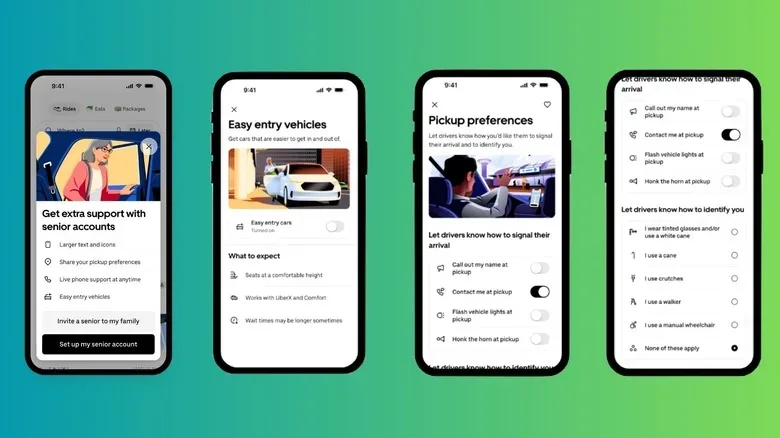
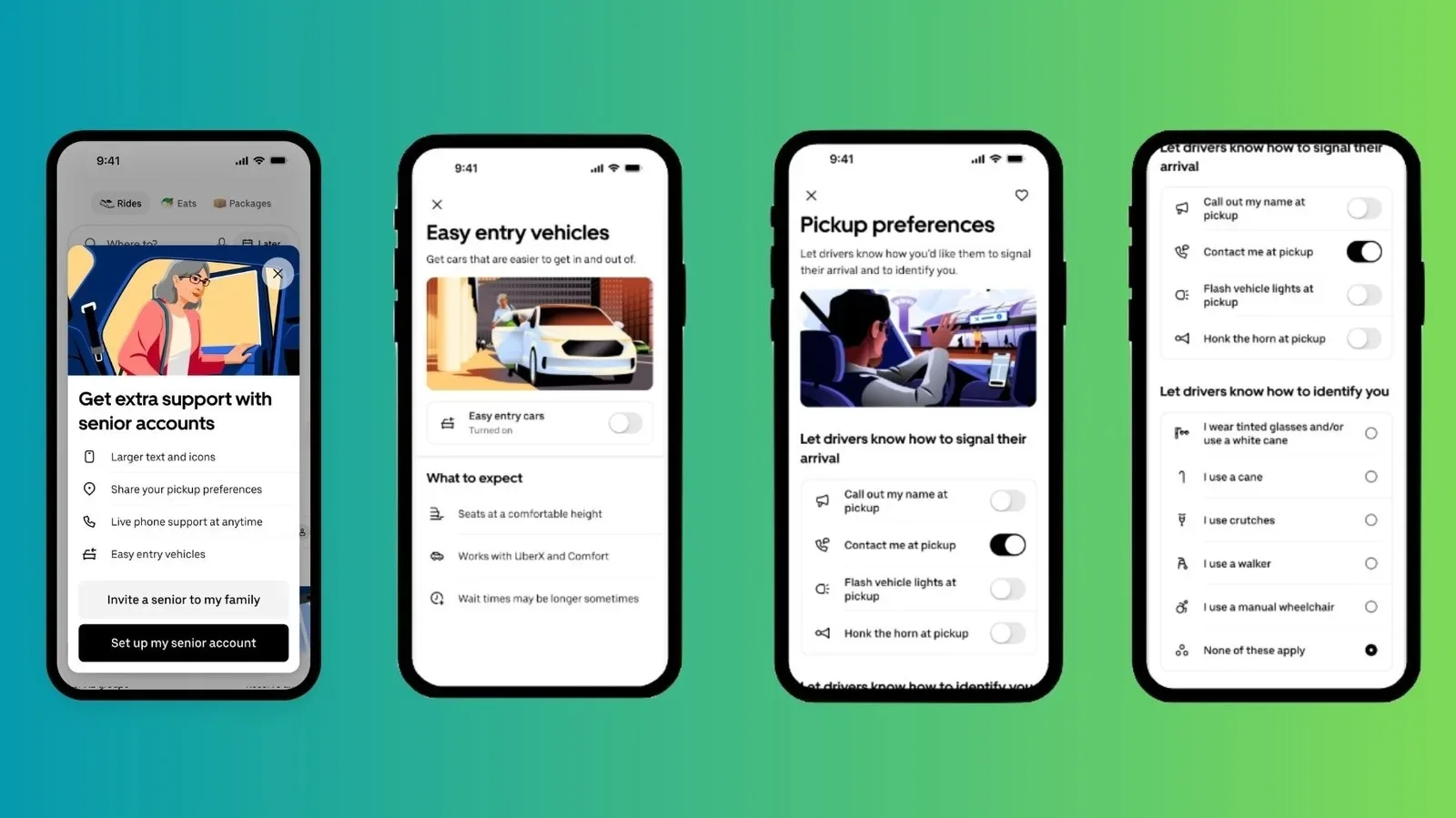
Both types of Senior Account now receive a dedicated settings page. The controls address three particularly practical parts of the trip: knowing when a driver has arrived, navigating the app, and making a driver aware of relevant mobility identifiers.
- Arrival signaling preferences: Riders can choose how a driver signals that they have arrived at the pickup point.
- Simple mode: An optional streamlined user interface is available for riders who prefer a less complex app layout.
- Notable identifiers: Riders can tell drivers about identifiers such as using a cane or walker.
“UI” means user interface: the screens, buttons, menus, and other on-screen elements people use to operate an app. A streamlined UI does not necessarily mean a different transportation service or a special vehicle. It means the app can present its controls in a simpler form. For a rider who finds dense menus or a long chain of choices frustrating, reducing interface complexity can be as relevant as adding a new ride category.
The arrival setting is similarly grounded in a routine but important handoff. A trip does not begin when the vehicle is dispatched; it begins when the rider and driver can locate one another and communicate successfully at pickup. Giving riders a preference for how a driver signals arrival may help make that moment more predictable.
The identifier option is not a promise of a particular vehicle feature, extra assistance, or a guaranteed accommodation. What Uber has said is narrower: the rider can inform the driver of notable identifiers, including the use of a cane or walker. That information may help the driver understand why a passenger may need additional time at the curb or why entry and exit may be especially important considerations.
Easy Entry Vehicle is a pilot, not a blanket fleet change
Alongside the Senior Account expansion, Uber is testing an Easy Entry Vehicle designation. The purpose is to identify a vehicle that does not require a high step to enter. The pilot is intended to serve both seniors and riders with limited mobility.
The distinction between a designation and a new vehicle fleet matters. Uber has described Easy Entry Vehicle as an option riders can request during a pilot; it has not said that every vehicle on the platform will meet the lower-step criterion, nor has it provided a detailed list of eligible models. Riders should therefore view it as a request category being tested, not as a universal guarantee across all trips.
Any Uber user can request an Easy Entry Vehicle through the app’s Accessibility settings page. The ability for all users to access the request is significant because mobility needs are not limited to one age group or one account type. A person may have a temporary injury, use a mobility aid, or simply find a tall step difficult without identifying with a senior-specific account.
The pilot is running in nine markets. Uber has not identified those markets, so availability cannot be assumed based on city, country, or the presence of Senior Accounts in a rider’s app. The company also has not detailed the duration of the pilot or stated what will happen after it concludes.
What “easy entry” means—and what remains unknown
In this announcement, easy entry has a specific, limited definition: a vehicle that does not require a high step to get in. This is an entry-height consideration. It should not be confused with a broad claim that the ride is suitable for every access need.
For example, the available details do not establish vehicle capacity for particular mobility equipment, loading procedures, driver training, wait times, or whether a request will always be fulfilled. They also do not establish how the designation relates to other accessibility needs. Those are meaningful questions, but they remain unanswered in the information currently available.
That uncertainty is not a reason to dismiss the pilot. Lower entry height can be a concrete barrier, especially for riders who have difficulty lifting a leg over a high threshold or stabilizing themselves while stepping into a vehicle. But it is equally important that riders and caregivers understand the feature’s stated scope. The designation concerns the step into the vehicle; it is not described as a complete accessibility classification.
How riders can approach the new options
For riders considering the update, the decision tree is relatively straightforward.
- Choose the account arrangement that fits the rider’s preference. A connected Senior Account may make sense when family support with trip management is wanted. A self-managed account is the new option for riders who want to manage their own setup.
- Review the Senior Account settings page. Arrival signaling, simple mode, and notable identifiers are separate preferences, so riders can use one without necessarily changing everything else.
- Use identifiers carefully and purposefully. Mentioning a cane or walker can communicate relevant context to a driver, but riders should not infer service details that Uber has not stated.
- Look in Accessibility settings for Easy Entry Vehicle. The request is open to any user, though it is only part of a nine-market pilot with locations not yet named.
The broader lesson is that accessibility is often made up of multiple smaller points of friction: account ownership, screen complexity, pickup communication, personal mobility context, and the physical step into a car. Uber’s update addresses pieces of that chain rather than presenting one setting as a universal answer.
A mobility update built around choice
The strongest through-line in the changes is optionality. Senior riders can continue using a family-connected account or set one up solo. They can adjust the app’s interface and arrival communication. They can share mobility-related identifiers with drivers. And, where the pilot is available, any rider can request a car selected for a lower step into the vehicle.
For a technology company operating through a mobile app, interface design is part of the service itself. That is also why choices around streamlined controls can matter as much as the hardware-oriented advances often covered in mobile technology, such as new flagship mobile processors. A more capable phone does not automatically make an app easier to use; the flow of information and controls still has to meet the rider where they are.
Uber has not provided every operational detail around the new options, especially for Easy Entry Vehicle. Still, the announced features offer a clearer separation between independence, support, communication and vehicle entry needs. For older adults and riders with limited mobility, that distinction could make ride setup and pickup feel less like a one-size-fits-all system.