A project called Tweetcraft is turning an X link into an entry point for a shared, browser-rendered block-building world. Created by an X user known as jaivin, the project lets a person generate a world, post its unique link, and have everyone who opens that link join the same real-time multiplayer session.
That simple distribution model is the notable part. Rather than asking players to install a game client or navigate a conventional server browser, Tweetcraft uses a social post as the invitation. The post is not itself the game; it is the route into a web game that runs in the player’s browser. In effect, the link becomes a lightweight multiplayer lobby that can be shared, reposted and opened with minimal friction.
Tweetcraft also has a commercial layer from the start. Its promotional material says users can buy in-game sponsorship placements with cryptocurrency, including placement at the top of a server list, on a world sponsor leaderboard, or as a logo on the “Block Dragon.” That is a striking combination: a viral, recognizable game format, social-network distribution, public multiplayer worlds and paid promotional inventory.
The project has already attracted significant attention. Jaivin’s launch post had reached 7.4 million views at the time described, with subsequent posts indicating a rush of people trying the game. The reaction has not been uniformly enthusiastic, however. Alongside interest in the technical stunt, the project has prompted skepticism over its close resemblance to Minecraft and questions about how long it can remain available.
What Tweetcraft appears to be
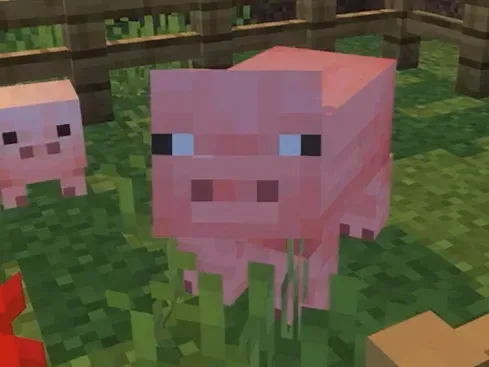
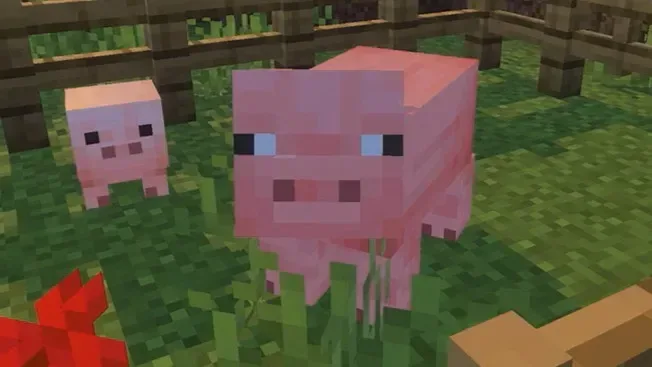
Tweetcraft is presented as a custom browser-based game with Minecraft-like block-world conventions. Jaivin has said it uses none of Minecraft’s assets and is not affiliated with Mojang or Microsoft. That statement matters, but it does not by itself settle broader questions about branding, visual identity, game design imitation or other possible intellectual-property issues.
It is therefore more accurate to describe Tweetcraft as a Minecraft-style clone than as Minecraft running natively inside X. The available description says the game renders in a web browser, while X supplies the shareable destination: each world gets a link, and people who follow it enter the same session.
Real-time multiplayer means participants are connected to a live shared session rather than each receiving a separate copy of a static world. That feature is a major reason the concept travels well on social media. A popular post can quickly become a public gathering point, with the social feed functioning as discovery and the browser link functioning as the doorway.
There are still important unknowns. The supplied information does not establish how long worlds persist, how player capacity is managed, what moderation tools exist, which cryptocurrencies are accepted, how sponsorship transactions work, or whether paid placements are available in every world. It also does not establish whether X has any direct involvement beyond hosting posts that contain links to the game.
Related coverage includes Tweetcraft Puts a Minecraft-Style Multiplayer Block Game Inside X Posts.
Why the X-link model is important
Browser games are not new, nor is sharing a multiplayer server invitation. Tweetcraft’s pitch combines those familiar ideas in a way that strips away a number of steps. A prospective player does not first need to find a website, choose a server, install a launcher or create a dedicated community space. A post can expose the world to an existing audience immediately.
That convenience has practical consequences. It could make community experimentation exceptionally easy: a creator can publish a world link, followers can arrive quickly, and a shared activity can develop around a post. It can also make moderation and administration harder. When an audience floods toward a link through a high-visibility post, the technical and social demands of maintaining a multiplayer environment grow just as rapidly.
The sponsorship system adds another pressure point. In conventional online games, advertising placements are usually governed by the publisher or operator, and players broadly understand who is selling the space. Tweetcraft’s offer appears to turn individual worlds and server discovery into potential ad surfaces. The material lists a prominent server-list position, a sponsor leaderboard within a world, and dragon-logo placement as options.
That does not tell us how visible those placements are in use or what obligations attach to them. But it does show that the project is not only a technical proof of concept. It is being positioned as something that can monetize attention generated by the social platform and by the popularity of a familiar block-building formula.
The use of cryptocurrency is similarly notable without revealing much about the underlying process. Cryptocurrency generally refers to digital tokens used through blockchain-based systems. Here, the relevant fact is simply that the stated sponsorship purchases use crypto. The supplied information does not identify a token, a payment provider, a refund process, or any consumer protections, so readers should avoid assuming details that have not been disclosed.
The resemblance problem is larger than a name
Tweetcraft’s name is plainly distinct from Minecraft, and jaivin has emphasized that it is not associated with Mojang or Microsoft and does not use Minecraft assets. Yet the project is described as clearly Minecraft-like in shape and form. That creates a familiar but unsettled boundary between making a new work in a genre and building something so recognizable that it may invite action from the owner of the better-known property.
Trademark concerns commonly center on identifiers that tell people who made or endorses a product: names, logos and potentially other branding signals. Copyright concerns protected expression, such as particular art, audio or code, rather than the broad idea of a block-building game. Those are simplified descriptions, not a legal judgment on Tweetcraft. The available evidence is not enough to determine whether any claim would succeed, or even whether one will be brought.
What can be said is that labels and disclaimers do not automatically end the question. Calling a game Tweetcraft and stating that it has no association with Minecraft may communicate an intent to differentiate the project. Whether the game’s overall presentation or operation creates legal risk is a separate matter that would depend on facts not provided here and on applicable law.
The project arrives amid a wider burst of AI-associated game clones and cross-franchise experiments circulating online. Recent examples in the supplied material include browser-playable versions styled after GTA 5 and the original Halo, along with an in-browser Fallout: New York project. The GTA 5 clone and Fallout: New York were both taken down. Those events do not prove that Tweetcraft will meet the same outcome, but they illustrate how quickly high-profile, unauthorized or allegedly unauthorized projects can face removal.
AI changes the speed, not the need for scrutiny
Jaivin used AI to make Tweetcraft, placing the project in the fast-moving conversation around AI-assisted game creation. In this context, “AI” should not be treated as a magic legal category or as proof of quality. It describes a method involved in creating the project. The practical concern raised by this wave is speed: tools that reduce the time needed to assemble playable prototypes may enable more people to produce close-looking versions of famous games and distribute them before rights holders can respond.
That can produce a whack-a-mole dynamic. A new project appears, gains traction through social posts and gameplay clips, potentially receives a complaint or takedown, and another similar project follows. The issue is not limited to whether a particular clone remains online. It is also about the cost of identifying projects, assessing them, deciding whether to act, and repeating that process at a faster cadence.
For players, the immediate appeal is obvious: a shared world that begins with a link is extremely accessible. The less glamorous questions are just as important. Who operates the service? What data is collected through the browser? What happens when a public world attracts disruptive behavior? How are paid promotions labeled? What recourse exists if a purchased sponsorship disappears when a world, link or project is removed?
None of those questions are answered by the provided description, and their absence is relevant rather than incidental. A multiplayer game distributed through a social platform may feel casual because entry is quick, but it still involves a service operator, networking, community behavior and, in this case, a stated crypto-based commercial system.
For developers, Tweetcraft highlights the appeal of the browser as a delivery mechanism. Browser rendering removes the conventional download step, and social links can turn distribution into a single click. It also demonstrates why recognizable franchise imitation is a risky foundation for attention. A familiar format can make a project instantly understandable, but close association with a major existing game can concentrate both audience interest and potential rights-holder scrutiny.
The industry conversation around prompt-built and AI-assisted projects is moving in parallel. Experimental tools that turn game ideas into prompt-built projects point toward a future where more people can make interactive prototypes, while projects such as Tweetcraft show why provenance, originality, moderation and monetization cannot be afterthoughts.
What to watch next
The next meaningful developments are likely to be operational rather than speculative. Tweetcraft may continue to spread through shared worlds; its sponsorship offer may become more detailed; X links may remain an effective on-ramp for multiplayer play; or the project may encounter removal pressure. At present, there is no supplied evidence of legal action against Tweetcraft, so a takedown should not be presented as a certainty.
There is also a difference between viral visibility and durable service. A launch post receiving millions of views demonstrates curiosity, not necessarily long-term capacity, player retention, commercial viability or legal clearance. Those are separate tests, and a browser multiplayer project tied to a major social platform has to meet all of them while its audience may be arriving at once.
Tweetcraft is compelling because it compresses several internet-era impulses into one experiment: instant access, communal play, familiar game language, AI-assisted creation and rapid monetization. Its limitations and risks are equally compressed. The game’s future will depend not only on whether people keep clicking its links, but on whether its operator can sustain a shared service and navigate the consequences of making a highly recognizable game-like experience so easy to spread.