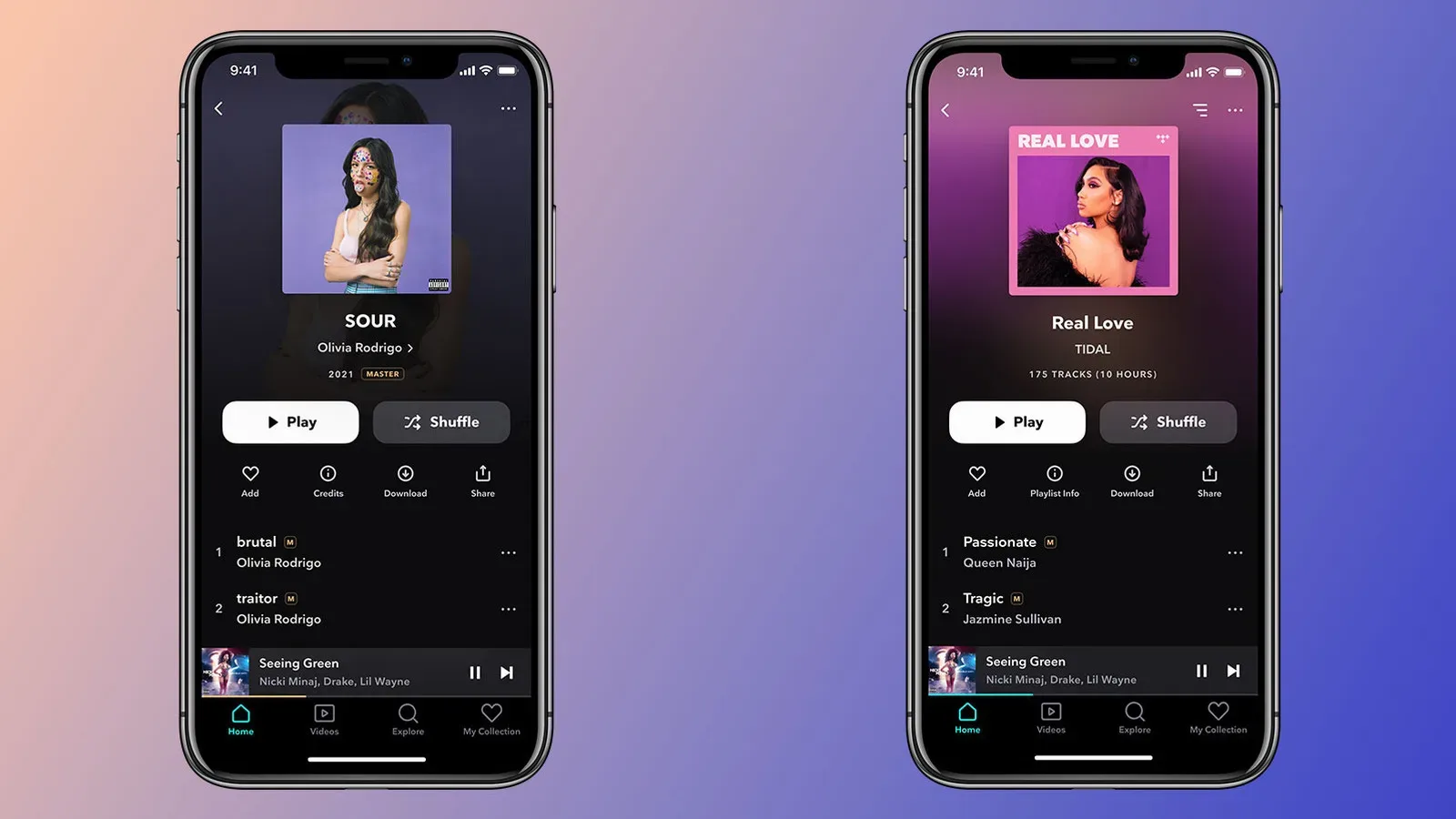
Tidal is drawing a bright policy line around fully AI-generated music. Starting December 9, the streaming service plans to block future uploads that are made entirely with AI and remove existing tracks that meet that standard. Tidal says the removal effort will be complete at the beginning of 2027.
The distinction matters: this is not a ban on every musician who uses an AI tool somewhere in a creative workflow. Tidal will continue to allow AI-assisted music. Its new rule is aimed at songs generated wholly by AI systems. In practical terms, the service is separating a tool used by an artist from a track whose creation it considers entirely automated.
It is a notably firmer approach than the platform’s earlier decision to demonetize AI music. Demonetization removes or limits a track’s ability to earn money through the service, while removal takes the track out of the catalogue altogether. For artists, distributors and listeners, that turns an economic decision into a visibility and access decision.
What Tidal says will change on December 9
Tidal lead Robert Andersen said that 43 percent of tracks uploaded to the service in the past 90 days were flagged as AI-generated. The company expects roughly 29 million songs to be deleted as it enforces the new policy, and it anticipates rejecting between 80,000 and 85,000 songs per day going forward.
Those figures describe the scale of the upload problem Tidal believes it is addressing. They do not mean AI music commands a comparable share of listener attention. Tidal says 96 percent of AI songs receive zero plays. That gap is central to the company’s rationale: an enormous amount of low- or no-listen content can still affect the catalogue, ingestion systems and the ability of listeners to find music they actually want.
For a streaming platform, an upload is not merely a file sitting quietly in storage. It becomes part of a searchable catalogue and may be supplied with artist information, titles and other metadata. When uploads rise sharply even though most tracks are not played, the platform has to decide whether to treat the volume as a neutral byproduct of open distribution or as something requiring an editorial and policy response.
Tidal has chosen the latter for music that it classifies as entirely AI-generated. Its decision does not establish an industry-wide definition of authorship, nor does the stated policy answer every borderline question about how much AI use makes a track “entirely” AI-made. But it does clearly establish the service’s intended destination: fully AI-generated songs will no longer be present.
AI-assisted and AI-generated are not interchangeable terms
The most important detail in Tidal’s policy is the boundary between assisted work and wholly generated work. AI-assisted can describe music where a human creator uses AI at some point in the process, while still making meaningful creative choices. Entirely AI-generated, as used in Tidal’s announced policy, refers to a song made completely with AI tools.
That distinction means musicians should not read the stated rule as a declaration that every AI-related production technique is prohibited. At the same time, the policy signals that “an AI tool was involved” is not enough information by itself to tell artists, labels or audiences how a track will be treated. The degree and nature of the system’s contribution matter.
This is also where implementation becomes significant. A platform can announce a rule in a sentence, but applying it depends on determining which tracks fall on either side of that boundary. Tidal has said uploads have been flagged as AI-generated, but the supplied details do not specify the detection process, review process, appeals route or the exact standards that will be used in difficult cases. Those unanswered operational questions are distinct from the announced policy itself.
That distinction is worth keeping in mind, particularly for people releasing music through distributors rather than uploading directly. The policy’s broad direction is clear: fully AI-generated tracks are to be rejected or removed. The supplied information does not provide a separate set of submission instructions for artists, labels or distributors.
Apple Music is taking a disclosure-first route
Apple Music has not announced a comparable ban. Instead, it introduced AI Transparency Tags earlier this year and relies on labels and distributors to disclose AI use. In August, Apple said tracks “materially generated using AI” must carry a “Made With AI” label.
A disclosure system and a removal system pursue different goals. Under a disclosure-first model, a track can remain available while listeners receive information about how it was made. Under Tidal’s announced model, a track that is entirely AI-generated is excluded, while AI-assisted work remains eligible to stay.
Neither approach should be reduced to a simple pro- or anti-technology label. Apple Music’s policy is focused on transparency for tracks that are materially generated with AI. Tidal’s policy is focused on whether a track was generated entirely with AI. Those are related but not identical tests, so a song’s treatment can depend on both the platform and the facts of its creation.
Apple Music’s own figures underline why catalogue share and listening share should not be confused. In April, Apple Music VP Oliver Schusser said more than one-third of monthly uploads were 100 percent AI-generated, yet AI music accounted for less than 0.5 percent of actual listening. In other words, AI-generated uploads can represent a large portion of incoming material without becoming a similarly large part of what audiences play.
Why the policies matter to listeners and working artists
For listeners, Tidal’s policy may chiefly be felt through catalogue curation. The service intends to remove a large volume of music that it says gets little or no engagement. A user should not infer from that alone that every AI-assisted track will vanish; Tidal specifically says AI-assisted music will remain allowed.
For artists, the immediate practical lesson is to understand which policy applies to a release and to describe the creation process accurately wherever a label or distributor asks for AI-related information. Apple Music’s framework specifically relies on disclosures by labels and distributors. Tidal’s framework makes the production distinction especially consequential because fully AI-generated material faces rejection or removal.
For independent distributors and catalog managers, the two policies add another reason that release metadata and creation disclosures cannot be treated as an afterthought. “Metadata” is the information attached to a track, such as its title and artist identity; in this context, AI-use disclosures are part of the information services may use to categorize and present music. The supplied details do not say how any particular distributor will handle the change, but the underlying platform policies make accurate categorization materially more important.
A broader creative-industry pressure point
The music decision arrives amid wider uncertainty over how creative communities should treat AI use without collapsing every kind of assistance into the same category. Games have encountered a comparable problem in settings where authorship rules affect eligibility: an Atari homebrew awards program was suspended as AI use complicated fair judging standards.
The shared issue is not that music streaming and game awards have identical rules. They plainly do not. Rather, both examples show why organizations increasingly need to define whether they are evaluating the final output, the tools used during production, the level of human contribution, or some combination of those factors.
Tidal has now supplied one of the clearest possible answers for its service: music made entirely with AI will be removed, while AI-assisted music can remain. Apple Music has adopted a different answer centered on disclosure, requiring a “Made With AI” designation for music materially generated using AI. As the December 9 start date approaches, the biggest practical question is not whether the platforms agree—they do not—but how consistently their respective rules can be applied to the large flow of new music arriving every day.