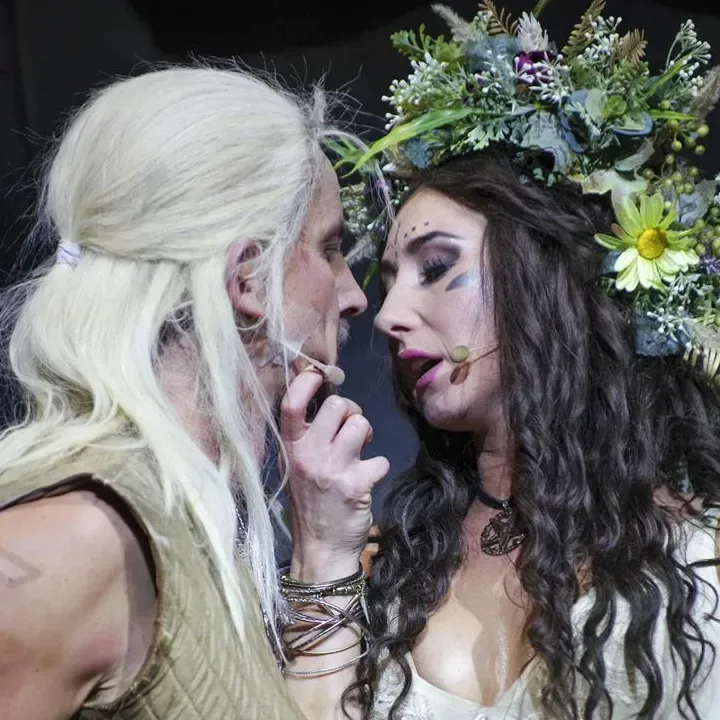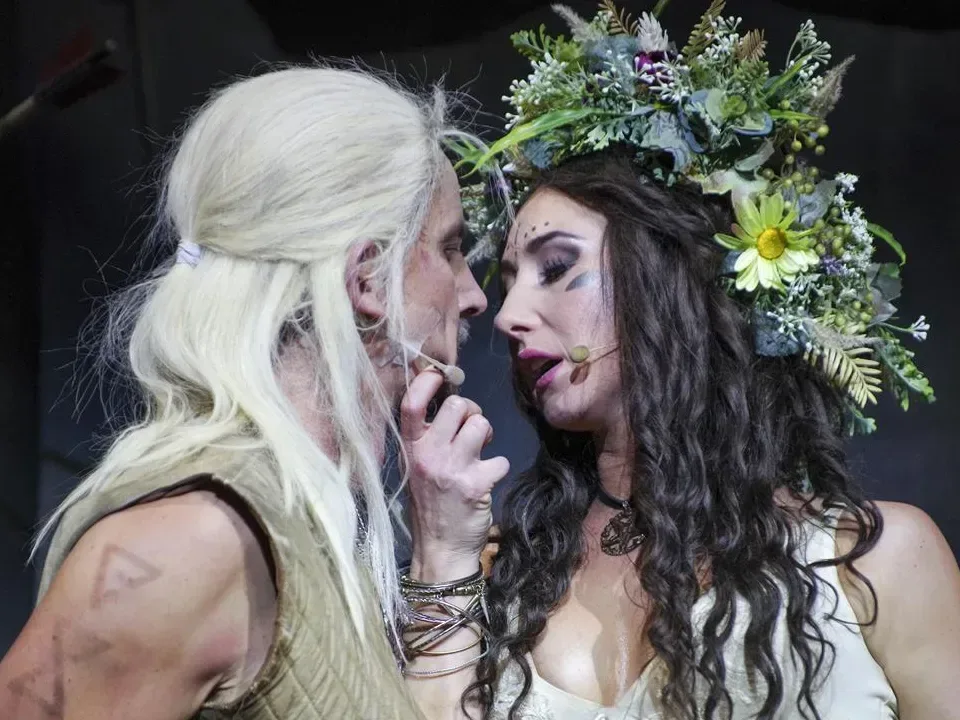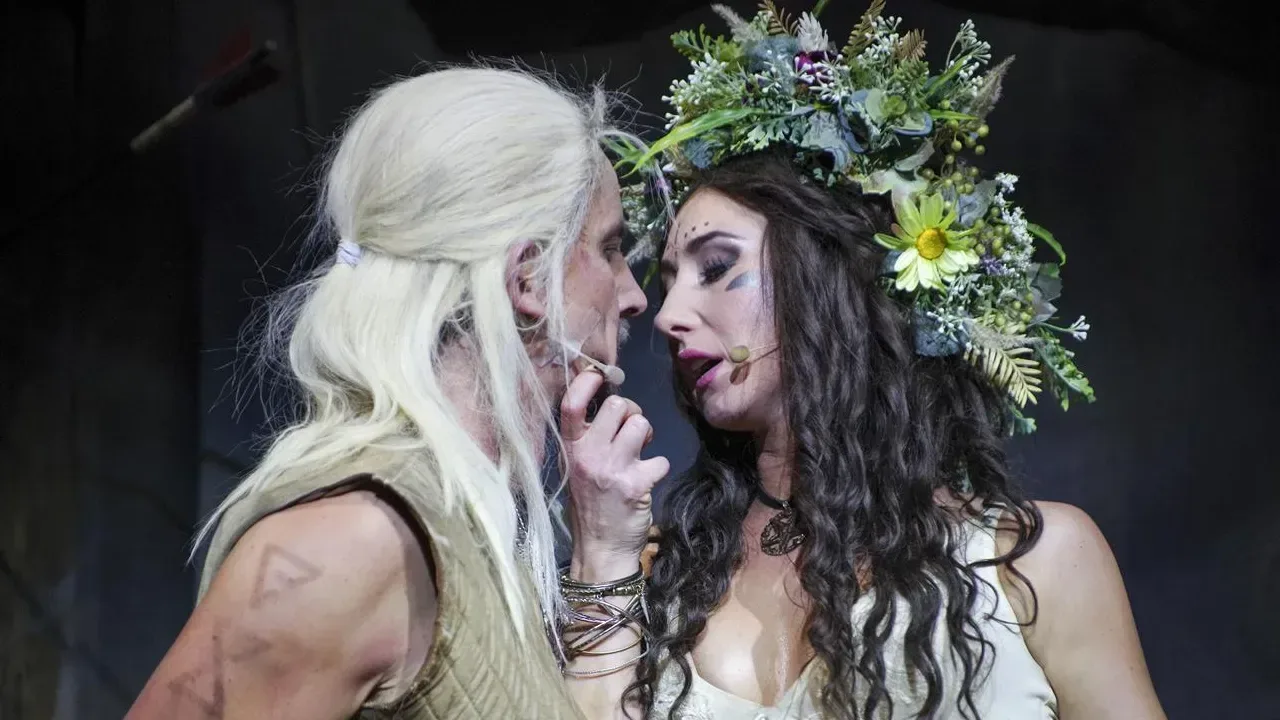
Geralt of Rivia has fought monsters, wandered across games, appeared in live-action television, animated films and comics, and apparently sung in not one but two musicals. If that sounds like a fairly complete set of fantasy-franchise careers, The Witcher’s creator is not prepared to call time on the experiment.
Andrzej Sapkowski has said he is open to suggestions for further adaptations of his fantasy world, including ideas that might seem unconventional. Asked about the possibility of more experimental formats, including a major stage production, Sapkowski pointed out that the series has already reached the musical stage twice. His position on the next possibility was broad: he remains open to it.
That is not confirmation that a new Witcher musical, play, or another specific project is in development. It is a useful distinction. An author being receptive to an idea is very different from a rights deal, a production team, a cast, a venue or a release plan. But the comment does leave the door open at a time when The Witcher is active in several media at once.
Musicals are not merely a hypothetical for Geralt
The entertaining part of the exchange is that the suggested “unconventional” format has, in one form, already happened. Sapkowski responded by asking whether a musical counted as a stage play, then noted that there had already been two. That matters because it changes the question from whether The Witcher could work on a stage to what kind of stage project could be tried next.
A musical is, of course, a theatrical work in which songs are a core storytelling device rather than incidental background music. A stage play is the broader category: it can be dramatic, comedic, musical, intimate, large-scale or something between those labels. Neither term describes a single production model. A chamber-sized show built around a handful of characters would be a very different undertaking from a lavish arena spectacle, even if both carried the same title.
That flexibility suits a property that has not stayed locked to one presentation. The original books introduced Geralt and the wider world, but the franchise has subsequently expanded into video games, live-action TV, animated films and comics. The existing musicals demonstrate that the property can move beyond the expected screen-and-controller route. Sapkowski’s answer suggests he does not see that history as a hard boundary.
“I am open to suggestions. Even unconventional ones,” Sapkowski said when discussing what could follow.
For audiences, the most practical takeaway is modest: there is permission for imagination, not a production calendar. It makes sense to treat any claims about a new play, musical, immersive event or other adaptation as speculation unless the relevant creators or rights holders announce details themselves.
Related coverage includes Andrzej Sapkowski Is Open to Unconventional New Ways to Adapt The Witcher.
A crowded Witcher slate makes format questions more interesting
The adaptation conversation arrives as The Witcher’s future is already full. CD Projekt Red’s The Witcher 3: Remastered is due September 29. The surprise expansion Songs of the Past is planned for 2027, while The Witcher 4 is targeting 2028 and is set to feature Ciri as its lead character.
Those plans make clear that Geralt’s world is not simply looking backward through remasters and revivals. A remaster generally refers to an updated version of an existing game, rather than a wholly new game built from the ground up. An expansion, meanwhile, adds material to an existing game framework. A new numbered entry is a separate proposition, and the stated move to Ciri as protagonist signals a fresh focal point for the next game.
Each format can approach the setting with different strengths. Games can make the player’s choices, movement and exploration central. Television can build a long-form screen narrative around episodes and performances. Comics and animation can shape pacing through pages or visual stylisation. Audio drama places voices, sound design and the listener’s imagination at the centre. A stage production would introduce yet another set of tools: physical performance, live audiences, limited space and the immediate energy of a shared room.
None of that guarantees that every format will suit every Witcher story. It does explain why “unconventional” need not mean random. A format works best when it has a reason to exist beyond placing a familiar logo in another marketplace. The essential question is not whether The Witcher can be put on a stage; its past musicals answer that. It is what a prospective stage adaptation would do that games, books, audio or screen versions cannot.
Audio dramas will bring the books into another storytelling mode
The publishing side has its own adaptation plans. Full-cast audio-drama versions of Sapkowski’s books are scheduled across 2026 and 2027. The sequence begins with Crossroads of Ravens, then moves to The Last Wish and Sword of Destiny.
A full-cast audio drama differs from a straightforward audiobook read by one narrator. It uses multiple performers for roles and typically frames the material as dramatic scenes. That does not make it a replacement for reading the books, nor does it mean it has the same rhythms as television. Its appeal is in turning dialogue, atmosphere and sound into the principal engines of the story while leaving listeners to supply much of the imagery themselves.
That planned run is also a reminder that adaptations do not only travel outward from games. The Witcher’s games are enormously prominent, but these audio productions return attention to Sapkowski’s books. The forthcoming titles include short-story collections that were important in introducing many readers to Geralt, which makes the format a potentially accessible route into an earlier part of the literary material.
The bigger pattern is one of coexistence rather than replacement. A remaster does not erase the original game. An audio drama does not erase the book. A new television season does not determine what a future novel will contain. Fans may encounter the universe through any one of these paths, and that variety is precisely why careful language around continuity and announcements is useful.
Television is approaching an endpoint, while the books continue
The live-action The Witcher is heading toward its fifth and final season, expected in 2027 following a reported delay. A final season puts a clear endpoint on that particular television version, even as other branches of the franchise continue to expand.
Sapkowski is also writing his next Witcher novel and is targeting completion in 2027. He has additionally said that he is considering a return to the short-story form that helped introduce Geralt to readers. There is no indication here that such a project is definitely set in Geralt’s younger years, but Sapkowski has suggested that there is ample scope to explore that period.
That point is important because it separates two ideas that are easy to merge: the existence of narrative room and the confirmation of a specific story. Saying there is room to revisit a character’s earlier life does not establish a title, plot, date or format. It does indicate that Sapkowski sees the setting as capable of supporting more stories, including ones that need not simply repeat the franchise’s best-known beats.
For a long-running world, that creative space can be more valuable than a single format decision. An adaptation might turn an existing tale into something new for another medium. A new novel can add to the foundational text itself. A Ciri-led game can shift perspective within a shared world. Those are distinct ways of expanding a franchise, and they place different kinds of responsibility on their creators.
What an “unconventional” Witcher project would need to solve
There is no announced experimental adaptation to evaluate, so any discussion of what comes next is analysis rather than reported fact. Still, Sapkowski’s openness raises some sensible questions for fans to keep in mind if an unusual Witcher project eventually appears.
- Why this medium? The project should have a storytelling rationale, not only a recognizable name. A stage show, for example, would need to make purposeful use of live performance.
- Which corner of the world does it serve? A tale about Geralt, Ciri, or a different era could call for very different scope and tone.
- Is it adapting or expanding? Adaptation means reshaping existing material for another medium. Expansion means telling a new story in the same world. The two can overlap, but they are not interchangeable.
- What is actually confirmed? Fans should separate a creator’s broad interest from a formal announcement that identifies partners, format, release timing or creative personnel.
The concern over format is not unique to The Witcher. Discussions around older game properties often show that a return can be appealing in principle while still demanding a clear creative purpose; the same tension appears in debate about what makes a modern return difficult. The Witcher’s situation is broader than a remake, but the underlying lesson applies: familiarity alone does not answer what a new version should be.
For now, the tangible calendar is already substantial: a remastered game due September 29, an expansion planned for 2027, audio dramas across 2026 and 2027, a final live-action season expected in 2027, a new novel targeting completion in 2027, and a Ciri-led game targeting 2028. Against that backdrop, Sapkowski’s openness is less a promise of a particular next step than an invitation not to assume the path ends with the formats already on the list.
In other words, The Witcher does not have a newly announced stage production. It does have a creator who has seen Geralt sing before, is willing to hear unusual pitches, and believes there is still plenty of room in the character’s past and the wider world. For a franchise that has already crossed books, games, screen, comics and audio, that is enough to make the next unexpected detour feel plausible.