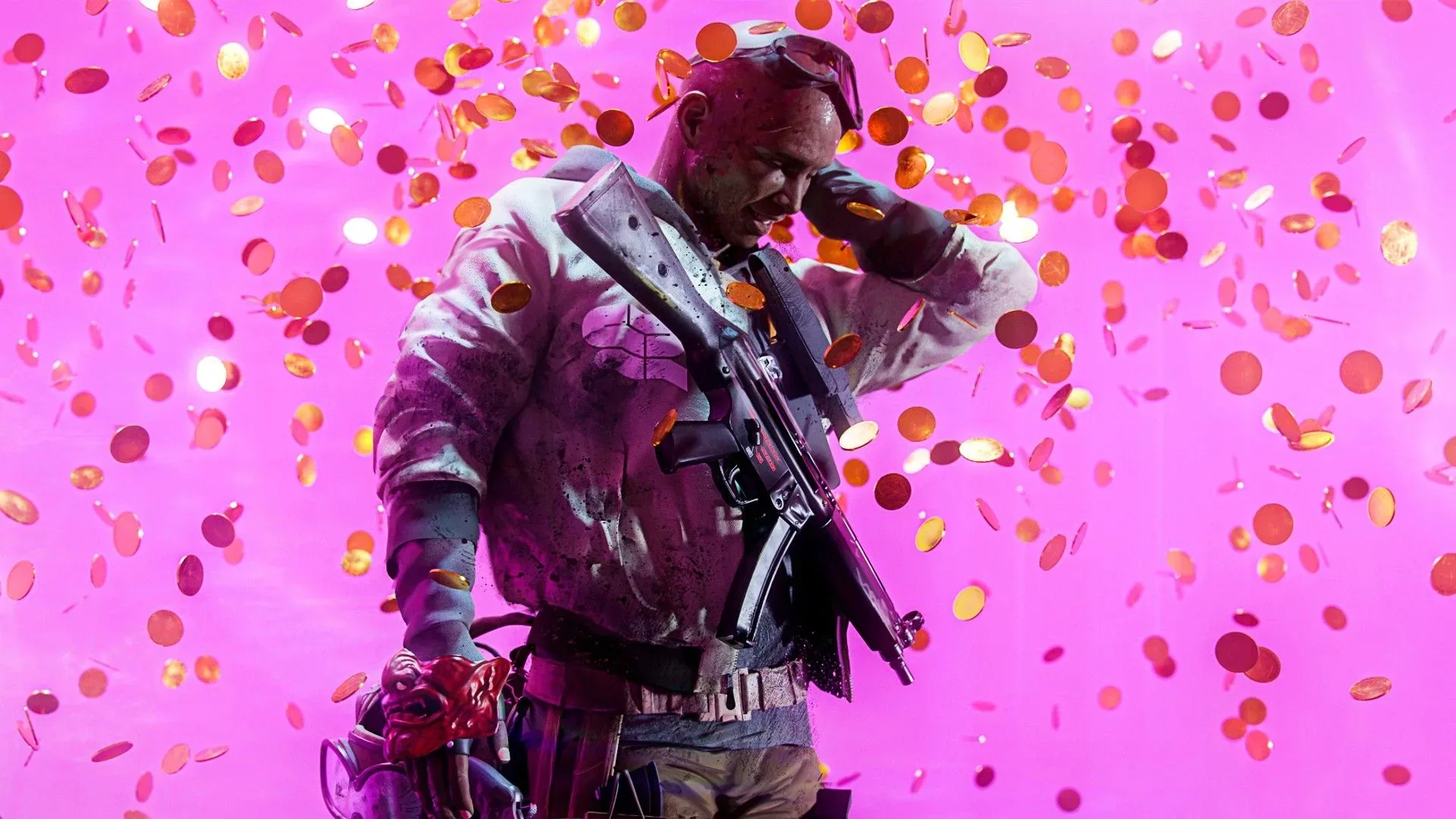
The Finals is preparing a more personal kind of arena commentary. When the Prime Time update arrives on October 20, its commentators, Scotty and June, will be able to recognize player nicknames in selected play-by-play moments. A successful headshot, for example, can be called with the player’s own name attached rather than receiving only a generic line.
It is a relatively small change on paper, but it targets a central part of The Finals’ presentation. The game frames multiplayer firefights like a televised contest, so a commentator acknowledging the person behind a clutch action could make an already theatrical match feel more immediate. It also raises some very practical questions about synthetic speech, username handling and how far this kind of reactive broadcast layer should go in a competitive online game.
Embark is not presenting the system as an unlimited commentary engine at launch. The initial set of situations where a name can be spoken will be short, with the team using that limited scope to assess the technology in live matches and to preserve the established sound of Scotty’s delivery. A separate report on the update is available here.
What the new commentary changes
Traditional multiplayer announcer systems respond to game events with pre-recorded lines: a commentator sees that a headshot or another notable action occurred and plays an appropriate phrase. The new element is the inclusion of a changing piece of information—the account nickname of the player involved.
For more context, explore Samsung’s 512GB P9 Is the Better Switch 2 Storage Buy at $99.99, Even With a Slower Spec Sheet.
That means the commentary can move from a broad reaction such as “that’s a good headshot” to a line that identifies who landed it. In a match with constant eliminations, objective play and team movement, this could give memorable plays a little extra recognition without requiring teammates to have heard voice chat or watched a replay.
The feature is described as AI-powered automatic text-to-speech. Text-to-speech, often shortened to TTS, is software that converts written text into spoken audio. In this case, the dynamic portion is a username that cannot reasonably be covered by a fixed bank of conventional voice recordings. The system has to produce speech for many possible names while making the result fit the timing and character of the existing commentary.
That distinction matters. The announced use is not simply an announcer picking randomly from a pile of generic recordings. It is a dynamic line that combines a curated commentary situation with variable player text. The value to Embark is flexibility; the challenge is maintaining a result that sounds intentional rather than robotic, awkwardly paced or out of character.
A deliberately narrow first test
Audio director Carl Strandberg has said the restricted initial selection is intended to let the team curate what Scotty says and ensure the lines still sound like the commentator players know. That is a sensible constraint for a system whose output changes with each lobby. The more events it covers, the more combinations, pronunciations and timing scenarios the team must account for.
Keeping the launch scope small also makes the feature easier to judge on its actual merits. Players will be able to hear whether names add excitement to important moments or merely create more noise during an already busy match. A competitive shooter has little room for voice lines that obscure useful gameplay audio, arrive late, or repeat often enough to become irritating.
The announced approach does not establish how many events will receive name callouts, exactly which actions qualify, or whether every nickname will be spoken exactly as written. It also does not answer whether players will have settings to adjust or disable the feature. Those are details worth separating from the confirmed plan: player-name commentary is coming, but its rollout is intentionally limited.
The username problem is not a minor detail
Once a game reads account names aloud, usernames stop being only text displayed in a scoreboard or kill feed. They become part of the game’s soundscape. That can be funny in the harmless sense—unusual names are a familiar multiplayer tradition—but it introduces moderation and pronunciation problems that fixed commentary does not have.
Offensive, suggestive or disruptive names are the obvious concern. A spoken callout can make a name more noticeable than its appearance in a small interface element, particularly when broadcast over match audio to every participant. Misspellings, strings designed to make a voice system say something unintended, and ordinary names with unpredictable pronunciation could all create rough edges.
None of those safeguards have been detailed for this update, so it would be premature to assume precisely how the game will filter, alter or skip problematic names. Still, the narrow rollout gives Embark a practical opportunity to observe those failure points before expanding the system. A technology trial in a live multiplayer setting is not only about whether the voice sounds natural; it is also about whether the inputs supplied by players can be handled responsibly.
There is also a social dimension. A player who enjoys a dramatic acknowledgement after a standout play may see it as part of the show. Another may find repeated use of their name distracting or uncomfortable. The Finals’ existing commentators are already a defining layer of its game-show framing, but naming individuals makes that layer more personal—and potentially more intrusive—than a generic reaction.
Why this will revive the AI conversation around The Finals
Embark’s commentary has previously attracted criticism after players learned that text-to-speech technology was part of the audio approach. The new feature makes that technical choice far more visible. A generic line can pass unnoticed as conventional game audio; a commentator speaking a changing username makes the dynamic nature of the system easier to hear.
Criticism of AI audio in games often combines several distinct concerns. One is creative: whether automated or synthetic performance weakens a character’s personality and consistency. Another is labor-focused: whether a feature that could once have required a larger set of recorded material substitutes for human performance. A third is simply player-facing quality: whether the output sounds good and belongs in the game.
The Prime Time update provides evidence only for the final, product-level question over time. It can show whether limited player-name callouts fit The Finals’ atmosphere and whether they make match highlights feel more legible or memorable. It cannot, by itself, settle the broader debate over AI use in game development. Those are related conversations, but they are not identical.
For Embark, the strongest argument for this particular use is likely specificity. A commentator that can acknowledge the actual player responsible for a big moment creates a personalized broadcast effect that conventional fixed recordings cannot easily deliver across a huge range of account names. The counterargument is equally straightforward: personalization is not automatically improvement, especially if the result is unnatural, exploitable or simply unnecessary.
What players should watch after October 20
The important measure will be restraint. If the named callouts are confined to genuinely notable actions and do not crowd out crucial game audio, they could reinforce The Finals’ televised-arena identity. If they are too frequent, have poor pronunciation, or become a vehicle for attention-seeking account names, players may experience them as a novelty that wears thin quickly.
- Natural delivery: Does the inserted name flow cleanly within the commentator’s line?
- Event selection: Are callouts reserved for plays that feel worth highlighting?
- Audio clarity: Do the lines coexist with combat sounds and team communication without becoming clutter?
- Name handling: How does the game deal with unusual, offensive or hard-to-pronounce nicknames?
- Player control: Will users be given any options around this more personalized layer of commentary?
There is an important difference between a technical demonstration and a lasting multiplayer feature. The former only needs to prove that it can speak a name after a game event. The latter needs to make thousands of matches better without turning every successful shot into an awkward announcement. Embark’s decision to begin with a constrained set of use cases suggests it recognizes that gap.
For now, the promise is modest but unusual: The Finals will make its game-show announcers a little more aware of the contestants. Whether that feels like lively sports-style coverage or a reminder that a text-to-speech system is listening for usernames will depend on execution once Prime Time goes live on October 20.