Takaya Imamura, whose Nintendo-era credits include art direction on The Legend of Zelda: Majora’s Mask, has become the center of a familiar but increasingly complicated games-industry argument: what does it mean when a veteran creator uses generative AI to turn an idea into a prototype?
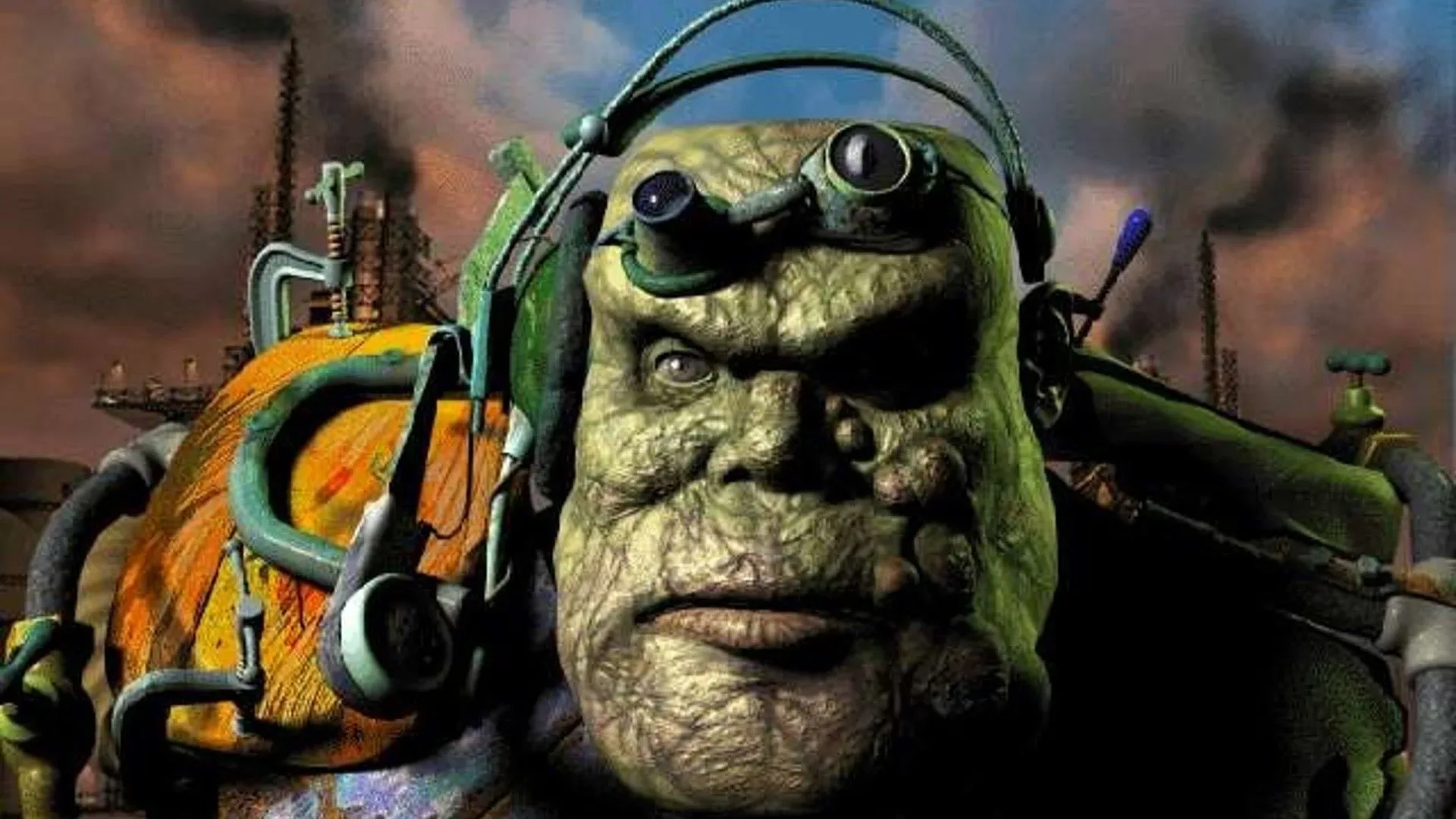
Imamura recently shared images on X from an experimental 3D shooter made with AI-assisted development. His description framed the work as a test rather than a product announcement. For a designer who says he is not a programmer, the striking part was not merely the output but the ability to rapidly trade ideas with a tool and see those ideas take shape in something game-like.
The response, however, was not confined to curiosity about the prototype. A substantial wave of criticism followed, with many visible objections appearing to come from Japanese users on the platform. Their concerns focused on the ethics of contemporary generative AI systems, particularly questions around the data used to train them, the impact on artists and developers, and the reputational damage that could follow from adopting the technology.
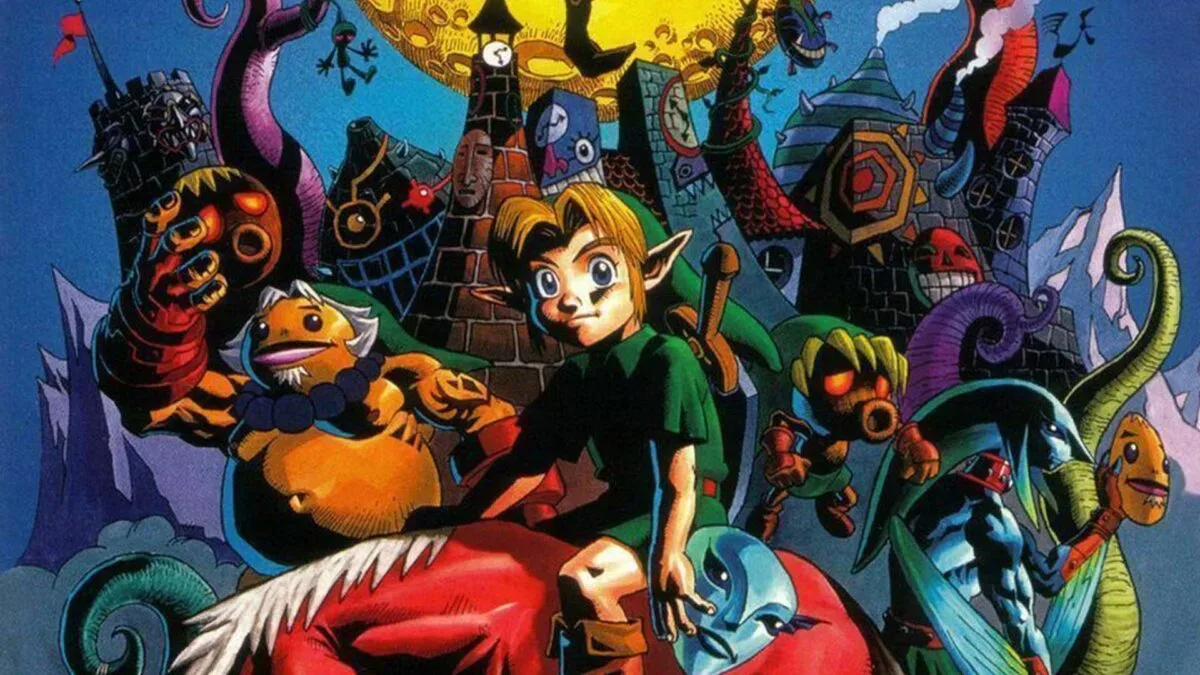
That reaction matters because Imamura is not an anonymous experimenter showing off a weekend project. He is associated with some of Nintendo’s most recognizable creative work: graphic design on the original Star Fox, character design for F-Zero: Climax, a supervisory role on Super Smash Bros. Brawl, and the art director position on Majora’s Mask. A prototype from a creator with that history naturally attracts attention far beyond the small circle that might normally follow AI-development experiments.
A prototype, not a confirmed game release
In replies to the criticism, Imamura said he understood the concerns. At the same time, he explained that AI is difficult for someone in his line of work to simply disregard. His interest appears to be practical: a non-programmer can use an AI system to help bridge the gap between an idea and a rough playable expression of that idea.
That is a meaningful distinction in game development. A prototype is usually a question posed in interactive form. Can a movement mechanic feel good? Does a camera angle support the intended action? Is the visual mood worth pursuing? Could a particular encounter structure work at all? The prototype does not need final art, production-ready code, a marketing plan, platform certification, or an audience. It only needs to reveal enough to guide the next decision.
AI tools are often sold on precisely that promise: reducing the distance between a person’s concept and a first iteration. For creators without programming experience, that can sound especially powerful. It resembles having a technical collaborator available for rapid trials, although the comparison has obvious limits. A human programmer brings judgment, communication, accountability, specialized expertise, and an ongoing stake in the work. A generative tool is not a creative partner in that human sense, regardless of how conversational its interface might feel.
After the initial response was interpreted by some as an intention to make and publish a finished game, Imamura clarified that he had not said he would complete or release the prototype. He characterized it as a quick experiment and expressed surprise at the intensity of the backlash.
Related coverage includes Takaya Imamura Faces AI Prototype Criticism After Sharing 3D Shooter Test.
That clarification narrows the immediate factual claim. There is no confirmed commercial release, no stated platform, no announced schedule, and no indication that the 3D shooter is intended to become a finished product. But it does not necessarily settle the wider disagreement. For critics, the ethical questions they raised concern use of the technology itself, not only whether a particular test becomes a product on a store page.
Why the reaction goes beyond one creator’s test
Generative AI is not a single tool or a single practice. It can refer to systems used for text, concept imagery, dialogue, code, animation, audio, asset ideation, or combinations of all of those things. Treating every use as identical creates more heat than clarity. Yet separating every case into a neat ethical category is also difficult, because the underlying models, training sources, permissions, contracts, and human oversight can vary enormously.
For many players and creative workers, the central objection is not that prototypes should never be made quickly. Games have always been full of placeholders, strange experiments, borrowed internal tools, and rough mock-ups. The concern is whether the speed offered by generative systems is built on data practices that artists and other rights holders did not consent to, and whether adoption eventually reduces paid opportunities for people whose work helps make games distinct.
Those worries become sharper when an established artist embraces the experiment. Imamura’s career is a reminder that memorable games are not assembled only from functionality. Their visual language, characters, silhouettes, texture, atmosphere, and odd little choices are often the reasons audiences remember them years later. Fans who value that kind of authored identity may see generative AI not as a neutral shortcut but as a threat to the creative ecosystem that produces it.
There is another layer: public trust. Players have become more alert to AI disclosures, whether they involve promotional art, in-game content, voice work, or internal production pipelines. A company or creator may view an AI-assisted proof of concept as a private, low-stakes technical test. Audiences may view the same disclosure as a signal of future staffing decisions, artistic standards, or willingness to rely on systems they consider ethically compromised. Both readings can exist at once, which is why the argument often escalates so quickly.
Japanese pushback complicates easy assumptions
The visible criticism aimed at Imamura also pushes back against simplistic claims that attitudes toward generative AI split cleanly by region. Discussions about AI in games are often portrayed as though one market is broadly enthusiastic while another is uniformly resistant. The reaction to this post suggests a messier reality.
Japan has a long and influential game-development tradition, a highly engaged player community, and strong connections between game fandom and illustration, animation, character design, and other creative disciplines. That does not produce one collective position on AI. It does mean the technology enters an environment where the value of individual craft and recognizable authorship can be especially visible.
Online reactions are never a scientifically complete picture of public opinion. X replies tend to reward strong views, and the people who choose to respond are not necessarily representative of every player, artist, or developer. Still, criticism from Japanese users is a useful reminder that “AI acceptance” is not a stable cultural label. The questions being asked—who provided the training data, what happens to creative labor, and how much risk accompanies adoption—travel across borders.
The broader games conversation will likely keep turning on specifics rather than slogans. Was the tool used for brainstorming, code assistance, final imagery, voice generation, or player-facing content? Were creators compensated or credited? Is the process disclosed? Does a company have clear rules around consent, data handling, and quality control? Is a human professional still empowered to make the decisive creative calls? Those details will affect how audiences interpret a project far more than a blanket claim that AI is either automatically innovative or automatically unacceptable.
The gap between an idea and a game is still enormous
It is also worth keeping the scale of game production in perspective. A functional prototype can be a valuable milestone, but it is very far from a completed game. Turning a basic shooter concept into a release would normally require sustained design work, engineering, art direction, audio, usability and accessibility considerations, balancing, debugging, testing, performance optimization, legal review, and more. The tool that helps begin an experiment does not erase that production reality.
That is partly why Imamura’s comments resonate as a creator’s reaction to newfound prototyping access. The appeal is understandable: the chance to test a thought that might otherwise remain a sketch or a conversation. But the backlash shows that audiences do not evaluate access and efficiency in a vacuum. They want to know what systems make that efficiency possible and who might bear the cost.
For now, the clearest takeaway is modest. Imamura showed an AI-assisted 3D shooter experiment, described it as testing, and later said he had not promised a finished or released game. The public response was forceful enough to expose a larger disagreement that is not going away. As games continue to wrestle with generative tools, even a small prototype can become a referendum on creative labor, ownership, and the future players want the medium to have.
That uncertainty is likely to remain part of the industry’s wider technology conversation, alongside questions about how games evolve and persist over time—an issue also explored in the changing possibilities of classic Azeroth. In Imamura’s case, the discussion has moved well beyond the shooter images themselves. The experiment may be small; the debate it reopened is not.