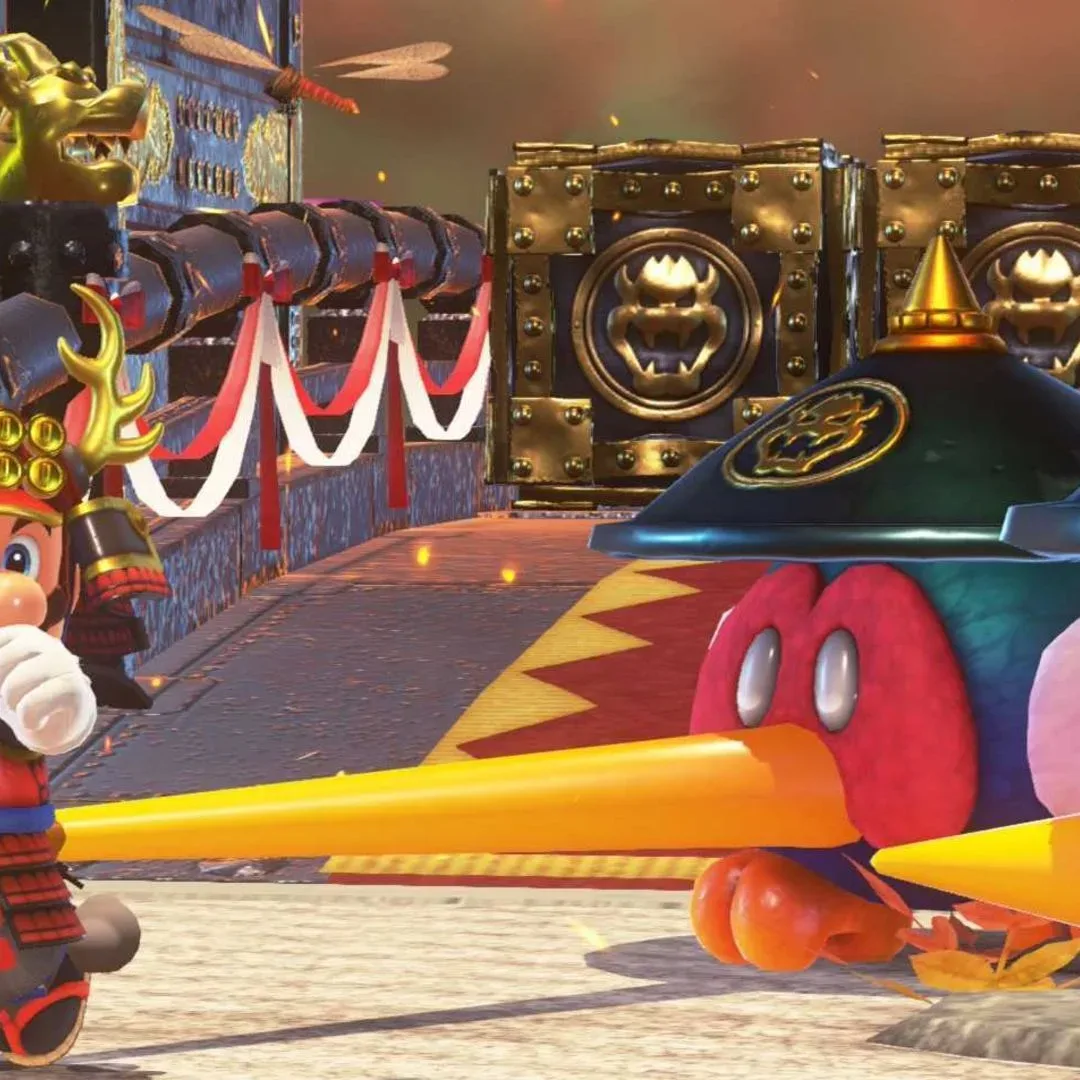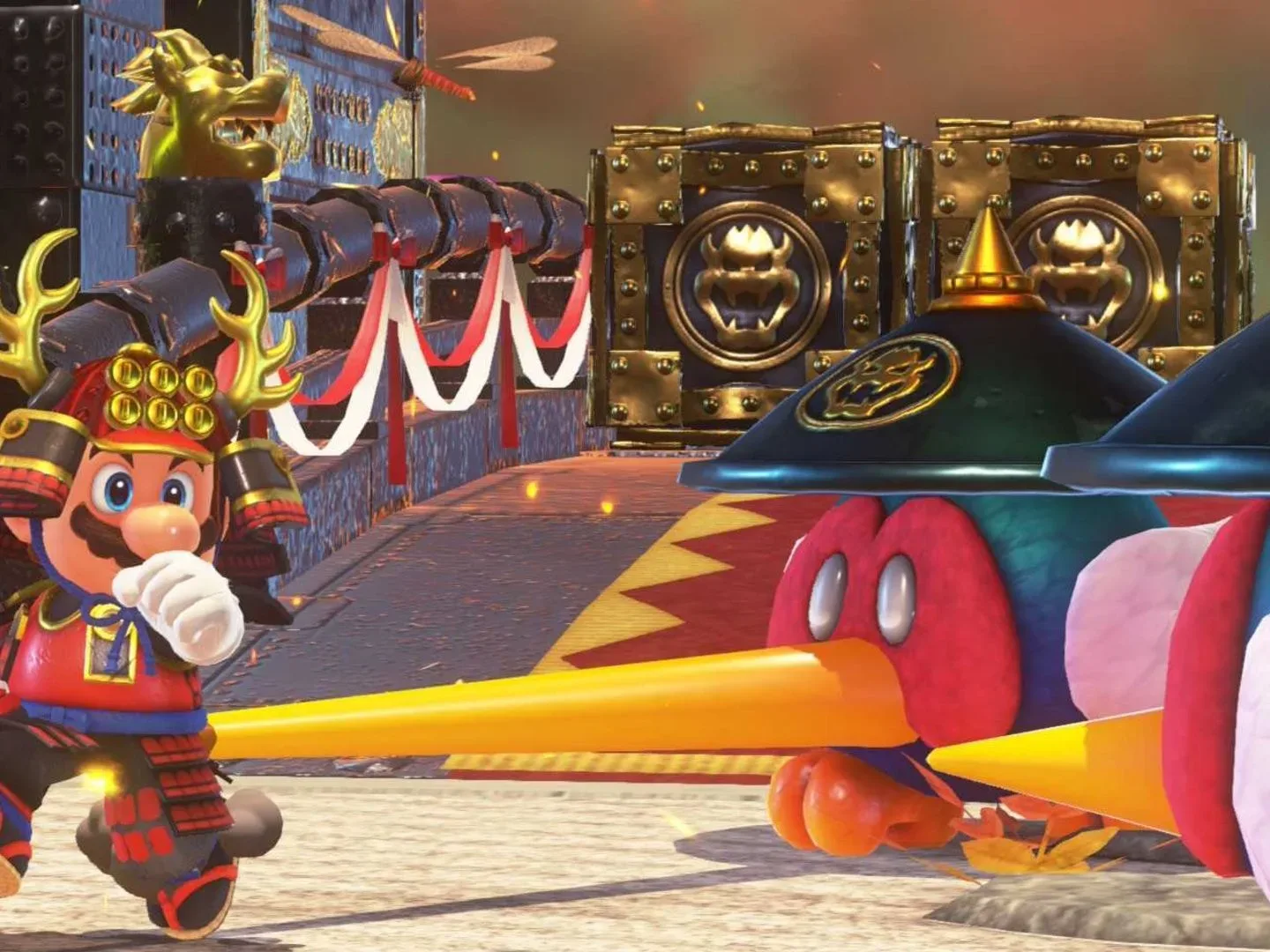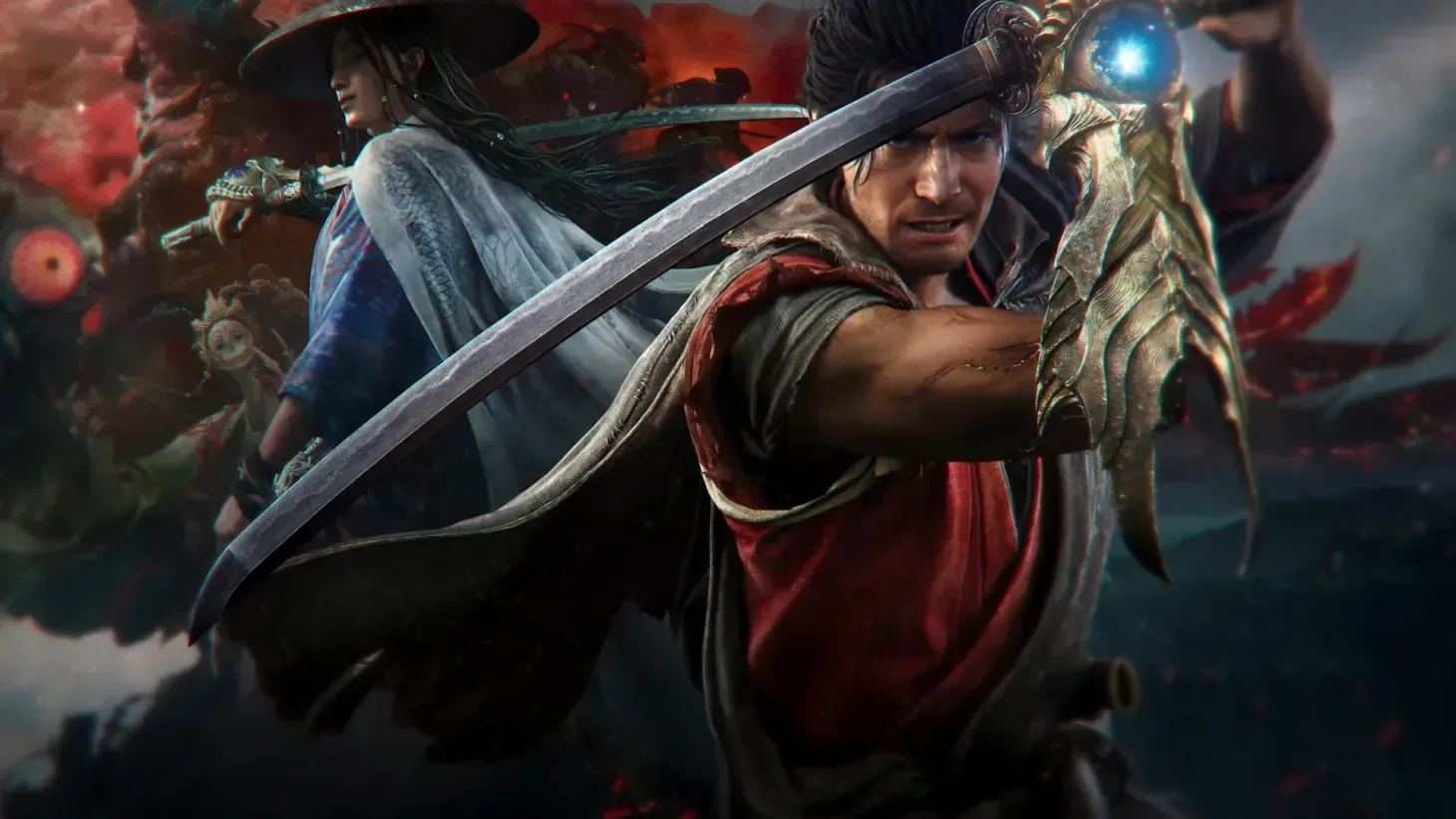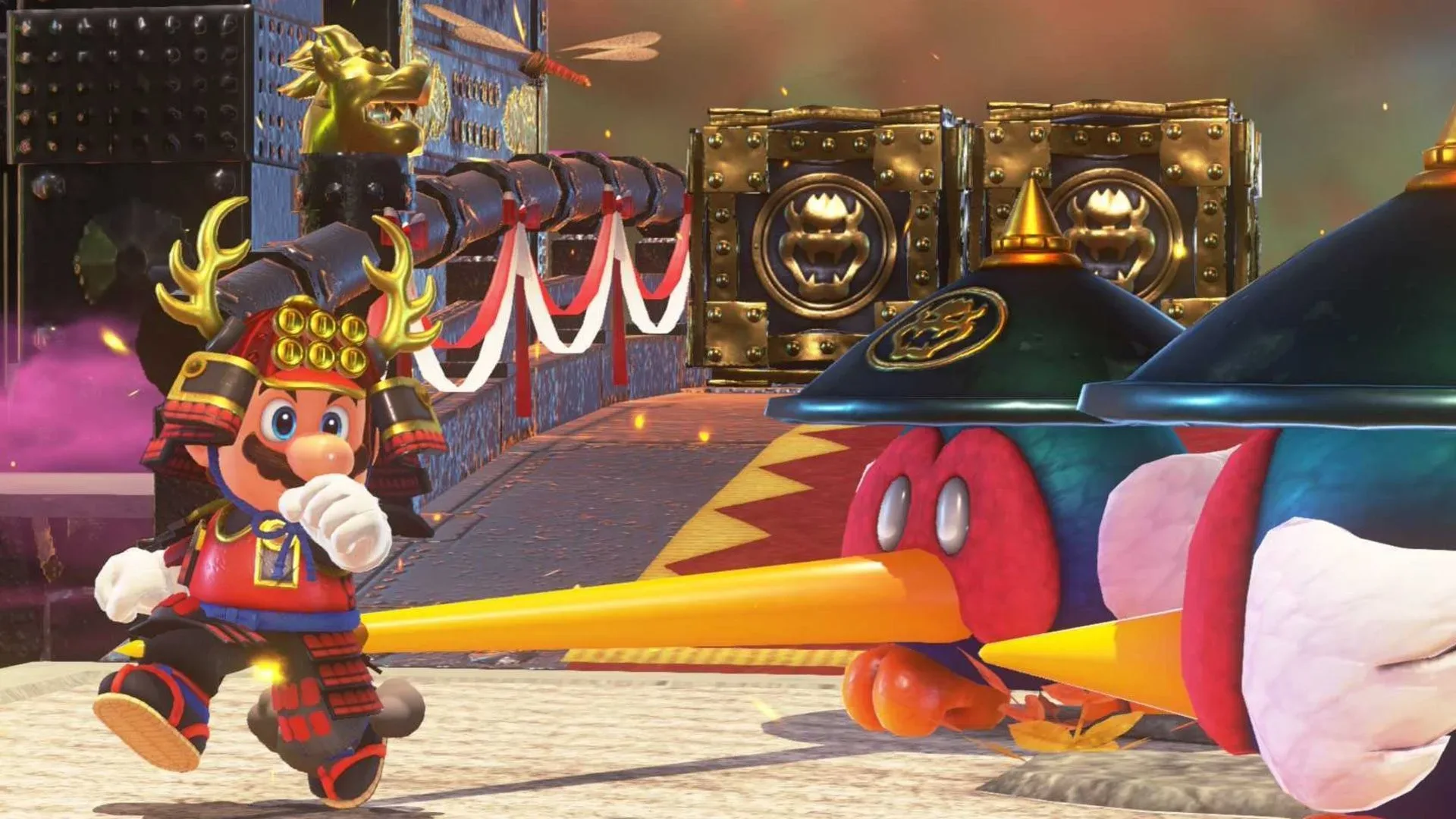
Some game-development influences arrive exactly as expected: a new sword-fighting game cites another celebrated sword-fighting game, everybody nods solemnly, and a nearby katana makes a tasteful whooshing sound. Onimusha: Way of the Sword has taken a far more surprising route. Director Satoru Nihei has identified Nintendo’s Super Mario Odyssey as a major inspiration for the upcoming samurai action game, specifically in the way its controls and player responses are designed.
The comparison is not about replacing demon-slaying blades with a plumber’s cap, unfortunately for anyone hoping to see Musashi bounce across feudal Japan yelling “Wahoo!” Nihei’s point concerns the underlying feel and depth of an action system: mechanics that seem approachable at first, then reveal increasing room for tactical decisions as the player understands what they can do and how enemies can answer.
It is an unexpected reference point, but it is also a useful reminder that influential design lessons do not have to come from games that share a setting, camera angle, tone, or weapon rack. A colorful 3D platformer and a darker samurai action game can be very different on the surface while still asking a similar central question: how can each button press feel readable, satisfying, and full of possible consequences?
A Mario lesson for a samurai action game
Nihei described Super Mario Odyssey as an action game that is easy to pick up on its surface but becomes more active and demanding as players dig further into it. That balance is a large part of why the 2017 Nintendo Switch game remains such a common point of reference for movement design. Mario has a straightforward basic vocabulary—running, jumping, throwing Cappy, diving—but players can combine those tools in ways that make traversal, recovery, combat encounters, and platforming challenges more expressive.
For Onimusha: Way of the Sword, Nihei’s stated interest is in the relationship between an action and the response available to counter it. In other words, a move is not merely an animation that looks cool in isolation. It exists within an exchange. The player chooses an action, an opponent has a possible reply, and the player must understand enough of that relationship to make another decision.
That is where the tactical element enters the picture. The goal is not necessarily complexity for its own sake—no one needs a controller diagram that looks like a tax form—but controls with enough clarity and flexibility that timing, positioning, and choice become meaningful. A combat system can feel immediate in the hands while still encouraging deeper thought. The simple input is only the opening bid; recognizing its risks, rewards, and counters is where the action gains texture.
Nihei said that this action-and-counteraction design was something he sought to bring into Way of the Sword’s control scheme. The comments do not provide a complete mechanical breakdown, so players should not treat them as a detailed feature list. They do, however, establish a clear design ambition: controls meant to support a more tactical style of play rather than functioning only as a route to flashy attacks.
Accessibility and mastery can share the same controller
There is a persistent misconception that “accessible” mechanics and “deep” mechanics are opposites. They are not. The best action games routinely make basic interaction intuitive while leaving plenty to learn. A player should understand what happened when they press a button. They should also gradually discover why doing it at a particular moment, from a particular place, against a particular enemy behavior can change the result.
Related coverage includes Super Mario Odyssey Helped Shape Onimusha: Way of the Sword's Tactical Combat.
Super Mario Odyssey is especially relevant to that idea because its movement is recognizable almost immediately, but its systems reward experimentation. A new player can move Mario through an objective without needing to master every trick. A more practiced player can use combinations of jumps, dives, cap throws, captures, and momentum to take unusual routes or solve problems efficiently. The game does not demand that every player perform at the same level, yet it gives capable players a larger toy box.
Translating that philosophy into sword-focused action would not mean making Onimusha play like a platformer. It means treating the controls as communication. The game needs to tell players what their inputs accomplish, while presenting enough responsive enemy behavior for them to form strategies. If that ambition lands, a newcomer may be able to understand the fundamentals while returning players develop sharper habits around attack selection and defensive reactions.
That emphasis also fits the broader appeal of action games built around duels and dangerous encounters. Tension comes from knowing that an opponent is not merely a target dummy waiting for a health bar to disappear. Their movements matter. The player’s response matters. An attack can be commitment, bait, punishment, escape, or a bad idea performed with impressive confidence. Good tactical combat gives each possibility a role.
Character inspiration reaches beyond games
Nihei was not the only Capcom figure to discuss influences. Akihito Kadowaki, producer of the Onimusha series, pointed to both Silent Hill f and the long-running Gundam franchise. The former was mentioned in connection with world design, while Gundam was highlighted for its rich roster of charismatic characters.
That Gundam reference is particularly telling because the franchise’s identity has never rested on mobile suits alone. Its expansive settings are populated by figures with strongly defined personalities, conflicting aims, loyalties, rivalries, and visual presence. Kadowaki’s stated goal was to bring a similar sense of character appeal to his work on Onimusha.
The named cast members—Musashi, Okuni, and Takamura—are therefore more than labels attached to swords and story scenes. Kadowaki’s comments frame memorable, varied personalities as a key part of the project’s creative direction. A world of supernatural threats and historical flavor can establish atmosphere, but characters give the audience someone to follow, challenge, distrust, admire, or perhaps immediately suspect of knowing far too much about a cursed artifact.
Silent Hill f and Gundam may seem as far apart from each other as Mario and Onimusha, but together they illustrate how broad the project’s creative inputs are. One offers a potential model for shaping an unsettling world; the other provides an example of an ensemble whose characters can remain distinct amid a large setting. Nihei’s Mario comparison adds a third layer: the moment-to-moment language of the controller.
Why unusual inspirations are often the useful ones
Genre labels can be helpful for audiences, but they can become limiting if developers only study their nearest neighbors. Looking exclusively at other samurai games risks producing an increasingly polished version of familiar ideas. Looking beyond the genre can expose a team to solutions developed for entirely different problems: movement readability from a platformer, emotional framing from a horror game, character construction from an anime universe, or environmental interaction from an RPG.
That last point is visible in games that make a player’s actions feel like part of a connected world. For another recent example of systems being positioned as meaningful choices, No Law’s Port Desire’s approach to turning a door sensor into a mine shows how even a small object can become part of a larger decision-making loop. The genres are different, but the principle is familiar: players become more engaged when they can understand a tool’s function, imagine its consequences, and apply it deliberately.
In Way of the Sword, the relevant toolset is likely to be the player’s combat controls rather than improvised cyber-noir hardware. Still, the same design question applies. Are individual actions legible? Do they create opportunities and vulnerabilities? Can a player learn from the outcome, then make a more informed choice next time? Nihei’s comments suggest those questions sit close to the project’s core.
What the comments do—and do not—confirm
It is worth keeping the scope of these remarks in view. Nihei’s comments identify a creative influence and a desired control philosophy. Kadowaki’s identify reference points for world design and characterization. They should not be inflated into promises of specific modes, mechanics, difficulty settings, combat stances, or story developments that have not been detailed.
Still, influences can be revealing when they are this precise. Saying that a game inspired a project because it is broadly “good” offers little to work with. Calling out the progression from accessible surface-level actions to more dynamic, challenging interactions—and the importance of moves having answers—gives players a clearer sense of what the team values.
For Onimusha: Way of the Sword, that value appears to be a combat experience where the player’s hands and brain stay in conversation. The ideal is not simply to make attacks look powerful, but to make choices feel purposeful. If the series’ next major outing can pair that tactical responsiveness with the distinctive characters Kadowaki is seeking, then its most unexpected influence may prove to be one of its most useful.