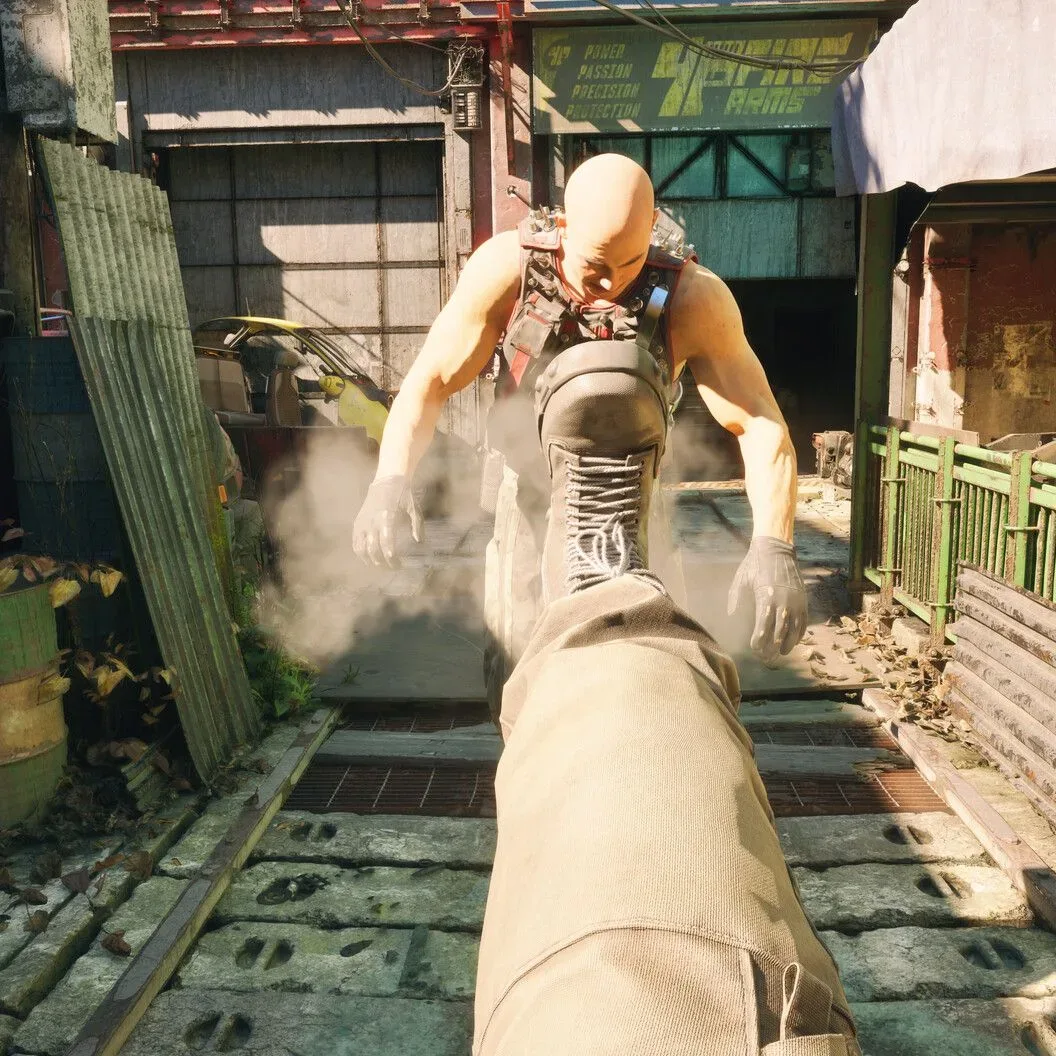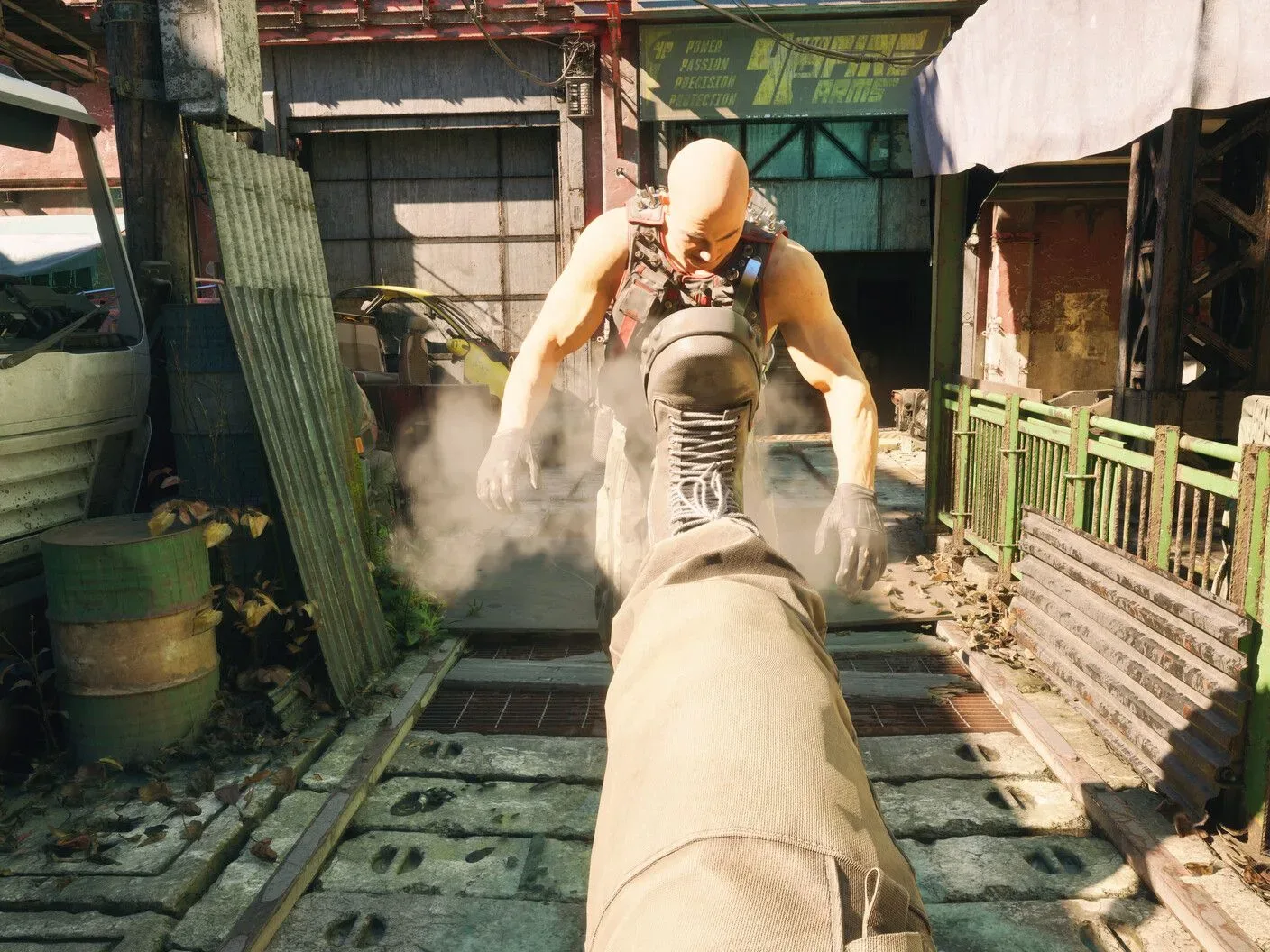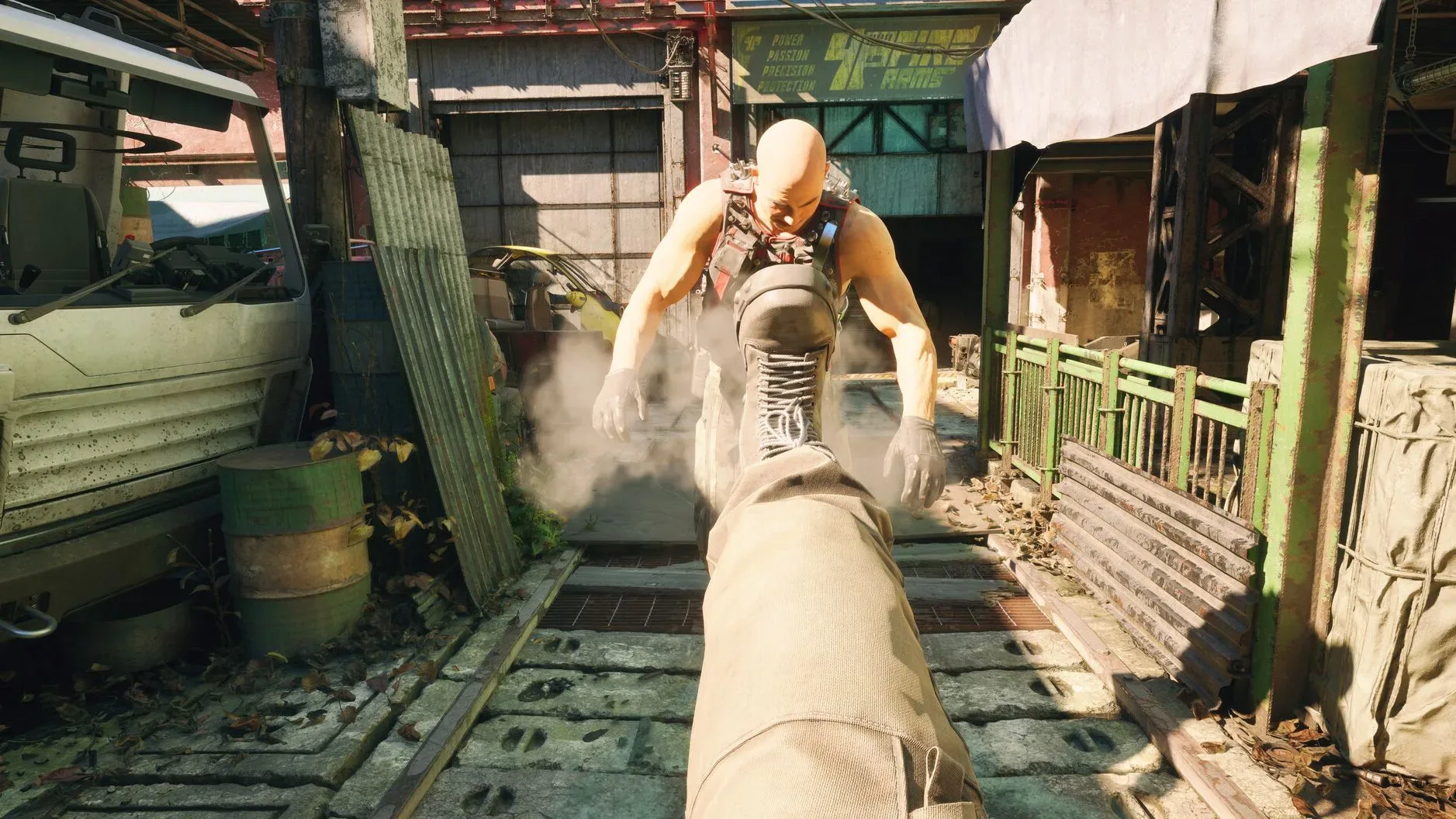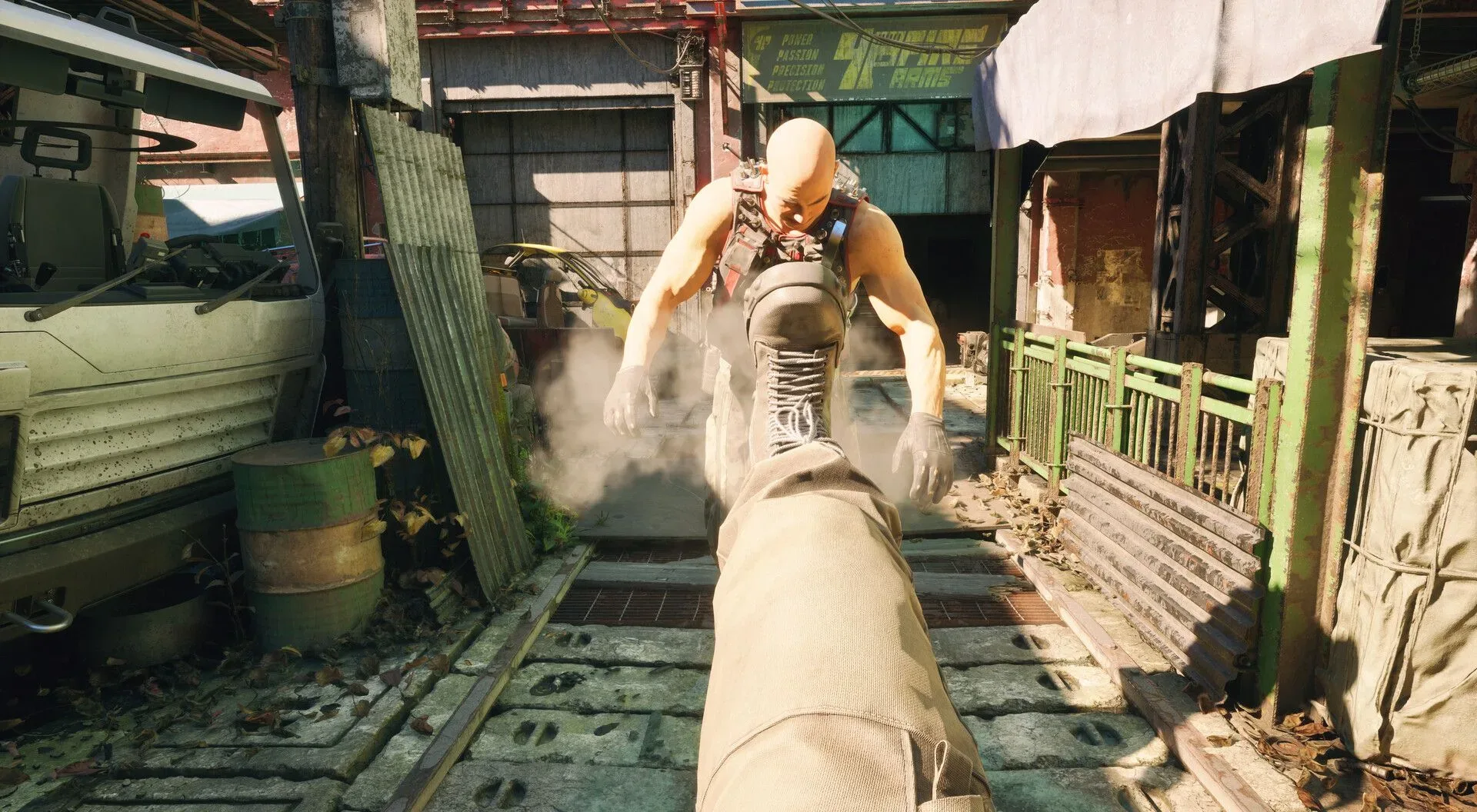
No Law, the next RPG from Neon Giant, is built around a proposition that should be immediately appealing to anyone who sees a locked door as less of a barrier than an invitation to get inventive. Its cyber-noir city, Port Desire, is intended to support quiet detective work, nimble trespassing, blunt-force firefights and a great deal in between. The clearest expression of that design philosophy may be a tiny sensor beside a convenience-store exit: steal it, combine it with a grenade, and the humble device can become a proximity mine.
That is not the only reported piece of gadget mischief. Footage has also shown a grenade attached to a Roomba-like robot vacuum, turning a domestic floor cleaner into a remote-controlled explosive. It is an absurd image, certainly, but it points toward a serious ambition. No Law wants players to inspect objects in its world, understand their potential, and decide for themselves whether the sensible use is also the most interesting one.
The game is scheduled for launch in 2027. Its platforms have not been detailed here, and much remains to be seen about the eventual scale of its systems. Still, a hands-off look at one apartment-complex objective suggests a game pursuing an immersive-sim-adjacent kind of freedom within a compact urban RPG. The comparison will naturally bring Dishonored to mind: not because No Law is presenting itself as a carbon copy, but because routes, tools, consequences and curiosity appear designed to matter as much as raw firepower.
Port Desire is meant to reward looking twice
Port Desire is the setting for detective protagonist Grey Harker, and the city’s personality changes with the light. Daytime scenes reportedly feature crowds, scattered greenery and small urban wildlife. At night, the population thins and more suspicious figures occupy the streets, while neon glare overwhelms the surrounding color. The result is a city that shifts from lively density into something harder and grittier after dark.
Its visual and cultural texture draws on a mixture of Southeast Asian and Mediterranean influences. That hybrid identity is important because No Law’s city does not appear to be framed as a series of anonymous combat arenas. The goal is a place with enough detail to invite scrutiny, which suits Harker’s role as a thorough, somewhat gruff investigator. Players need not role-play him with the same patience, though. Creative director Arcade Berg has described the approach plainly: “You can’t play No Law wrong.”
That maxim has limits, naturally. Choices may have consequences, and one surprisingly firm aesthetic boundary has reportedly been set: do not remove Harker’s moustache. Beyond that indispensable follicular rule, the game’s progression is not meant to privilege combat over stealth. Players do not earn more experience simply for taking a louder path. Exploration, rapid objective completion, conversations, theft, infiltration and violence are all intended to be viable parts of the same role-playing space rather than mutually exclusive tracks with one clearly superior reward structure.
A dense city rather than a drivable sprawl
No Law does not let players drive vehicles. That restriction has an obvious effect on world design: destinations need to exist within walking distance. Neon Giant’s answer appears to be density and verticality rather than a vast road network. Buildings stack play space upward as well as outward, and the reported intention is that every door encountered can be accessed. That is a large claim in a city RPG, and it will be worth seeing how it holds up in the finished game, but it is precisely the sort of promise that makes an apartment block potentially as compelling as an open district.
A single missing-informant mission provides the best available illustration. The assignment is simple on paper: enter an apartment complex and locate the informant. The ways into and through the structure, however, differ substantially depending on how the player approaches the problem. One run takes the covert route; another tears through the same location with firearms and explosives. Neither appears to be treated as an invalid answer by the game’s progression rules.
Before the apartment block, Harker can stop at a convenience store to restock. Rather than presenting the shop merely as an inventory screen, the goods are individually modeled on shelves for the player to browse. There is an immediate moral and practical decision, too: pay the clerk or steal what is needed. Even a welcome-chime sensor at the doorway is interactive. In the right hands, that unassuming bit of hardware becomes part of a trap.
- Explore and inspect: Buildings emphasize accessible interiors and alternate routes.
- Approach objectives differently: Stealth, dialogue, investigation, theft and direct violence can all shape a mission.
- Repurpose objects: Components can combine with explosives in unexpected ways.
- Live with reactions: Port Desire’s citizens may grow fearful when Harker repeatedly chooses violence.
The quiet apartment route uses observation and access
On the stealthier version of the apartment mission, the route begins above street level. Harker climbs onto an awning and slips past guards outside. A glance through a window reveals useful intelligence: an open room, a door left available and a guard asleep inside, signaled with the kind of overt visual shorthand that makes the opportunity difficult to miss.
Inside, the complex manager initially blocks progress. Instead of shooting past him, the demonstration uses conversation and a modest investigative puzzle to get permission to go upstairs. Permission does not mean total access, however. The rooms remain off limits, so the infiltration continues through the open door previously spotted from outside. The sleeping guard is bypassed, and a grimy ventilation route—complete with scuttling cockroaches and webs—leads toward the target apartment.
It is a useful example of why the city’s environmental density matters. The route is not simply “press crouch and follow a highlighted vent.” It starts with a sightline from outdoors, turns that observation into a physical entry point, uses social interaction to reduce resistance, then breaks the remaining rules with a hidden path. Even if the final game streamlines or alters this particular mission, the sequence communicates a preference for connected spaces and layered access.
The loud route makes the city take notice
The combat-focused version of the same scenario starts by killing the convenience-store clerk and taking supplies. Before leaving, the entrance sensor is stolen and paired with a grenade, illustrating the proximity-mine combination. From the elevated approach near the apartment complex, the guards in the courtyard are then attacked with an SMG and explosives.
The manager who served as a conversational obstacle in the quiet route is also killed. Rather than solve the investigative puzzle for access upstairs, the aggressive approach obtains the master key after working around locked doors. The sleeping enemies encountered later are tased in this version, showing that a violent run does not have to mean applying the exact same lethal answer to every person in a building.
That flexibility is important, but No Law is not promising consequence-free chaos. The more Harker relies on violence, the more fearful Port Desire’s people can become. Every NPC can reportedly be killed, and deaths are permanent. Those systems could make a playthrough feel meaningfully shaped by its player rather than reset to a neutral state after each mission. It also suggests an intriguing tension: the quickest or most spectacular solution may be valid, yet it could gradually make Harker’s city less welcoming, more wary and potentially more difficult to navigate.
Reactive RPG systems remain a major question for forthcoming games generally. The Expanse: Osiris Reborn’s RPG-choice questions underline why players tend to watch closely for the difference between choices that look expressive and choices that substantially alter the world. No Law’s reported permanent deaths and civilian-fear response give it promising mechanisms for that distinction, though the extent of their knock-on effects will only become clear nearer release.
Improvisation is the central attraction
The most exciting aspect of No Law is not merely that it has stealth, shooting and crafting. Plenty of games have those labels on the box. It is that the design being outlined connects them through environmental interaction. A shop can be a place to buy supplies, rob supplies, gather a trap component, or simply study details that may become relevant later. An awning becomes an entry route. A bedroom window becomes reconnaissance. A manager can be negotiated with, investigated around or eliminated. A locked apartment can be reached through legitimate access, a key, a vent or an alternate sequence of decisions.
There is still plenty Neon Giant has not established publicly in these details: how broad the item-combination catalog will be, how often the world can account for major character deaths, and how deeply Port Desire’s fear response changes everyday play. No Law’s 2027 target also leaves a long runway for systems to evolve. But the core direction is clear. Port Desire is being designed as a concentrated cyber-noir playground where attention is valuable, creativity can be explosive, and a doorway chime might be the beginning of a plan rather than background decoration.