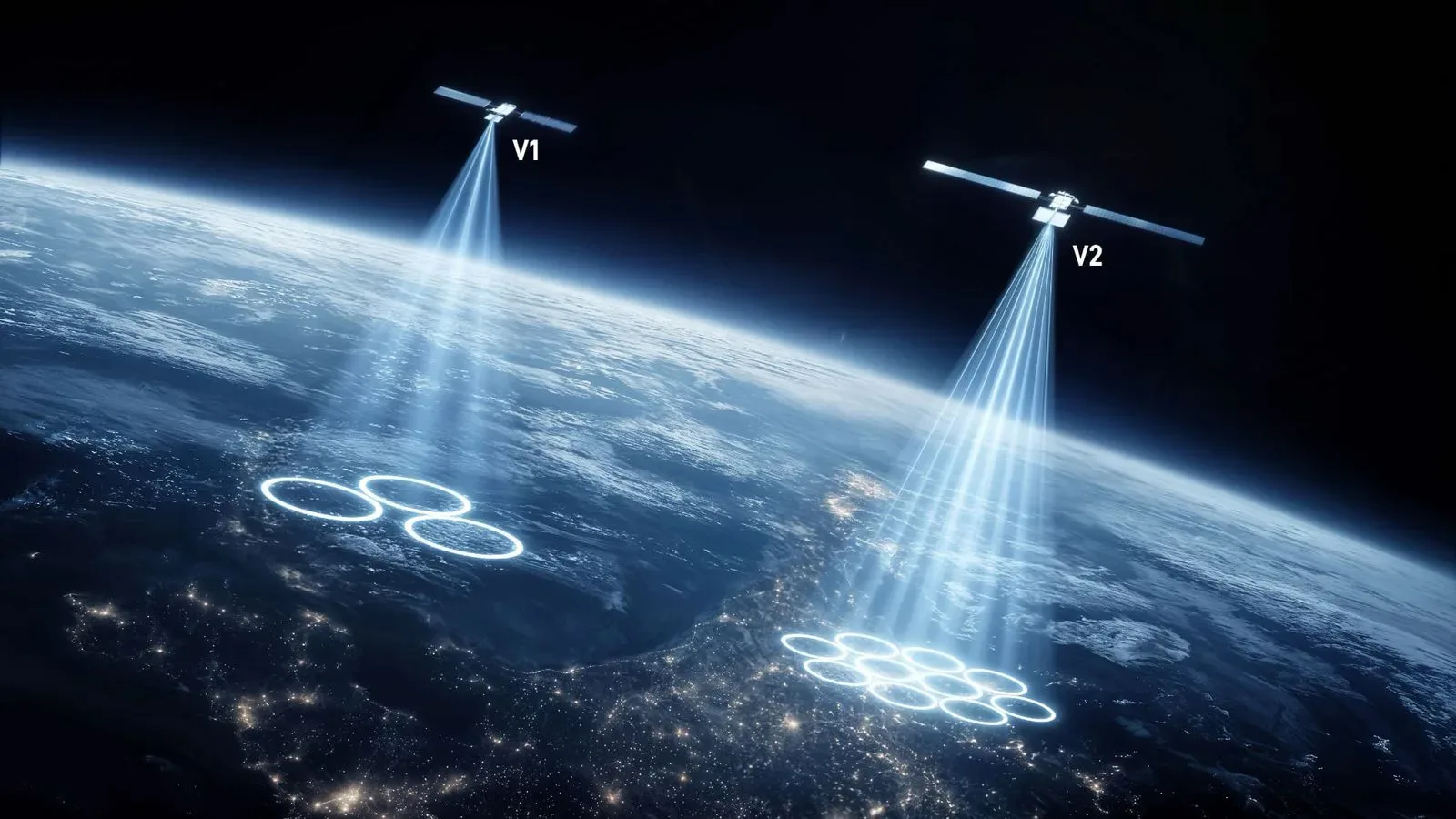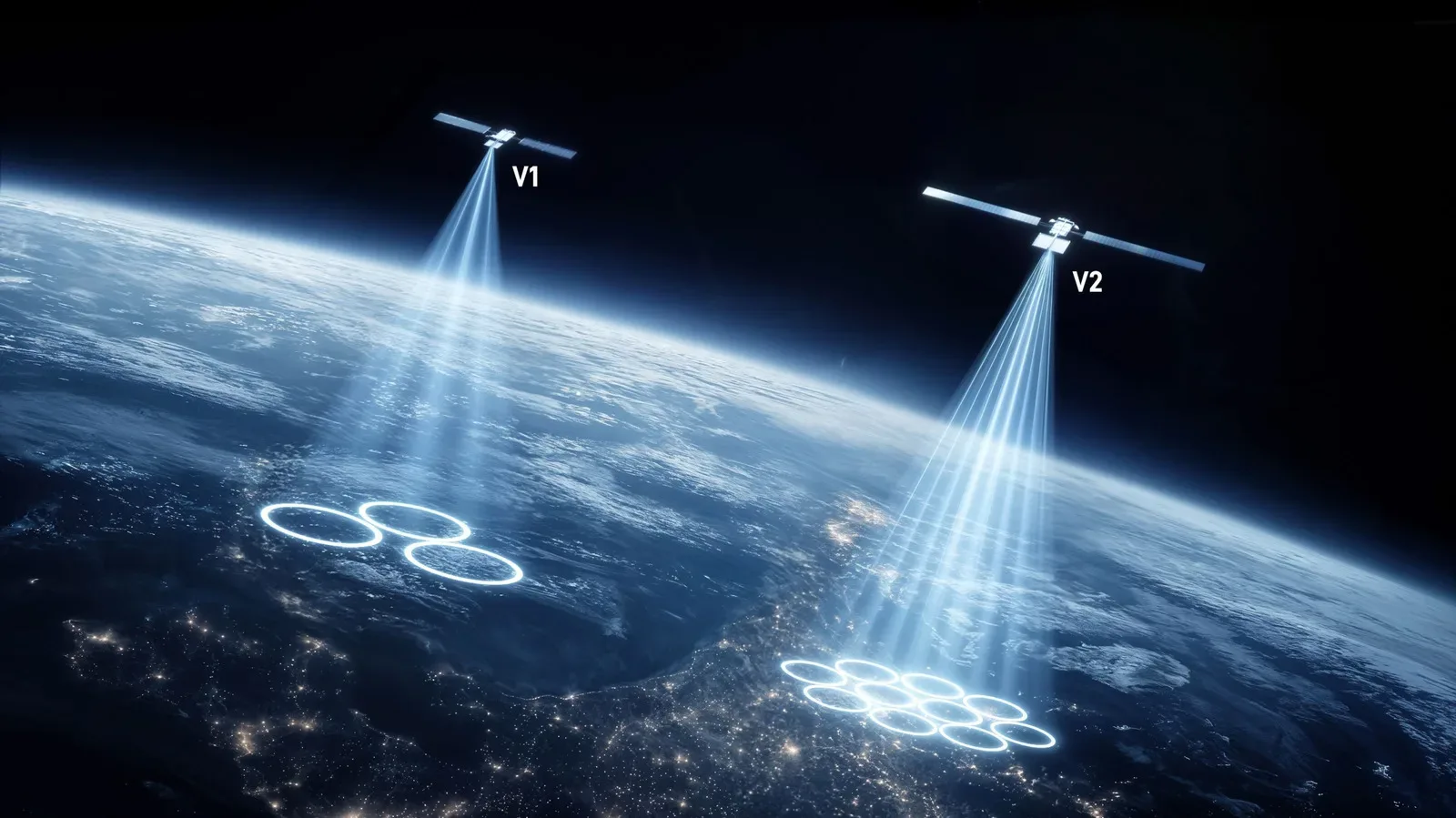
SpaceX has received Federal Communications Commission approval for a proposal that is enormous even by satellite-constellation standards: Starmind, an authorized network of as many as 1 million satellites intended to function as an orbital AI data-center system.
The company presented the project as an alternative to terrestrial data centers amid rising demand for AI computing capacity. Its case is built around a simple promise: satellites can use solar power in orbit and, in theory, avoid some of the operating and maintenance demands associated with facilities on the ground.
Approval, however, should not be mistaken for proof that the concept works at the proposed scale. The decision gives SpaceX permission to pursue the constellation subject to deployment conditions. It does not settle the central engineering question raised by critics: whether large amounts of computing hardware can reliably shed enough heat in space to operate as an AI data center.
That distinction matters. Starmind is now a regulatory authorization with stated milestones, not a demonstrated orbital computing network.
For more context, explore Shang-Chi 2 Has ‘Real Movement’ as Dave Callaham Confirms Early Sequel Work.
What Starmind is meant to do
AI computing requires substantial hardware capacity. In broad terms, that means processors perform vast numbers of calculations while drawing power and producing heat. A conventional data center is a building full of that equipment, supported by power delivery, networking, cooling infrastructure and ongoing maintenance.
SpaceX’s proposed answer is to move that computing infrastructure into orbit. The company has argued that orbital data centers could meet expanding AI demand more efficiently than ground-based sites, pointing specifically to solar energy and lower operating and maintenance costs.
The proposition has an immediately understandable appeal. Ground-based AI facilities can require considerable electricity, and cooling is a major design concern. Putting solar-powered hardware above the atmosphere sounds like a way to decouple computing growth from some of those terrestrial constraints.
But the word cooling needs careful treatment here. Space is cold in the everyday sense, yet a satellite does not cool itself merely by being surrounded by cold emptiness. That is the core challenge critics have highlighted.
Why heat is the project’s central technical problem
On Earth, equipment can lose heat through contact with air or liquids. Fans move air, liquid systems carry heat away and facilities can use external cooling equipment. In orbit, there is effectively no surrounding air to carry heat from a satellite’s electronics.
Instead, heat must leave a spacecraft primarily through radiation: the emission of energy from its surfaces. This is not the same as “having cold space around it.” A system still needs enough suitable surface area and thermal design to send the heat it generates away.
That creates an especially difficult scaling question for Starmind. AI computation is useful precisely because it can be intensive, but intensive computation also creates heat. Critics argue that there are fundamental physical limits to radiating enough of that heat away across a constellation of this size. The concern is not just whether one satellite can operate a computer in orbit; it is whether a vast network of satellites can support the implied computing workload while keeping hardware within operating limits.
In other words, solar power addresses the energy-input side of the equation. It does not automatically solve the heat-output side. Any assessment of an orbital data-center proposal has to consider both.
The scale: one million authorized satellites
The FCC authorization covers orbital layers spanning 50 kilometers at altitudes between 500 meters and 1,002 kilometers, as described in the approval terms. SpaceX has permission to place Starmind satellites into those assigned orbital bands.
The headline number remains startling: one million satellites. At that scale, the proposal is not simply a new spacecraft program. It would be a major change in the number of active objects that must operate safely in orbital space.
Critics have therefore raised collision and debris concerns alongside the thermal objections. A collision in orbit can create debris, and debris can present risks to other satellites. With such a large authorized constellation, avoiding close approaches and preventing failures from becoming debris-generating events would be central practical challenges.
These issues are connected. A data-center satellite would need power systems, computing hardware, communications capability and thermal-management components. Every added system can influence mass, reliability and operational complexity. At constellation scale, even a small failure rate could become consequential.
What the FCC approval actually requires
The authorization is accompanied by deployment deadlines. SpaceX must place at least one authorized satellite into its assigned orbit by November 25, 2033. It must have deployed 100,000 satellites by November 25, 2035, and all 1 million authorized satellites by November 25, 2040.
There is an apparent inconsistency in the reported milestone language: it also states that 500,000 satellites must be deployed by November 25, 2028, while describing that date as three years after the 2035 100,000-satellite deadline. A 2028 deadline would precede both 2033 and 2035, so the sequence as reported does not line up chronologically. The available details do not clarify whether that date is a reporting error or reflects a different condition.
That uncertainty is worth preserving rather than smoothing over, because the schedule is one of the few concrete measures attached to such a far-reaching proposal. SpaceX previously indicated that launches could begin in 2027, but whether it can meet that timeline remains unproven.
Authorization is not deployment
The decision is significant because it establishes that the project can proceed under the FCC’s approved framework. It also signals official enthusiasm for a new approach to AI infrastructure; FCC Chairman Brendan Carr characterized the approval as a step toward an era of “super intelligence” and a new frontier.
Yet an approved maximum is very different from a completed system. For Starmind to become the infrastructure SpaceX describes, the company would need to launch and operate hardware at unprecedented scale, make the computing case work in orbit, manage heat through radiation, and minimize collision and debris risks across many orbital layers.
There is also a practical information gap. The currently available description establishes the broad objective—an AI orbital data center—and the authorized number of satellites, but it does not explain the specific computing architecture, the thermal design, or how the network would demonstrate that it can do useful AI workloads at scale. Those details will determine whether the proposal becomes a viable computing platform rather than a compelling but unresolved idea.
Why this matters beyond the space industry
The Starmind plan lands during a broader race to expand computing capacity for AI. For technology companies, the attraction is clear: a new source of power and physical space could potentially change how infrastructure is built. For regulators and satellite operators, the same proposal raises questions about stewardship of orbital space and the consequences of deploying extremely large fleets.
It is also a reminder that AI infrastructure is not purely a software issue. The models may be digital, but the computation depends on physical systems: processors, power generation, communication links and heat removal. On Earth, those realities involve buildings and cooling installations. In orbit, they become spacecraft-design and space-safety problems.
For now, Starmind is best understood as an approved ambition with unusually high stakes. SpaceX has regulatory permission to begin building toward a one-million-satellite orbital AI network. The harder phase is still ahead: demonstrating that the physics, hardware and orbital operations can support the promise.