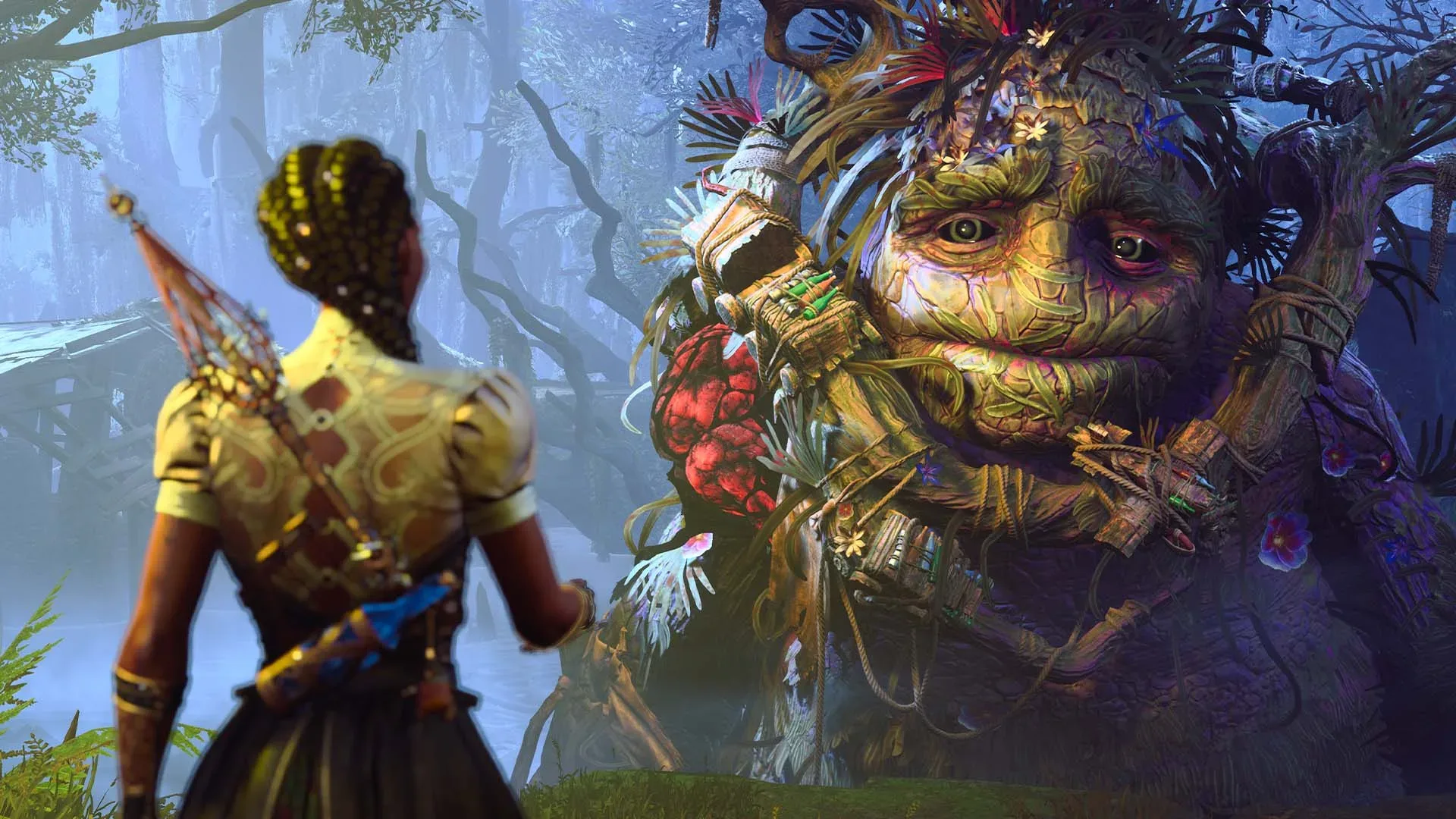
Compulsion Games creative director David Sears has offered an unusually candid assessment of the financial logic behind South of Midnight. He remains clear that the team wanted to make the game, but says he would “probably” not have chosen to fund it himself if the decision and financial risk had been his alone.
The point is not that the project lacked artistic value. Rather, Sears’ comments draw a line between a game a studio passionately wants to create and a game that fits a sustainable funding model. That distinction matters even more now that Compulsion has been spun out of Microsoft and is seeking collaborative work with other partners.
A creative win and a difficult business case can coexist
South of Midnight launched in 2025 and went on to earn multiple awards, including a BAFTA. That is meaningful recognition for a game made by a studio that had been working within Xbox Game Studios after Microsoft acquired Compulsion shortly before the 2018 release of We Happy Few, which was published by Gearbox Publishing.
But awards, cultural relevance and corporate return are not interchangeable measures. A game can earn acclaim, build a studio’s reputation, expand the artistic identity of a platform and still fail to generate the kind of revenue a conventional investor would require. Sears’ remarks directly acknowledge that tension.
He described an environment in which Xbox backed games that were not necessarily expected to make substantial money. In that framing, projects such as South of Midnight and Double Fine’s Keeper could help give a platform prestige or become works with lasting cultural significance. The trouble, Sears suggests, is that funding a portfolio of ambitious, lower-return projects depends on a continuing willingness to absorb that risk.
“I wanted to make it. No doubt,” Sears said, while adding that the model looked unsustainable in hindsight.
That is a far more nuanced position than simply dismissing the game. Sears can believe the game deserved to exist and still conclude that its financing was precarious. For players, that may sound coldly commercial. For studios, though, the ability to keep teams employed, retain control of intellectual property and fund another production is inseparable from how a project is paid for.
What Sears means by sustainability
In this context, sustainability does not mean environmental policy or whether a developer can physically finish a game. It refers to whether a funding approach can continue over time without a company deciding the spending no longer makes sense.
Related coverage includes South of Midnight Director Reflects on Xbox Funding: 'In Hindsight... It Was Unsustainable'.
Large platform holders can sometimes support games for reasons beyond an individual title’s direct sales. A release may broaden a subscription library, demonstrate the range of a platform’s catalog, attract creative talent, strengthen a brand’s identity or create an intellectual property asset with longer-term potential. Those goals can make room for projects that might look less attractive under a strictly standalone profit-and-loss calculation.
Yet that latitude is also vulnerable to a change in corporate priorities. Sears said he warned during development that the flow of money could eventually stop, with difficult effects farther down the chain. His concern was not presented as knowledge of a specific decision or date. It was a broader belief that a generous era of investment would not last indefinitely.
His description of conversations with fellow directors captures the uncertainty of that period: there was a sense of extraordinary good fortune, but Sears says he was skeptical that it represented a permanent “golden era.” In practical terms, a studio can be staffed and planned around a publisher’s current appetite for risk, only to face a radically different situation when leadership changes strategy, budgets tighten or a wider restructuring arrives.
Prestige is valuable, but it is not cash flow
“Prestige” can be a vague word, so it is worth separating it from immediate revenue. A prestige project can help a company be seen as a place that supports distinctive work. It can give a platform an acclaimed release that reaches an audience not served by its biggest franchises. It can also create goodwill with players and developers who want more variety than a catalog built only around the safest commercial bets.
Those are real advantages. They are simply harder to measure than a game’s direct income. If a project is not expected to make much money, then somebody must consistently decide that the indirect benefits justify the expense. Sears’ reflection suggests that Microsoft’s past willingness to make that choice gave Compulsion an opportunity it might not have found through a more conventional financing route.
That does not turn the arrangement into a mistake automatically. It means the arrangement carried a structural dependency: it worked while the parent company was committed to the rationale behind it. Once that commitment shifts, even celebrated teams can be affected.
Compulsion’s spinout changes the immediate question
Compulsion has now been spun out of Microsoft as part of Xbox’s recent restructuring. The studio retained all of its intellectual property and has an undisclosed amount of financial runway. Financial runway is the period a company can continue paying its costs before it needs new income or financing. Because neither the amount nor the duration has been disclosed, it is not possible to say how much time Compulsion has to secure its next deal.
The retained IP is especially important. Intellectual property, often shortened to IP, includes the studio’s owned creative assets and rights: its game worlds, names, characters and related concepts. Keeping that IP gives Compulsion options. It could potentially return to existing work, use its own concepts in pitches or negotiate from a position with more control than a studio leaving without its creative catalog.
There is still no confirmed next project or confirmed partner. Compulsion is looking for collaborative work, but that should not be mistaken for an announcement. The absence of a disclosed project means there is no basis to assume the studio will make a sequel, repeat the scale of South of Midnight, or move to a particular platform or publisher.
What can reasonably be inferred is that its next arrangement may need a clearer commercial framework. That does not necessarily mean Compulsion must abandon unusual subject matter or artistic ambition. It may mean the scope, budget, ownership structure, distribution plan or partner expectations need to align more tightly than they did under a model built around corporate prestige and platform breadth.
Why the remarks matter beyond one game
Sears’ comments are noteworthy because they do not reduce creative work to a binary of success or failure. South of Midnight received awards recognition, including a BAFTA, and is part of Compulsion’s body of work. At the same time, its creative director is willing to say the funding decision did not look sustainable from a business perspective.
That can be uncomfortable, because audiences often want a simple answer: either a game was worthwhile and should have been funded, or it did not earn enough and therefore should not exist. The reality described here is messier. A game may be artistically worthwhile, important to its makers and meaningful to its players while still requiring a level of institutional support that cannot be relied upon forever.
It also puts a sharper focus on the difference between ownership and employment. When a studio belongs to a large parent company, it may gain access to resources that make a project possible. But it also operates inside decisions made at a much larger scale. When it becomes independent, it may hold more control over its direction and IP, while facing greater responsibility for financing, dealmaking and survival.
Sears characterized Microsoft’s decision to allow studios to spin out rather than close them as more humane than the version of the company he knew in the 1990s. That is not a claim that independence is easy. It is recognition that a spinout preserves a path forward: a team can seek new partners and keep its work rather than disappearing entirely.
What players should and should not read into this
- It does not mean Sears regrets making South of Midnight. He explicitly said he wanted to make it.
- It does not establish that the game was creatively unsuccessful. Its awards, including a BAFTA, point in the other direction.
- It does not reveal Compulsion’s next game. No new project has been confirmed.
- It does suggest that the studio’s future deals may be shaped by a more cautious funding climate. That is an analysis grounded in Sears’ sustainability concerns and the studio’s new independent status, not a disclosed production plan.
The broader platform-business backdrop is also worth watching. Companies across technology regularly weigh expensive content and long-term ecosystem goals against more immediate financial discipline; the pressures on service-led strategies can be seen in recent reporting on the scale of Apple’s services business, even though Compulsion’s situation is specific to Xbox and game development.
For now, Compulsion’s position is defined by possibility rather than certainty. It has its IP, an independent future and an undisclosed amount of runway. Sears’ frankness explains why the next chapter may look different: not because the team no longer values ambitious games, but because making them outside a major platform holder requires a funding case that can endure after the mood around investment changes.