A coalition led by the Human Consent Foundation has entered the copyright dispute between The New York Times and OpenAI and Microsoft, arguing that the entertainment business already has practical ways to license creative work for AI training.
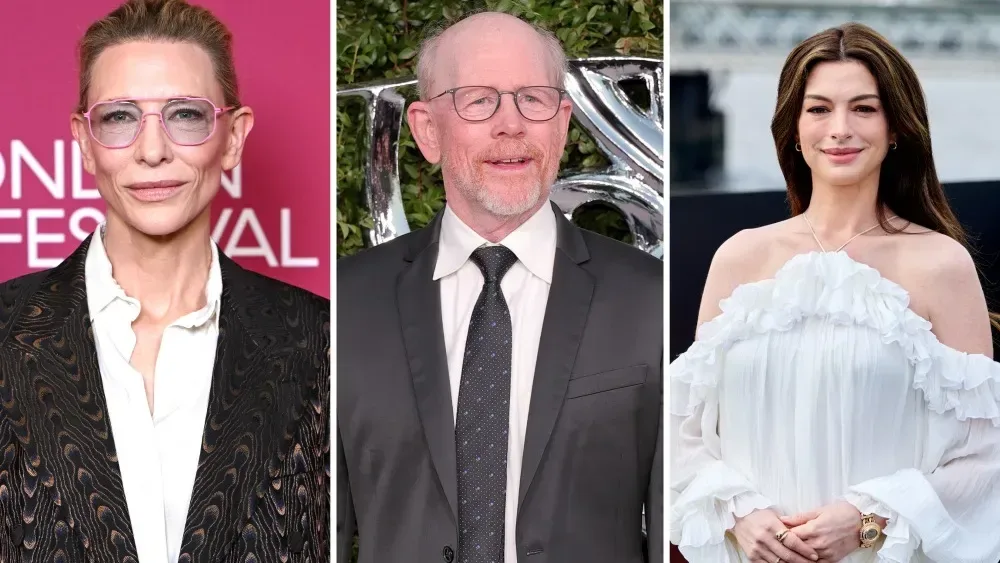
The 31-page amicus brief was filed in the Southern District of New York and challenges a central practical argument associated with the technology companies’ position: that obtaining permissions for vast amounts of creative material would be prohibitively expensive or too difficult to administer. The Human Consent Foundation, a nonprofit backed by Cate Blanchett and focused on protecting individuals’ likenesses from unauthorized AI scraping, was joined by CAA, the Music Artists Coalition, the National Association of Voice Actors, Writer, Inc., and the Creative Coalition on AI.
An appendix to the filing includes support from a group of prominent entertainment figures, among them Anne Hathaway, Emma Thompson, Dan Levy, Ron Howard, Madonna and Olivia Wilde.
The argument is about more than whether AI is useful
The brief does not hinge on a claim that artificial intelligence should be stopped. Its stated concern is who gets to decide whether creative work is included in the material used to develop AI systems, and whether the people who made that work receive a meaningful choice and potential compensation.
That distinction matters. An AI model is trained by processing material—often called training data—to identify patterns that allow it to generate or predict text, images, audio or other outputs. The legal dispute is not simply about a model’s final response to a prompt. It concerns the earlier act of obtaining and using underlying works during development.
The coalition says existing creative-industry rights systems undermine the idea that licensing is impossible at meaningful scale. Its position is that music, writing, performances, images and other dispersed works have long been subject to rights-clearance processes. In plain terms, the brief argues that the industry has mechanisms for locating rights holders, negotiating permitted uses and setting terms even when many separate creators and works are involved.
“We are not starting from scratch,” Human Consent Foundation co-founder and CEO Nikki Hexum said in a statement, arguing that a functioning market and infrastructure for licensing creative work already exist.
That is a consequential framing. Rather than treating AI training as an entirely unprecedented use that cannot fit within licensing, the group contends it can be addressed through expanding and adapting systems creators already use. It also emphasizes a creator’s option not to participate—an issue with particular resonance for performers, voice actors and public figures whose likenesses or recognizable styles may hold commercial value.
What an amicus brief does—and does not—do
An amicus brief is a filing from a person or organization that is not one of the core parties in a case. “Amicus” is short for amicus curiae, commonly understood as a friend of the court. It lets outside groups explain why the court’s decision could affect a particular field, workforce or public interest.
Here, the Human Consent Foundation coalition is not taking over the lawsuit or adding a new claim. It is offering the court an industry-facing argument: that claims about the supposed unworkability of licensing do not match how creative rights are routinely handled.
The filing itself does not decide the case, establish a licensing rate or require any AI developer to adopt a particular deal structure. Its importance lies in the perspective it puts before the court. If a court finds arguments about viable licensing relevant, the question of whether a real market can function may become an important part of how it evaluates the competing positions.
Fair use remains a key fault line
The entertainment coalition’s filing arrived one day after separate amicus briefs from SAG-AFTRA, the Writers Guild of America and the American Federation of Musicians. Those labor groups urged the court to reject the view that OpenAI and Microsoft’s conduct qualifies as fair use, arguing that such a result would undermine terms negotiated by unions and the industry.
Fair use is a legal doctrine that can, in some circumstances, allow use of copyrighted material without permission. It is not a blanket exception that automatically applies whenever material is used for a new technology, a research purpose or a commercial product. Whether it applies depends on legal analysis of the particular use and facts at issue.
The unions’ concern, as reflected in their filing, is practical as well as legal. Collective bargaining agreements can set protections and terms around creative labor. If an expansive fair-use ruling were to supersede the need for permission in the relevant circumstances, the unions argue that bargains reached at the negotiating table could lose their force.
For performers and writers, this connects copyright questions with questions of consent and work. A performer’s recorded voice, an actor’s image, a script or a song can be a creative work with legal protections, but it can also be part of someone’s livelihood. The filings place that human dimension directly alongside the technical debate over model training.
Why the licensing-market dispute is especially important
At the center of the Human Consent Foundation brief is a disagreement over market reality. The coalition says defendants have characterized licensing creative works for AI training as too costly and have argued that there is no established method for valuing training data. The brief responds that rights-clearance infrastructure and scalable workflows already exist in creative industries.
This does not mean the filing establishes a universal price for every work or resolves how every AI-training agreement should be structured. Licensing can vary based on the type of work, the rights being granted, the duration of use, exclusivity, territory and many other terms. The coalition’s narrower assertion is that difficulty in assigning value does not demonstrate that a market cannot exist.
That difference is important. Markets often develop terms through negotiation rather than beginning with one universally accepted price. The brief’s position is that AI training should be approached through that familiar process: permissions, contracts, representation and the ability to decline participation.
The dispute also arrives as AI’s broader infrastructure demands are becoming harder to separate from the products people use every day. For another example of the technology’s wider economic footprint, see how AI memory demand is affecting storage costs. The case before the Southern District of New York concerns a different question, but both developments show that AI is not an abstract software trend; it increasingly creates negotiations over resources, access and who bears the cost.
Consent is the coalition’s organizing principle
The Human Consent Foundation’s intervention foregrounds consent as the principle that should guide a growing AI-data licensing market. Hexum said the goal is to protect the people who create the value in that market and ensure they have a meaningful choice.
For creative industries, “consent” is not merely a request for acknowledgment after a work has been used. It implies a chance to authorize the use beforehand, negotiate conditions or refuse. That is why the coalition puts so much weight on existing licensing frameworks: those systems are presented as the route through which choice becomes operational rather than symbolic.
The outcome of the underlying lawsuit remains unresolved, and neither the coalition’s brief nor the unions’ filing determines how the court will rule on fair use, copyright liability or any remedy. What the filings do make clear is that a substantial group of entertainment organizations and artists wants the court to view AI training through the established realities of creative labor and rights management—not solely through the lens of technical scale.
For game, film, television, music and publishing audiences, the immediate case is a legal proceeding rather than a consumer-facing product change. But the issues it raises are broad: whether training uses require permission, whether licensing can work at scale, and whether creators can meaningfully opt in or out. Those questions will help shape the relationship between AI companies and the people whose work gives AI systems much of their raw material.