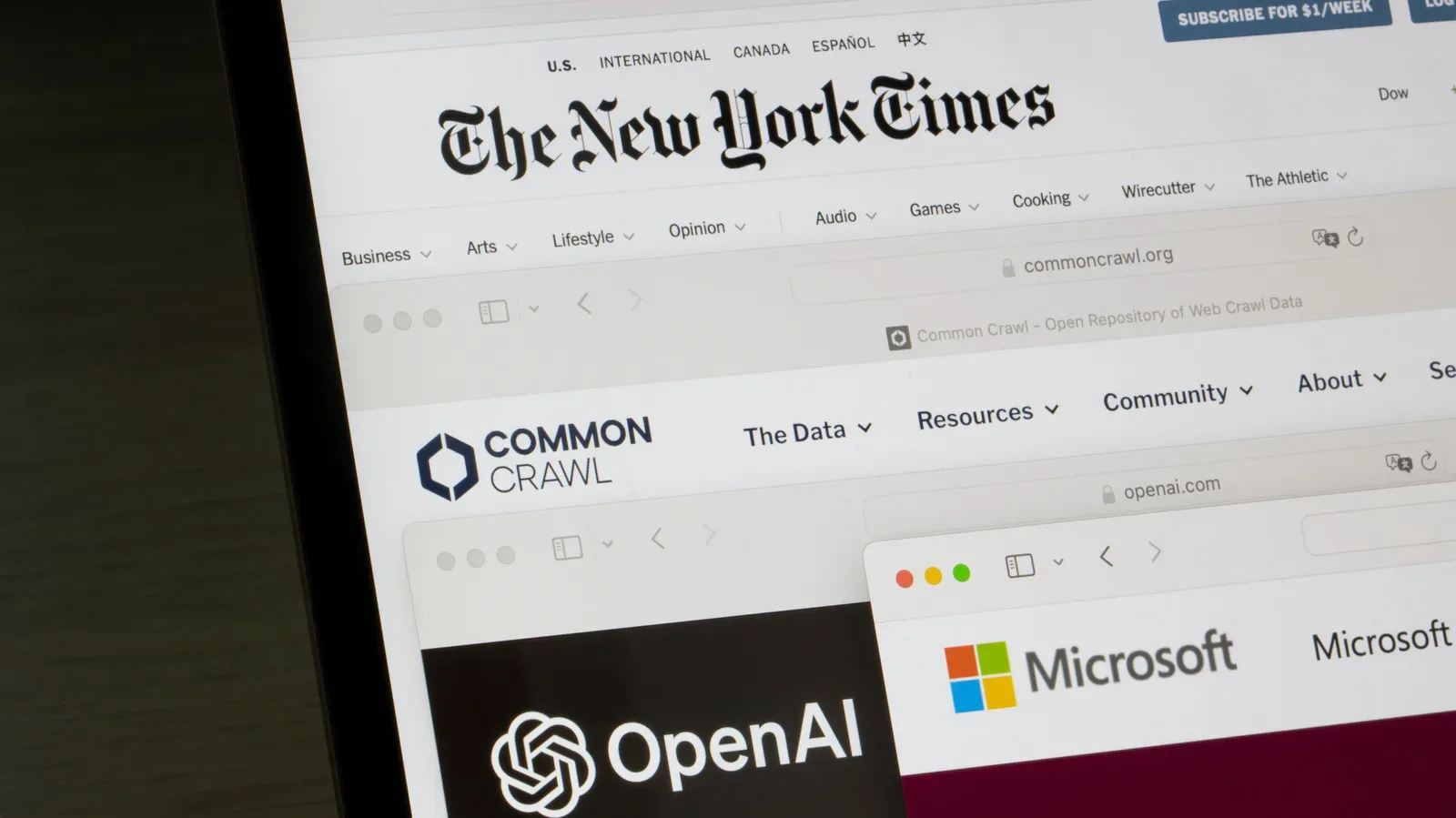
The legal fight between The New York Times, OpenAI and Microsoft is not only a dispute over whether AI companies may use one publisher’s reporting. It is increasingly a test of how copyright law should separate genuinely transformative computing from systems that may substitute for the work they ingest.
The Wikimedia Foundation, the nonprofit behind Wikipedia, has submitted an amicus brief calling for a more specific answer than either extreme. Its position is that an overly narrow view of fair use could restrict technological development, while a blanket declaration that AI use is fair could damage the information ecosystem on which open knowledge relies.
That distinction matters well beyond AI chatbots. Search, game-help communities, public reference material and the wider web all depend on people and organizations having reasons to create, publish and link to useful material. As access to web information becomes more controlled, the consequences can also reach players trying to locate reliable answers online. Login barriers and AI-era discovery are already a concern for game-answer seekers, making the larger argument over what remains accessible, attributable and sustainable especially relevant.
What the lawsuit is asking
The case centers on the use of material published by The New York Times, including use for AI model training. The publisher’s position is that AI companies should not receive unrestricted permission to use its work. OpenAI and Microsoft have argued that training and deploying models from published material are important to technical progress and can qualify as fair use.
Fair use is a copyright doctrine that can permit some unlicensed uses of protected work, depending on the facts. In this dispute, the hard question is not merely whether a system encountered copyrighted text. It is whether the use changes the purpose of that material enough, and creates a sufficiently different result, to justify the use without undermining the original work.
Wikimedia does not endorse an all-purpose rule that answers every AI question at once. Instead, it asks the court to examine particular uses and their practical effects. That approach recognizes that “AI” covers many distinct processes. A model learning statistical patterns from a large body of text is not necessarily doing the same thing as a product fetching a publisher’s article and presenting it back to a user in response to a prompt.
Wikimedia’s proposed distinction: transformation versus replacement
For model training, Wikimedia’s argument is that scraping copyrighted material may be fair use when it trains large language models that are new and different from the underlying sources. A large language model, or LLM, is a system trained on vast amounts of language data to produce or interpret text. In the framing presented by Wikimedia, the key consideration is whether the training produces a new system rather than a tool that simply serves the original material back to the public.
That is not a claim that every model output will be harmless, accurate or non-infringing. It is a narrower point about the training use itself: the court should consider whether the model is sufficiently distinct from the works that contributed to its training. Wikipedia is also described as one of the highest-quality data sources used in LLM training, giving Wikimedia a direct stake in rules that affect the future of open, collaboratively created knowledge.
The foundation’s warning runs in both directions. A rule that makes fair use too difficult to establish could hinder open-source technology and access to information. But a rule treating all AI use as presumptively fair could create incentives to lock down the web, particularly if publishers conclude that making material available simply supplies systems that compete with or replace their work.
That concern is not abstract. Wikimedia argues that a broad ruling could weaken knowledge by reducing the availability of secondary sources. In practical terms, a web with fewer independently produced, accessible reference materials is a poorer foundation for researchers, readers, educators and the volunteers who build resources such as Wikipedia.
Why retrieval-augmented generation gets separate treatment
The brief also distinguishes model training from retrieval-augmented generation, commonly shortened to RAG. RAG is a method in which an AI system consults an outside knowledge base while responding, rather than relying exclusively on what was encoded during training. The retrieved material can be used to ground a response in a more authoritative or current source.
In the best-case version, RAG can make an answer more useful because it points back to the material that supports it. This is substantially different from an opaque response that gives no indication of where its claims came from. Attribution lets a reader evaluate a source, inspect its context and, where appropriate, visit the original publisher.
Wikimedia’s position supports fair-use treatment for certain RAG applications, but it draws a clear line at systems that reproduce existing articles without attribution. That boundary focuses on a real-world effect: if a user receives the substance of a publisher’s work without credit or a route back to it, the AI product may become a replacement rather than a research aid.
For users, this is the difference between an assistant saying, in effect, “Here is a summarized answer and the material it is based on,” and one delivering the article-shaped answer itself with no meaningful acknowledgement of who created it. The former can support discovery; the latter may reduce the incentive to produce the original reporting, analysis or reference work in the first place.
Training and RAG are related, but not interchangeable
- Model training: material is used to develop the capabilities of a language model. Wikimedia argues this can be fair use where the resulting model is something new and different from the inputs.
- RAG: a system retrieves information from an external knowledge base during a user interaction to help form its response.
- Regurgitation: an AI system reproduces pre-existing material. Wikimedia opposes treating uncredited reproduction of articles through RAG as acceptable.
- Attribution: identifying the work or source that supports an output, allowing users to understand where information came from and potentially consult it directly.
These categories can overlap in an individual product, but they raise different copyright and sustainability questions. Treating them as identical would obscure the issue the foundation is trying to put before the court: whether an AI system adds a meaningful new function, or instead captures the value of someone else’s work while severing the connection to its creator.
The open-web stakes in a publisher-versus-AI fight
Wikimedia’s intervention is notable because its mission depends on a broad base of accessible human knowledge. Wikipedia is created through collaboration, but that collaboration does not happen in a vacuum. Contributors need material to consult, assess and synthesize. If high-quality secondary sources become less available, a free reference project can be affected even when it is not a party to the original dispute.
The foundation’s general counsel, Stephen LaPorte, argues that the court must apply fair-use principles carefully, warning that an ill-fitting result could threaten free knowledge or constrain open-source development. The two concerns may pull in different directions, which is why the brief resists simple slogans about AI training either always being theft or always being innovation.
For publishers, the major concern is control over the use and commercial value of original work. For developers and open technology advocates, the concern is that highly restrictive rules could make useful research and development inaccessible except to the biggest organizations with extensive licensing resources. For readers, the concern is whether future tools drive people toward credible material or quietly extract its value while making provenance harder to see.
Wikimedia’s proposed approach does not eliminate difficult judgment calls. Courts would still need to determine whether a particular training use is truly transformative, whether a particular retrieval system is reproducing protected expression, and whether attribution is meaningful rather than decorative. But it would avoid assuming that every technical method deserves exactly the same legal treatment.
What happens next
A summary judgment is expected in the case in the near future. Such a ruling could be influential because the dispute is one of more than a dozen similar AI copyright cases moving through the courts.
The immediate case concerns The New York Times, OpenAI and Microsoft, yet the result could inform how future systems are designed. Developers may have stronger incentives to build retrieval tools that identify and link to the material they use. Publishers may watch closely for guidance on when their work can be used to train models and when outputs cross into replacement. Open-knowledge projects will be looking at whether the ruling preserves both a workable path for innovation and a healthy supply of accessible, human-created information.
Wikimedia’s central request is not for a technology exemption or a total ban. It is for a legal framework capable of seeing the difference between learning from the web, helping users navigate it and reproducing it without credit. In a case with implications for information access, creative labor and the future shape of online knowledge, that may be the most consequential distinction of all.