Apple closed its fiscal 2026 with record results from both its iPhone line and its Services segment. For the fourth quarter, which ended September 26, 2026, the company reported $114.5 billion in total revenue, a year-over-year increase of 12%.
Services generated $31.57 billion in the quarter, an all-time high and a 9.8% rise from the prior-year period. iPhone revenue reached $57.58 billion, up 17%, setting a September-quarter record for the product family.
The figures make for a notably hardware-led quarter while also showing the scale of Apple’s recurring and platform-oriented business. iPhone alone represented a little more than half of reported quarterly revenue, while Services accounted for more than a quarter. Those are different parts of the business, but both moved upward in the same period—a useful signal as Apple heads into the holiday season with a newly expanded device lineup.
The headline numbers from Apple’s fiscal fourth quarter
- Total revenue: $114.5 billion, up 12% year over year.
- iPhone revenue: $57.58 billion, up 17% year over year and a September-quarter record.
- Services revenue: $31.57 billion, up 9.8% year over year and an all-time record.
- Overall gross margin: 47.9%.
- Diluted earnings per share: $2.10, up 14% year over year.
Apple’s reported gross margin included an approximately one-percentage-point favorable effect from tariff refunds following the Supreme Court’s invalidation of Trump’s tariffs. Diluted earnings per share also included a favorable impact of $0.05 from those refunds.
That distinction matters because revenue and profitability answer different questions. Revenue is the money brought in through sales during the quarter. Gross margin is the percentage of revenue remaining after the direct costs associated with the products and services sold. Earnings per share, meanwhile, expresses profit on a per-share basis; diluted EPS uses a share count that includes the potential effect of additional shares from instruments such as employee compensation awards. The tariff-refund benefit does not erase the underlying revenue gains, but it is relevant context when assessing the reported margin and per-share earnings results.
Services becomes a larger pillar without replacing iPhone
At $31.57 billion, Services posted the strongest quarterly revenue total Apple has reported for that segment. The 9.8% growth rate was slower than iPhone’s 17% increase, but it was built on a substantial base and occurred at the same time as iPhone revenue climbed to a September-quarter high.
For players and people who follow the wider games business, Services is a category worth watching because large technology ecosystems increasingly matter alongside game consoles and individual releases. It is not a direct measure of game spending, nor do these results provide a breakdown for gaming-related revenue. Still, a record Services quarter indicates the growing financial weight of Apple’s broader software, platform and digital business within its overall operation.
The practical point is less about declaring one side of the company more important than the other. The quarter instead shows the two reinforcing Apple’s financial foundation in different ways: iPhone delivered the biggest dollar increase among the figures disclosed here, while Services established a new high-water mark of its own.
Related coverage includes Apple Services Reaches $31.57B as iPhone Sales Set September-Quarter Record.
A new CEO and an ambitious device slate
John Ternus, previously Apple’s head of hardware, became CEO on September 1 after Tim Cook. In comments accompanying the results, Ternus described the quarter as the close of Apple’s best fiscal year and pointed to what the company sees as its most ambitious product lineup to date.
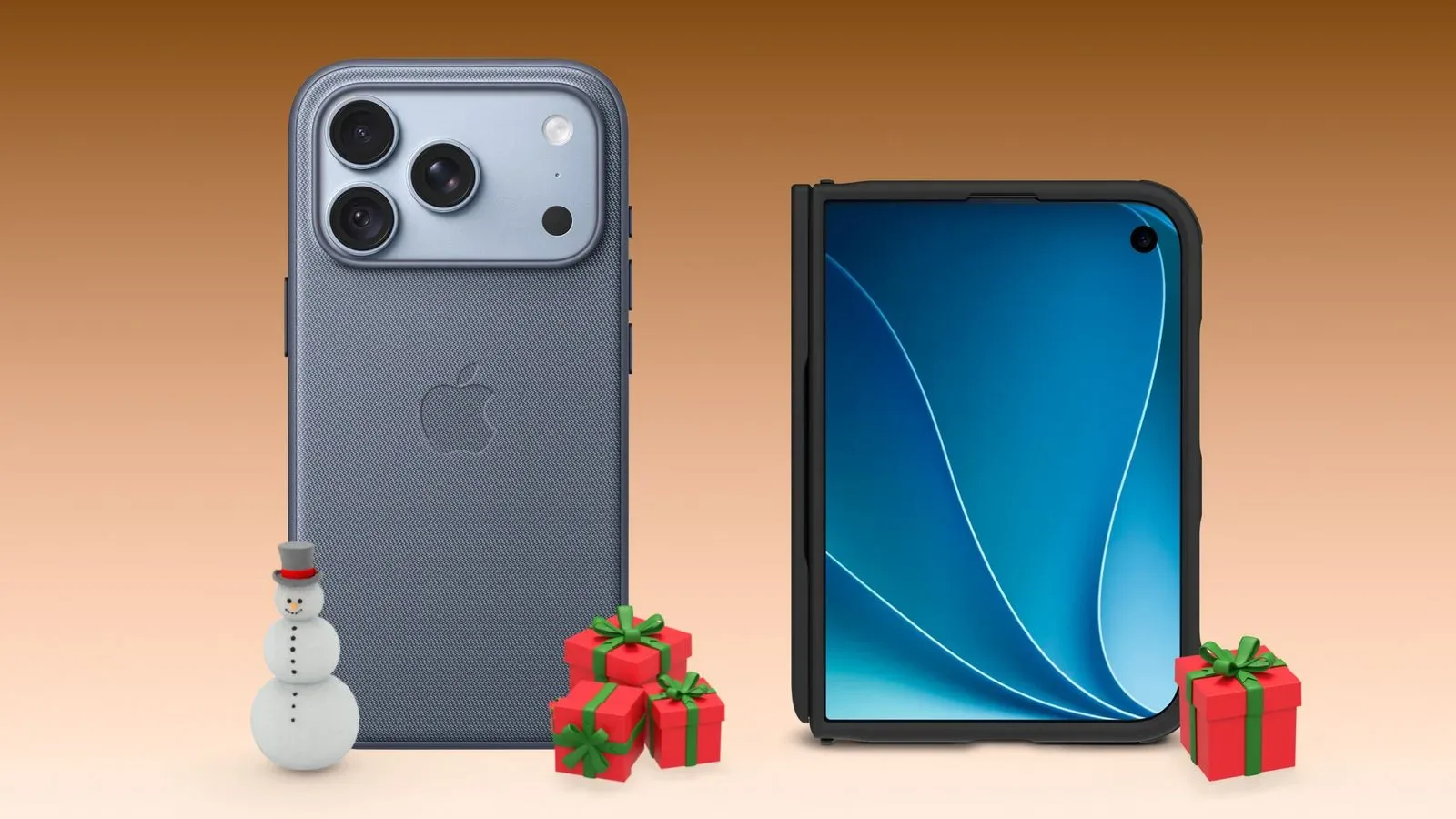
That lineup includes the foldable iPhone Duo, iPhone 18 Pro and iPhone 18 Pro Max. Ternus also cited a new generation of home hardware, Touch coming to Mac for the first time, and the all-new Siri AI as the company approaches the holiday period.
Those references offer important context for the unusually large iPhone result. Apple is not framing the next phase around a single model or one narrowly defined product category. It is presenting a coordinated set of phone, Mac, home and AI-related changes. The reported results do not establish how much any newly cited product or feature contributed to the quarter, and they should not be read as a sales breakdown for those items. They do, however, establish the backdrop against which Apple will try to sustain momentum into the holiday season.
For consumers considering accessory purchases around the latest Pro phone, Joking Joystick has also covered early Black Friday price cuts on iPhone 18 Pro cases. That is a separate retail story, but it illustrates the ecosystem that forms around a major iPhone cycle: a flagship device can drive attention not only to the phone itself but also to practical add-ons and support products.
How to read the tariff-refund effect
Apple reported a 47.9% overall gross margin, with about one percentage point of favorable impact from tariff refunds. It also reported $2.10 in diluted earnings per share, including a $0.05 favorable impact from the same refunds.
These disclosures are useful because they separate business performance from an external factor that lifted some profitability measures. A favorable one-time or policy-related item can materially affect margin and earnings in a single reporting period, even when the main sales trends—here, 12% total revenue growth, 17% iPhone growth and 9.8% Services growth—are calculated separately from that benefit.
In plain terms, the refunds improved the quarter’s profitability presentation. They are not presented as the reason iPhone or Services revenue grew. Keeping those concepts separate helps avoid a common earnings-season mistake: treating revenue growth, gross-margin movement and per-share profit as interchangeable. They are connected, but they are not the same metric.
What the results mean heading into the holidays
The immediate takeaway is straightforward: Apple enters the holiday period after a quarter in which its signature hardware category and its Services business both reached major milestones. iPhone sales hit a September-quarter record, Services set an all-time revenue record, and company-wide revenue rose 12% to $114.5 billion.
There are still limits to what this report reveals. It does not provide a Services subcategory breakdown, identify how much each newly mentioned device or feature contributed, or forecast future quarterly performance. It also does not establish any specific impact on games, game developers or game players. Those claims would require information beyond the figures disclosed.
What is supported by the results is a strong starting position. Apple has a record Services base, a record September quarter for iPhone, a new CEO with a hardware background, and a product message spanning foldable phones, Pro iPhones, home hardware, Mac touch input and Siri AI. As the holiday season begins, the company’s challenge is no longer simply to point to growth in one corner of the business. It is to convert a broad product slate and a giant installed ecosystem into continued momentum after an already record-setting fiscal year.