
Slate’s approach to the Slate Truck is unusually literal: if an owner wants a connected vehicle, they can buy the hardware that makes it connected. If they do not, the truck can remain without it. The company’s optional Telematics Module is the $275 component at the center of that choice, adding a cellular connection that enables remote access functions and battery pre-conditioning.
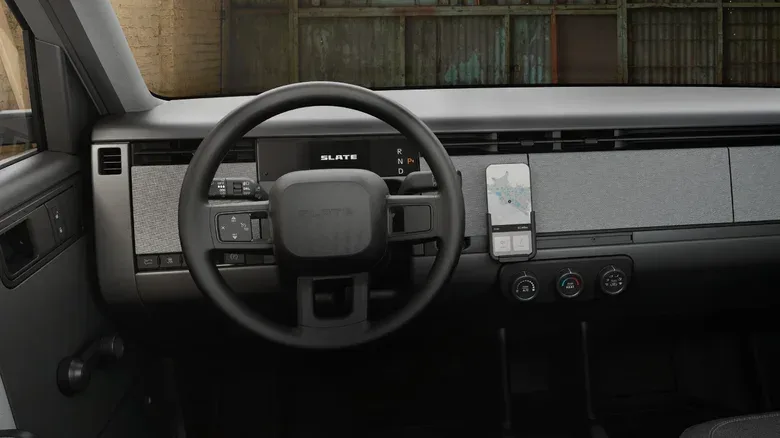
That distinction matters because the module is not required to operate the truck, and Slate’s planned free phone app is not compulsory either. On the entry-level Blank Slate, there is no built-in infotainment system and no base-truck modem. Rather than treating a permanent cellular link as standard equipment, Slate has made it an owner-selected add-on.
The result is a small accessory with some big practical questions attached. The initial $275 includes one year of service, but the future subscription price is unknown. Slate has also not detailed the full scope of “remote access,” leaving prospective owners to separate confirmed capabilities from features that are common elsewhere but not yet promised here.
What the Telematics Module is
In straightforward terms, telematics is the exchange of vehicle information over a communications network. A modem is the piece of hardware that lets a vehicle communicate through a cellular network rather than only through a nearby phone connection. Slate’s module supplies that cellular route between the truck and the owner’s phone.
It is compatible with every Slate body style. The module is described as plug-and-play, although that should not be mistaken for a zero-effort installation. Slate categorizes the job as intermediate, says standard tools are enough, and estimates a fitting time of roughly 30 minutes to two hours. Owners comfortable with that level of vehicle work may be able to handle it themselves; others will need to weigh the accessory’s price against the time and confidence the installation requires.
Crucially, it is not a driving requirement. The Slate Truck will function without the module. It is instead an elective route to the kind of always-available remote interaction that has become familiar in newer vehicles.
The app and the module do different jobs
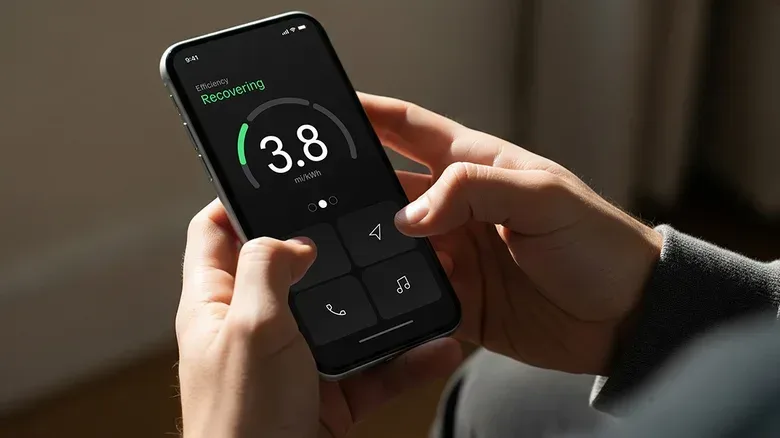
It is easy to assume a mobile app automatically means remote vehicle controls. Slate’s setup makes the difference especially important. The planned free app is expected to provide charge-status and battery-health information, help drivers locate charging stations, and support service functions. Those app functions do not mean the base truck has its own cellular connection.
The Telematics Module is what creates the cellular path that makes remote access possible. Put another way, the app is the interface on the owner’s phone; the module is the truck-side hardware that can receive and send information over a mobile network.
This arrangement gives buyers a choice that many connected-car systems do not foreground: they can use the truck and its app-related tools without opting into the extra hardware needed for remote commands. For some people, that may be an appealing reduction in complexity. For others, remote access may be sufficiently useful that the module feels less like an option and more like a necessary part of the ownership experience.
Battery pre-conditioning is the clearest confirmed benefit
The most concrete use Slate has identified is battery pre-conditioning. Electric-vehicle batteries can behave differently in cold weather. Pre-conditioning refers here to warming the battery before driving, and the module allows that process to be started remotely.
That can be particularly relevant for a truck kept outdoors through winter, especially when it is plugged in. An owner could potentially prepare the battery before setting out rather than waiting until they are ready to leave. Slate has not laid out the exact operation of this feature, so it would be premature to assume details beyond the confirmed ability to remotely pre-condition the battery.
It is also important not to conflate battery pre-conditioning with cabin comfort. Slate has not said whether the remote-access feature set includes heating or cooling the cabin. Nor has it explained whether battery pre-conditioning is linked to any particular charging state or other conditions. Those are meaningful details for anyone deciding whether the module will solve their cold-weather routine.
What “remote access” does not yet tell us
Remote access is a broad label. In other vehicles, it can mean commands such as locking or unlocking doors, finding the vehicle’s location, reviewing diagnostics, or managing climate settings. Slate has not specified whether its own version will include any of those functions.
For now, the sensible buying assumption is narrow: the module enables remote access and remote battery pre-conditioning, while the precise boundaries of remote access have not been disclosed. Buyers should not count on remote lock/unlock, tracking, cabin controls, or detailed diagnostics merely because those features exist in parts of the wider automotive market.
This is more than a terminology quibble. A driver whose priority is checking battery condition and preparing for a cold trip may find the confirmed feature compelling. Someone primarily seeking remote locks, a vehicle finder, or remote cabin conditioning has no confirmation that Slate’s module will offer what they want.
One year is included; the long-term connectivity cost is unknown
The $275 purchase covers the module and its first year of service. After that, Slate has not announced the price of connectivity. It has also not said which features, if any, would stop functioning if an owner chooses not to renew.
That unanswered question changes how the accessory should be evaluated. Its up-front cost is known, but its full ownership cost is not. The first year establishes whether an owner enjoys the connected features; the period after it is when the recurring value proposition will become clearer.
There is a useful contrast with more conventional connected-vehicle bundles. Ford lists a 5G modem for the 2026 Maverick and says modem activation enables free app features including remote locking and unlocking, remote start, and vehicle information. Rivian includes app-based remote commands such as locking and unlocking as standard, while charging separately for more advanced connected capabilities. Slate’s approach reverses the expectation at the hardware level: the cellular equipment itself is optional.
That does not automatically make Slate’s plan cheaper or more expensive over time. Without its renewal price and feature-retention policy, a direct cost comparison is incomplete. It does make the initial decision clearer: owners who never want the remote layer do not have to buy the cellular hardware in the first place.
Who should consider the module?
The strongest case is for an owner who knows they want remote battery pre-conditioning or values remote access enough to accept an ongoing service relationship after the included year. A winter climate, outdoor parking, and regular plugged-in charging could all make the confirmed pre-conditioning feature more relevant.
The weakest case is for a buyer attracted to the Blank Slate specifically because it avoids connected-car equipment. That owner can skip the module without losing the ability to drive the truck. Slate’s minimalist setup treats disconnected ownership as a valid configuration rather than an incomplete one.
- Consider it if: remote battery pre-conditioning is useful to your routine, or you want Slate’s remote-access capability and are comfortable with an as-yet-unpriced renewal after year one.
- Wait for more detail if: your purchase depends on a particular remote command, such as door locks, location services, cabin climate controls, or expanded diagnostics.
- Skip it if: you prefer to avoid a vehicle cellular connection and do not need remote functions. The truck does not require the module to be driven.
Privacy deserves the same scrutiny as the feature list
Any cellularly connected vehicle raises a basic data question: what information travels between the truck, the app, and the company’s systems? Slate has said it does not plan to sell driver data. At the same time, it has not specified the data the optional module sends or stores.
Those statements can coexist. A company may say it does not intend to sell data while owners still reasonably want clarity on what categories of vehicle information are collected, how long they are retained, and how the information supports the connected functions. Since the module is optional, buyers who prioritize limiting that data exchange have a direct choice at purchase.
For an accessible parallel on how software features and hardware choices can shape a buying decision, see our look at Pixel 11 versus Galaxy S26 AI and camera tools.
The bottom line for Slate Truck buyers
The Telematics Module is not an upgrade that makes the Slate Truck roadworthy; it is an opt-in connection package. It supplies the modem absent from the base vehicle, permits remote access, and has one firmly identified practical use: remotely warming the battery ahead of a drive. It costs $275 with one year of service included and can be owner-installed with standard tools, though Slate considers the job intermediate.
For now, the most important unknowns are the future subscription price, the effect of not renewing, the complete remote-command list, the mechanics of pre-conditioning, and the data-handling specifics. Buyers should assess it on what is confirmed today rather than filling those gaps with assumptions drawn from other brands.
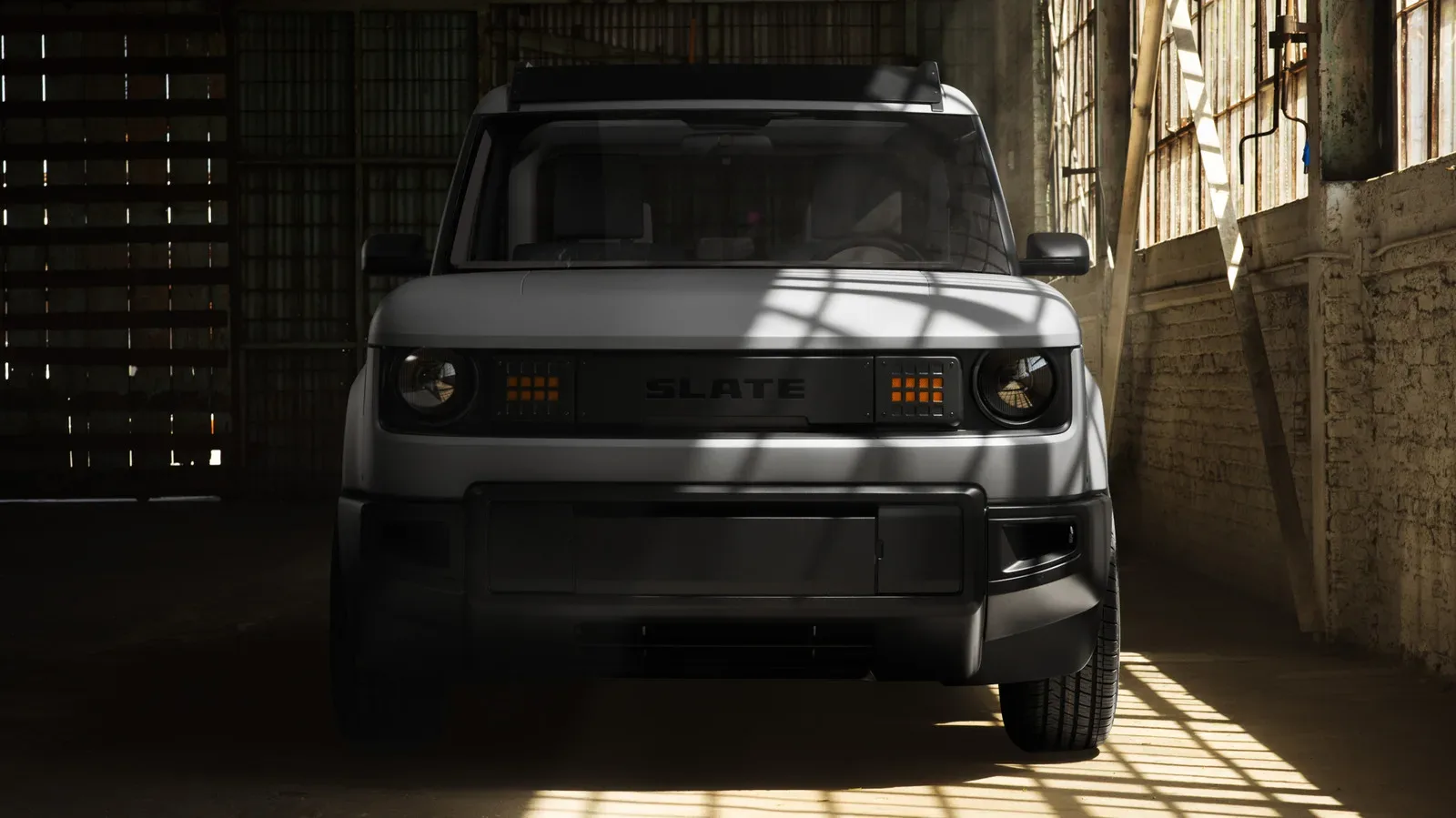
The Blank Slate is listed at $24,950 before its $1,450 destination fee, and pre-orders are limited to U.S. residents. In that context, the module is a deliberate expression of the truck’s broader philosophy: connectivity is available, but it is not imposed.