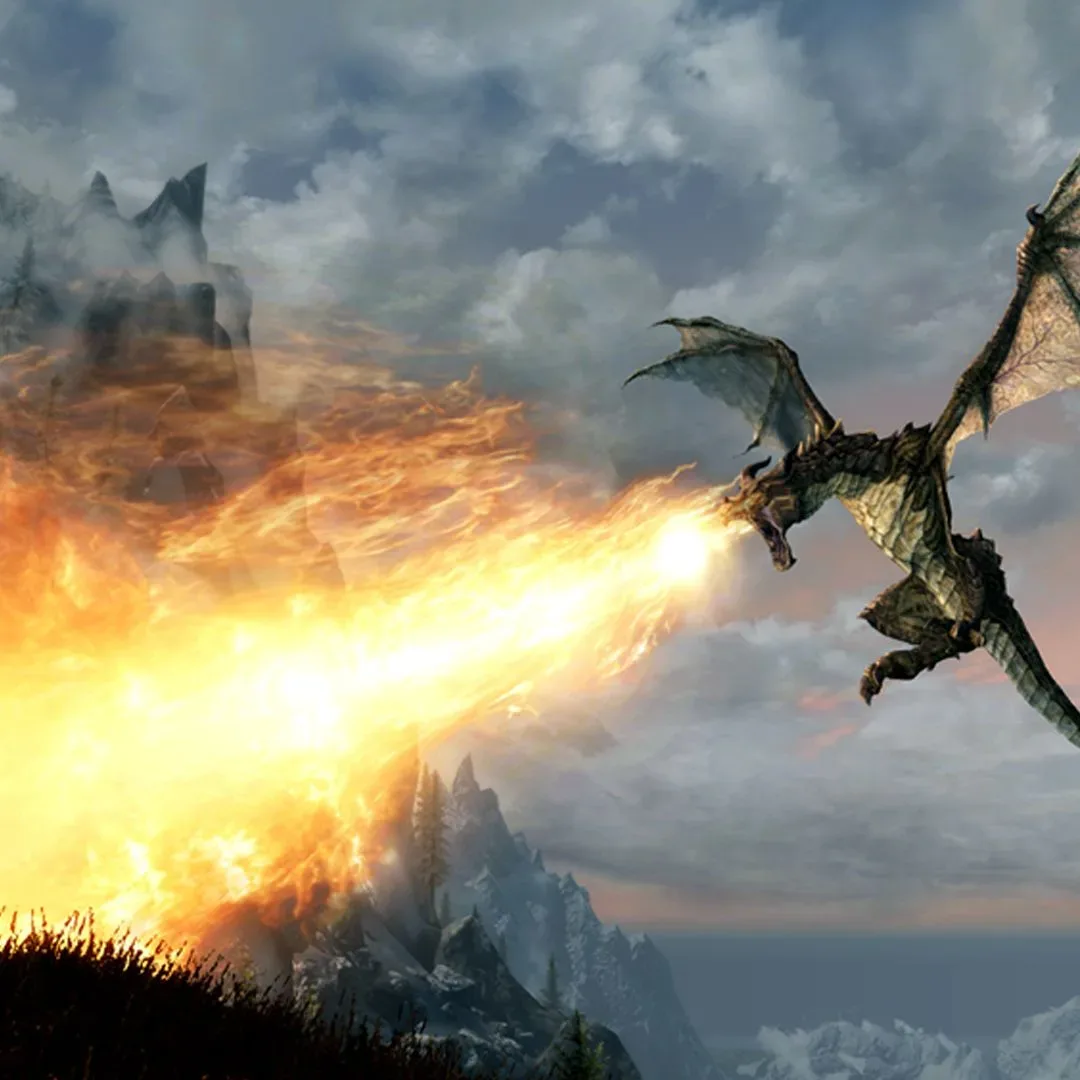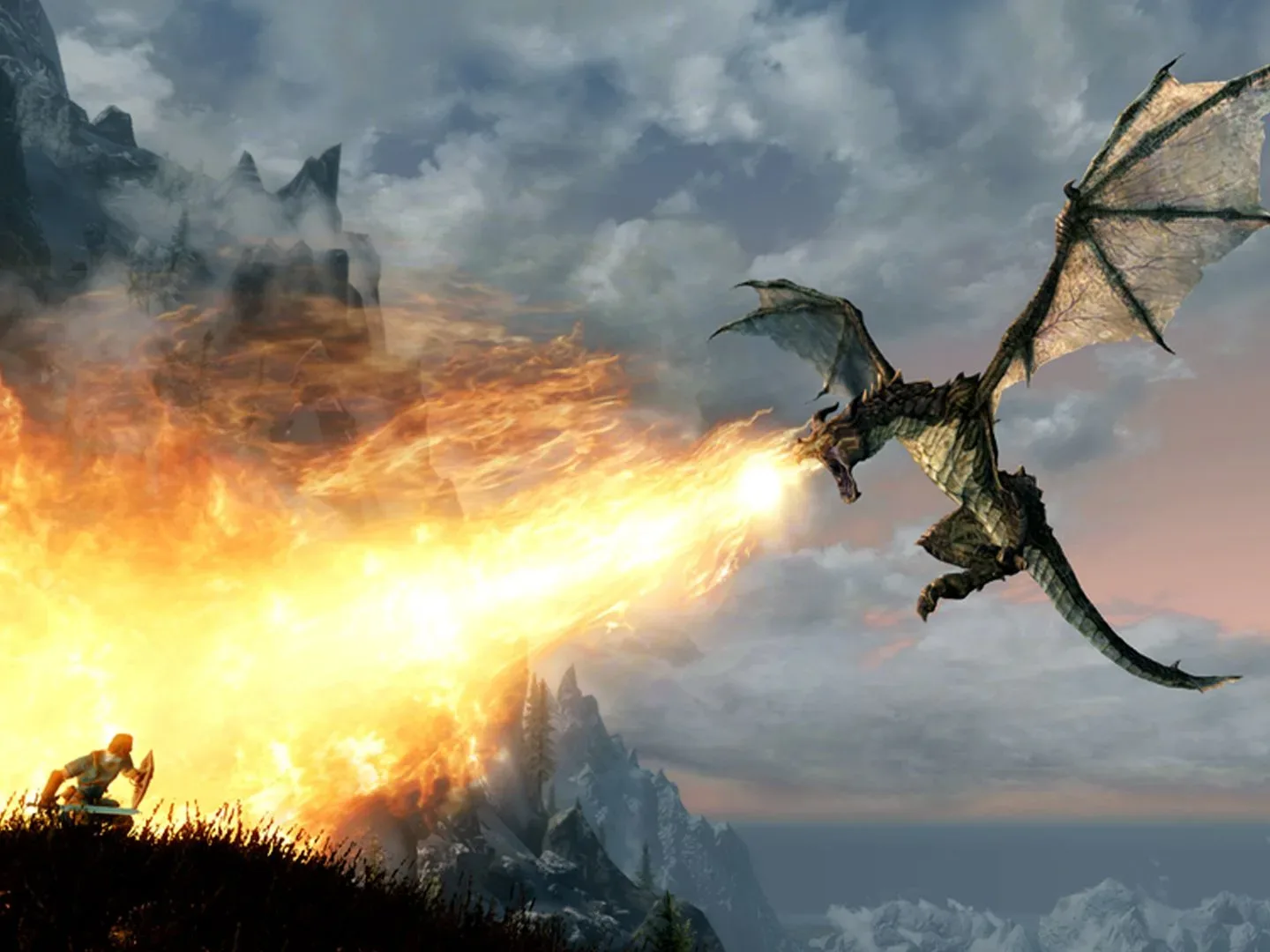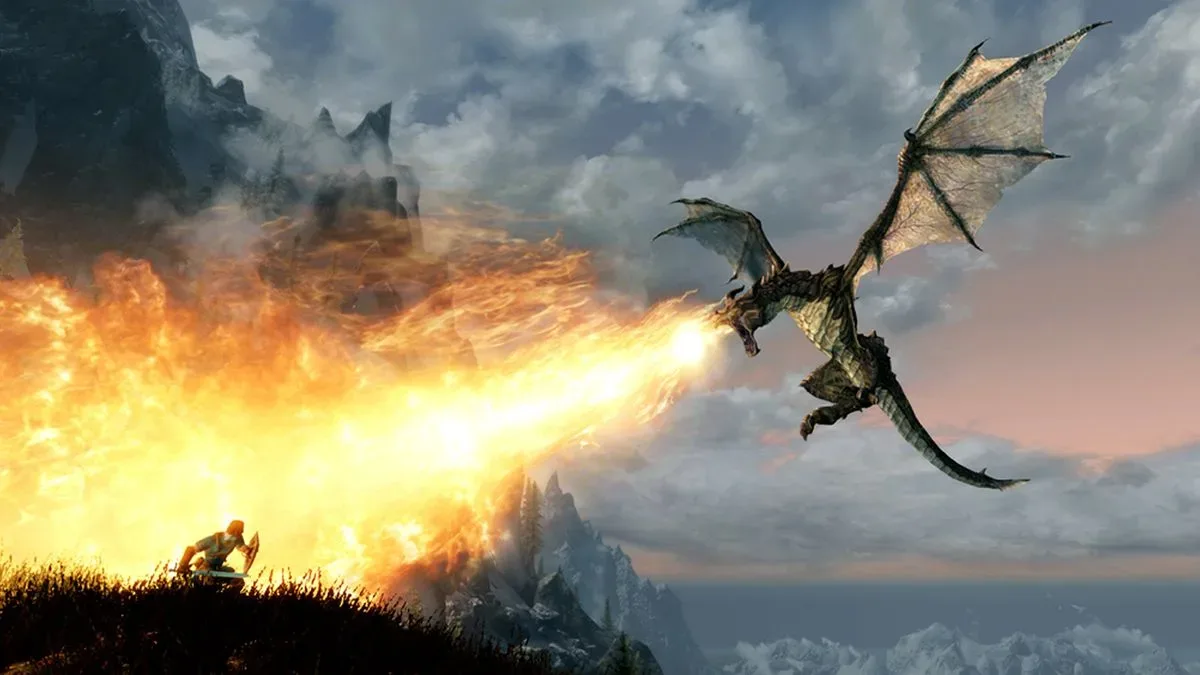
Skyrim’s Seven Thousand Steps have spent nearly 15 years as one of those beautifully specific RPG details that invite a very simple question: are there actually 7,000 of them?
The answer remains no—at least not on the route players climb toward High Hrothgar. Community counts have generally placed the total somewhere between 700 and 800 steps, with one early calculation arriving at 748. But a new account from Bethesda associate art director Dan Lee adds a more charitable and much funnier explanation for the mismatch: the team member associated with shaping the destination did try to make the famous name literal.
Lee says he made his “darndest” effort to fit all 7,000 steps into the path. The proposed route, however, would have had to continue well beyond Ivarstead, circle the mountain, and finish near Whiterun in the frozen tundra. In short, a named ascent became an exercise in scale. Seven thousand is, as Lee put it, quite a lot.
A lore-sized number meets an explorable mountain
Lee’s comments neatly separate two related pieces of Skyrim’s world design. He was not responsible for the rough layout of Skyrim’s terrain, but he was responsible for refining the form of High Hrothgar. His work on the Throat of the World extended beyond sculpting the mountain itself: it also involved the environmental dressing that makes an area feel inhabited, hazardous, old, and visually legible.
That work included visual effects, plants, and objects along the mountain, as well as the Seven Thousand Steps. In game-development terms, environmental dressing is the placement and arrangement of details that give a space character. It is not merely decoration. On a long mountain route, plants, props, weather effects, and changes in the landscape help communicate the passage from a settled area into a colder, more isolated climb. They can also make the player feel that a path has history, even when the game cannot build every implied mile of it.
The “Seven Thousand” part is therefore best understood as a lore-scale description rather than a physical count preserved at one-to-one scale. That distinction is common sense once the imagined alternative is laid out. A route beginning at Ivarstead, winding around the mountain, and stretching to the tundra near Whiterun would be a dramatically different piece of level design from the recognizable pilgrimage players know.
It would also change the practical rhythm of the trip. The existing climb has a clear purpose: carry players from Ivarstead toward High Hrothgar while sustaining the impression that they are ascending a significant and remote mountain. Expanding it into a vastly longer circuit would make the path less like an approach and more like a regional journey. That may have been faithful to the number, but faithfulness to a number is not automatically the same thing as serving the route’s role in an RPG.
The 748-step question is still part of the joke
Fans have been counting the stairs since shortly after Skyrim launched in 2011. The best-known estimate cited in the discussion is 748, while broader fan estimates put the total in the 700-to-800 range. Neither figure approaches 7,000, of course, but the difference is now part of what makes the location memorable.
There is a useful distinction between the two claims. “There are 748 steps” is a community-derived count, not a newly confirmed official tally. “The developers considered a far longer route” comes from Lee’s recollection of his own attempt to make the feature match its title. Together, they explain why the landmark is both an enduring fan counting project and a successful piece of environmental storytelling.
Players notice numeric names because numbers appear objective. A place called the Seven Thousand Steps sounds measurable in a way that a name such as “Old Mountain Road” does not. That turns a small world-building flourish into an informal challenge: people will count, compare routes, debate what qualifies as a step, and look for an answer. The exact number becomes a playful test of the game’s physical world rather than just a phrase in its fiction.
That impulse is especially fitting for a game built around travel and discovery. Skyrim asks players to take landscape seriously—mountains, paths, ruins, rivers, and settlements are not only scenery but the connective tissue between quests. The Seven Thousand Steps stand out because the landmark makes its own promise in its name. Players naturally want to see whether the world can keep it.
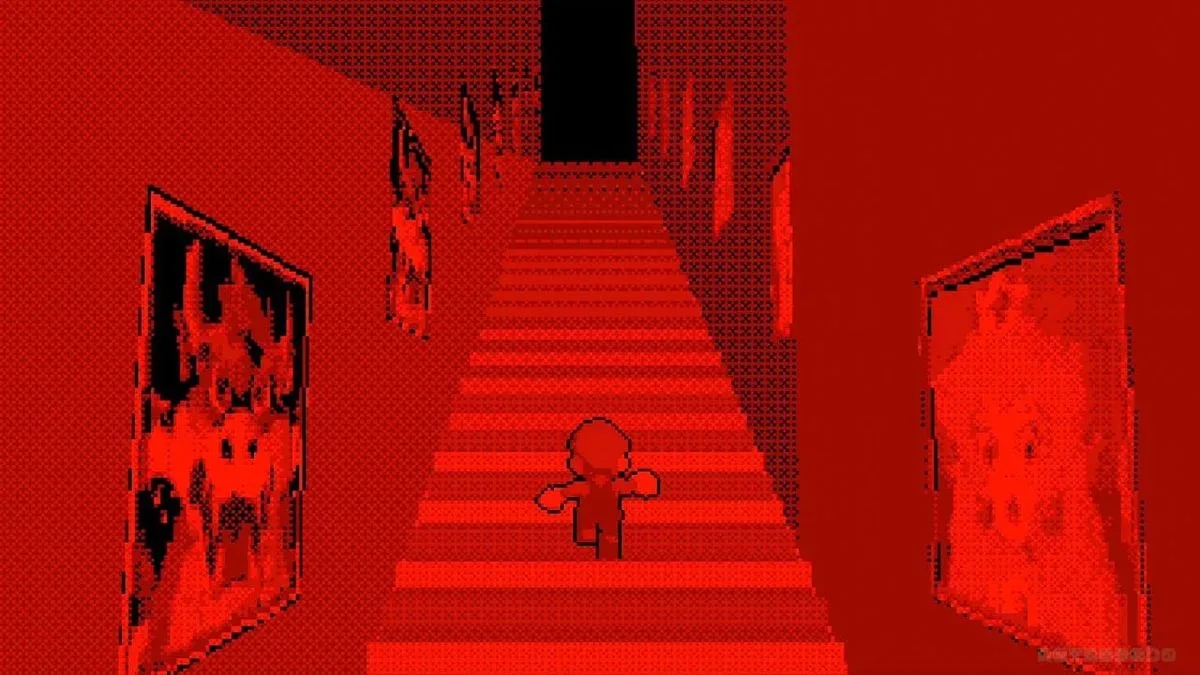
For a different kind of famously impossible staircase, see this look at Super Mario 64’s Endless Stairs in red 3D. The comparison is not one of design intent—Skyrim’s route is a fixed, traversable path—but it illustrates why stairs have a special habit of becoming gaming folklore. A staircase gives players something concrete to test: can it be climbed, counted, or overcome?
Why all 7,000 may have been the wrong kind of accuracy
Lee’s stated goal was to be as faithful to lore or real life as possible. That motivation matters, because it shows the shortened route was not simply an overlooked detail. The team faced a collision between a grand in-universe figure and the usable geography of an open-world game.
Scale compression is a helpful term here. It describes the way a game condenses distance, time, or physical space so that a world remains navigable and meaningful to the player. It is not an admission that the setting lacks ambition. Often it is the technique that lets a large fictional world be experienced at all. A literal seven-thousand-step climb would mean a great deal more path, repeated elevation, and travel time. Lee’s description makes clear that accommodating it would have required reshaping the journey across a much larger area.
The key word is not merely “shorter,” but “different.” A long route wrapping around the Throat of the World could potentially convey the enormity of the lore more literally. Yet it might also dilute the directness of the approach to High Hrothgar. The implemented version concentrates the climb into a distinct sequence: leave Ivarstead, follow the old path upward, and reach the monastery. That clarity has value in a game whose players may be pursuing a main-story objective rather than setting aside an enormous amount of time for one named stairway.
Lee’s account also offers a reminder that an individual game location is usually the product of several disciplines. Terrain layout, mountain shaping, object placement, plants, visual effects, and enemy encounters can be separate responsibilities. When players remember a location as one cohesive ordeal, they are often remembering the results of work distributed across multiple people and systems.
The Frost Troll has been formally disowned
There is one part of the climb Lee is eager not to claim: the Frost Troll.
He says his work did not include enemy encounters and that he takes no responsibility for the creature that caused trouble for many players on the road to High Hrothgar. It is a small clarification, but an important one for understanding the path. The memorable version of the Seven Thousand Steps is not simply a count of stone risers. It is the combined experience of elevation, weather, visual design, the sense of remoteness, and the threats positioned along the way.
Enemy encounters refers to the placement or selection of hostile creatures and combat situations within the game world. Encounter design can completely alter how players remember a space. A scenic trail can become a cautionary tale if a difficult foe appears at a point where the player feels exposed or underprepared. Lee’s clarification does not tell us who designed that specific encounter or why it was placed there, so it would be wrong to infer more than he stated. It does, however, confirm that the mountain’s art and its combat challenges were not one and the same responsibility.
The result is an amusing split in the Seven Thousand Steps’ legacy. Its number became a counting joke; its Frost Troll became a problem players remember; and its actual environmental construction came from an artist who had wanted the route to be far, far longer. None of those facts cancel the others. They show how a single stretch of game world can acquire multiple kinds of reputation at once.
What this says about named places in future Elder Scrolls games
The comments arrived amid renewed attention on The Elder Scrolls 6, identified as Sentinel in the material accompanying the discussion. Very little is known about the upcoming game, and Bethesda has also cautioned that it will be some time before it is ready. That makes the Seven Thousand Steps story less a roadmap for the next game than a useful design anecdote from Skyrim’s past.
Still, it highlights a decision any future Elder Scrolls location can face: should a dramatic name be represented literally, or should the game prioritize the feeling behind it? There is no universal answer. A number can establish mythic scale. A playable route has to account for navigation, visual variety, the player’s time, and the larger geography around it. Lee’s unrealized plan suggests that, at least in this case, literalism would have imposed a much larger cost than the final experience required.
It also gives the old discrepancy a better punchline. Skyrim did not accidentally miss a few stairs. The person responsible for refining High Hrothgar considered what it would take to honor the number and found that the answer was a sprawling route around the mountain. The 700-ish-step version was not 7,000 in miniature; it was the practical version of a legend-sized climb.
And for anyone who endured the Frost Troll on the way up, Lee has made one final thing clear: the mountain art department would like its name removed from the complaint ledger.