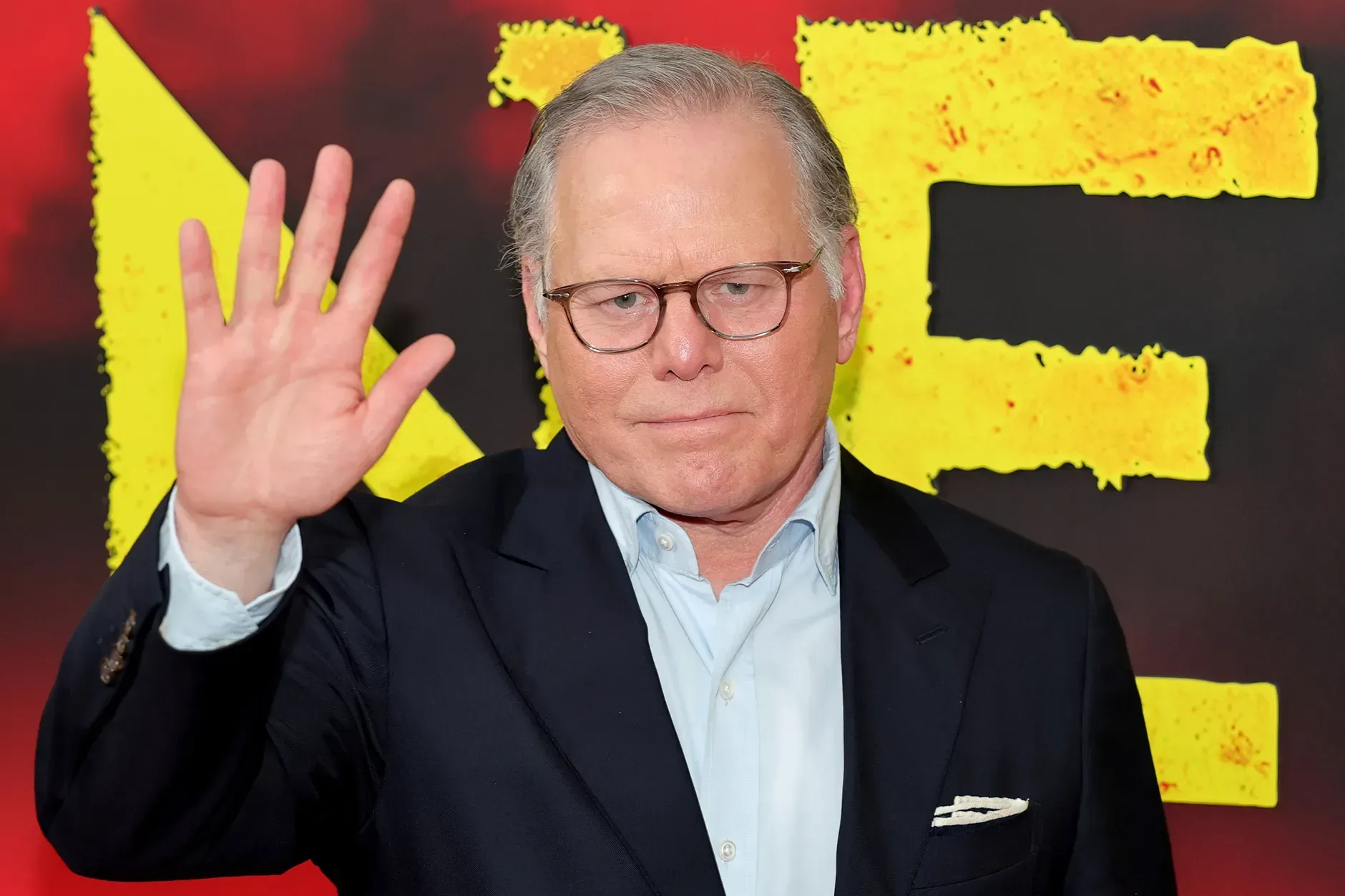
Skydance Corp. has entered its biggest level with the health bar already blinking red. The newly merged entertainment company, led by David Ellison after the acquisition of Warner Bros. Discovery, has landed on the New York Stock Exchange with a market capitalization under $40 billion. That is less than half the roughly $88.7 billion combined market value of Warner Bros. Discovery and Paramount Skydance at their final day of Nasdaq trading on October 5.
That gap does not, by itself, settle whether the merger was good or bad. Market capitalization is simply the market’s current estimate of the value of a company’s outstanding equity, calculated from its share price and share count. It can move rapidly, particularly during a merger, a ticker transition and the introduction of new securities. But the early read is difficult to miss: investors are assigning a markedly lower value to the combined company than the two predecessor businesses carried separately.
The result is a particularly unforgiving opening act for a business that paid about $78 billion in cash to Warner Bros. Discovery shareholders and assumed WBD debt. Skydance’s challenge now is not just to make movies, run networks and manage a large media library. It must show that its financial plan can function under the weight of close to $80 billion in net debt.
A sudden stock fall, followed by a technical explanation
Skydance shares dropped 22% on Wednesday after the distribution of roughly 471 million warrants to holders of Paramount Skydance’s PSKY Class B shares. A warrant is a financial instrument that gives its holder the right, but not the obligation, to buy a company’s stock at a fixed price before a specified expiration date. In this case, the warrants allow holders to purchase shares of the new company for $12 apiece and trade under the symbol SKYD.WS.
That fixed $12 exercise price matters. With Skydance Class B stock closing Thursday at $7.26, the warrants were underwater: immediately using them to buy shares at $12 would cost more than buying stock at the market price. That does not necessarily make them worthless. The warrants have a 10-year maturity, so their value reflects the possibility that the stock could rise above $12 in the future as well as the time remaining for that possibility to play out.
The New York Stock Exchange made a technical adjustment Tuesday after the close, lowering Skydance’s share price by 19.4 cents to reflect the warrant issuance. A market explanation circulating around the sell-off is that index funds sold warrants once trading began, and automated trading systems interpreted that activity as evidence of a broader sell-off, pressuring SKYD shares.
That explanation is plausible as a description of short-term trading mechanics, but it should not be mistaken for a complete investment thesis. Technical dislocations can intensify a move in either direction, particularly when a company is new to an exchange and has just distributed a separate security. Yet the market was already confronting much larger questions about the deal’s economics, its debt and the execution needed to meet management’s targets.
Skydance said the warrants represent only about 9% of its Class B common stock. At a Class B share price of $9.07, it calculated an implied market capitalization of $45.6 billion after the warrant distribution, plus roughly $1 billion in warrant value at $2.20 each, for total equity value of $46.6 billion. After Wednesday’s drop, its market cap stood at around $36 billion. Thursday brought a 2.8% rebound to $7.26 per share, putting market capitalization at approximately $36.6 billion, excluding warrants, which closed at $2.96.
Related coverage includes Skydance Market Value Falls Below Half of WBD and Paramount’s Combined Total.
In other words, the warrant issue complicates simple before-and-after comparisons. Looking only at the common share price after a warrant distribution can understate the value now spread between stock and warrants. Even after allowing for that complication, however, the combined equity value remained far below the roughly $88.7 billion represented by WBD and Paramount Skydance before the merger.
The real mission: savings, output and debt service at once
The essential question for Skydance is whether it can deliver on several expensive objectives simultaneously. Management has projected $6 billion in annualized cost savings over the next three years. “Annualized” means the savings are measured as a recurring yearly run rate once the changes are fully implemented, rather than necessarily being $6 billion of cash savings during the first year.
Cost savings can come from consolidating overlapping operations, trimming spending, combining systems or renegotiating expenses. The supplied information does not detail Skydance’s specific roadmap, so it would be premature to assume where cuts will occur. What is clear is the balancing act: Skydance is also expected to continue investing in content and plans for more than 30 theatrical film releases per year.
That is why this is more complicated than the familiar corporate slogan of “find efficiencies.” Entertainment businesses depend on a pipeline of creative work, distribution and promotion. Cutting costs too slowly would make debt reduction harder; cutting too deeply or in the wrong places could weaken the content operation that is supposed to support the merged company’s long-term value. The company must make the savings credible without hollowing out the part of the business investors expect to create future revenue.
The debt burden raises the stakes. Paramount assumed $33.1 billion of WBD debt as of the end of June, and the combined company’s net debt is nearly $80 billion. Net debt generally refers to debt after accounting for cash and similar balances. Skydance’s interest payments alone are projected to exceed $6 billion annually.
Interest expense is not the same thing as repaying the principal balance, but it is an unavoidable claim on the company’s finances. Before debt can be meaningfully reduced, the company needs enough cash flow to cover operating needs, content investment and those interest costs. That helps explain why analysts and credit-rating agencies are skeptical about whether the projected numbers can be reached. The margin for disappointing execution is narrow when the recurring cost of borrowing is already measured in billions.
What the price gap says—and what it does not
It is tempting to frame a market-value decline as a definitive verdict that Skydance “overpaid” for Warner Bros. Discovery. The current valuation clearly signals investor concern about the transaction and its financial consequences. It does not prove, on its own, that the acquisition cannot create value over time.
Equity markets price expectations rather than merely adding up yesterday’s assets. Investors may be discounting the difficulty of integrating the businesses, uncertainty around cost reductions, the large interest burden and the risk that future content spending fails to generate the expected returns. They may also be reacting to the warrant-related trading turbulence. Those forces can overlap.
Conversely, a low valuation can create an opportunity only if the market’s assumptions prove too pessimistic. One market observer argued that the warrant distribution did not materially change Skydance’s share count or outlook and suggested the decline could present a buying opportunity. The same view noted that the long maturity of the warrants gives them option value despite the $12 purchase price sitting above the current share price.
That is the bull case in its most basic form: the core company’s outlook has not fundamentally changed, while a technical event created a lower entry point. The bear case is equally straightforward: the sell-off may have accelerated for technical reasons, but it landed on a company facing a huge operational promise, large borrowing costs and a merger price investors have yet to embrace.
Neither case is resolved by a single trading day. Skydance will have to provide evidence through its operating results: measurable progress toward the $6 billion annualized savings target, sustained investment in its content business, a workable theatrical release rhythm and a credible path to manage the debt load.
Shareholders own an economic stake, not equal control
Skydance’s ownership structure adds another important layer for Class B investors. The Ellison family and RedBird Capital Partners are the sole holders of the company’s Class A shares and control 100% of the voting shares. Class B holders therefore do not have a say in corporate-governance matters.
Corporate governance covers the mechanisms through which a company is directed and controlled: voting on certain major matters, influence over board composition and the ability to affect the stewardship of the business. A dual-class structure can allow leadership to pursue a long-term strategy without the pressure of shifting shareholder votes. It also means public shareholders have less formal power to challenge that strategy if they disagree with it.
The Class A shares themselves do not carry intrinsic economic value, but each can be converted into 1.5 Class B shares. That conversion feature is relevant to anyone trying to understand potential dilution, meaning the possibility of a larger pool of Class B shares in the future. It does not change the immediate fact that voting control is concentrated.
For audiences focused on the company’s film and entertainment output, the market drama may feel several levels removed from the screen. It is not. The financial constraints and governance model shape the environment in which decisions about content investment, release volume and business priorities will be made. Entertainment is the product, but this merger’s opening scorecard is financial—and Wall Street has set an exacting difficulty level.
That wider industry context is also why big franchises and high-profile projects remain central to the conversation around major studios; for another recent example of franchise-scale filmmaking, see the evolving plans around Denis Villeneuve and James Bond. Skydance’s immediate task, though, is more basic: persuade investors that the numbers behind its much larger entertainment empire can hold together.