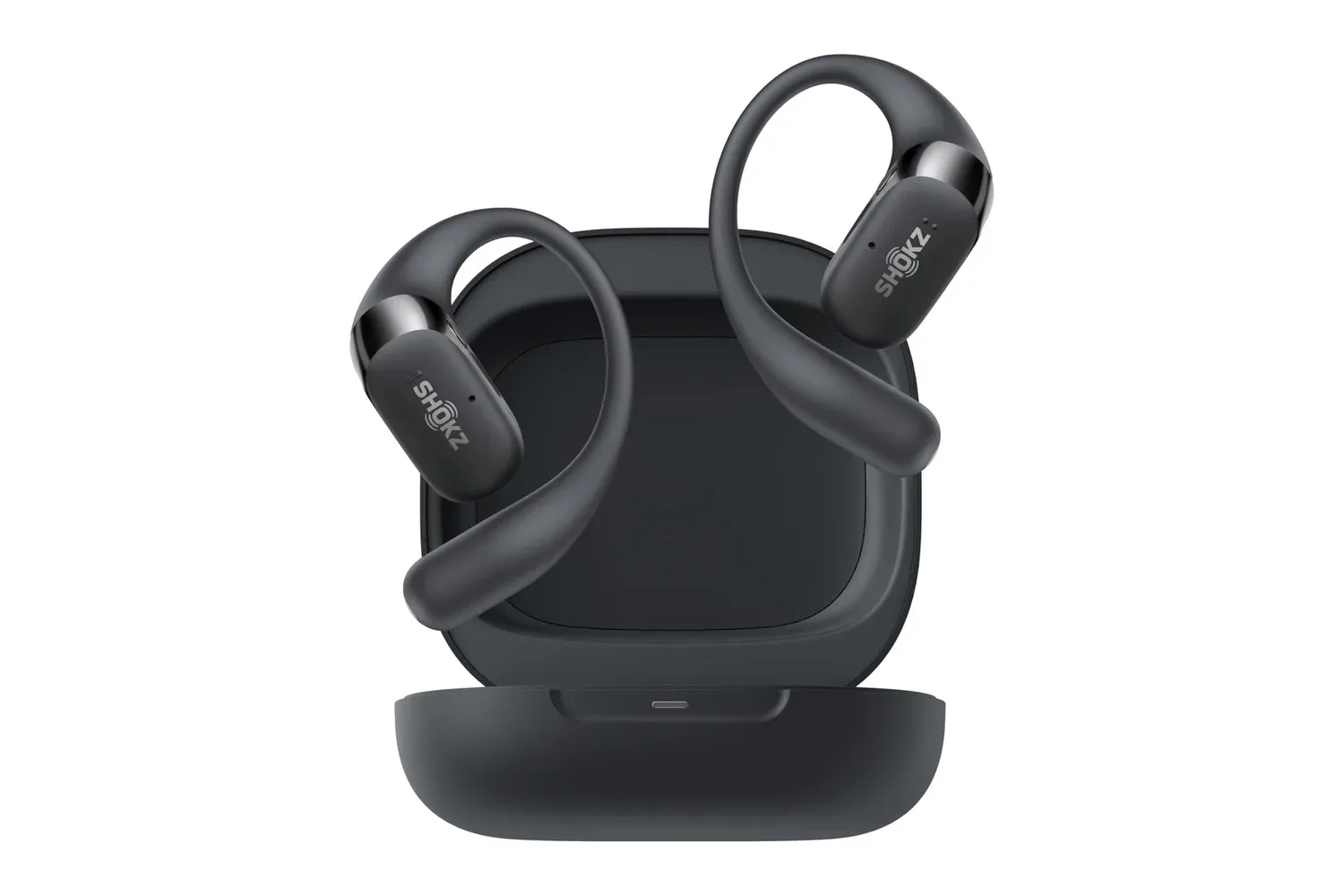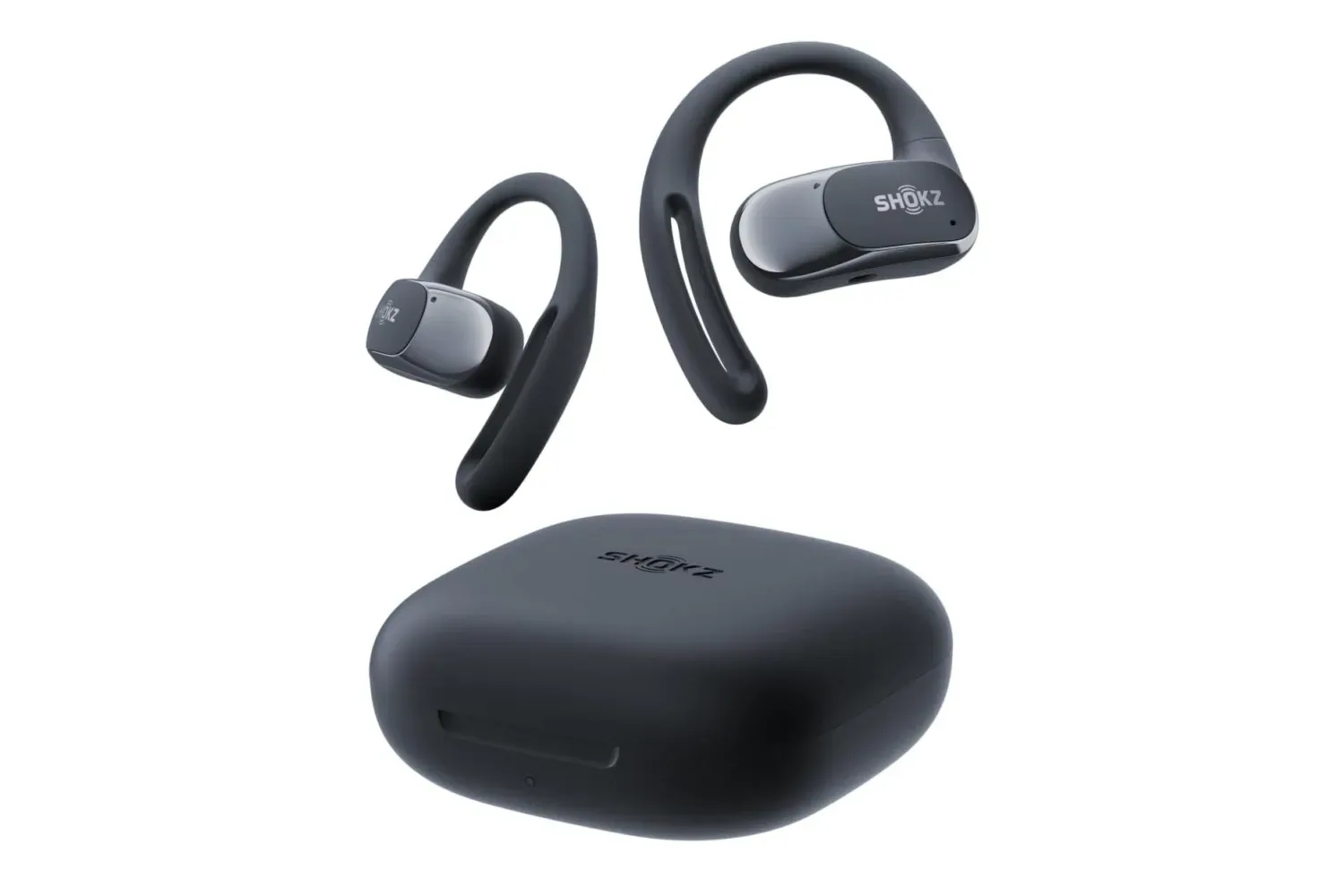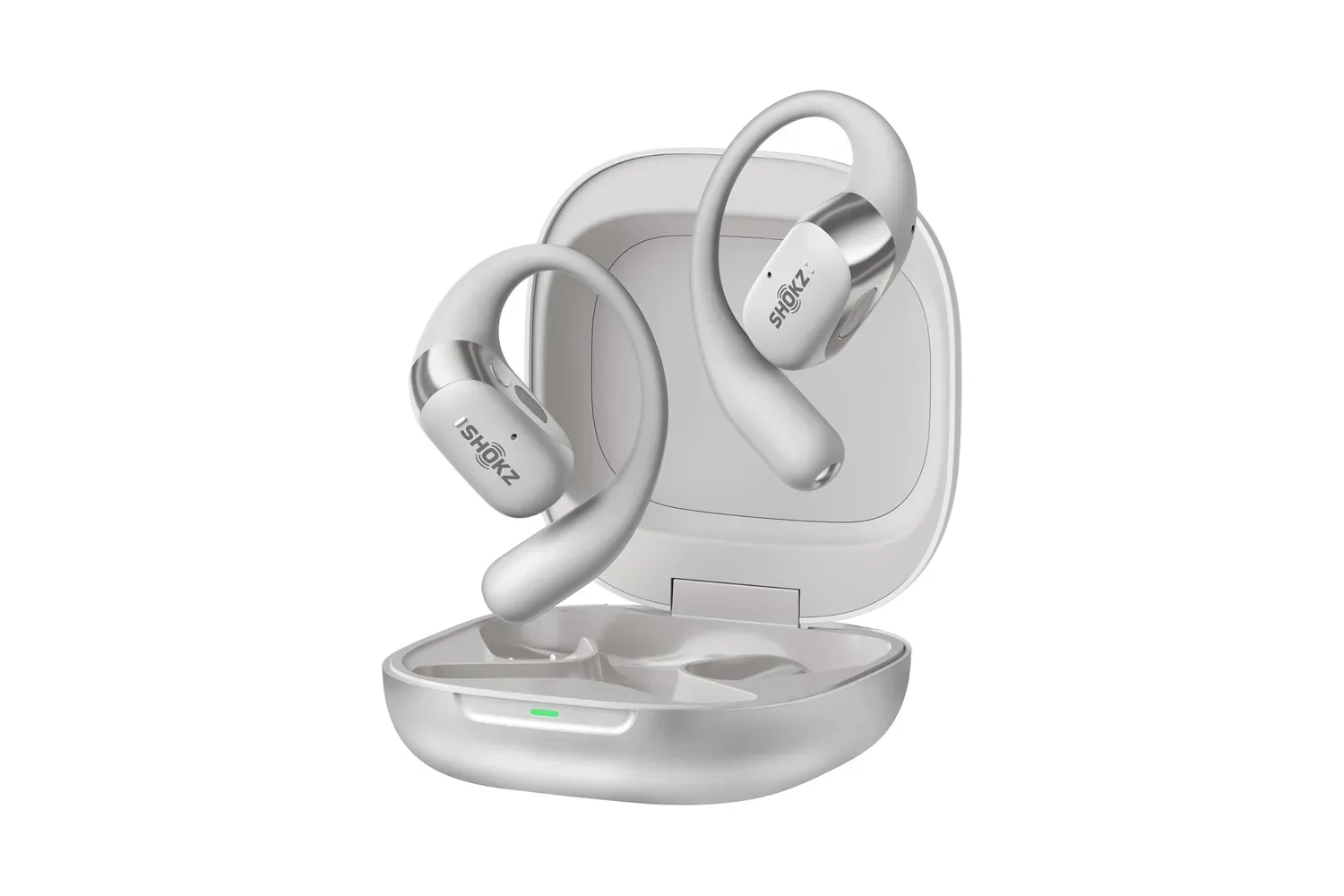
The Shokz OpenFit 2+ open-ear earbuds are listed at $99.95, a $100 reduction from the stated $199.95 price. That is a 50% discount on a pair built around a particular compromise: playing music, podcasts and calls without sealing the listener off from nearby sound.
That distinction matters. Rather than resting inside the ear canal, the OpenFit 2+ sit outside it and use ear hooks to stay in place. Shokz positions the format for workouts and daily use, where someone may value being able to hear traffic, nearby conversation or general activity while audio is playing. It is a different proposition from conventional in-ear buds, which are generally designed around a more enclosed fit.
The deal is notable because the OpenFit 2+ combines that open-ear approach with features usually judged on practical convenience: stated battery life of up to 11 hours per charge, up to 48 hours with its charging case, Qi wireless charging, Bluetooth 5.4 multipoint support, physical controls and an IP55 rating for sweat and water resistance.
What the open-ear design is trying to solve
Open-ear headphones are not simply regular earbuds with a looser seal. The core idea is that the ear canal remains unobstructed. For a runner, gym-goer or commuter, that can make external sounds easier to notice without pulling an earbud out or activating a software transparency mode.
There is a comfort component, too. Some people dislike the pressure or plugged-up sensation associated with earbuds that enter the ear canal. The OpenFit 2+ use soft ear hooks, with a nickel-titanium alloy core under Shokz Ultrasoft Silicone 2.0, to curve around the ear and hold the audio hardware in position. Each earbud weighs 0.33 ounces.
That wraparound approach is especially relevant during exercise. A stable fit is about more than preventing a bud from falling out: it can reduce the need for repeated adjustments while moving. The supplied details say the controls remain usable with wet, sweaty hands, an unusually down-to-earth detail for a device being pitched toward training sessions.
There are trade-offs inherent to the category. Keeping ears open prioritizes environmental awareness, and it does not produce the isolation of a sealed in-ear fit. Buyers looking specifically to shut out a busy office, transit noise or a loud room should recognize that this product’s design is aimed at a different listening preference. Awareness is the feature, rather than an accidental limitation.
Audio hardware, explained without the marketing fog
Shokz says the OpenFit 2+ use DualBoost technology, placing separate low-frequency and high-frequency drivers in each earbud. A driver is the small component that converts the electrical audio signal into sound. Splitting the work between drivers is intended to give bass and treble dedicated hardware rather than asking one driver to handle the entire frequency range.
Related coverage includes Shokz OpenFit 2+ earbuds drop to $99.95 at Amazon.
The earbuds also support Dolby Audio, with an option in the Shokz app that is designed to create a wider sound field. In simple terms, a wider sound field is an attempt to make audio feel less confined to two tiny speakers beside the ears and more spatially spread out. Whether a listener prefers that processing will depend on the recording and personal taste, but the option can be useful for people who want a broader presentation for music, video or games.
Four preset equalizer settings are available in the app, along with an option to raise bass. An EQ, short for equalizer, adjusts the balance of frequencies in playback. More bass can give kick drums, electronic music and effects additional weight; a different preset may better suit voices in podcasts or spoken video. The important practical point is that the sound is not fixed to a single tuning.
Open designs face another challenge: sound leakage. Because they do not close off the ear canal, some sound can be audible to people nearby, especially when volume climbs. Shokz says its DirectPitch 2.0 system is intended to reduce leakage while keeping sound clear to the wearer. It is a worthwhile feature claim for shared spaces, but prospective buyers should still treat an open-ear product as something best used with sensible volume around other people.
Battery and charging figures make the daily case
The stated 11-hour listening figure from the earbuds is the headline battery number, while the included case raises total listening time to up to 48 hours. The case is therefore not just storage; it functions as the portable reserve that replenishes the earbuds between uses.
A quick charge is also specified: 10 minutes of charging can provide up to two hours of listening. That is useful for the mundane situation where the earbuds are low shortly before a walk, workout or call. A full charge in the case takes about an hour, based on the provided specifications.
The case works with Qi-certified wireless chargers. Qi is a widely used wireless-charging standard, so users with a compatible pad do not necessarily need to attach a cable to the case every time. For readers already interested in device accessories that reduce daily friction, our look at Galaxy Watch apps for music, commutes and smart-home control covers another way connected gear can consolidate routine tasks.
Calls and two-device pairing are the quiet practical upgrades
The OpenFit 2+ have microphones that use AI-based background-noise reduction for calls. Here, AI refers to processing designed to identify and suppress unwanted sound so a voice is easier to understand. The provided details specifically frame the feature around calls in places such as a noisy gym, indoors or outdoors. It should not be read as a promise that every loud environment disappears; the useful expectation is that the system is intended to improve speech clarity when surrounding noise is present.
Bluetooth 5.4 multipoint is another feature with clear everyday value. Multipoint means the earbuds can connect to two devices at once, such as a phone and laptop. Instead of manually unpairing from one and pairing to the other, the user can move between them more easily. Someone could listen to audio on a computer, then take a call arriving on their phone without starting the pairing process over again.
This is not the same as simultaneously listening to both devices as a deliberate mix. Its benefit is connection management: fewer steps when phone and computer use overlap during a day. For people who use earbuds only with one handset, it may not change much. For hybrid work, gaming on a laptop, or switching between a workout playlist and an incoming call, it is more consequential.
Durability and controls: what IP55 does and does not say
The earbuds carry an IP55 rating. An IP rating is a standardized shorthand for resistance to solids and water. In this case, the supplied information characterizes the OpenFit 2+ as able to handle sweat and water, fitting the workout-focused design.
The rating should be interpreted carefully. It supports the idea that sweat and exposure to water are considered in the design; it does not turn the earbuds into an all-purpose underwater audio device. Anyone whose use centers on gym sessions, outdoor walks or exercise where sweat is likely has a clearer match for the intended use than someone assuming every water-heavy activity is covered.
Physical buttons handle play and pause, track skipping and call answering. Touch controls can be convenient, but buttons offer a direct press-based action, and Shokz says these remain operable when hands are wet. That may sound unglamorous next to Dolby Audio or AI call processing, yet it is the sort of feature that can make a difference when operating audio controls mid-workout.
Who should consider the OpenFit 2+
At the listed $99.95 price, the OpenFit 2+ make the strongest case for listeners who place awareness and secure fit above isolation. The combination of open-ear construction, ear hooks, sweat-and-water resistance, long claimed case endurance and rapid top-ups speaks most directly to runners, gym users and people who wear audio for long stretches without wanting an ear-canal seal.
The value proposition also improves for users who regularly juggle a phone and laptop. Multipoint, call-noise processing and button controls are all practical rather than decorative additions. Meanwhile, Dolby Audio, separate low- and high-frequency drivers, app EQ presets and bass adjustment provide avenues to tailor playback instead of treating the workout angle as an excuse for thin sound.
People who need maximum isolation should assess their priorities before buying, because the OpenFit 2+ deliberately leave the wearer open to the world around them. For the audience that sees that awareness as an advantage, the advertised half-price reduction brings a feature-rich open-ear option down to a much more approachable figure.
Shop the products
Check current price, model and availability at the retailer.