
Generative AI is now one of game development’s most uncomfortable contradictions: a tool that may help teams make more with the resources they have, and a tool that could change who gets to make games at all. Shinji Mikami, the veteran creator associated with Resident Evil and the head of Unbound Studio, has put that tension unusually plainly.
Mikami has said he sometimes wishes generative AI would disappear entirely—not only from games, but from the world. Yet he has also experimented with the technology and continues to use it. His position is not a simple endorsement or rejection. Rather, it captures a practical problem facing studios: generative tools are increasingly present in creative and technical workflows, even for people deeply uneasy about their wider effects.
For Mikami, the appeal is straightforward. Used effectively, AI could help improve a game without requiring a larger budget, while making production more efficient. But he also worries that game developers may lose jobs to generative AI in five or 10 years. Those views can sit awkwardly together, but they describe the central argument around the technology more accurately than either extreme: the same efficiency that helps a team finish work can become a reason to demand fewer people do it.
A human-driven studio using AI
Unbound Studio is described by Mikami as human-driven. That phrase matters because it draws a distinction between a studio whose creative direction and decision-making remain in people’s hands, and one that hands meaningful authorship over to an automated system. Still, “human-driven” does not automatically answer every question about AI use.
Generative AI generally refers to systems that produce new-looking output from prompts or other inputs. In a game-development context, that output might be text, images, audio, code, or other material. It is different from the broad category of AI, which can include analytical or automation tools that do not generate creative content. Treating all uses of “AI” as identical obscures the debate.
That difference becomes especially relevant when discussing development tasks such as quality assurance and debugging. Quality assurance, usually shortened to QA, is the work of identifying issues and checking that a game behaves as intended. Debugging is the process of tracing and fixing the underlying causes of those issues. AI-assisted systems may be used in either area, but a tool that helps identify a defect is not necessarily doing the same thing as a system asked to generate artwork, dialogue, or code.
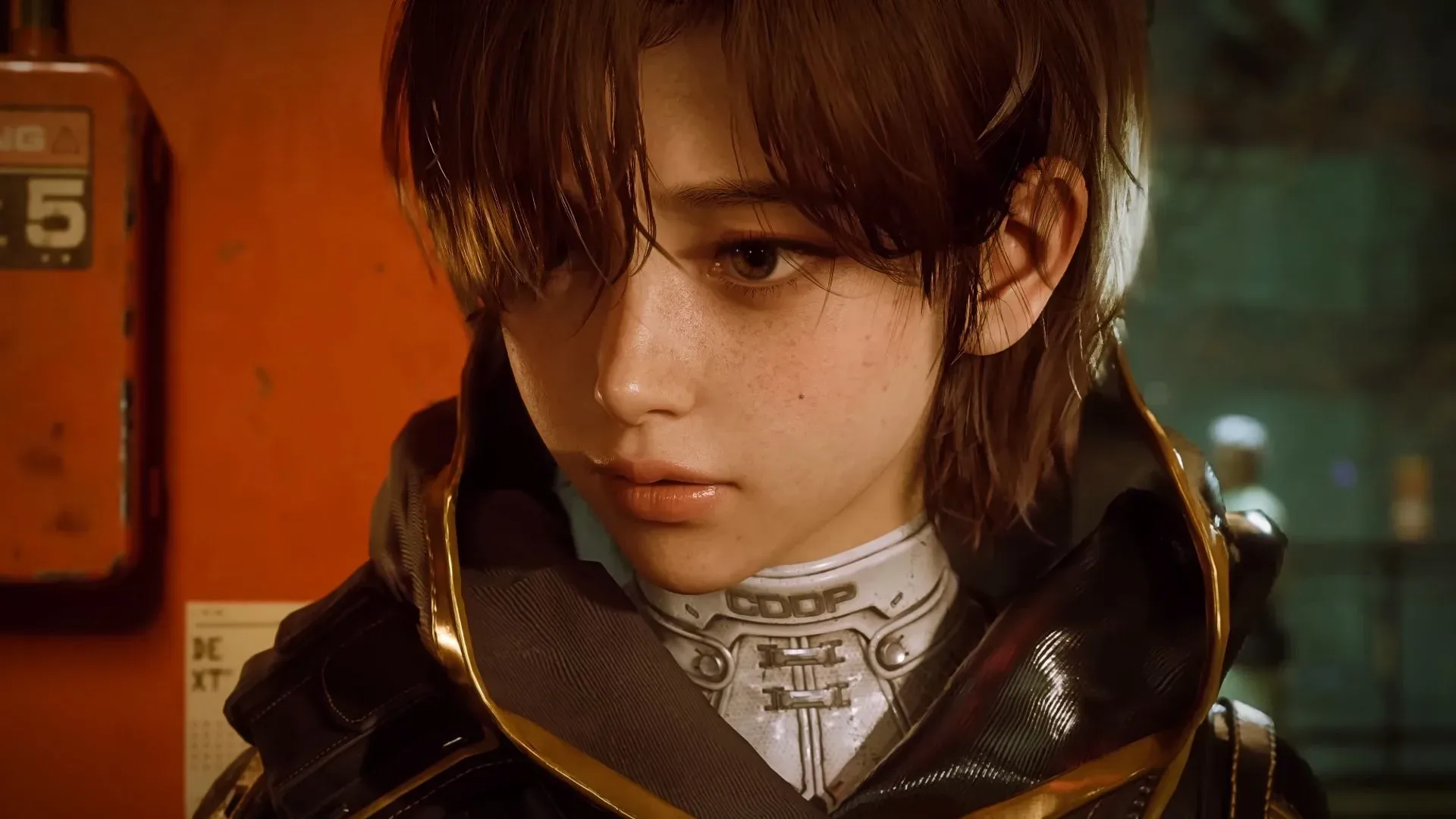
Shift Up CEO Kim Hyung-tae, speaking in the same interview, similarly presented a mixed position. He described Stellar Blade: Blood Rain as handmade from beginning to end while also saying it uses AI. Kim’s broader argument is that completely avoiding the technology may no longer be realistic because it appears in many parts of development, from basic QA work through deeper debugging.
The apparent contradiction in both viewpoints may partly come down to definitions. A project can be handmade in the sense that people make the creative choices, review work, and assemble the final game, while still relying on software that automates or assists certain steps. That does not eliminate concerns about generative systems. It does mean readers should ask more precise questions than whether a game “uses AI.” What tool was used? What did it produce or automate? Who reviewed it? Did it replace work that would otherwise have been done by people?
Related coverage includes Shinji Mikami Sees Promise and Peril in Generative AI for Game Development.
Why efficiency is not a neutral outcome
“Streamlining production” sounds inherently positive. Development is complicated, budgets matter, and a smoother process can potentially free a team to spend time on the parts of a game that need judgment and care. Mikami’s point that AI could raise quality without expanding a budget reflects that practical appeal.
But efficiency has consequences beyond a single project’s schedule. If a studio uses a tool to complete work faster, it has choices about what happens next. It can retain the same staff and use newly available time for iteration, accessibility work, bug fixing, polish, or experimentation. Or it can treat the saved time as a reason to reduce the number of people needed. The software itself does not make that decision; management and production priorities do. For workers, however, the outcome can feel inseparable from the technology.
That is why Mikami’s warning about potential job losses deserves attention even alongside his own experimentation. His five-to-10-year window is a concern about a possible future, not a certainty or a forecast with a defined number attached. Still, it directs attention to the key issue: not merely whether generative AI can perform a task, but whether companies will use it to reshape staffing.
Game development already brings together artists, writers, designers, programmers, QA staff, producers, and many other specialists. Their work is not interchangeable simply because it can be placed under one broad label such as “content” or “development.” A generated draft, a code suggestion, or an automated test result may save time, but someone still has to decide whether it fits the game, whether it introduces errors, and whether it serves players. The faster a tool produces material, the more important that evaluation can become.
The questions studios should be prepared to answer
Neither Mikami nor Kim’s comments establish a single standard for the industry. They do, however, point toward a more useful way to talk about AI use. Broad claims that a game is fully handmade, fully AI-made, or completely AI-free often fail to explain much. Clearer disclosures would focus on particular workflows and responsibilities.
- Purpose: Was the tool used for QA, debugging, drafting, asset generation, coding assistance, or another task?
- Human responsibility: Who made the final creative and technical decisions, and who checked the tool’s output?
- Workforce impact: Did automation change the makeup of the team, the scope of jobs, or the amount of outsourced work?
- Quality control: What process caught inaccurate, unsuitable, or broken outputs before they reached the final game?
- Creative role: Did the system support people doing their jobs, or was it intended to replace parts of those jobs?
Those are difficult questions, but they are more meaningful than blanket slogans. A studio may reasonably use an automated aid to speed up a narrow technical process while maintaining human control over the finished result. It may also use generative systems in ways that create serious concerns about creative labor, accountability, and employment. The label alone cannot settle where a particular use falls.
The distinction is important for players as well. Players are often asked to judge a finished game while having limited visibility into how it was made. Transparent explanations will not end disagreement, but they can give audiences something concrete to evaluate. That is particularly valuable when developers make strong claims about craft or hand-authored work while also acknowledging AI somewhere in the pipeline.
Mikami’s stance reflects a wider industry dilemma
Mikami’s comments do not resolve the contradiction between fearing generative AI and using it. They make the contradiction visible. A developer may see genuine production benefits, believe the technology is difficult to avoid, and remain worried that its adoption will damage careers. All three positions can be held at once, even if the combination invites hard questions about who ultimately benefits from efficiency.
There is also a difference between accepting that a technology is widespread and arguing that every implementation is desirable. “It is everywhere” can explain why studios feel pressure to explore a tool. It cannot, on its own, explain how that tool should be deployed, what protections workers should have, or where a studio should draw its lines.
For an industry built on creative collaboration, the phrase “human-driven” will be tested by practice rather than branding. It should mean more than a person approving machine-produced material at the end of a process. At its strongest, it implies that people retain control over creative direction, that their expertise is valued in production decisions, and that efficiency gains are not automatically converted into fewer jobs.
The debate will likely become more detailed as AI tools become more common in both technical and creative work. Games can benefit from better debugging, stronger QA processes, and more time for refinement. But those gains should not make the people responsible for games easier to discard. Mikami’s concern is a useful reminder that a development tool is never only about what it can do. It is also about the choices companies make once it can do it.
As the industry continues to weigh new production methods, other studios are also navigating how technology shapes development and audience expectations. Persona 4 Revival’s relationship to Golden, for example, shows how closely players examine the creative decisions behind a project—even before they have had the chance to play it.