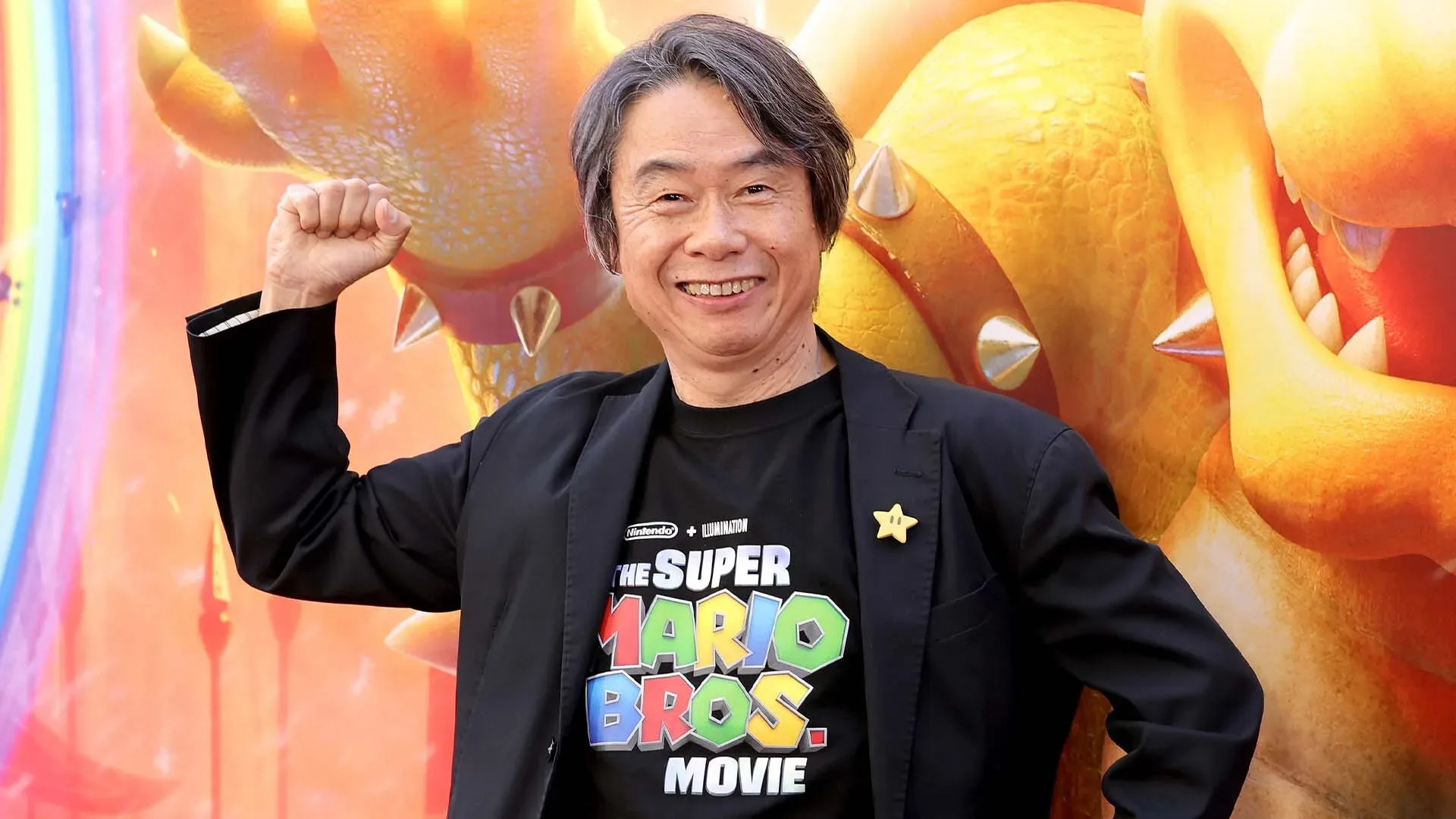

Shigeru Miyamoto will receive the inaugural Legend Award at the 30th D.I.C.E. Awards, recognizing a career whose influence reaches across games, entertainment, and Nintendo’s most recognizable properties.
The new award is intended for an industry icon whose vision continues to reshape interactive entertainment. That broad description matters: this is not simply another annual trophy for a recent release or a single creative achievement. It is an honor built to acknowledge sustained, long-term impact—and its rarity is part of the point.
A deliberately rare new honor
The Legend Award differs from the D.I.C.E. Hall of Fame distinction already associated with the ceremony. Most notably, it is described as a generational award that will not be presented more often than once per decade. In practical terms, that makes its first recipient a statement about the kind of career the award is meant to represent: one with an influence large enough to outlast individual hardware cycles, franchises, and shifts in how people play.
Miyamoto has a particularly notable connection to the ceremony’s existing honors. He was the first game creator inducted into the Hall of Fame in 1998. Receiving the first Legend Award at the event’s 30th ceremony therefore links two separate landmarks: an early recognition of his contribution and a new award intended to mark the most enduring kind of industry legacy.
“Shigeru Miyamoto is widely recognized as one of the most respected and impactful figures in the games industry and beyond,” Meggan Scavio, president of the Academy of Interactive Arts & Sciences, said. She added that the organization believes Miyamoto embodies the purpose of the inaugural award through the scale of his impact and reach.
Why Miyamoto fits the award’s remit
Miyamoto’s work is inseparable from several of Nintendo’s best-known series, including Mario, The Legend of Zelda, and Pikmin. Those names mean different things to different players, but together they show why a once-in-a-decade accolade frames his contribution more effectively than an award limited to one game or one year.
A franchise is more than a title that returns in sequels. It is an ongoing creative identity, often carried through new systems, audiences, and expectations. The continued visibility of Mario, Zelda, and Pikmin demonstrates the reach of Nintendo’s characters and game worlds, while Miyamoto’s association with them places him at the center of some of gaming’s most widely recognized creative work.
His influence also extends beyond games themselves. Miyamoto has helped lead Nintendo’s expansion into films and theme parks, reflecting how game properties can operate across different forms of entertainment without ceasing to be game-born cultural touchstones. That wider reach is central to the wording behind the Legend Award, which specifically recognizes influence on interactive entertainment while also acknowledging an impact beyond the industry.
Related coverage includes Shigeru Miyamoto Will Receive D.I.C.E.'s First Legend Award at Its 30th Ceremony.
For players, this kind of recognition is a reminder that video-game legacies are not measured only through sales charts, awards for individual releases, or the arrival of a new console. They are also measured by whether characters, design ideas, and worlds remain meaningful as games move into other spaces. Nintendo’s current ecosystem is still closely watched by fans, whether the discussion is about major releases or practical matters such as patchy Zelda Switch 2 restocks.
Hall of Fame versus Legend Award
The distinction between the Hall of Fame and Legend Award is worth making clear. A Hall of Fame honor generally preserves and celebrates a person’s place among the medium’s major contributors. The Legend Award is being positioned more selectively: it is a generational recognition, intentionally withheld for long stretches rather than becoming a standard annual category.
That does not make one honor a replacement for the other. Instead, the two serve different purposes. Miyamoto’s 1998 Hall of Fame induction recognized his standing as a foundational creator. The Legend Award, presented much later and as the first of its kind, acknowledges the durability and breadth of that standing over subsequent decades.
The decision to limit the award’s frequency also creates a high threshold for future recipients. Because it is not expected to appear every year, the honor carries an implicit expectation that it should be reserved for figures whose influence can be assessed on a very long timeline. It is a category designed to resist the urgency of the news cycle.
A career recognized in games and Japan’s cultural sphere
The D.I.C.E. recognition joins a career already marked by major honors. Miyamoto was the first game creator to receive Japan’s Order of Culture, an award recognizing significant cultural achievement. He was unable to attend the presentation because of a sudden illness, but the honor remains another indication that his work has been recognized beyond the usual boundaries of the games business.
That context helps explain why the new D.I.C.E. award emphasizes both impact and reach. Miyamoto is not being recognized solely as a name attached to beloved Nintendo franchises, nor solely as a representative of a long career. The honor is aimed at the sustained consequences of creative leadership: games that remain prominent, characters that travel into other media, and ideas that continue to shape how the public understands interactive entertainment.
What the inaugural choice says about the award
Launching a new accolade with Miyamoto establishes an especially high bar. The Academy of Interactive Arts & Sciences has chosen a creator linked to Mario, Zelda, and Pikmin; a previous Hall of Fame first inductee; and someone whose work has helped carry Nintendo properties into movies and theme parks. The selection makes the award’s intended scale easy to understand.
It also means the Legend Award will be watched closely whenever it returns. Since the category is not meant to be granted more than once per decade, each future presentation will invite comparisons not just to other honors, but to the standard set by its first recipient. For an award centered on enduring vision, that is likely exactly the effect its organizers intend.
The 30th D.I.C.E. Awards will therefore mark more than a recognition of one of gaming’s most consequential creators. It will introduce a new, deliberately scarce way for the industry to honor careers whose effects remain visible across generations.