Foldable phones have always carried an implicit bargain: buyers pay flagship money, then accept a few compromises demanded by hinges, thin halves, battery space, cameras and radio hardware. Rumors surrounding Apple’s first foldable handset suggest that its version of that bargain could be especially stark. The device widely being called the iPhone Ultra is expected to occupy a price bracket beginning at no less than $1,999, but it may omit several features associated with Apple’s conventional Pro-tier phones.
None of these specifications is official. The name “iPhone Ultra,” the final feature set, the price and even the timing remain subject to change until Apple presents the product. Still, reports built up over more than a year and physical dummy units have sketched an unusually specific possible design: a foldable that favors thinness and internal efficiency over having every checkbox found on an iPhone 18 Pro.
The potentially missing items are substantial: Face ID’s TrueDepth system, a dedicated telephoto rear camera, an Action button, a physical SIM card slot and mmWave 5G. MagSafe, once an open question, now appears more likely to be included. Taken together, that would make the rumored foldable a fascinating exercise in product priorities rather than a straightforward “Pro, but it bends” proposition.
Face ID may give way to a side-mounted fingerprint reader
The most conspicuous rumored change is biometric authentication. Apple’s foldable is said to be too thin to house the full TrueDepth camera arrangement that enables Face ID. Rather than forcing that module into an impossibly slim chassis, the company may use Touch ID integrated into the side button.
That would be a major reversal for the flagship iPhone line. The iPhone 7, released in 2016, was Apple’s last flagship iPhone with Touch ID. In the years since, Face ID has become the expected authentication method on premium iPhones. Meanwhile, the rumored iPhone 18 Pro direction is nearly the opposite: shifting the Face ID flood illuminator under the display in an apparent effort to reduce the size of the Dynamic Island.
A switch to Touch ID would not mean the foldable lacks selfie cameras. Current claims point to front-facing cameras on both of its displays, including a rumored 24-megapixel under-display camera on the internal screen. The distinction is that those cameras would not be doing the full TrueDepth job; fingerprint recognition would reportedly handle secure unlocking and authentication.
For some prospective owners, a power-button fingerprint scanner could be convenient and familiar. For others, it will read as an odd omission on a device that could cost more than $2,000. Foldable design imposes physical constraints, but expensive electronics are generally judged most harshly where they look like they are moving backward.
The camera compromise could be the most visible one
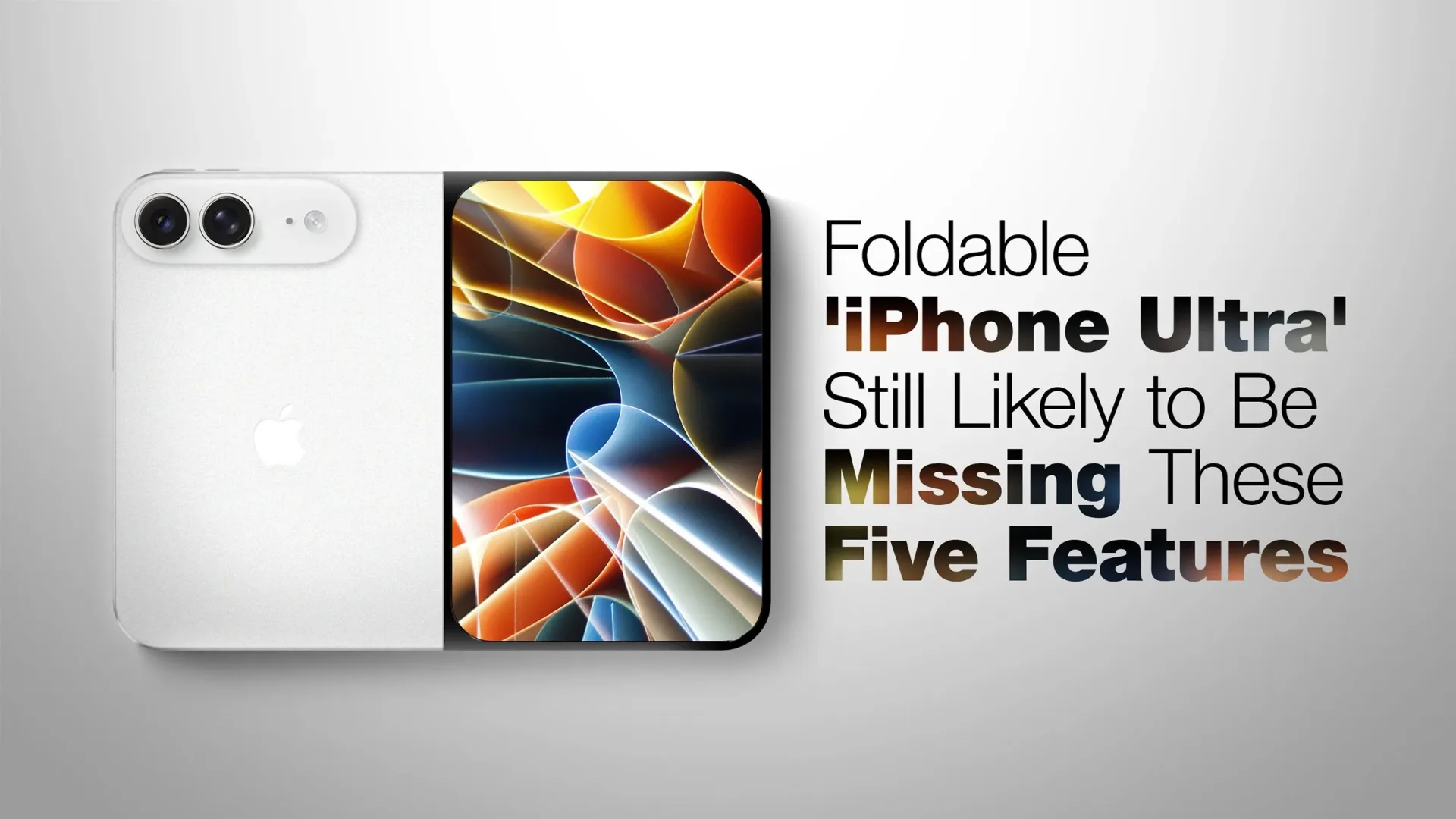
Dummy models attributed to several established device leakers have pointed to a dual-camera rear setup. The expected pairing is two 48-megapixel cameras: Wide and Ultra Wide. What does not appear to be present is a third telephoto camera, the dedicated zoom option that helps distinguish Pro iPhones from lower-tier models.
This is more consequential than a raw lens count. A telephoto camera changes the range of shots that can be made without leaning heavily on digital crop or zoom. Anyone who frequently photographs concerts, sporting events, wildlife, travel scenes or a child who refuses to stand still at a reasonable distance is likely to notice its absence. In a market where buyers increasingly expect ultra-premium phones to be broadly capable cameras, a dual-camera system may become the foldable’s clearest weakness.
The issue is amplified by the price discussion. The iPhone 17 Pro starts at $1,099 and includes the features reportedly absent from the foldable. The iPhone 18 Pro family is expected to become more expensive, with estimates putting the increase around $200 to $300, but even that anticipated shift leaves the foldable’s proposed price at a dramatic premium.
Of course, the foldable’s argument is not supposed to be camera parity alone. Its larger interior display and pocketable folded form would be the attraction. That gives it a different kind of appeal for mobile games, media, multitasking and reading. The broader push toward immersive screens also remains a notable industry theme, as seen in recent developments around XR and shared digital spaces. But a flexible display cannot make a missing optical zoom lens reappear when a buyer needs one.
An unusual button map may leave out the Action button
The physical controls may look different as well. Models of the rumored device show a power button and volume buttons, but no Action button. The left edge appears bare, while the volume buttons sit across the top edge on the right side, echoing the layout used by the iPad mini.
If that layout survives to the finished hardware, the iPhone Ultra would be Apple’s first iPhone with neither the Action button nor the older silent/ring switch in roughly three years. Apple introduced the Action button on the iPhone 15 Pro as the replacement for the switch, allowing users to assign functions such as mute, camera, flashlight, voice memo or shortcuts.
The reported explanation is practical rather than arbitrary. One leak claimed the motherboard is placed on the right-hand side. Routing control connections upward instead of across the display to the opposite edge could preserve valuable interior room. Foldables turn every millimeter into a budget negotiation between battery, hinge, display layers, cooling, antennas and cameras. Losing a customizable button may be the price of winning a little more space elsewhere.
That does not necessarily make the decision painless. Small hardware shortcuts can become daily annoyances more quickly than a buyer expects, particularly when a device is meant to replace a conventional phone rather than supplement it.
eSIM-only design and a possible mmWave gap
The foldable is also rumored to be eSIM only in every market where it launches, without a physical SIM tray. That would follow the approach expected for the iPhone Air. eSIM support is routine for many consumers, but it can still complicate a carrier switch, travel planning or a move between devices for people who value the simplicity of a removable card.
The cellular modem could impose another regional tradeoff. The iPhone Ultra is expected to use Apple’s rumored in-house C2 modem, a step forward in the company’s gradual modem transition. Yet the C2 is also believed to lack mmWave 5G support. If correct, it would limit the foldable to sub-6GHz 5G.
That distinction matters most in the United States, where mmWave bands are used by carriers in selected high-density locations. The U.S. versions of the iPhone 18 Pro models are expected to retain Qualcomm modem hardware to keep mmWave compatibility. Apple does not currently sell mmWave-equipped iPhones outside the U.S., so this is not likely to be an equally meaningful downgrade in every territory.
MagSafe now looks more promising than the early mockups suggested
MagSafe was once another concern. Earlier dummy units did not visibly show the features associated with the internal magnet ring, even though mock iPhone 18 Pro and iPhone 18 Pro Max units displayed alongside them apparently did. On the other hand, leaked foldable cases have included a magnetic ring.
The latest indication is that MagSafe will make the cut. That outcome makes sense in light of the iPhone Air, which demonstrated that Apple can fit the magnet array into a very thin phone. For an expensive foldable, retaining support for magnetic chargers, wallets, stands and other accessories would avoid an unnecessary fracture in the broader iPhone accessory ecosystem.
What the rumored price asks buyers to accept
Current estimates place the iPhone Ultra somewhere from $2,000 to $2,500, with $1,999 described as the floor rather than an optimistic starting point. That positioning would put Apple’s first foldable among the most expensive mainstream phones available, and it guarantees intense scrutiny of each omitted feature.
The real question is not whether a foldable must make compromises. Every foldable does. It is whether Apple can make the gains feel proportionate: an exceptionally slim titanium-and-glass design, a useful large internal display, refined software, dependable durability and enough battery life to justify the sacrifices. Reports suggest a design with similarities to the thin iPhone Air, a model already associated with concessions such as no physical SIM slot and reduced camera hardware. There is no firm indication that the foldable will also lack stereo speakers, though its compact engineering means the possibility cannot be completely dismissed.
Apple is expected to reveal the foldable beside the iPhone 18 Pro and iPhone 18 Pro Max at its “Surprise and Shine” event on Wednesday, September 9. Until then, the iPhone Ultra remains a rumor with a compelling central tension: potentially the company’s boldest iPhone form factor, but perhaps not its most feature-complete one.