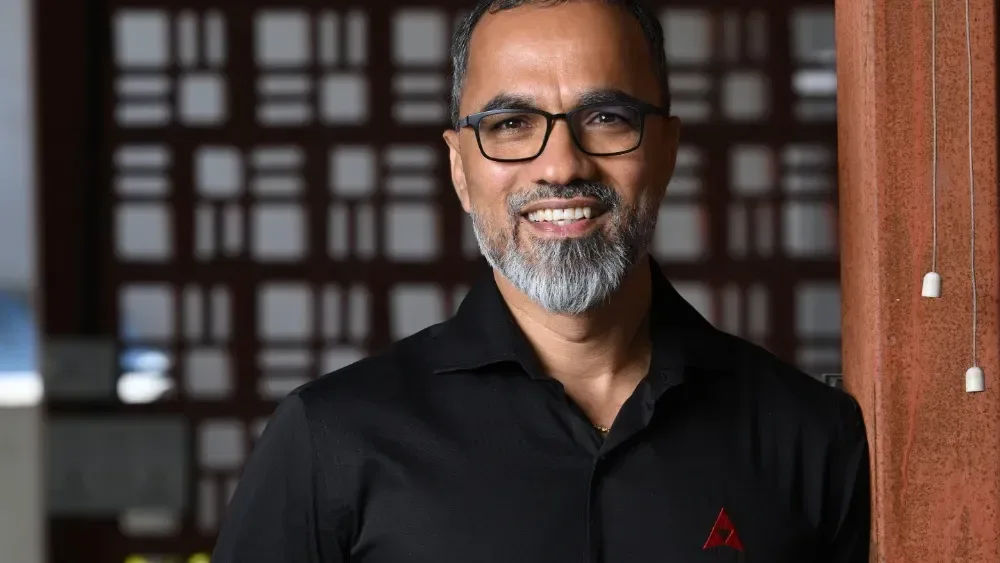
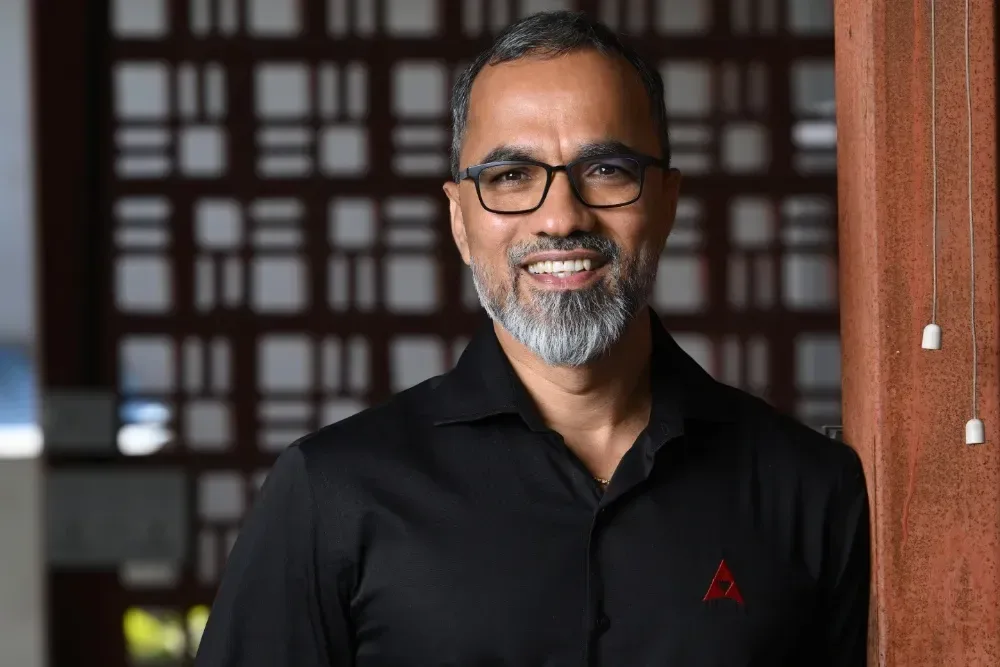
C.V. Rao’s election as a Fellow of the Society of Motion Picture and Television Engineers is a personal milestone, but the larger story is about the industrial muscle required to make ambitious screen spectacles. Rao, the chief technology officer of Hyderabad-based Annapurna Studios, helped shape production and post-production pipelines for S.S. Rajamouli’s Baahubali films and RRR. He is the first technologist from South India to receive the Fellow distinction from SMPTE.
For Rao, the recognition is both an honor and a responsibility. It creates a route into technical conversations with an international community of engineers and production specialists, while also putting a spotlight on the technical talent already working in India. His central argument is not that Indian filmmaking needs to import every new capability, but that it should move from adopting advanced technology toward contributing to its development, workflow design and standards.
That distinction matters. Buying or accessing a tool is only one part of a production pipeline. A reliable pipeline also needs trained people, compatible systems, shared technical language between departments, sufficient computing and storage capacity, defined delivery specifications, and enough preparation time to make creative decisions without creating a crisis near the finish line. Rao’s experience across more than 500 feature-film deliveries has left him focused on that less glamorous, but crucial, side of screen technology.
What mega-productions changed
India already had experienced VFX artists and capable post-production houses before Baahubali and RRR. Rao does not present those films as the beginning of local technical talent. Their impact, instead, came from their unusual scale and complexity. They pushed facilities to expand capacity, build larger teams and make departments work in closer coordination.
On the Baahubali films, the demands went well beyond normal expectations in areas including color grading, processing power, storage, bandwidth and staffing. For Baahubali 2, the team established a dedicated peer-to-peer connection between Hyderabad and Los Angeles so large volumes of material could be sent directly to IMAX.
A peer-to-peer link in this context is a direct network connection between two facilities rather than a loosely managed transfer route. For productions handling enormous image files, speed is valuable, but reliability and control are just as important. A dependable transfer pipeline can reduce friction when a project has to move material between distant specialist teams.
The experience also fed into the creation of ANR Sound & Vision, a post-production facility intended to cover a project’s path from data management and editing through visual effects, sound, grading and final mastering. This kind of integrated setup addresses a practical production problem: films do not become technically coherent simply because every individual department is talented. They need clear handoffs, consistent file management and early agreement about how the finished work will be delivered.
The Dolby Cinema version of RRR showed another limit in the local ecosystem at the time. A Dolby Cinema demonstration at NAB in Las Vegas led to discussions with cinematographer K.K. Senthil Kumar, who brought the idea to Rajamouli. But the processing for that edition required travel to Germany. The question Rao took from that process was straightforward: why should Indian filmmakers have to leave the country for that capability? Annapurna subsequently established Dolby Cinema processing facilities.
That is the practical meaning behind the goal of reducing dependence on overseas facilities. It does not mean international partners disappear from complex filmmaking. Both Baahubali and RRR worked with international partners, and Rao has been clear that attempting projects of their size wholly within India a decade earlier would have been much more difficult because specialized infrastructure, processing capacity and experience were not as developed. The issue is whether a production has meaningful choices—and whether core work can be completed locally when that makes creative and economic sense.
Premium formats only work as a complete chain
Annapurna has also built Dolby Vision and Dolby Atmos mastering facilities. Dolby Vision is a premium high-dynamic-range imaging format designed to preserve expanded brightness, contrast and color information. Dolby Atmos is an audio format that can place and move sounds within a more three-dimensional sound field. Mastering is the stage where a film is prepared and checked for a particular technical format before its final release version is created.
Rao sees greater enthusiasm for premium formats on large-budget productions, while mid-budget filmmakers are still assessing whether the commercial returns justify the extra work. His broader point is that high-end mastering alone cannot create a premium theatrical experience. The exhibition side must be ready too: cinemas need compatible screens and audio systems, while producers need to make format decisions early enough to plan for them properly.
This alignment is particularly relevant when audiences can watch high-quality images at home through streaming services and increasingly capable televisions. Premium theatrical presentation can give viewers a reason to choose a cinema trip, but only if the work made in post-production is actually represented in the venues where it plays. More premium-format screens could encourage producers to commit earlier, but the relationship runs both ways. Facilities, filmmakers and exhibitors need to plan as a connected system.
It is a useful reminder that new media businesses depend on infrastructure as much as headlines or hype. Even entertainment sectors with growing audiences can face difficult questions about economics and distribution, as explored in the profit pressures facing the expanding microdrama business. In Rao’s field, the parallel is clear: technical capability becomes sustainable only when production plans, business cases and exhibition options fit together.
Virtual production’s real obstacle is preparation
Annapurna has invested in virtual production and one of India’s largest motion-capture stages, but Rao says virtual production adoption has been slower than early expectations. During COVID, it appeared particularly useful as a way to work in controlled environments and reduce location work and travel. Yet its production demands are substantial.
Virtual production commonly involves creating digital environments before filming and carefully mapping camera movements and lighting before a crew shoots. In other words, a significant amount of the problem-solving shifts earlier in the schedule. That can be beneficial when a project has time to prepare, but it is poorly suited to a process where approvals and shooting schedules arrive late.
Rao identifies that late-locking production culture as a major reason conventional shooting can remain the easier choice, even when filmmakers are interested in newer approaches. If the digital set, shot design and lighting plan are not ready before the shoot, virtual production’s promised efficiencies may never materialize. It can add cost rather than remove it.
Motion capture is advancing in a somewhat different set of use cases. It is gaining ground for complex action, performance-driven visual effects and digital characters. Motion capture records an actor’s physical performance so it can inform animation or a digital character. Rao’s expectation is not that it will replace every method, but that it and virtual production can become standard options as more teams get practical experience and understand where each tool genuinely saves time.
That “where” is important. Technology decisions should be tied to a production’s actual constraints: its schedule, creative needs, locations, required visual effects, staffing and final delivery formats. Rao’s approach resists the idea that a technical upgrade is automatically a production upgrade. The best use of a tool is the one that solves a specific problem better than the alternatives.
AI as a supporting tool, not the author
Rao places artificial intelligence within the same pragmatic framework. He identifies useful applications in concept development, storyboarding, previsualization, restoration and repetitive visual-effects work. Previsualization, often shortened to previs, is the process of planning shots before principal photography, helping teams test staging, camera movement or timing in advance. Faster iteration at this stage can help people examine ideas before committing major resources.
But he draws a firm line around creative control. Storytelling, performance, emotion and final artistic decisions should remain human responsibilities. For sophisticated digital characters driven by actor performance, precise motion capture may still be essential, with AI assisting on related tasks rather than replacing the performance at the center.
The cost question is equally conditional. Virtual production can lower expenses associated with locations, travel and scheduling, but it also requires facilities, digital assets and extensive pre-production. AI tools may be increasingly accessible to smaller filmmakers, yet professional consistency still requires skilled workers, computing resources and quality control. Neither category is a universal shortcut.
For smaller productions, Rao sees a more realistic route in shared facilities and specialized technical services than in every filmmaker attempting to purchase costly infrastructure independently. That could allow a broader group of projects to use sophisticated tools while preserving the expertise needed to operate them well.
The unglamorous fix: involve post early
Rao’s sharpest advice is also the least futuristic: bring post-production teams into the process before shooting begins. He says many post-production problems start with poor planning. Visual effects, sound, grading, data management and delivery specifications should be considered in pre-production, rather than introduced after creative and logistical choices have already narrowed the options.
Data management covers how production material is organized, protected, tracked and moved between teams. Delivery specifications are the agreed technical requirements for finished versions: the exact standards a distributor, cinema or platform needs. Treating these as late-stage administrative chores can force avoidable rework.
Late creative changes are another recurring source of pressure. Rao recognizes that revisions are inevitable, but large changes close to delivery can mean repeating completed work, compressing time for vital processes and asking artists and technicians to work extended hours. The likely results are higher costs, greater stress and, at times, a compromised final product.
The lesson applies whether a film uses a huge VFX pipeline or a comparatively simple workflow. Planning does not eliminate artistic change. It makes change more visible, gives teams time to assess its consequences and reduces the chance that a final sprint becomes the default way to finish a project.
From service capacity to long-term innovation
Rao believes Indian facilities can compete with established international hubs in infrastructure and access to advanced tools, and notes that major Indian productions are now completing substantial portions of post work domestically. The bigger gap, in his view, is research and development.
More mature production markets benefit from cooperation among studios, technology companies, research institutions and creative professionals. Rao wants greater investment in homegrown technology and in testing new workflows. His proposed path for attracting complete high-end international productions also includes a more supportive business climate, consistent government policy, competitive incentives, simpler approvals, deeper relationships with global studios, training and integrated facilities.
Training is not a side issue in that model. Rao calls for structured studio internships and mentorships, curricula shaped with input from working professionals, and public support for specialist training centers and research. Hardware can be installed quickly; experienced teams and durable professional knowledge take much longer to develop.
As an SMPTE Fellow, Rao plans to participate in technical discussions where India’s experience may be valuable. The country’s film industry works across many languages, production scales and demanding workflows, giving it practical lessons in digital cinema, post-production and data management. Rao describes the fellowship as a two-way exchange: learning from the wider engineering and research community while bringing those lessons back to the Indian industry.
Over the next five years, he expects AI, real-time rendering, virtual production and motion capture to increasingly converge. Real-time rendering refers to generating images quickly enough to be viewed and adjusted immediately, making it central to many interactive planning and virtual-production processes. But Rao’s standard for adopting any of it remains refreshingly plain: the investment should serve filmmaking, not novelty. The machines may get more capable; the decisive work is still designing a process that lets people use them well.