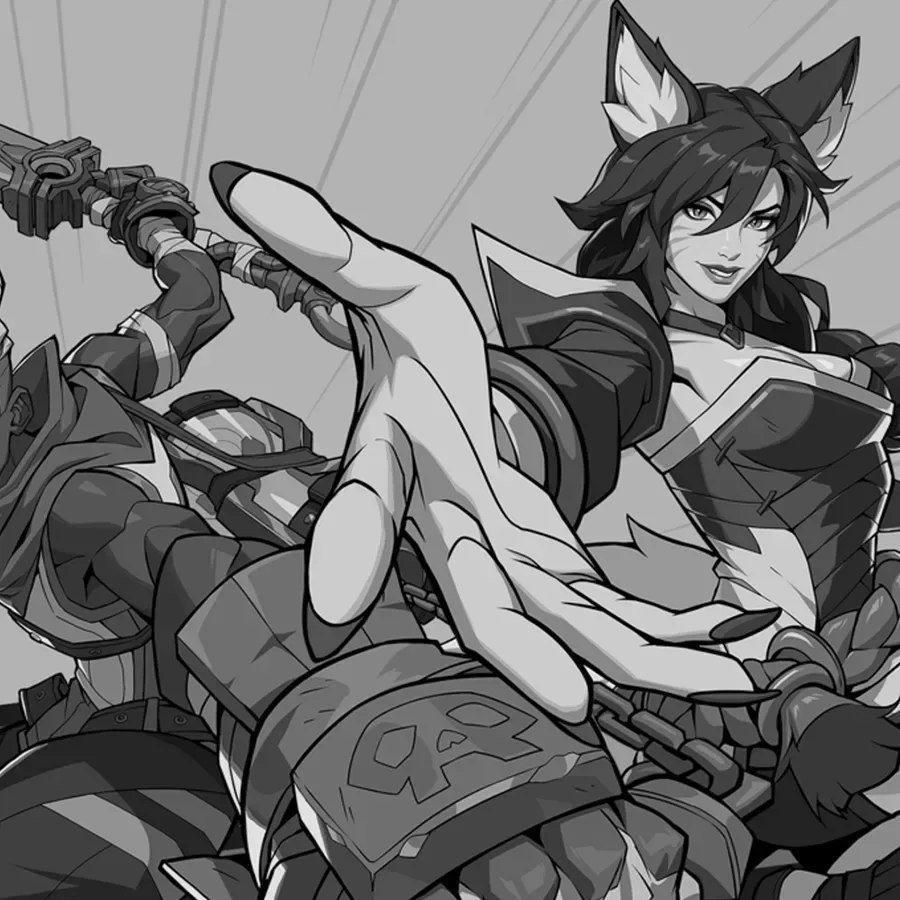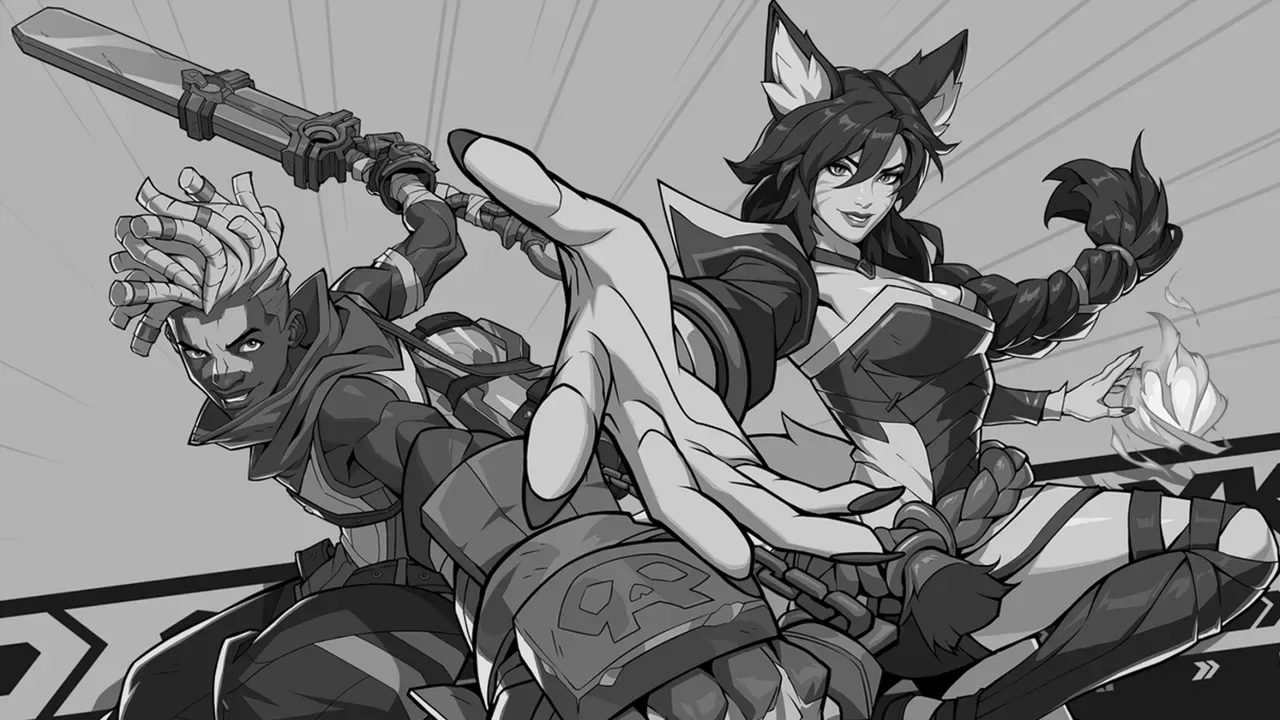
Riot Games co-founder, co-chairman and chief product officer Marc Merrill has put a startling number on the commercial expectations behind 2XKO: to justify its ongoing costs, the League of Legends fighting game would have needed a monthly player population in the high hundreds of thousands, and perhaps millions.
That figure helps explain why the company has chosen to end active development after December 2026 despite keeping online play available. It also illustrates the difficult fit between a costly, long-running live-service plan and the scale traditionally associated with the fighting-game audience.
Merrill described the target while discussing the project’s internal problems, its lengthy route to release, and the decision to issue full refunds and halt future content updates. His assessment was direct: the game found an audience, but not one large enough to support the model Riot had built around it.
A very large target for a fighting game
Monthly active users, often abbreviated as MAU, is a measure of how many distinct people play or otherwise use a product during a month. It is not the same thing as concurrent players—the number online at one moment—or copies sold. For a free-to-play or continually updated game, though, MAU can be a major planning metric because it informs matchmaking populations, engagement, monetization opportunities and the rationale for continuing to fund a content pipeline.
In this case, Merrill said 2XKO’s cost structure would have required a player base “in the high hundreds of thousands, if not millions” to make continued support viable. That is a particularly ambitious bar in a genre where committed communities can be highly durable without necessarily reaching an audience on the scale of the largest multiplayer games.
The comparison being debated by players is Street Fighter 6. The 2023 fighting game averages roughly 16,000 to 20,000 monthly users on Steam in the figures cited during the discussion, although that PC storefront snapshot cannot represent its full player population. PlayStation statistics are not publicly included in that comparison, and platform measures should not be treated as a complete cross-platform census.
Even with that caveat, the gap between a Steam-only measurement in the tens of thousands and a business requirement in the hundreds of thousands or millions shows why the disclosed goal has provoked such a strong reaction. It is less a verdict on whether a fighting game can have a passionate player base than a window into the size of audience Riot believed it needed for this particular project and its planned level of support.
What a “long-tail” live-service plan means
Merrill characterized 2XKO as a game designed for a live-service, “long-tail” approach. In practical terms, live service refers to a game intended to keep evolving after launch through ongoing operations and updates rather than reaching a fixed endpoint at release. A long tail is the extended period in which a game is expected to retain players and generate enough engagement to support that continued work.
Related coverage includes Riot's Marc Merrill Says 2XKO Needed Massive Monthly Audience to Continue.
That approach can be appealing for a competitive game. New content and regular maintenance can give returning players reasons to stay connected, while online competition depends on having enough opponents across regions and skill levels. But it also creates an ongoing obligation. The developer must pay for the teams, technical work and content production needed to operate the game over time. If the audience does not meet the business assumptions behind that operation, even a well-liked game can struggle to fit its intended model.
Merrill said 2XKO resonated with some people but did not attract enough players to warrant the time and spending required for that long-term plan. Riot’s response was to pivot away from active support, refund players, and effectively reposition the game as a more self-contained “box” product that people can continue playing for years.
That distinction matters. An end to active development means no further planned content updates after the stated cutoff; it does not mean the game’s online component is immediately being switched off. Riot has said online play will remain supported, preserving a way for the existing community to keep playing even as the live-service roadmap ends.
Riot identifies strategy and timing problems
Player counts were not the only issue Merrill identified. He said there was not sufficient internal alignment on 2XKO’s strategy, leading to managerial fracturing and confusion within the team. The wording points to a development problem that went beyond any one character, mode, or balance decision: a lack of shared direction about what the project needed to be and how it should reach its audience.
Merrill also connected the game’s challenges to timing. He said Riot had begun work roughly eight years before Street Fighter 6 arrived, and believed there had been an opportunity to make a significant impact on the fighting-game community before Capcom’s newer release entered the market. In his view, a launch years earlier could have changed 2XKO’s prospects.
That is an explanation from Riot’s leadership, not a definitive counterfactual. No available evidence can establish how a different launch window would have altered the game’s audience. Still, timing is especially consequential in competitive games: a major release can absorb attention, tournament interest, streaming visibility and the time players have for learning another system.
It is also worth separating the existence of competition from the broader development issue. Merrill did not present Street Fighter 6 as the only reason for 2XKO’s outcome. He also acknowledged shortcomings inside Riot, saying the company had nobody to blame but itself. That admission places strategic alignment, development duration and the game’s economic assumptions alongside the crowded genre landscape.
From Project L to the end of new content
2XKO was publicly revealed as Project L in 2019, following earlier rumors about a League of Legends-based fighting game. Its extended development became part of the story around the game, as did a release path that moved from closed beta into extended early access.
The unusual rollout is cited as a factor in fading momentum. For a multiplayer competitive game, clarity can be valuable: players need to know what version they are joining, whether progress and access are stable, and what future support will look like. A drawn-out or difficult-to-read release structure can make it harder to convert curiosity into a sustained community, particularly when the audience is already deciding where to spend its competitive time.
Riot nevertheless elected to let players have the game rather than canceling before they could access it. Merrill praised the development team’s work and said the game was beautiful, while explaining that Riot chose to continue, see how the community responded, and then reassess. The subsequent refund decision and cancellation of additional content were presented as the company’s attempt to address the gap between its aspirations and the outcome.
Why the reaction has been so intense
The core dispute is not simply whether 2XKO should have been more popular. It is whether the financial threshold described by Merrill was plausible for a fighting game in the first place.
Fighting-game communities often organize around long-term mastery, local meetups, online ranked play, tournaments and enthusiasm for individual series. Those qualities can sustain a game’s cultural presence, but they do not automatically produce the enormous recurring population a high-cost live-service strategy may demand. The community reaction reflects concern that the project’s budget and expectations may have been mismatched with the market it was trying to serve.
There is another practical implication for players evaluating future competitive games. A game can offer strong mechanics, polished presentation, recognizable characters and online play, yet still face difficult decisions if its operational plan assumes an audience far above what the genre regularly supports. Popularity is not a single measurement, and the requirements of a publisher’s business model may be substantially different from what a dedicated community considers a healthy game.
For 2XKO players, the immediate picture is clearer than the debate over what might have been. Active development is scheduled to end after December 2026. Refunds have been issued, further content updates are being canceled, and online play is expected to continue. The game’s existing community can still play it, but it will do so without the expanding, long-term live-service future Riot originally envisioned.
The wider lesson is not that fighting games cannot thrive, nor that every project needs blockbuster-scale monthly participation. Rather, 2XKO’s situation highlights how profoundly the chosen business structure can shape a game’s fate. A player community and a sustainable live-service operation are related, but they are not identical things—and Riot’s disclosed target suggests its project required an unusually large overlap between the two.
Players looking for other PC releases and price-conscious ways to fill their library can also check the current Steam Autumn Sale game deals, though a discounted purchase is, of course, a very different proposition from joining a competitive game built around continuing online support.