Krafton has canceled PUBG: Black Budget, ending development on the planned first-person PvPvE extraction shooter before it reached release. The decision closes the book on a PUBG spin-off that had moved from an early investor-presentation mention to a Steam listing, teaser trailer and closed-alpha testing, but never became publicly available as a finished game.
In its Steam update, Krafton said it had reviewed the project’s development status and future direction and concluded that Black Budget’s existing direction would not support an experience players could enjoy over the long term. The company thanked participants in the closed alpha for their feedback and said PUBG Studios will carry lessons from development and testing into future projects as it explores new gameplay ideas.
That wording matters. This was not framed simply as a scheduling delay or a temporary pause. Development is ending, and the game’s premise, progression systems and unreleased content will not move forward as PUBG: Black Budget.
What PUBG: Black Budget was meant to be
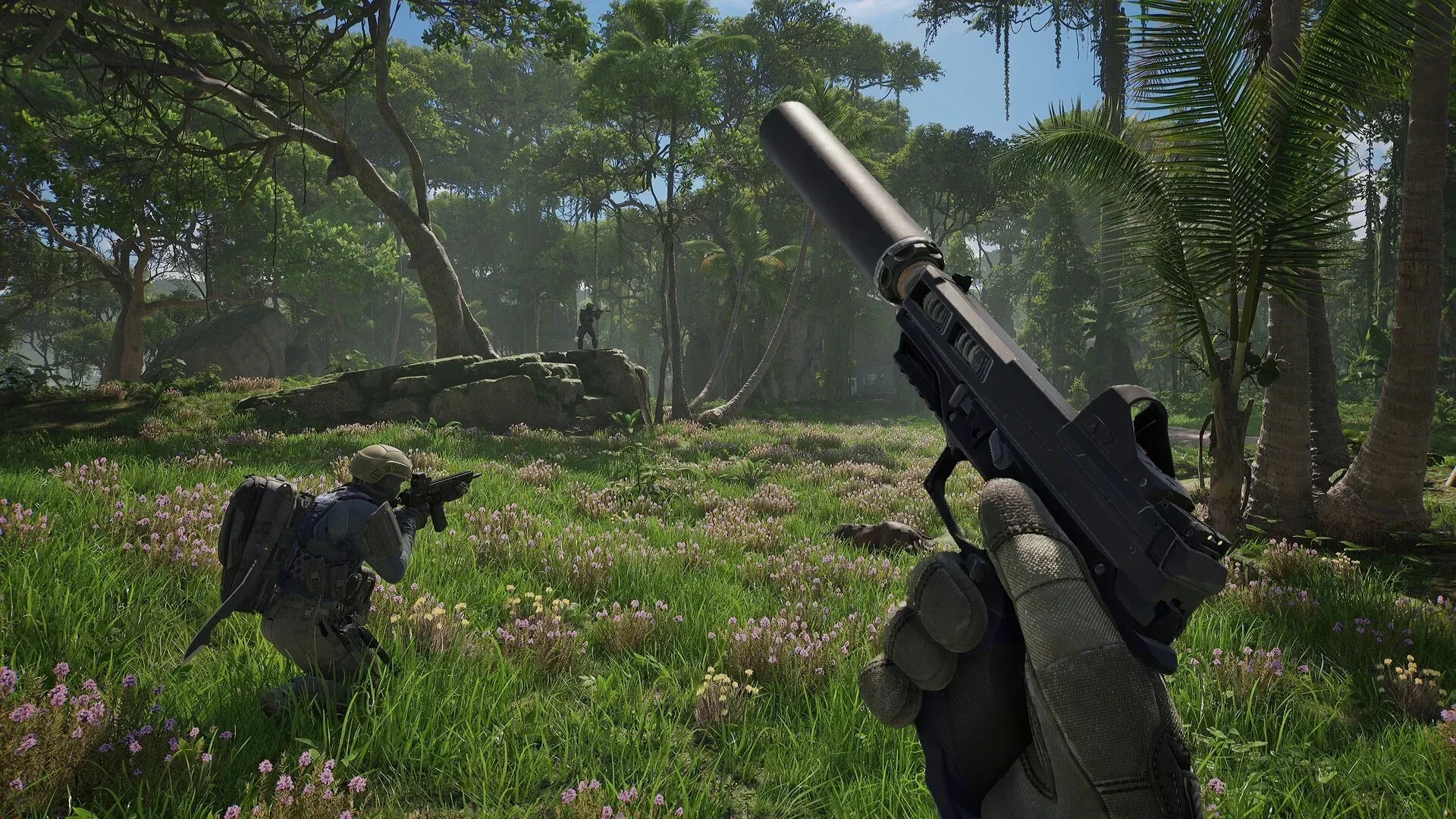
Black Budget was conceived as a first-person PvPvE game. PvPvE means “player versus player versus environment”: competitors contend with one another while also dealing with AI-controlled threats and hazards built into the world. In this case, players were to enter an abandoned island research facility, seek secret technology, and survive a setting affected by a time loop.
The concept paired familiar military-shooter imagery with a more unusual supernatural premise. The island’s time-loop setup suggested a world where the environment itself could be part of the tension, rather than functioning only as a backdrop for firefights. However, the available information did not establish exactly how the loop would affect individual matches, objectives, enemies or long-term progression. Those specifics will now remain unrealized.
Its broader format was that of an extraction shooter. In that genre, the key objective is generally not merely to win a match or eliminate every rival. Players enter an area to pursue loot or objectives and must successfully leave with what they have secured. The act of extracting gives items, equipment and knowledge value; losing a run can carry consequences for the gear or progress brought into it.
Black Budget was also expected to have an out-of-match layer in which players upgraded their character and crafted their base. That is often called meta-progression: advancement that persists between individual sessions, rather than resetting when a single match ends. A good meta-progression system can provide goals beyond the immediate run, but it also has to make advancement understandable and rewarding without becoming a barrier to players entering later or returning after time away.
A project disclosed in 2023 that never launched
PUBG: Black Budget was first mentioned in a November 2023 investor presentation. It surfaced more visibly two years later with a Steam page and teaser trailer, while closed alpha tests gave a limited group of players an opportunity to try an unfinished version and provide feedback.
Related coverage includes PUBG: Black Budget Canceled as Krafton Ends Extraction Shooter Development.
A closed alpha is an early testing phase rather than a promise of a finished product. Developers use it to examine whether core systems work together: moment-to-moment combat, pacing, technical stability, progression, navigation, retention and the clarity of objectives can all be tested before a broader release. Player feedback is useful in that process, but it does not obligate a company to finish a project if it decides that the underlying direction is not strong enough.
Krafton did not provide a detailed public breakdown of which features or test results led to the cancellation. It would therefore be wrong to declare a single mechanic, a particular technical problem, or alpha feedback alone as the definitive cause. The stated reason is narrower and more direct: after a review, the company determined that the game in its current direction could not deliver a satisfying long-term experience.
Why “long term” is a particularly high bar here
The reference to long-term enjoyment points to the challenge facing games designed around repeat runs and ongoing progression. A one-off campaign can be judged primarily on its opening, its story and the quality of a finite sequence of missions. An extraction shooter needs players to find meaning in repetition. Its risk-and-reward loop has to remain exciting after the novelty of the first few runs fades.
That does not just mean strong shooting mechanics. Players need reasons to make difficult decisions over what to carry, what objective to pursue, whether to confront other players and when to attempt an exit. The stakes must be understandable. The rewards must feel worth the danger. Progression must provide momentum without draining the tension that comes from risking valuable equipment.
Black Budget also would have had to explain how its supernatural research-island concept served that loop. A time loop can be a memorable hook, but a hook alone does not settle whether each session has enough variety, readable objectives and meaningful choices. Krafton’s statement does not criticize the setting directly; it simply indicates that the total experience was not headed toward the durability the company wanted.
That is an important distinction. A game can contain several appealing ideas and still fail to cohere into a serviceable long-term product. Decisions to discontinue work before launch are difficult, particularly after public teases and closed testing, but they avoid committing players to a live game that its maker does not believe will sustain them.
An increasingly demanding extraction-shooter field
The cancellation arrives in a competitive extraction-shooter landscape. Black Budget began testing while Arc Raiders was gaining major attention, while Marathon later struggled to achieve a comparable impact. Those titles are not evidence of why Black Budget was canceled, and Krafton has not publicly assigned blame to any competitor. They do illustrate the commercial and creative pressure surrounding a format where games are competing not only for a purchase, but also for repeated player time.
For a new game in this space, being an extraction shooter is not enough of a pitch by itself. The project needs a distinct identity, clear systems, and an answer to why players should build habits around its particular world. Black Budget appeared positioned to answer with its PUBG connection, military presentation, secret-technology objective and time-loop mystery. Yet the company’s decision indicates that those elements, in their tested form, were not adding up to the experience it wanted to maintain.
There is a broader design lesson in the wording around player feedback as well. Feedback is not simply a vote on whether players like an idea. It can reveal whether people understand what a game asks of them, whether the costs of failure feel fair, and whether rewards fit the investment required. As a recent discussion of designing around player behavior argues, systems work best when they account for how people actually respond to incentives and setbacks, rather than how designers hope they will behave.
That principle is especially relevant to a high-stakes multiplayer format. If players see failure as arbitrary, progression as a grind, or extraction as an interruption rather than a thrilling decision, the loop can lose its pull. Conversely, if risks are too light, the central tension of an extraction game can disappear. Finding the balance is a core development challenge, not a finishing touch.
What the cancellation means for players and PUBG Studios
For people who participated in the closed alpha, the immediate result is straightforward: their testing will not lead to a release of PUBG: Black Budget. Krafton specifically acknowledged those players and their feedback, while saying that development and testing lessons will be used in future PUBG Studios projects.
That does not amount to an announcement of a replacement game, a revised version of Black Budget, or a commitment that its island and time-loop premise will return elsewhere. No such project details were provided. The practical takeaway is only that the studio intends to apply what it learned as it pursues other gameplay experiences.
The end of Black Budget follows another short-lived PUBG-related experiment. Krafton also canceled PUBG: Blindspot after two months in Early Access. Together, the two decisions underline that a major multiplayer brand can support experimentation without guaranteeing that every spin-off will continue. A recognizable name may help introduce a project, but an ongoing competitive game still has to establish a durable reason for players to stay.
For now, PUBG: Black Budget joins the list of announced games that reached public testing but not release. Its cancellation leaves an intriguing but incomplete outline: a first-person PvPvE extraction shooter involving a deserted research facility, secret technology, player-made bases and an island trapped in a time loop. Krafton’s next steps are not yet defined publicly, but the company has made clear that the Black Budget team’s development and testing work will not simply be discarded from its future planning.