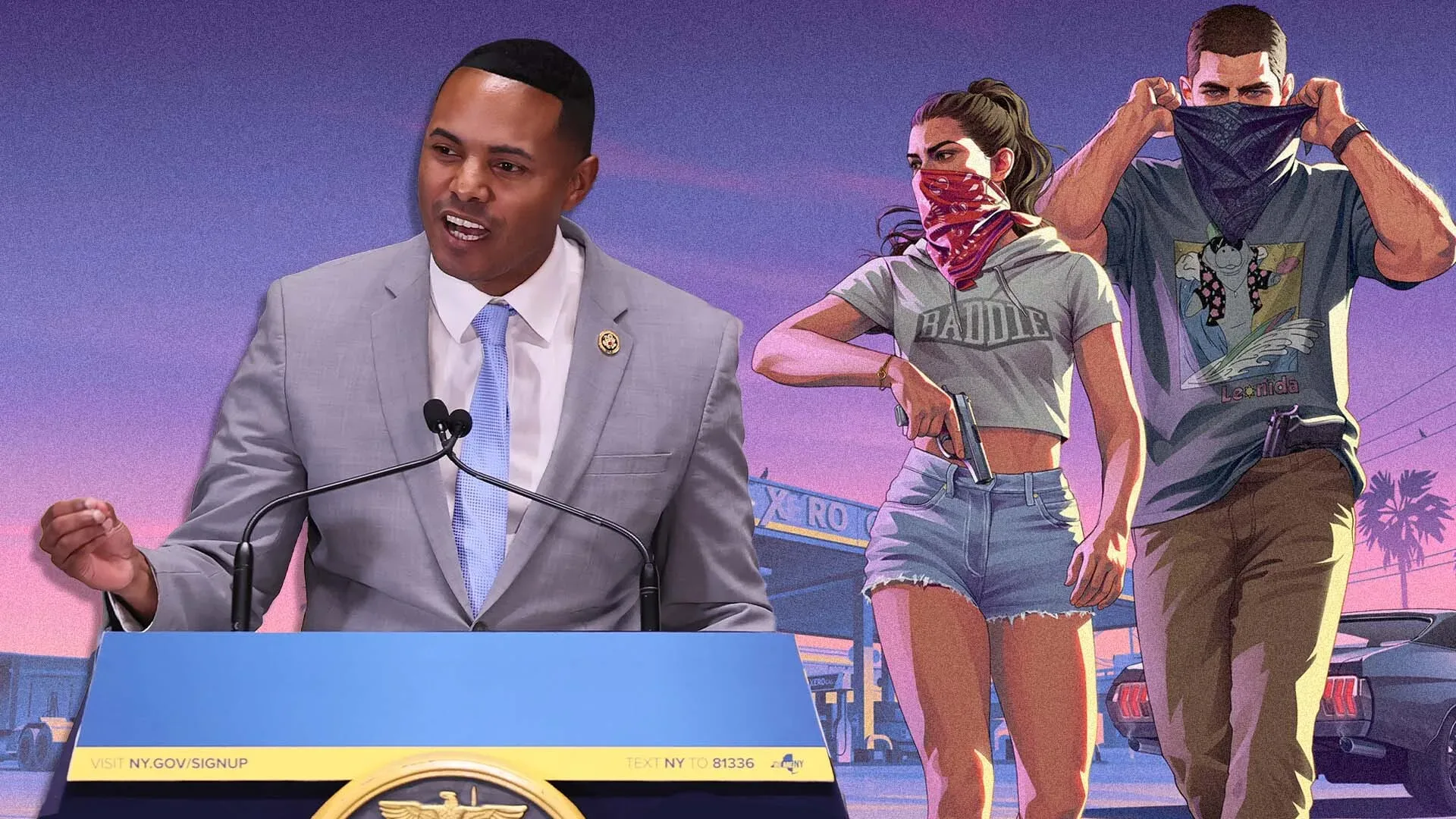
A digital game purchase can look a great deal like ownership right up until the storefront listing disappears, the servers switch off, and a menu option quietly becomes an exhibit in the Museum of Things You Used To Be Able To Do. Rep. Ritchie Torres, the Democratic representative for New York’s 15th congressional district, wants federal rules to make that outcome harder to accept as business as usual.
Torres says he plans to introduce the Power To The Players Act, proposed legislation intended to protect video-game ownership rights. Its central idea is easy to state and much harder to legislate: if someone pays for a game, that purchase should not amount to a temporary license that can cease to function when a company moves on.
“Consumers must have the right to own, the right to play, and the right to transfer the games they buy,” Torres said in a press release.
The proposal would instruct the Federal Trade Commission, or FTC, to develop regulations addressing those rights. As described, sellers of digital games would have to provide buyers with something stronger than an expiring license, while games with online functionality would need offline modes that remain usable after their servers are eventually shut down.
That is not yet a new law, a guarantee that older games will suddenly return, or a detailed technical standard. The bill still needs to be formally introduced, assigned through the congressional process, and ultimately passed. But it puts a very current gaming anxiety—whether a purchase remains playable—into unusually direct legislative language.
NBA 2K25 is the immediate example
The case driving the conversation is NBA 2K25. It was the fifth best-selling game in the United States in 2024, yet its digital storefront delisting is set for October 30. Its online servers are then scheduled to close on January 1, 2027. Once that happens, the game’s most popular modes will no longer be playable.
For a sports game built around continual online activity, that distinction matters. A title may retain some local or offline content after its network services end, but a player’s access to the modes that defined much of the product can disappear. The result is a purchase that still technically exists in some form while becoming substantially less useful than the game customers thought they were getting.
Torres’s argument is that this is not merely a frustrating support-policy decision. It is an ownership and affordability question. NBA 2K25 cost $70 for many purchasers, and its players can devote significant time and money to its ecosystem. When online support ends a little more than two years after release, a customer is left confronting the difference between the everyday meaning of “buy” and the fine-print reality of a revocable digital license.
Related coverage includes Power To The Players Act Targets Expiring Digital Game Licenses.
That gap is the little goblin living under modern game storefronts. It does not necessarily announce itself at checkout, but it becomes extremely visible when a game, its servers, or a digital library entry goes away.
What the bill appears to seek
Based on the plan described by Torres, the Power To The Players Act has two connected aims.
- Stronger ownership protections for digital-game buyers: Companies selling digital games would have to offer more than access governed by a license that may expire or be withdrawn.
- Playable offline options after server closure: Games with online features would need an offline mode that continues to work once official servers are no longer operating.
An offline mode, in this context, means gameplay that does not need a continuing connection to the publisher’s servers. It would not automatically mean that every online multiplayer match, live service, or network-dependent feature can continue exactly as it did. The proposal’s broad description does not specify how the FTC would define sufficient offline functionality, which types of games would qualify, how compliance would be measured, or how it would apply to games designed principally around online play.
Those omissions are not necessarily flaws at this early stage; agencies are often directed by statutes to write detailed regulations later. They are, however, the questions that would determine whether the policy creates a meaningful preservation path or a narrow minimum requirement that publishers can satisfy with a token offering.
Digital delisting is also worth separating from a server shutdown. Delisting removes a game from sale on a digital storefront. A server shutdown ends the publisher-run online services a game needs for particular modes or, in some cases, for the entire game to operate. Both can affect consumers, but they do so differently. A buyer may be unable to make a new purchase after a delisting, while an existing buyer may lose the ability to use major parts of a game when its online infrastructure closes.
A dispute shaped by an all-digital future
The proposal arrives as concern over vanishing games has gathered around the Stop Killing Games advocacy movement, which argues that companies should not sell games that become completely unplayable at the end of official support. The question is especially urgent as physical distribution appears less central to the next generation of console gaming.
Sony is reported to be ending PlayStation disc production for its next console generation, a change that would push buyers of a future PS6 toward an all-digital model. Meanwhile, Grand Theft Auto 6 is expected to arrive as a download code in a box rather than a disc, offering a pointed example of how a physical package does not necessarily mean a physical copy of the game. The shift is particularly conspicuous for a release expected to start at $80. For more on the game’s expected award-calendar timing, see GTA 6’s Game Awards eligibility deadline window.
None of this means physical discs alone solve every preservation problem. A disc can coexist with patches, mandatory connections, account systems, and server-reliant modes. Conversely, a digital game can be accessible for years. The practical issue is control: a buyer of a digital title often has few options if a platform holder, publisher, or server operator changes the terms of access.
Torres describes the legislation not as a radical new theory of games but as a return to the historical expectation created by buying games across the 1980s, 1990s, and 2000s: put the game in, turn the system on, and play. He has said he grew up with series including Grand Theft Auto, Resident Evil, and SOCOM, and frames the issue as one consumers understand immediately even if the legal plumbing underneath it is complicated.
The hard part is not the slogan
“If you pay for it, you own it” is a compelling rule of thumb. Turning it into enforceable policy will require definitions that account for the huge variation among games.
Publishers could be expected to argue that online games depend on ongoing infrastructure, maintenance, security work, and operational costs. A regulatory system would have to decide what an acceptable post-shutdown version looks like without inventing requirements that the underlying game cannot technically meet. It would also need to distinguish between preserving a purchasable game and compelling continued operation of a specific live online service forever—two related but not identical demands.
That is why the FTC’s role is notable. The commission is the federal consumer-protection agency that the proposal would task with translating the bill’s principle into concrete rules. In theory, that could mean standards for disclosures, game functionality, offline preservation, or the terms on which a digital purchase may be revoked. The current description does not lay out those eventual rules, so it would be premature to claim the act would preserve every mode, every game, or every customer investment.
There is also a commercial fight ahead. Major publishers are likely to resist restrictions on how they sell and support games, particularly rules that could alter digital licensing models or create new development obligations. Torres has not confirmed whether the measure will have co-sponsors, including Republican support. With an estimated 87% of legislation never receiving a full vote, the bill faces a difficult path even before policy details become the subject of negotiation.
Why games, and why now?
The proposal is limited to video games rather than extending immediately to digital films or music. That boundary is noteworthy because digital-media removals have affected movies as well, including purchases of Terminator 2 and other titles earlier this year.
Torres’s distinction is that games carry a particular mix of ownership, collection, and time investment. A game is not simply something watched once and placed on a virtual shelf. Players may return to it for years, build progress within it, and rely on the continued function of modes that were part of the sale. In the case of annual sports releases, the stakes can be especially stark: a game can stop being sold and later lose online modes while its successor is already asking players to begin the cycle again.
That does not settle the larger digital-ownership debate, but it explains why video games may be the testing ground. If a workable consumer right can be defined for software that mixes local code, online systems, accounts, and paid access, Torres believes it could establish a precedent for other parts of the digital economy.
For now, the Power To The Players Act is a proposed answer to a question that has become hard to avoid: when the checkout screen says “purchase,” what exactly survives after the servers are gone? The legislation cannot answer that on its own yet. Its significance is that a member of Congress is trying to make the answer something sturdier than “whatever the platform’s terms said that day.”