
Some of Cyberpunk 2077’s most persuasive storytelling happens after the major decision, the loud confrontation or the job-ending gunfire. It arrives in a small box on V’s phone: a reply, a thank-you, a complication, or proof that a person the player met briefly is still living with the consequences of what happened.
Paweł Sasko, formerly Cyberpunk 2077’s quest lead and now an associate game director on Cyberpunk 2, has identified an unexpected influence on that approach: Persona 5. In a social-media discussion about using phone messages for narrative, Sasko said Cyberpunk 2077’s style of phone interaction was inspired by mechanics he saw in Atlus’s role-playing game, which he described as a game he loves.
The connection makes sense without suggesting that the two games tell stories in the same way. Persona 5 centers a student’s day-to-day life, friendships and group communication; Cyberpunk 2077 follows a mercenary in a dystopian city. Yet both understand that a text is not merely menu dressing. It can be a compact scene, an aftershock from a choice, or a low-cost means of reminding players that characters do not freeze in place once a quest marker disappears.
A message can make a choice feel like it continued
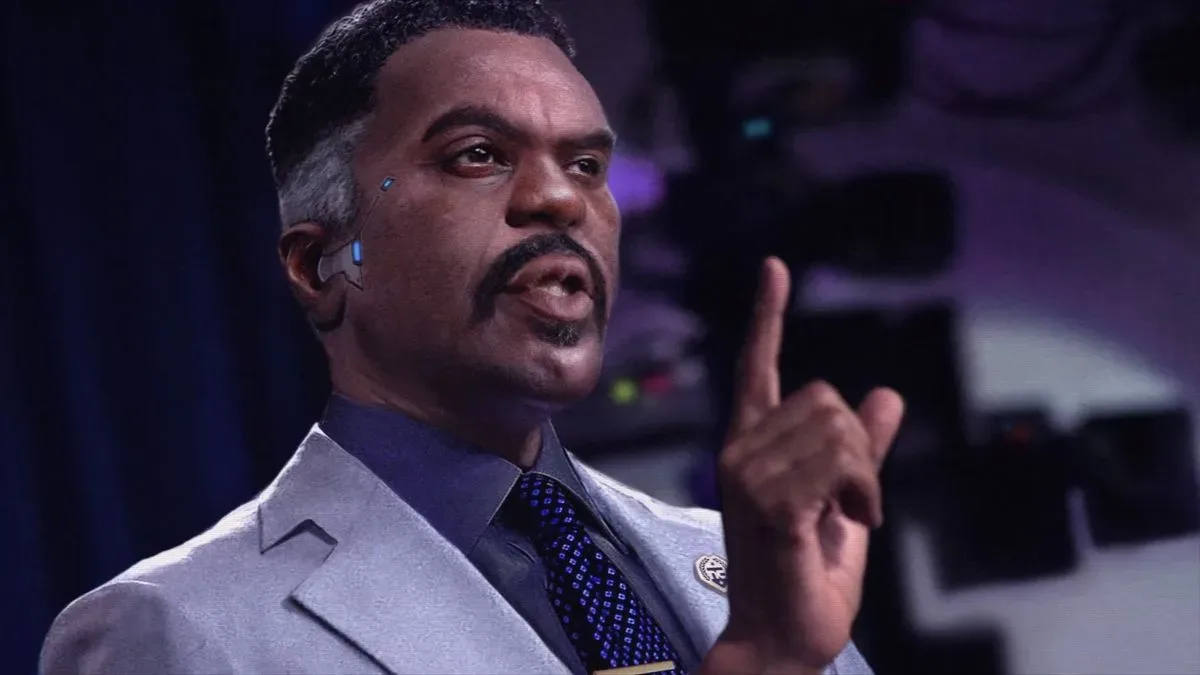
The example that prompted Sasko’s comments involves El César, a side character caught up in a fighting-ring scandal. Players can choose not to take his money. Later, he can message V with news that his family has welcomed a new baby, thanking the player for letting him go and framing the decision as evidence of a mercenary with compassion.
That exchange is brief, but it does several jobs at once. It acknowledges a player action, gives El César a life event unrelated to a new mission, and interprets V’s decision through another character’s eyes. Crucially, it does not need to turn every act of generosity into a sprawling quest chain to make the moment matter.
This is what makes asynchronous communication useful in a role-playing game. “Asynchronous” simply means the player receives and reads the response apart from the original encounter rather than while both characters are standing in the same scene. The time gap can make the response feel more natural: an update arrives when the other person has had time to react, recover or move on. It also allows the game to keep a relationship present while the player is occupied elsewhere.
Cyberpunk 2077 uses its phone in a world where phone contact belongs naturally. V is continually working, negotiating, following leads and maintaining connections across a large city. Messages can therefore deliver a practical lead, but they can also carry the ordinary social texture that jobs and combat cannot supply on their own.
What Persona 5 contributed to the idea
Persona 5, released before Cyberpunk 2077’s 2020 launch and re-released as Persona 5 Royal in 2020, frequently communicates with its cast through texts and group chats. Those exchanges are woven into the main story, not treated as a detached novelty. They also intersect with Social Links, the character-focused stories associated with improving Personas and party abilities.
Related coverage includes Persona 5 Helped Shape Cyberpunk 2077's Phone Messages, Pawel Sasko Says.
That dual role is important. In Persona 5, messaging can reinforce the feeling that the player has a circle of friends coordinating around extraordinary problems while also living ordinary lives. It is both characterization and structure. A player is not just told that relationships matter; the game repeatedly uses a familiar communication form to keep those relationships active.
Sasko’s comments point to that lesson rather than to a claim that Cyberpunk 2077 copied Persona 5’s specific systems. The useful design principle is that an interface players immediately understand can carry meaningful story information without requiring every development to become a full voiced cinematic. For a game about people who use phones, the fiction and the delivery mechanism line up.
Why written follow-ups matter in a voiced RPG
Sasko described the phone correspondence as an intuitive way to broaden narrative possibilities while keeping development costs comparatively low. Once dialogue has been written and sent for voice recording, developers can add substantial written material through shards, emails and text messages. These elements can build on the established story, develop consequences or provide natural follow-ups.
“VO” in this context means voice-over: recorded spoken dialogue performed for the game. Fully voiced scenes can be especially valuable for crucial dramatic beats, but they require writing, recording and integration. Written communications are not consequence-free to make—they still require careful writing, editing, localization and implementation—but they give a team another tool for adding narrative density after the core dialogue is in place.
That distinction is worth making because “lower cost” should not be mistaken for “throwaway.” A message works only if it feels like it comes from a person with a recognizable perspective and a believable reason to write. It must arrive at an appropriate time, avoid repeating information the player already knows, and respect the player’s prior choices. The small format is precisely why every sentence has to be economical.
Shards, emails and texts can also divide narrative labor effectively. A voiced scene can handle confrontation or a major turning point. A short message can then explain the quieter implication: someone got home safely, someone remains hurt, a relationship has warmed, or an old contact remembers the player’s conduct. The latter may not warrant an expensive performance, but it can still change the emotional reading of the original scene.
Consistency is the feature, not merely the phone UI
Sasko emphasized that the cumulative result depends on doing this consistently throughout the game. One memorable note after one quest can be pleasant flavor. A repeated pattern of credible responses creates a stronger impression that the setting continues to function around the protagonist.
That is a more demanding standard than simply filling an inbox. A large volume of messages does not automatically produce a richer narrative. If every contact writes only to announce an objective, messages become quest-log delivery. If every response is effusive praise, player choices lose definition. If a text never reflects the prior interaction, it can expose the machinery instead of strengthening the fiction.
The effective version is selective. It uses messages when the format contributes something that a waypoint, codex entry or immediate dialogue scene would not. El César’s later family news is a useful model because it is personal, delayed and connected to a specific act of mercy. It is not just a receipt confirming that a task was completed.
Romance exchanges are among Sasko’s favorites because some contribute meaningfully to character development. That observation gets at another advantage of written contact: it can create room for a relationship to breathe between defining scenes. Not every expression of care, uncertainty or humor needs to be a major cinematic event. Smaller exchanges can make the larger scenes feel less isolated.
The design challenge: messages must respect attention
For players, phone storytelling has an obvious practical benefit: it allows optional reading at a pace they choose. Someone focused on the central plot can scan the essentials; someone invested in the cast can linger over a thread. The format fits an RPG especially well because it can reward curiosity without forcing all characterization through a single mandatory route.
But it comes with risks. A phone can become an interruption engine if it buzzes too frequently or turns every moment into a prompt to check a screen. Important information buried among routine chatter can be missed. And an artificial tone can be immediately noticeable, because players have unusually sharp expectations for texts, emails and chat language drawn from their own lives.
For developers, the implication is not that every game should add a smartphone interface. Sasko’s point is more specific: when phone-based contact makes sense for the world and protagonist, it is an intuitive channel for follow-up storytelling. A historical adventure, a fantasy journey or any setting where such technology does not belong would need a different diegetic equivalent. “Diegetic” means an element that exists inside the game world itself; in Cyberpunk 2077, V’s phone is part of the character’s reality rather than an abstract player-only overlay.
The format is strongest when the interface, setting and character behavior reinforce each other. A student organizing friends through group chats and a mercenary staying connected to fixers, clients and acquaintances both have plausible reasons to receive written updates. The player’s everyday habit of checking a phone is then transformed into role-playing rather than merely copied.
A timely comparison with GTA VI’s relationship texts
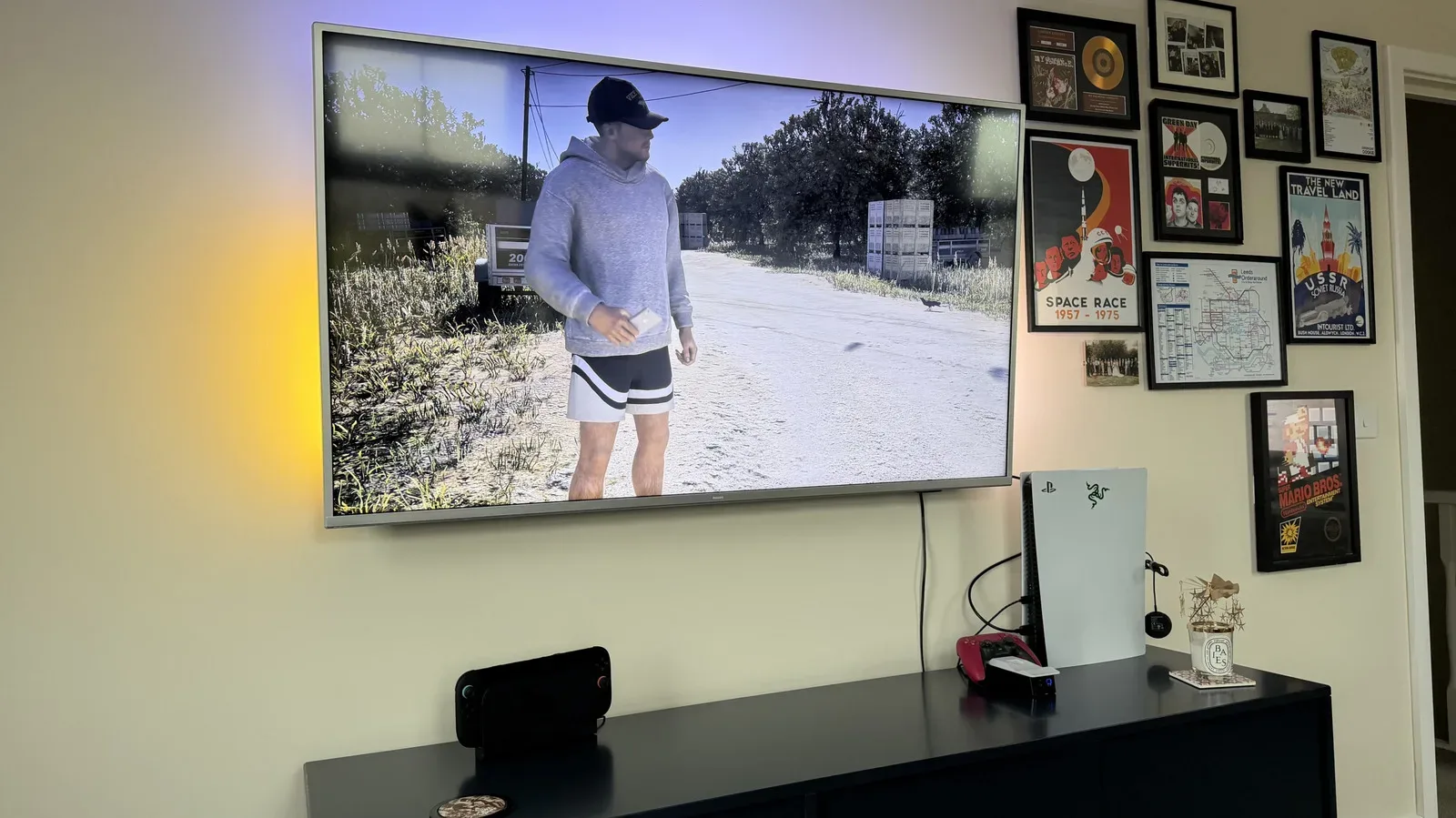
The idea has renewed relevance as GTA VI uses texts and reminders in the relationship between protagonists Jason and Lucia. The messages encompass small gestures—gifts, thanks, concern and photos—as well as more explicit prompts about actions a partner may appreciate. Alongside updates from side characters, that communication layer illustrates how a phone can support both moment-to-moment organization and the impression of a relationship developing over time.
Players troubleshooting Rockstar’s newest release can also consult our GTA VI stuttering guide for PS5 and Xbox. The larger narrative point, however, is that texts can hold emotional value even when they are mechanically modest. A smiley photo or an expression of concern may not change a mission outcome, but it can give context to why the player should care about the person at the other end of the conversation.
That is the quiet power Sasko’s Persona 5 connection helps explain. Narrative games often seek spectacle, branching decisions and enormous worlds. Those can matter enormously. But an RPG can also earn its sense of consequence through a small written follow-up that arrives later, acknowledges a decision and lets a side character be more than a completed objective.
Cyberpunk 2 is making good progress, Sasko has said, while CD Projekt aims to reduce the wait between its RPG releases in the future. There is no basis here to assume which communication systems will appear in that game. Still, Sasko’s account offers a revealing look at how one effective storytelling convention traveled between very different RPGs—and why the most convincing consequence can sometimes fit on a phone screen.