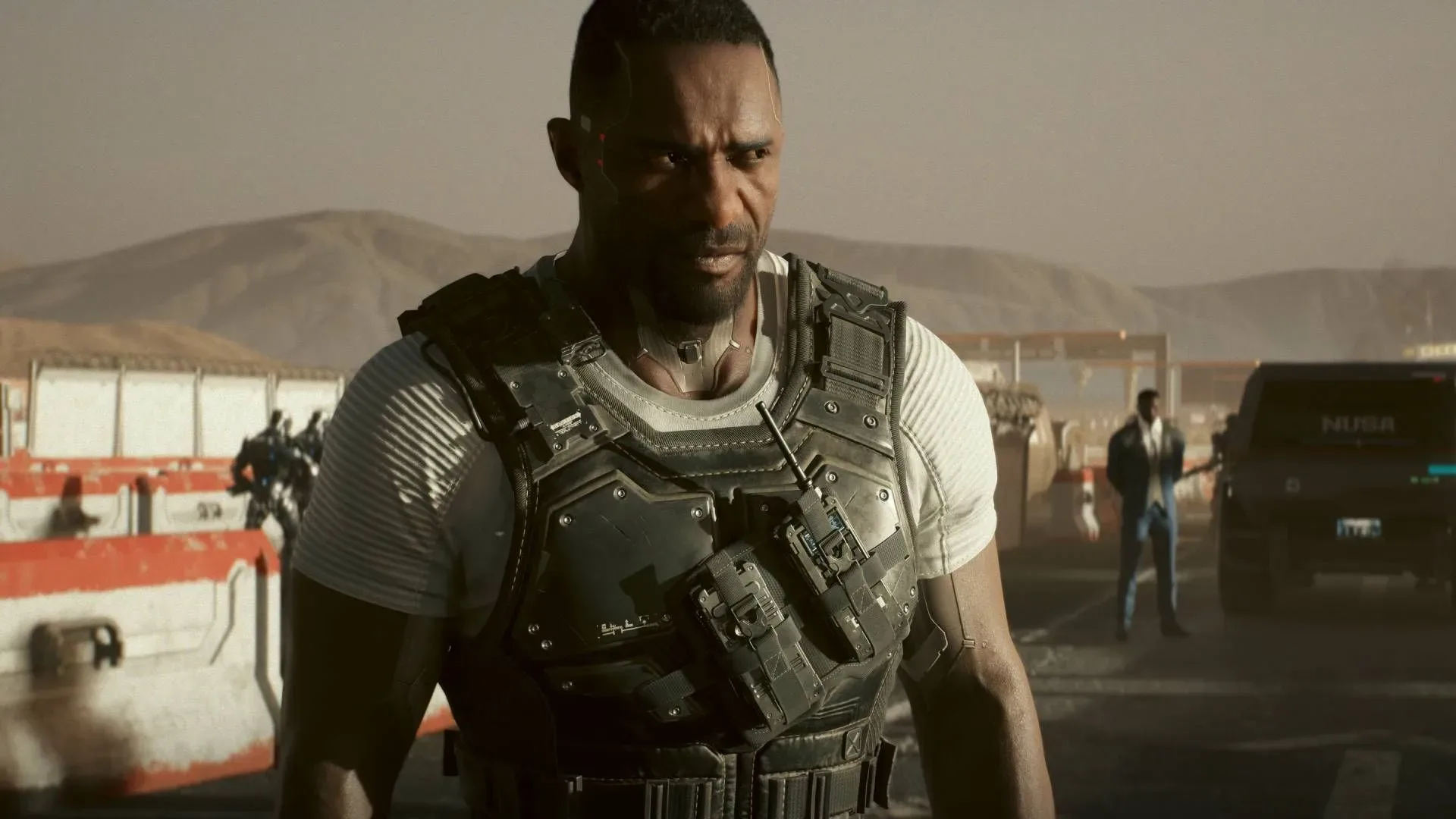
Spoiler warning: This article discusses the central late-game choice in Cyberpunk 2077: Phantom Liberty, involving Songbird and Solomon Reed. It does not lay out every possible outcome, but players hoping to encounter that decision without context may want to return later.
Three years after Phantom Liberty, Paweł Sasko has offered a revealing look at how CD Projekt Red approached the expansion’s most difficult narrative moment. The lead quest designer on Phantom Liberty, now associate game director on the next mainline Cyberpunk RPG, says the team treated V’s eventual choice between Songbird and Reed as a foundational design problem. Rather than simply arriving at the fork after building the surrounding story, the developers worked backwards from it and repeatedly rewrote scenes to make the decision carry real weight.
That approach goes beyond writing two characters who can argue convincingly. It means constructing a route to the choice where each person has understandable motives, major blind spots, secrets, and behavior that can earn or lose a player’s trust. Sasko’s description makes clear that ambiguity was not a side effect of the expansion’s spy-thriller plot. It was the point.
The reflection also supplies a useful view of the studio’s larger production changes. In place of a more sequential workflow used during the development of Cyberpunk 2077, the Phantom Liberty team moved toward multidisciplinary “pods,” putting contributors from design, writing, cinematics, art, audio, quality assurance, and other specialties around the same material. For an expansion built around tension, branching paths, and consequences that must feel native to the world, that structure is as important as any individual scene.
The final choice as a design anchor
Role-playing games often promise meaningful choices, but a branching decision can fall flat if players immediately identify the option the game appears to endorse. A choice becomes more emotionally demanding when the competing paths represent people whose motives are comprehensible even when their actions are troubling.
That was the target for Songbird and Reed. Sasko says both characters needed contradictions, weaknesses, secrets, and motivations that players could understand. The wording matters. “Understand” is not the same as “approve of.” A player can recognize why someone acts out of fear, duty, desperation, loyalty, or self-preservation without deciding that those actions are justified.
In practical narrative terms, this is what gives a climactic decision its friction. If one character is presented as consistently honest and compassionate while the other is only manipulative or cruel, the game is not really asking the player to weigh competing values. It is mainly asking whether they noticed the signposting. Phantom Liberty instead sought to make both Songbird and Reed persuasive, suspect, and vulnerable in ways that could support different interpretations.
Working backwards from the ending is a way to protect that tension. The writers and quest team can assess earlier scenes with a concrete question: does this moment make the later choice more legible, more difficult, or more personal? If it does none of those things, it may need revision. If it makes one character too obviously right, it may also need revision.
Related coverage includes Phantom Liberty's Final Choice Was Built First, Says Cyberpunk 2 Director.
That does not mean every earlier moment must be a blunt clue. The expansion’s aim, as Sasko explains it, was not to announce the correct decision. It was to let players live with their own reading of what they had done. The payoff is less about receiving a definitive moral grade and more about carrying the consequences of a decision made under uncertainty.
Clearer consequences without an answer key
Sasko identified a lesson drawn from the base game: consequences can be so subtle that players do not always recognize them as consequences of an earlier decision. For Phantom Liberty, the team pushed for more branches and clearer cause-and-effect signals while keeping them within the fiction.
That distinction is central to good choice design. A game can make consequences clear in a mechanical way—through a large notification, a morality meter, or an explicit declaration that one action was correct. But that kind of feedback can weaken a story built around doubt. It shifts attention away from the characters and toward optimizing a system.
Phantom Liberty instead uses world-facing reminders such as messages, photographs, returning characters, and alternate quest routes. These are diegetic signals: information communicated through the game world rather than by a detached interface message. A text message or a changed interaction with a recurring character can tell the player that their action mattered without turning the scene into a scorecard.
The approach also gives the player something more useful than a simplistic “good” or “bad” label. It establishes causality. Players can see that events changed because of a choice, while still disagreeing with each other about whether the change was worth it. For a spy story, where information is partial and allegiances can be unstable, that is a particularly appropriate fit.
There is a broader storytelling benefit as well. Consequences do not have to be massive to be memorable; they have to be identifiable and meaningful. A small message can resonate if it recalls a sacrifice, a broken promise, or a relationship that now carries different terms. A different quest path can do the same thing by making a player inhabit the practical cost of their decision rather than merely hear about it afterward.
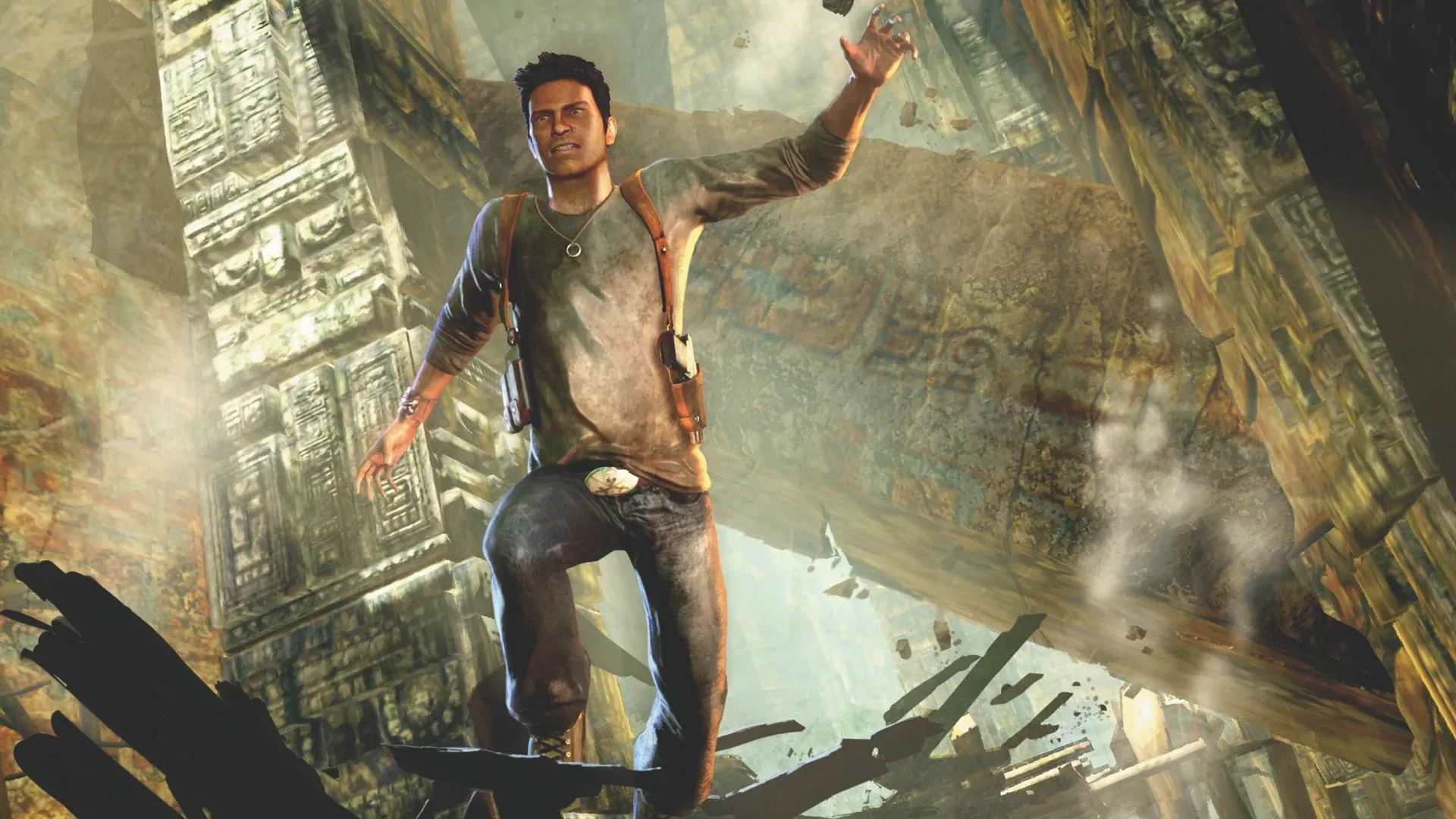
That focus on connecting spectacle to intimate stakes is one reason games can make huge set pieces feel consequential rather than ornamental. It is a principle visible in other cinematic action adventures too, including the way Uncharted 2’s spectacle is framed through personal stakes. In Phantom Liberty, the relevant scale is not only what happens to Night City or its power players, but what V chooses to do for—or against—two people they have come to know.
Spy fiction provided a practical framework
The expansion’s narrative identity was shaped through a wide range of spy fiction. Sasko cited Tinker Tailor Soldier Spy, James Bond, The Bourne Identity, Bridge of Spies, and Ocean’s Eleven among the reference points. These works differ sharply in tone and style, but they share tools that translate well to an interactive thriller: concealed motives, shifting alliances, operational planning, political pressure, performance, betrayal, and the recurring question of who has enough information to trust anyone.
Genre references are often discussed as surface inspiration—fashion, gadgets, music, or a glamorous location. Phantom Liberty does use that kind of style, including its Black Sapphire party sequence and its musical opening. But Sasko describes genre as a practical tool, suggesting it also helped organize the expansion’s storytelling problems.
A spy framework gives writers a clear reason for characters to withhold information. It also gives the player a reason to question what they are told without assuming every revelation settles the matter. In a story about covert operations, omissions and deception are not arbitrary twists added to prolong the plot; they are part of the environment the characters inhabit.
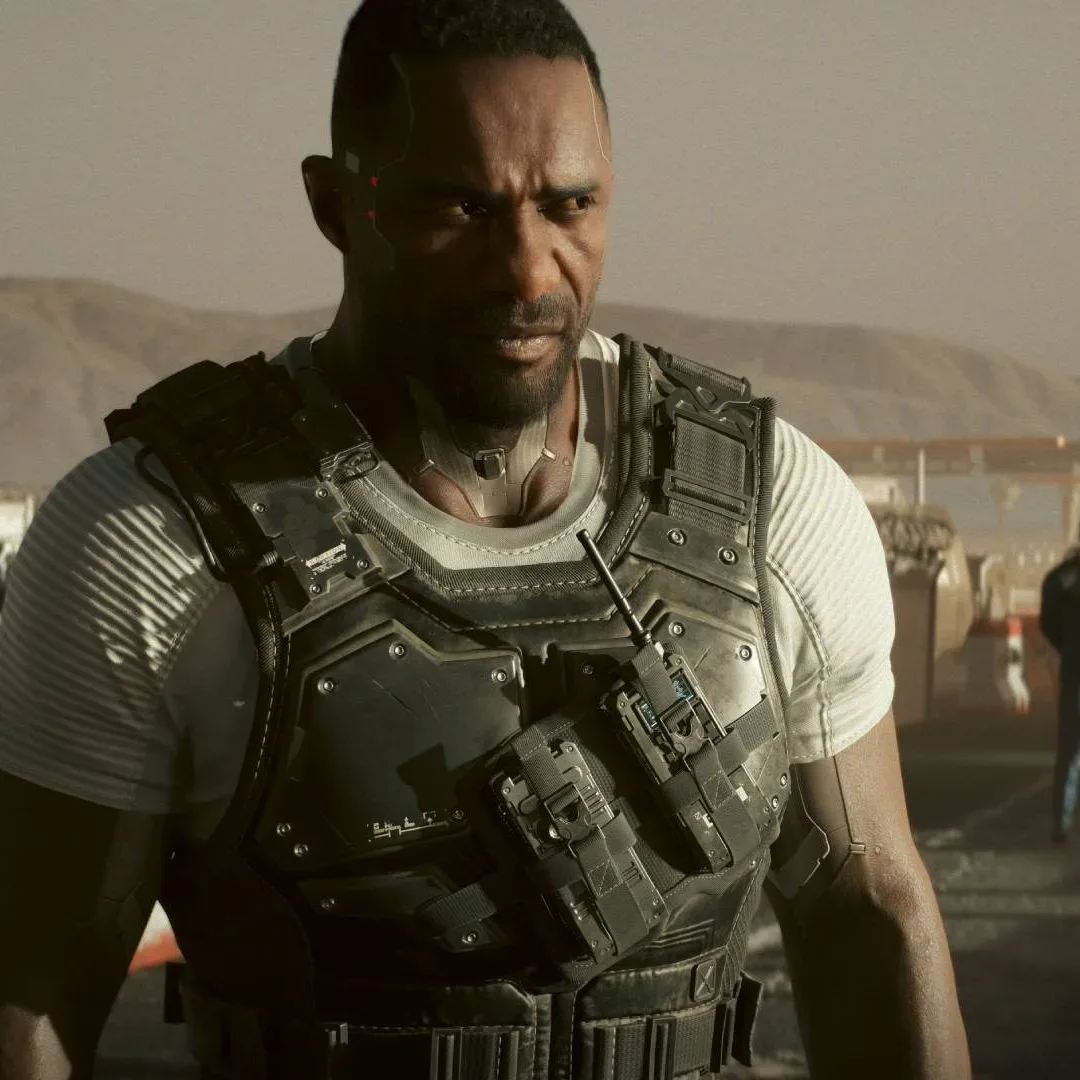
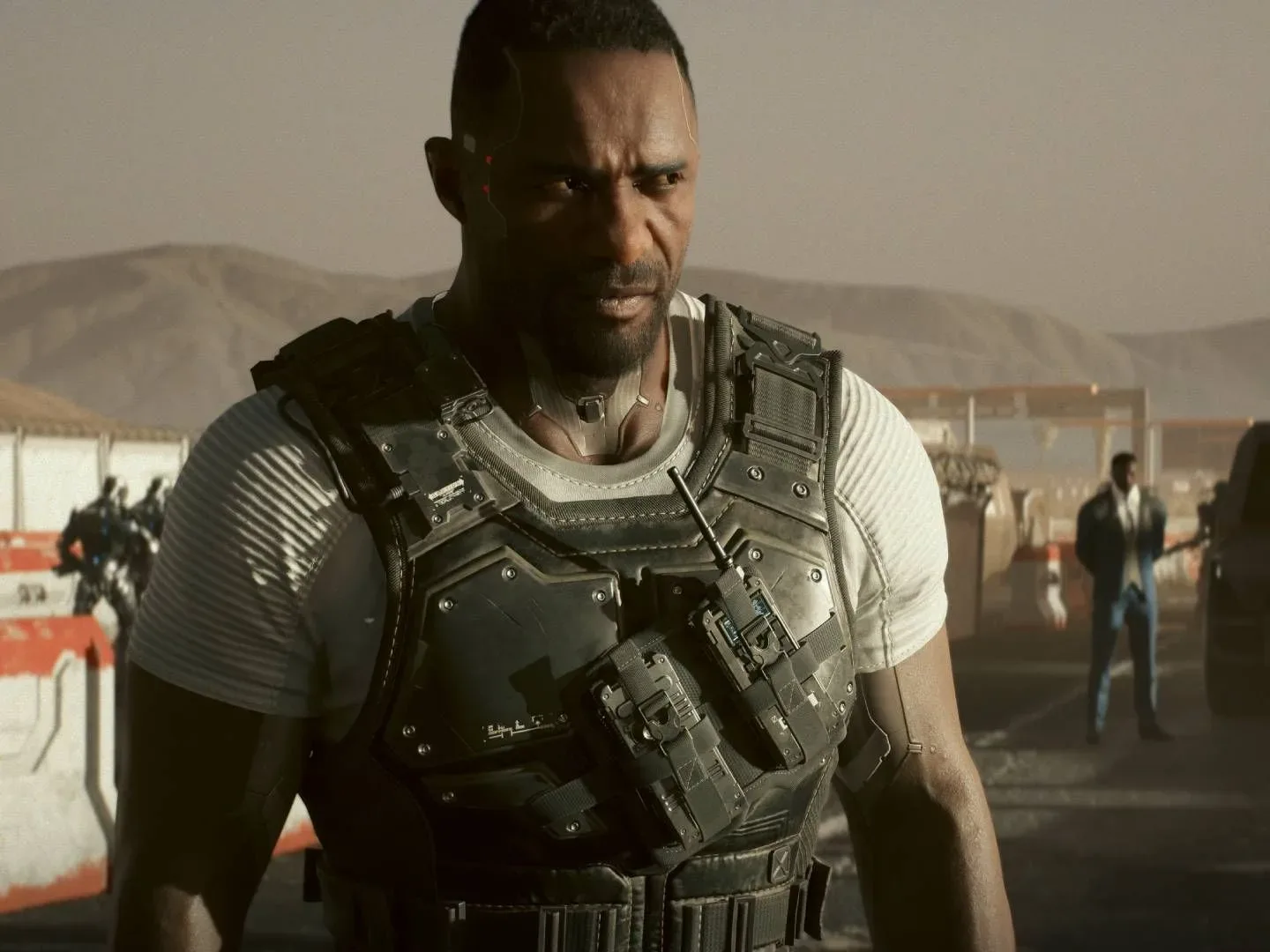
Dogtown, the dangerous and lawless area of Night City that V infiltrates in the Idris Elba-fronted expansion, provides a fitting stage for that approach. The setting supports a plot where authority is contested, loyalties are transactional, and help can come with an obligation. Those conditions make the Songbird-and-Reed choice feel less like a menu selection and more like the culmination of a relationship built in unstable territory.
Why production structure matters to narrative quality
The creative choices behind Phantom Liberty cannot be separated from the team structure Sasko described. He contrasted the expansion’s process with a workflow closer to a waterfall model during development of the base game.
In broad terms, a waterfall model moves work through stages or departments in sequence. Decisions can accumulate around leads and directors while material passes from one discipline to another. That structure can make coordination difficult when a story mission depends on a tightly linked mix of writing, level design, animation and cinematics, art, music and sound, player-facing systems, and quality assurance.
For Phantom Liberty, CD Projekt Red moved toward multidisciplinary content teams, referred to as pods. These groups brought relevant disciplines together around the same piece of content. Sasko says learning to work that way took time, but that the difference became apparent once the process started to click.
A pod does not automatically solve creative disagreements or eliminate the hard work of iteration. What it can do is reduce the distance between a narrative intention and the people responsible for expressing it across the game. If a rewritten scene alters the player’s understanding of Reed or Songbird, it may affect dialogue, performances, cinematics, level pacing, environmental storytelling, audio, quest logic, and testing. A cross-disciplinary team can identify those ripple effects earlier and evaluate them as a connected experience.
QA, or quality assurance, is especially relevant in a branching expansion. It is not only about finding technical defects. When a story has multiple routes, the team must also verify that quest states, character returns, messages, and follow-up scenes communicate the intended consequences consistently. Clear consequences require reliable implementation. An effective narrative branch loses much of its force if players cannot tell what the game is responding to, or if the response appears in the wrong context.
A success that does not erase the past
Phantom Liberty has sold more than 15 million copies. Sasko nevertheless does not frame it as something that erases the launch of Cyberpunk 2077. Instead, he emphasizes what the expansion taught him about directing games and expresses hope that the larger project has earned a place in players’ eyes.
That is a more measured reading of a turnaround than treating an acclaimed expansion as a clean slate. The production changes Sasko describes were born from reassessing how games were made, and the result became a concrete example of what the studio wanted to improve: closer collaboration across disciplines, choices with more visible consequences, and a story that refuses to resolve its central moral conflict for the player.
Those lessons now have forward-looking significance because Sasko is leading the next mainline Cyberpunk RPG. No specific features or story details for that game are established here, so it would be premature to treat Phantom Liberty as a blueprint for every aspect of its successor. Still, his account points to a clear creative priority: build the most important player decisions early, give every side of the conflict credible human logic, and make the eventual consequences visible without dictating how players should feel about them.
For players, that is the lasting appeal of Phantom Liberty’s defining choice. It is not difficult because the game hides a perfect answer. It is difficult because its people, like its espionage setting, remain complicated enough that any answer can leave something unresolved.