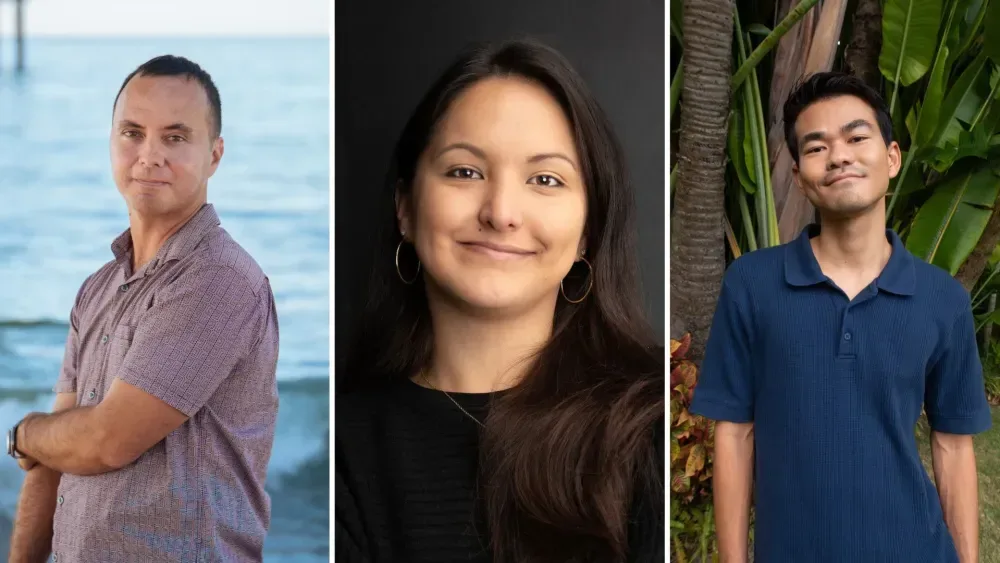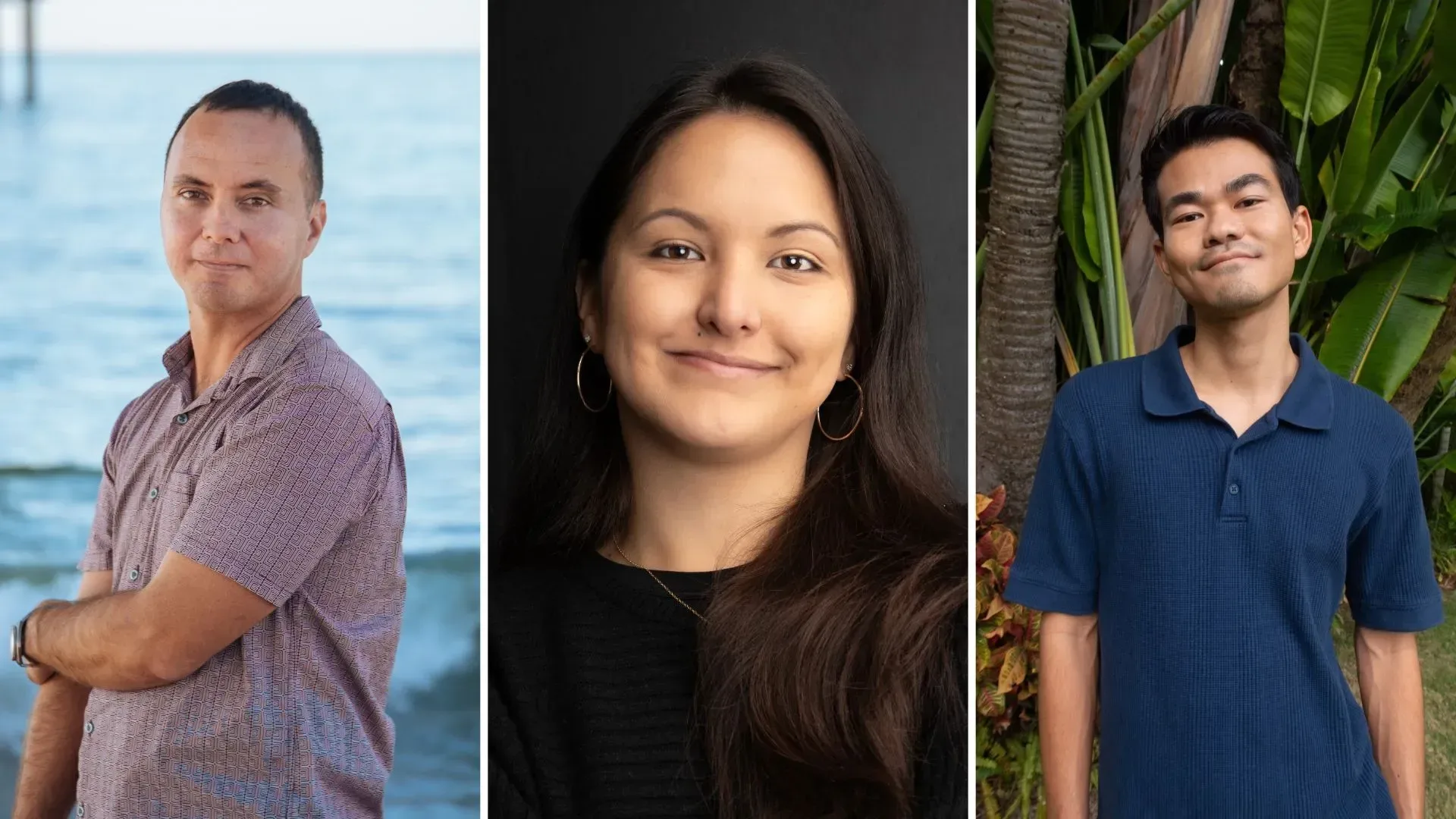
The Pasifika Entertainment Advancement Komiti, known as PEAK, has named five writers to its 2026 Writers Fellowship cohort: Kanani Koster, Erin Lau, Sean Oketani, Neil Tinkham and Pouariʻi Tanner. The program, supported by Netflix, is designed for emerging television writers whose work centers Pasifika experiences.
The fellowship’s immediate value is straightforward but substantial: each participant is paired with an experienced mentor to refine a script toward a professional presentation. Fellows also take part in weekly conversations and panels with writers, showrunners, executives, representatives, actors and other entertainment professionals. That mix places development of the actual work alongside a clearer view of how a television career functions beyond the script itself.
PEAK describes the fellowship as the only Hollywood writing program created by a Pasifika storyteller. It was founded by PEAK co-founder Dana Ledoux Miller, a director, screenwriter and showrunner, and is co-managed by program manager and screenwriter Bryson Chun. This is the program’s third annual cohort.
For readers following the broader media-business side of games and screen entertainment, the fellowship is also a reminder that creative development is not confined to studios and game teams; mentorship, access and durable professional networks can shape which stories reach audiences. That wider industry picture has been increasingly visible across games and media, including in recent reporting on workplace policy changes across games and media.
What the PEAK fellowship offers
A writers fellowship is not simply a contest result or a public endorsement. In this case, it is a structured development program. The core practical component is one-to-one mentorship focused on bringing scripts to a standard suitable for professional circulation. “Professionally presented” does not guarantee that a series will be bought, made or aired. It does mean the program is intended to help writers prepare material and navigate the expectations around it.
The additional panels matter for a different reason. Television writing involves more than drafting a pilot or a premise. Writers must understand the roles that surround a project: showrunners who lead a series creatively and operationally, executives who oversee development and production, representatives who help clients pursue opportunities, and performers whose work can inform how characters live beyond the page. PEAK’s weekly sessions are built to expose fellows to those perspectives.
The 2026 mentors named for the program are Ryan Belenzon and Jeffrey Gelber of Boulevard, Aminta Goyel of Pivoting, Lauren Thompson of Ghostwriter, and Michelle Giannusa of Ripple. Five fellows and four listed mentor credits do not establish how individual pairings are arranged, so PEAK has not publicly detailed a one-to-one mentor assignment for every project in the information provided.
Dana Ledoux Miller framed the fellowship as a way for communities to steward their own stories from script to screen, particularly during a period she described as industry uncertainty. Interim executive director Averie Huffine said this year brought a record number of applications, signaling both demand for the program and the visibility it has built through its backers and leadership.
Related coverage includes PEAK Names Five Writers for Its 2026 Pasifika Fellowship.
The five projects selected for 2026
The cohort’s scripts span comedy, family drama and character-driven stories rooted in Native Hawaiian, Chamoru, Māori and Cook Islands perspectives. Importantly, the supplied project descriptions establish premises, not cast, production status or release plans. These are fellowship projects in development rather than announced television series.
Kanani Koster — Clinic Daze
Koster’s Clinic Daze is a half-hour dramedy about the staff at an underfunded abortion clinic. The employees work to provide compassionate patient care while managing turbulent personal lives of their own. A “dramedy” generally combines comedic storytelling with dramatic or serious material; the designation is particularly useful here because the premise brings workplace pressure and emotionally weighty subject matter into the same frame.
Koster is a Native Hawaiian writer and director whose work uses raunchy, blue comedy in service of a desire to make a difference. Her previous support includes the Tribeca Film Festival, Gotham’s Project Market, Visionary Justice Story Lab and the Alfred P. Sloan Foundation. She was a 2024 American Film Institute directing alum, a 2024 ʻOhina Lab Fellow and a 2023 Punky Aloha Scholar for Kanaka ʻŌiwi and Pasifika creatives. Her short work has played at AFI Fest, SeriesFest, Hawaiʻi International Film Festival and the Smithsonian Museum.
Erin Lau — The Hālau
The Hālau is a one-hour family drama following 16-year-old Maile Johnson. After the death of her mother, Maile must live with estranged family on Oʻahu and enter the world of competitive hula dancing. The project’s setup establishes both a grief-driven family story and a coming-of-age framework, with competition providing a structured arena for its central character.
Lau is a Native Hawaiian filmmaker whose work explores empathy, redemption and legacy across narrative, documentary and episodic forms. Her work has received support from the Sundance Institute, Tribeca Studios, Film Independent and Ryan Murphy’s Half Initiative, and has appeared on the Criterion Channel, Netflix and PBS. Her most recent listed directing credit is Fox’s Rescue: HI-Surf. She is also a 2026 fellow in the ImagineNATIVE Screenwriting Series Lab and the Sundance Institute and The Asian American Foundation Accelerator.
A hālau can refer to a hula school or group, and the title places that cultural setting at the center of the project rather than treating it as background decoration. The available description does not disclose further plot details, but it makes the setting integral to Maile’s changed life on Oʻahu.
Sean Oketani — [Pair]adise
Sean Oketani’s [Pair]adise follows two queer, hapa Hawaiian best friends who leave their hotel-server jobs behind for a day spent playing tourist in Waikīkī. “Hapa” is used in the project description in connection with Hawaiian mixed-heritage identity. The premise turns the visitor experience inside out: people working within a tourist economy decide to inhabit its leisure-facing side for themselves.
Oketani is a Native Hawaiian writer, director and storyteller born and raised on Oʻahu. He earned a BFA in television writing and production from Chapman University’s Dodge College of Film and Media Arts. His undergraduate thesis, Gay Church, was a short-form comedy pilot. He has also worked in programming, education and outreach at the Hawaiʻi International Film Festival.
In 2025, Oketani was selected as an ʻOhina Labs Writers Fellow and received the ʻOhina Judge’s Award for a short-film script that is in pre-production. His creative interests include the intersections of lived and inherited experience, identity, culture and belonging, with stated influences including Indigenous and Pasifika cinema, queer art and literature, and digital culture.
Neil Tinkham — West Coast Chamorus
West Coast Chamorus centers on a straight-laced Chamoru father who returns to Los Angeles with his son for medical treatment. There, he must confront a former life as a gangbanger. The title and description point to diaspora as a central concern: the story connects a Chamoru family perspective with a return to Los Angeles and the pressures of unresolved personal history.
Tinkham is a Chamoru filmmaker originally from Guam. His work reflects both his island upbringing and the Chamoru diaspora community. His short films have received funding from the Corporation for Public Broadcasting, Pacific Islanders in Communications and the Guam Council for the Arts and Humanities Agency. They have screened at film festivals and regional museums and received distribution.
His feature screenplay Jungle was optioned by New Zealand production company Popgun Filmmakers in 2018. An option means a company has obtained the temporary right to pursue development or production of a script; it is not the same as confirmation that the project has been produced. In 2022, Tinkham’s screenplay The Taotaomona was selected for the Second Annual Indigenous List, compiled by the Sundance Institute, ImagineNATIVE and The Black List. Other scripts have placed in the ʻOhina Filmmakers Lab and the Page International Screenwriting Awards.
Pouariʻi Tanner — The Assistant
The Assistant follows a Māori current-affairs crew that arrives in Hollywood intending to profile Indigenous stars, only to find that promised access has evaporated. The crew must then deal with assistants, gatekeepers and an unusual assortment of figures working behind the scenes of the Indigenous entertainment industry. The concept uses comedy and access journalism as a route into questions of institutional power: who is visible, who controls access and what happens when a promised opportunity proves less solid than it first appeared.
Tanner is a Cook Islands writer and producer based in Rarotonga. Her work draws on experience in Indigenous film, television and media, using comedy and character-focused storytelling to examine the meeting points between island communities and larger cultural institutions. She previously worked with the Sundance Institute’s Indigenous Program and created and produced the Cook Islands documentary series Turtle Town.
She is developing three short films through Pasifika TV’s film masterclass, with completion and release planned for 2027. Through her company, Pacific Standard Time, she is also developing original film and television projects from the Pacific.
One small naming discrepancy appears in the fellowship information: the initial cohort list spells the fellow’s surname “Tanne,” while the individual project biography identifies her as Pouariʻi Tanner. The fuller project entry uses Tanner, which is the name used here.
Why this cohort’s range matters
The five selected premises do not argue for a single, narrow definition of Pasifika storytelling. Instead, they move through a clinic workplace, competitive hula, hotel work and tourism in Waikīkī, a family’s medical journey to Los Angeles, and Hollywood’s systems of access. The common thread is not a fixed genre. It is the opportunity for writers to tell stories shaped by specific communities, places and perspectives while working across forms familiar to television: half-hour comedy-drama, hourlong family drama and character-led comedy.
That distinction is important. Representation is sometimes discussed only in terms of who appears on screen. PEAK’s structure puts attention earlier in the process, supporting writers as they build and revise the underlying scripts. The stated aim is not merely to have Pasifika stories visible at the end of a pipeline, but to support Pasifika creatives as stewards of those stories through development.
There is still a meaningful line between a fellowship and a commissioned program. None of the five projects has been described as ordered, cast, produced or scheduled for release. What the announcement establishes is a development opportunity: mentorship, career-facing professional education and conversations with people working across television. For the selected writers, those are concrete resources at a stage when a strong script needs both refinement and a path into an industry built around relationships as well as material.