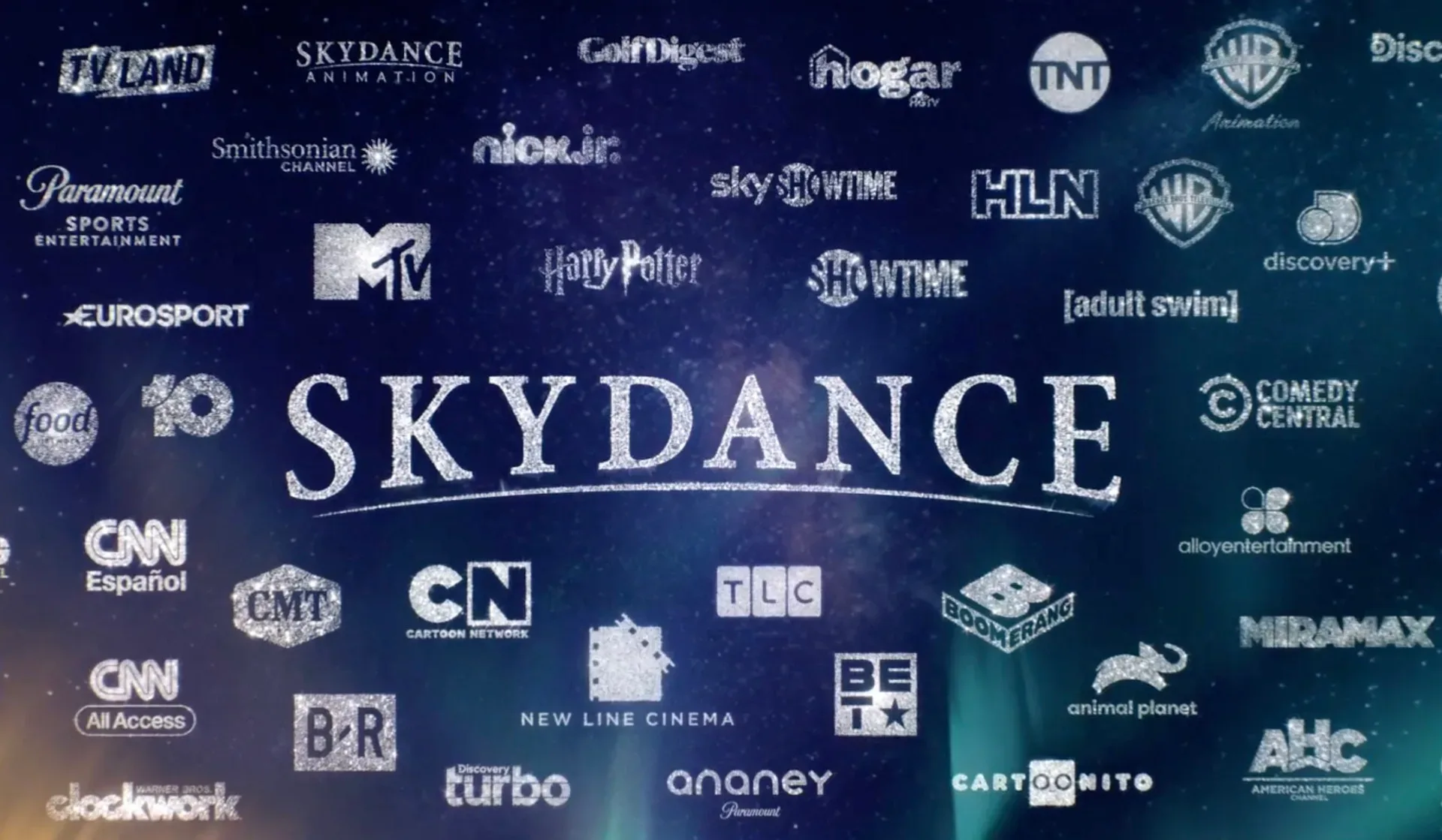
Skydance has reportedly told employees across its newly combined media business to return to the office five days a week, a policy said to include Skydance Games, DC Comics and other company holdings. The change arrives shortly after Paramount and Warner Bros. completed their merger under the Skydance name, a deal valued at $110 billion.
The company is also reportedly preparing a voluntary buyout program designed to reduce headcount. Taken together, the two measures put a difficult workplace question at the center of a major entertainment consolidation: whether the organization is pursuing a more conventional post-merger reduction without immediately framing it as a round of layoffs.
What has reportedly changed
The return-to-office, often shortened to RTO, is described as a business-wide five-day requirement rather than a games-only policy. That matters because Skydance is not treating the move as an isolated production decision inside the game division. Employees across a broad media organization may be navigating the same mandate at once.
A five-day RTO means staff are expected to work from a company office for the full traditional workweek. It is distinct from a hybrid arrangement, where employees split time between remote work and an office. The supplied information does not specify implementation dates, exceptions, office locations, which jobs are covered, or what accommodations may exist. Those details are essential to employees, but they have not been established here.
The voluntary buyout program is the other major reported component. In workforce terms, a buyout is an option offered to employees to leave the company under terms set by the employer. It differs from a layoff because participation is voluntary, at least formally. It also differs from severance in an involuntary reduction, though the available information does not describe the program’s eligibility rules, financial terms, timetable, or target number of departures.
That distinction should not obscure the stated purpose: the program is intended to lower headcount. An RTO requirement and a voluntary exit offer can each change the size and composition of a workforce; together, they can create pressure during a period when two large companies are being combined.
Why the merger context matters
Large mergers commonly put overlapping operations under review. The straightforward business concern is that the combined company may have departments, management layers, facilities or support functions that once existed separately at the pre-merger organizations. The factual record here does not identify any particular duplication or planned role eliminations at Skydance Games. But the timing makes the reported measures significant: the merger completed earlier this month, and the organization is already moving on attendance rules and a voluntary buyout program.
For game-development staff, the practical impact can extend beyond a commute. Modern game production relies on specialized teams with different needs: engineering, art, design, quality assurance, production, publishing, community and business operations. A company-wide rule does not necessarily affect every team identically, but it can reshape hiring decisions, retention and day-to-day coordination. None of that proves a particular project will be changed or canceled. It does explain why workers and players tend to watch workforce news closely when a publisher is reorganizing.
Related coverage includes Skydance Reportedly Orders Five-Day Office Return Across Media Businesses.
It is also important to separate what is reported from what is inferred. The five-day mandate and the voluntary buyout program are the reported actions. The idea that a strict RTO can function as a “soft layoff” is analysis of how such policies may influence departures, not confirmation that Skydance has announced layoffs or disclosed that this is its purpose. No specific number of expected exits has been provided.
A games division with recent cuts behind it
The games organization enters this new phase after prior reductions under WB Games. Last year, WB Games closed Monolith Productions, which had been working on a Wonder Woman game. It also shut down Player First Games, the studio behind MultiVersus, and Warner Bros. San Diego, a mobile development studio.
At the time, WB Games said its restructuring was meant to focus resources on core franchises, including Harry Potter and Mortal Kombat. That rationale described a strategic concentration of effort, but it did not make the studio closures any less consequential. The closures removed teams and, in the case of Monolith, ended work on a project tied to one of the company’s biggest comic-book properties.
The new Skydance-wide policy therefore lands against a documented background of contraction in the former WB Games operation. That history is relevant to the stakes for employees, but it should not be used to claim that a particular studio, franchise or game is now at risk. There is no supplied evidence identifying additional studio shutdowns, canceled games, release changes, project transfers or platform plans.
Readers looking for concrete game-release news should be careful not to confuse organizational reporting with product reporting. A workforce policy can affect a company’s future capacity, but it is not itself a roadmap. No new game announcement is contained in the reported RTO and buyout details. Likewise, no release status has been established for the company’s existing franchises. For a separate example of how clearly defined game updates differ from corporate restructuring news, see the report on a final major update adding New Game+ and a Nightmare difficulty.
RTO, buyouts and layoffs are not interchangeable terms
The language around corporate reductions often gets flattened, so the differences are worth stating plainly.
- Return to office: a workplace-attendance rule requiring employees to work from a company location for a defined number of days. In this case, the reported requirement is five days per week.
- Voluntary buyout: an employer-provided departure option intended to encourage employees to leave by choice. Its actual effect depends on the terms and who is eligible, neither of which has been detailed.
- Layoff: an employer-directed elimination of positions. The provided information reports a headcount-reduction effort, but does not state that Skydance has announced a specific layoff round.
- Restructuring: a broad label for reorganizing a business. It can encompass closures, changes in priorities, workforce reductions or new reporting structures, but the term alone does not reveal the effects on individual teams.
These distinctions are not merely semantic. An employee weighing a buyout needs to know the offer’s exact terms and whether their role is affected by other changes. A worker facing a five-day commute may evaluate the policy differently based on their location, family obligations, health needs or prior remote-work agreement. And investors, players and collaborators should avoid treating any one of these corporate mechanisms as automatic proof of another.
What remains unknown
The reported policy establishes a potentially consequential direction, but many of the questions that would clarify its effect are unanswered. There is no stated headcount target for the voluntary buyout program. There is no outline of which teams, offices or job categories could be most affected. There is no stated deadline for participation, and no details on what happens after the program concludes.
There is similarly no confirmed list of game projects affected by the wider Skydance integration. The former WB Games portfolio includes franchises singled out previously as strategic priorities, but a prior focus statement is not the same as a current production schedule. Until the company offers project-specific information, claims about cancellations, studio reductions or franchise investment would be speculation.
The broader conclusion supported by the available facts is narrower but still substantial: a newly merged $110 billion entertainment company is reportedly imposing full-week office attendance across its businesses while introducing a voluntary mechanism to reduce staffing. In the games division, that development follows an earlier period in which Monolith Productions, Player First Games and Warner Bros. San Diego were closed.
Why players may still want to pay attention
Employment policy is not a patch note, trailer or release date. Yet it can shape the conditions under which games are made. The immediate story is about workers and organizational change, not a confirmed change to a particular game. Still, the stability of development teams, the ability to retain specialized talent and the priorities set by ownership can matter over time for any publisher’s output.
For now, the clearest responsible reading is that Skydance’s integration is moving beyond a nameplate change. The reported five-day RTO rule and voluntary buyout program indicate a company-wide effort to reshape how and by whom the newly combined business operates. Whether that process results in more explicit workforce actions, or produces direct consequences for specific game teams and franchises, has not been established.