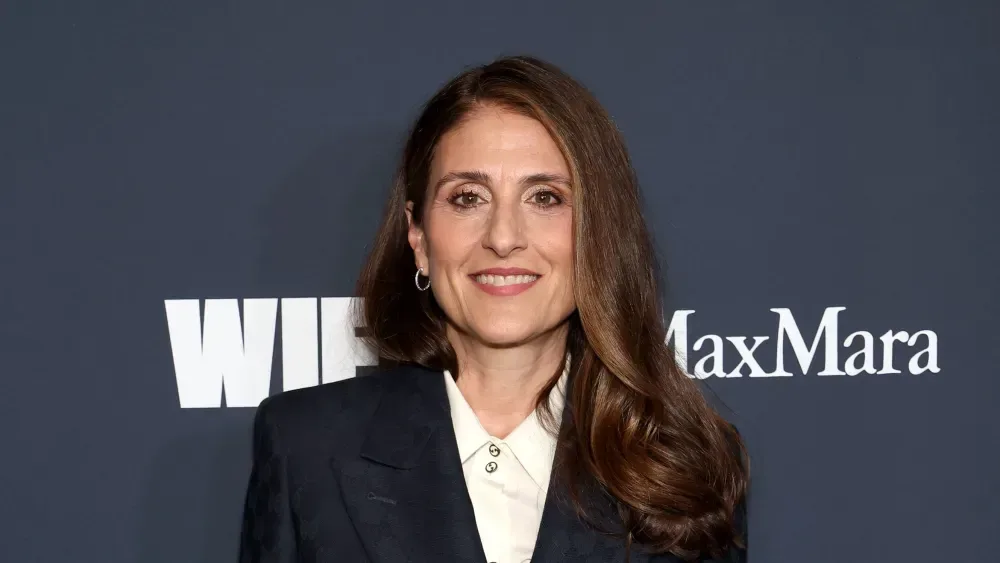
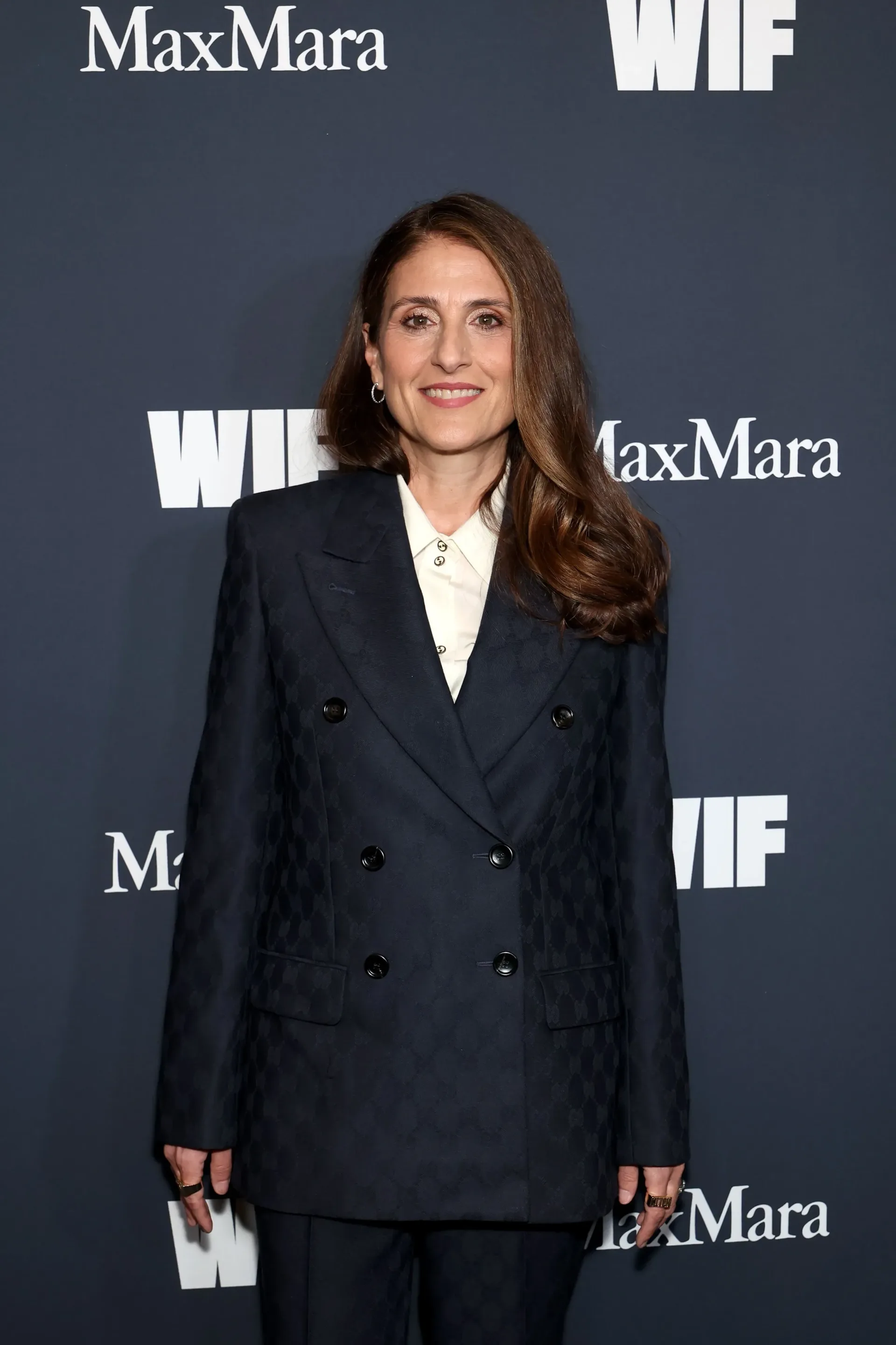
Pamela Abdy has made her first industry appearance since the announcement of her departure from Warner Bros. Motion Picture Group, and her message was notably measured: she is not presenting a new job, a new company or a ready-made next act.
At the Women in Film Honors at the Beverly Hilton, Abdy said she is “taking a break and chilling” after leaving the studio she had led as co-chair and CEO alongside longtime producing partner Michael DeLuca. She added that the pause has let her attend all of her daughter’s volleyball games without interruption.
That answer may sound simple, but it offers the clearest available response to speculation around the executive’s future. Asked about rumors that she and DeLuca could move into the open film-head role at Netflix, Abdy did not validate a destination. Instead, she said that she would share her plans when she had decided them, emphasizing the value of having time to determine what she wants next.
“When I decide what I’m doing, I promise I will tell everyone. But honestly, it’s an interesting time to be able to take a break, and really decide what I want.”
For now, the firm news is that there is no announced next position. The rest remains industry speculation rather than a confirmed career move.
An award-night appearance after a rapid change
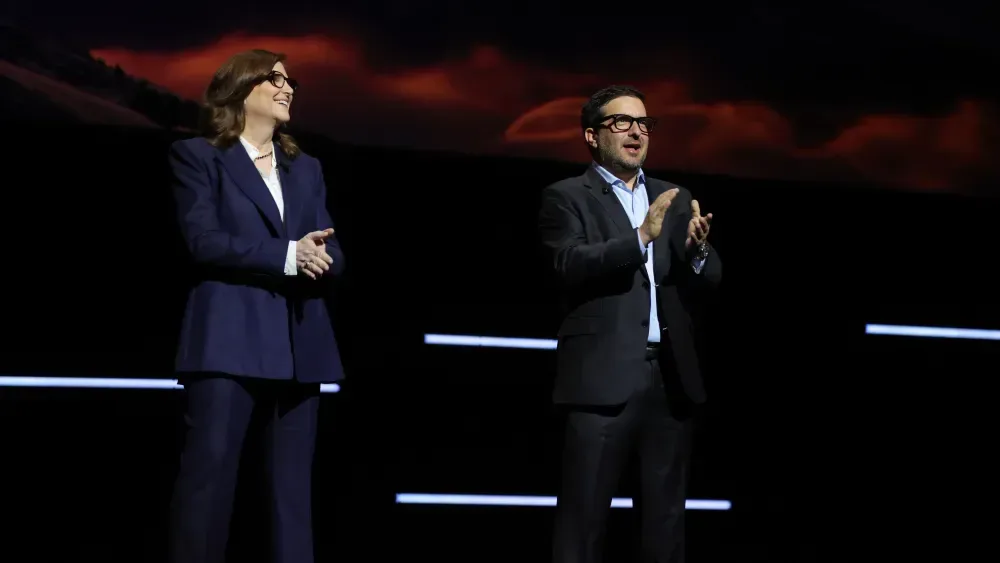
The timing of the gala gave Abdy’s comments additional weight. On the morning of October 1, she was named the inaugural Vanguard Award recipient by Women in Film. At that point, she was still leading Warner Bros. Motion Picture Group with DeLuca. Later that same day, the pair learned they would not lead the studio into its next chapter amid the Skydance merger.
Just over a month later, Abdy appeared at the event in recognition of a career that extends beyond her Warner Bros. tenure. The Vanguard Award is therefore not a retirement marker or evidence of a new appointment; it is recognition of the body of work associated with her career so far.
The change also illustrates how quickly the business side of major film studios can shift during a corporate merger. A merger is the combination of companies or businesses into a new ownership and management structure. In practice, changes of that scale can reshape reporting lines, strategic plans and senior roles. Abdy’s response avoided public predictions about decisions being made by the combined company after her exit.
Asked whether the newly combined company could achieve its stated goal of releasing 30 movies a year, Abdy was direct about the limit of her perspective: “I don’t know. I’m not there. I hope they do.” That is neither an endorsement nor a rejection of the target. It is an acknowledgment that she is no longer part of the leadership group responsible for carrying it out.
What Abdy says she wants from her next chapter
Abdy did offer a useful indication of the kind of work that still motivates her. She described working with filmmakers as the source of professional happiness and said her goal, wherever she lands, is to keep collaborating with the best storytellers.
“I know what happiness is when I’m working with filmmakers, and wherever and whatever I end up doing, that’s my goal is to continue to work with the best storytellers out there.”
That distinction matters. It identifies a creative priority without committing to a particular employer, title or platform. Film-studio leadership, independent production and streaming-film leadership can all involve relationships with filmmakers, but they differ substantially in responsibility. A studio chief may oversee a broad theatrical slate and a large organization; a producer can focus more closely on developing and shepherding individual projects; a streaming executive operates within a distribution model that does not necessarily follow the same theatrical-release timetable.
None of those routes has been confirmed for Abdy. The Netflix idea raised during the exchange remains one of the possibilities circulating publicly, not an announcement. Readers should be careful not to turn an unanswered rumor into a reported appointment.
A Warner Bros. record of big successes and expensive misses
The recognition at the event cited a run that included major commercial titles and awards-oriented releases. During her Warner Bros. leadership tenure, Abdy oversaw films including One Battle After Another, Sinners, Barbie, Weapons and Dune: Part Two.
Last year, Warner Bros. matched the all-time studio record with 11 Academy Awards, drawn from an industry-leading 30 nominations. Those figures reflect substantial awards visibility across the studio’s films. Academy Award nominations are selections for the annual Oscars; wins are the final awards. The difference is important: a high nomination total signals broad recognition, while the wins measure the eventual conversion of that recognition into trophies.
But the supplied record is not one of uninterrupted success. The studio also had costly disappointments. The Bride! lost $100 million theatrically after failing to generate enough box-office momentum in the spring. Digger, Warner Bros.’ final release as a standalone studio, was described as one of the year’s largest financial misfires.
“Theatrically” here refers to a film’s performance in cinemas. A movie can be important to a studio’s strategy, attract critical attention or build a future audience and still fall short financially at the box office. The examples also underline why senior film executives are judged across a portfolio rather than by one hit or one flop: a studio slate contains projects with varying budgets, audience expectations, release conditions and outcomes.
It would be a mistake, however, to draw a simple one-person line from either the successes or the failures to Abdy alone. Studio releases are the product of many people and divisions, and the available information only says that she oversaw these titles during her time in the leadership role. It does not assign the decision-making behind each production, marketing campaign, release plan or financial result to her personally.
Why the 30-film target is more complicated than a number
The stated ambition to release 30 films in a year is easy to understand as a headline figure, but the number alone does not explain the task. A release slate is a planned collection of films being brought to audiences over a defined period. Reaching a numerical target requires enough projects at viable stages of development and production, decisions about timing and distribution, and an organization able to support each release.
Abdy did not offer an assessment of whether that target is realistic, and her answer should not be read as inside knowledge after the transition. Still, her decision not to speculate is telling in its restraint. She separated her personal hopes for the company from any assertion that she knows how its new leadership will execute the plan.
That is especially relevant in an environment where executive transitions tend to generate a rush of predictions: who will take the next job, which projects will survive a strategy shift, and whether bigger output goals will reshape a studio’s identity. At present, the confirmed detail from Abdy is narrower. She has stepped away, is using the time for family and reflection, and intends to continue working with filmmakers when she chooses her next role.
The public record: pause first, plans later
The Women in Film Honors also recognized Adria Arjona, Beth de Araújo, Gemma Chan and Salma Hayek Pinault. Against that wider celebration, Abdy’s appearance was less a launch pad for a corporate reveal than an opportunity to accept career recognition while setting a boundary around speculation.
For observers of studio leadership, the appropriate takeaway is modest but meaningful: Abdy has not announced a new home, has not confirmed talks for the rumored Netflix opening and has not offered a verdict on the combined company’s 30-film goal. She has explained what she is doing now and the creative value she wants to carry forward.
Her departure also sits within a broader pattern of leadership movement across major entertainment companies, where the business decisions around studios can be as consequential as the films they release. For another recent look at an executive career in the industry, see this overview of Helene Hahn Loyd’s work at Disney and DreamWorks.
Until Abdy makes a further announcement, the most accurate description of her next move is the one she gave herself: a break, followed by a decision about where she can work with strong storytellers again.