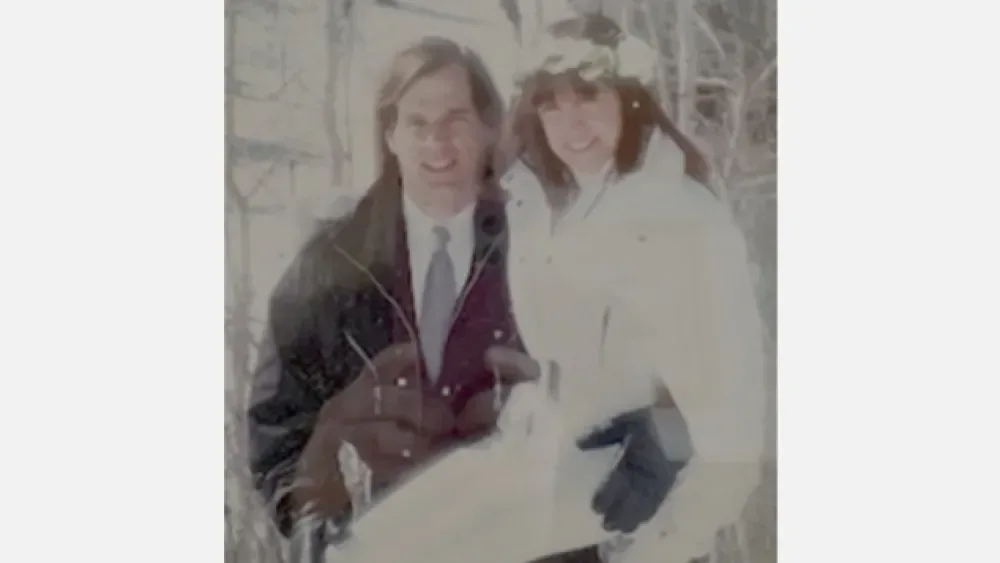
Helene Hahn Loyd, a film-industry executive whose career included senior leadership roles at Paramount, Walt Disney Studios and DreamWorks SKG, died Oct. 24 in Park City, Utah. She was 78.
Loyd was part of the executive team that built DreamWorks SKG and served as the company’s chief operating officer. Earlier, she held a pivotal senior role at Disney during the studio’s resurgence in the 1980s and 1990s, working with Jeffrey Katzenberg and helping support the partnership with Pixar.
Her path through Hollywood was also notable for the ground she covered at a time when women held far fewer top jobs in the film business. Named executive vice president at Walt Disney Studios in 1981, Loyd became one of the industry’s highest-ranking women. She was known as a formidable dealmaker and, later in her career, as an advocate and mentor for rising female executives.
From a temporary Paramount job to studio leadership
Born Helene Bulakoff in Westbury, New York, Loyd graduated from Hofstra University before moving to Los Angeles. Her first role at Paramount Pictures was a temporary job taken while she was attending law school. She earned her law degree from Loyola Law School in 1975.
That legal training mattered in an industry shaped not only by creative decisions, but by contracts, partnerships, rights and negotiations. A studio executive’s work can encompass decisions about the business structures that make films and larger corporate relationships possible. Loyd’s reputation as a dealmaker suggests that this side of the business was central to her professional identity.
After returning to Paramount, she rose to senior vice president. The progression from a temporary role to a senior leadership post is a concise illustration of the experience and institutional knowledge that can sit behind studio decision-making. Film companies are often publicly defined by directors, performers and individual releases, but executives help determine the conditions under which creative teams, financing arrangements and distribution relationships come together.
A leadership role during Disney’s comeback
In 1981, Loyd became executive vice president at Walt Disney Studios. The title indicates a senior executive position, one involved in high-level management rather than a narrowly defined production assignment. Her appointment placed her among the most senior women working in film at the time.
During her Disney years, Loyd worked with Katzenberg as the studio engineered a comeback. The supplied record specifically identifies Disney’s partnership with Pixar as part of that work. That relationship is an especially important part of Loyd’s legacy because it shows how her career touched a major intersection of filmmaking, business strategy and animation technology.
Related coverage includes Helene Hahn Loyd, Disney and DreamWorks Executive, Dies at 78.
A partnership in this context is more than a casual creative association. It is a business relationship that requires parties to align on responsibilities, long-term interests and the practical framework for bringing work to audiences. Loyd’s legal background and dealmaking reputation make the connection between executive work and such partnerships particularly clear, even though the details of her individual responsibilities in the Pixar arrangement are not specified here.
Her work belongs to a wider entertainment-business story: the most visible creative transformations are often supported by less visible organizational decisions. For readers interested in how strategic shifts can redefine entertainment companies in another medium, Nintendo’s hardware strategy around the GameCube offers a useful adjacent example of how corporate choices shape the creative and consumer-facing side of an industry.
Helping build DreamWorks SKG
In 1994, Loyd was recruited to help build DreamWorks SKG. She served as its chief operating officer, commonly shortened to COO. A COO is generally responsible for overseeing how an organization operates day to day, translating broad leadership goals into functioning systems and coordinated business activity.
For a new entertainment company, operational leadership carries particular weight. Building a studio requires more than creative ambition: it involves establishing the infrastructure, processes and executive coordination needed for a company to function. The available information does not assign specific films, divisions or deals to Loyd at DreamWorks, so those details should not be assumed. What is clear is that she was a member of the executive team that helped establish the company and that she held the COO role there.
That combination of Disney and DreamWorks experience places Loyd within two consequential chapters of modern film-studio history. At Disney, she helped support a comeback that included the Pixar partnership. At DreamWorks SKG, she helped construct a new studio operation from its early days. Both roles underline the importance of executives whose work is essential to an organization’s direction but is often less recognizable to the public than the work of on-screen talent.
Mentorship as part of the legacy
Loyd was also described as a passionate mentor to emerging female executives. Mentorship has practical significance in industries where access to senior leadership has historically been uneven. It can mean sharing professional knowledge, expanding a younger executive’s network, offering informed career guidance or simply demonstrating that leadership positions are attainable.
Her own rise made that role especially meaningful. Loyd moved from a temporary job at Paramount to a senior vice presidency there, then became executive vice president at Disney before serving as COO of DreamWorks SKG. The available account does not identify individual mentees or programs, but it does establish mentoring as a sustained value in her professional life.
That legacy is not reducible to titles. Senior executives influence an industry through decisions, but also through the people they prepare to make later decisions. The recognition of Loyd’s mentorship emphasizes that her impact extended beyond corporate structures and negotiations.
Life in Park City and memorial donations
After moving to Park City, Loyd devoted herself to skiing with the same intensity she had brought to dealmaking, as described in her official obituary. The detail offers a picture of a life that continued to be active and committed outside the studio system.
Her husband of more than two decades, Charles “Chuck” Loyd Jr., died in July. Donations in their memory may be made to U.S. Ski & Snowboard, reflecting their shared love of skiing and their commitment to supporting the next generation of athletes. Donors are asked to indicate that a contribution is made in their memory.
Loyd’s career traces a distinctive route through the business of film: from a temporary position and a law degree to leadership at three major studios, a role in Disney’s revival, and operational responsibility in the formation of DreamWorks SKG. Her record as a dealmaker, builder and mentor remains the through line.