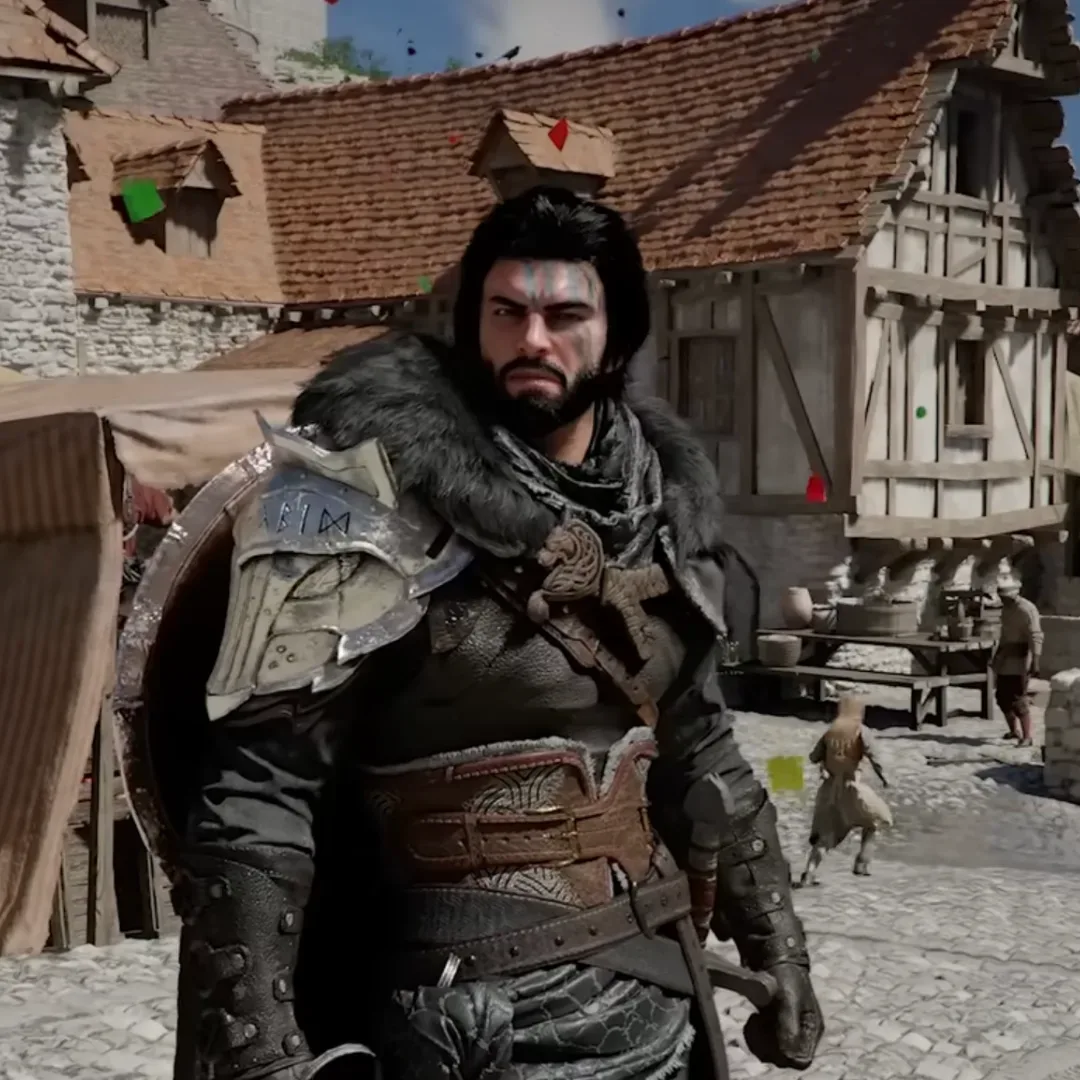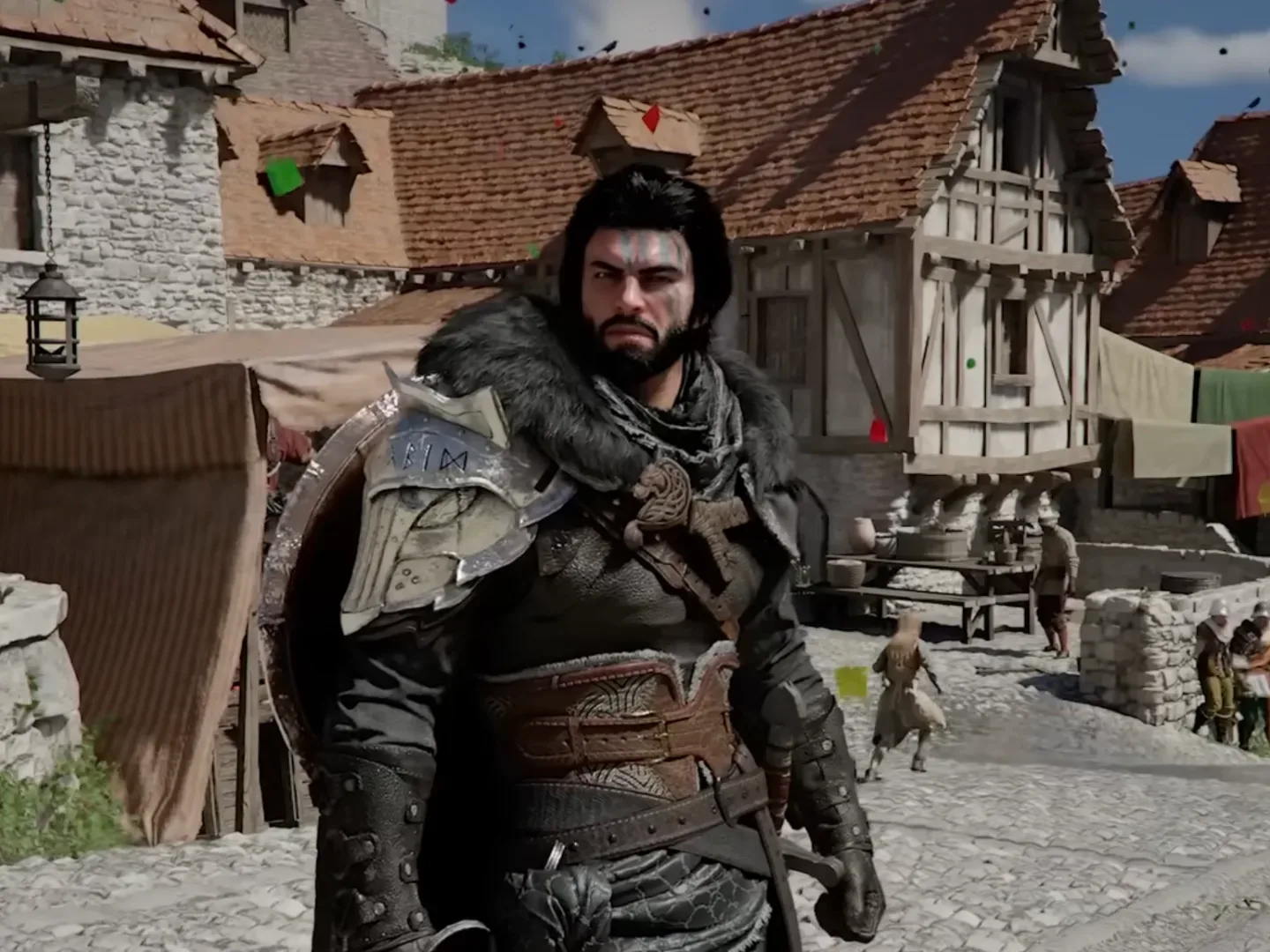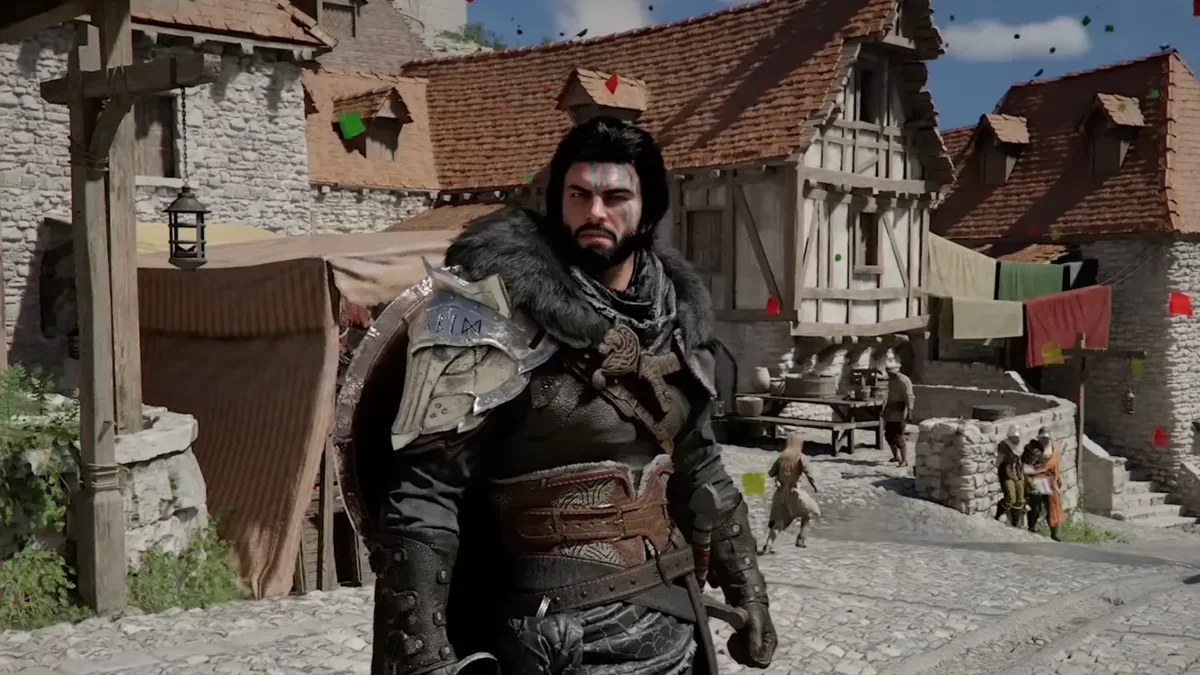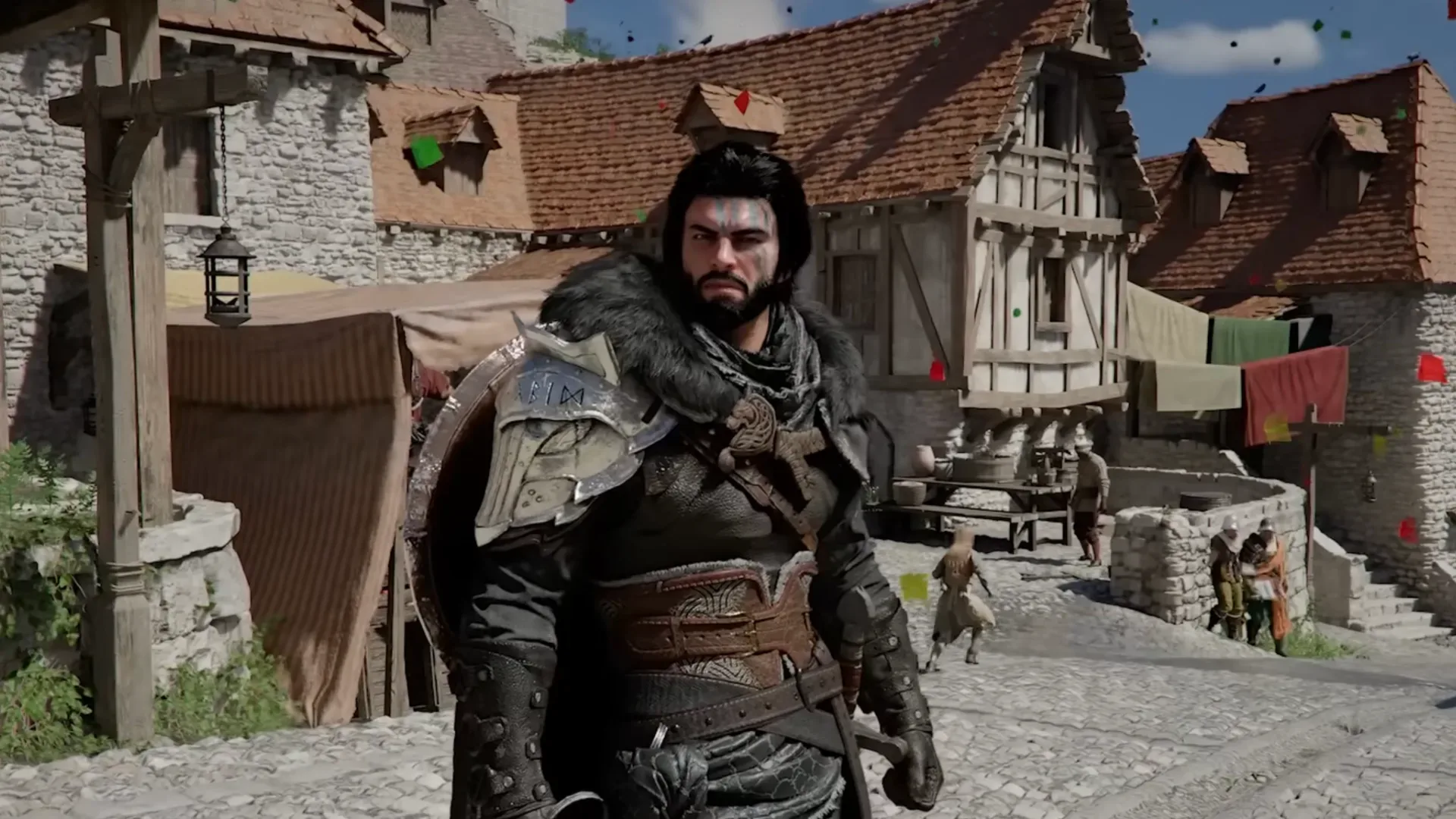
Crimson Desert’s first DLC, Charting the Unknown, has reopened a familiar argument: how should players and critics weigh a game’s scope and technical ambition against the quality and completeness of the experience that is actually in their hands?
John “Bucky” Buckley, Pocketpair’s head of publishing and communications, has come down firmly on the side of recognizing the scale of the achievement. The Palworld lead argued on social media that Crimson Desert is among the most technically ambitious games of the past decade, and suggested that it is judged more harshly because it does not conform to the kind of linear, narrative-led RPG structure audiences commonly reward.
“You don’t have to like every part of it,” Buckley wrote, “but surely the sheer ambition deserves some recognition?”
That is a defensible distinction, but it does not settle the debate. Ambition is not the same thing as polish, and player criticism of a DLC can be legitimate even when the underlying technology or breadth of a project is impressive. At the time of discussion, Charting the Unknown held a 72% Steam review score. Some user feedback specifically says elements feel unfinished and need substantially more work.
The interesting part is not that one side cares about innovation and the other cares about quality. Most players care about both. The friction comes from how people rank them when a game offers an unusually large mechanical proposition while also leaving parts of that proposition open to criticism.
What “technically ambitious” means in this conversation
“Technical ambition” can become an empty compliment if it is never explained. In this case, Buckley’s point is centered on the challenge of making a game that is, in his words, mechanically massive. That phrase speaks to the breadth and interaction of game systems rather than simply visual fidelity or a large map.
A mechanically ambitious game attempts to support many activities, rules, objects, or player choices at once. The challenge is not merely creating each component in isolation. It is ensuring they coexist reliably, communicate with one another, and remain understandable to the player. A feature that sounds good in a trailer may become frustrating if it behaves inconsistently, is poorly introduced, or collides awkwardly with other systems.
That makes the conversation around Crimson Desert broader than whether any individual criticism is right or wrong. Buckley is asking audiences to account for the difficulty of building a large, systems-driven fantasy sandbox. Critics and players, meanwhile, are evaluating whether the released content feels complete and rewarding. Those are different questions, and both matter.
Related coverage includes Palworld Publishing Lead Defends Crimson Desert's Ambition Amid DLC Criticism.
There is also a practical reason the distinction matters. A narrowly structured game can focus its development effort on a more controlled set of encounters, progression beats, and authored narrative moments. A wide-ranging sandbox has more possible player actions and more chances for rough edges to surface. That does not give a sandbox a free pass, but it helps explain why a game’s technical design can deserve attention even when the result inspires disagreement.
Mixed DLC feedback is not a verdict on the whole project
Charting the Unknown has become the immediate flashpoint because it is new, because reviews are arriving now, and because the discussion was prompted by a middling assessment of the DLC. Its 72% Steam score is neither a universal dismissal nor an unqualified endorsement. It indicates a divided response, with enough negative feedback to make complaints about finish and further work impossible to ignore.
Steam’s percentage is useful as a quick signal of sentiment, but it is not a technical audit. It tells prospective players that a defined share of submitted reviews are positive; it does not, by itself, explain whether readers object to bugs, balance, progression, performance, value, design direction, or something else. The supplied criticism here is pointed: some players feel the DLC’s material is not fully finished. That is more informative than the percentage alone, though it still represents player feedback rather than a final diagnosis of development priorities.
For players considering the expansion, the sensible takeaway is therefore narrower than either extreme. Do not assume praise for Crimson Desert’s ambition means every aspect of Charting the Unknown will meet your expectations. Equally, do not treat a mixed review aggregate as proof that the game’s larger design goals lack merit. Read the recent feedback for the concerns that matter most to your own play preferences, especially if completion and refinement are your priorities.
The DLC has also introduced an economic talking point: players are sharing money-making grinds after the addition of a ship said to cost more than Kliff’s soul. That reaction suggests the new content has created a high-cost in-game objective and a corresponding focus on earning routes. It is an example of how an expansion can generate conversation beyond formal reviews: players rapidly turn new requirements into questions of strategy, effort, and the value of their time.
Why “safe” AAA games are at the center of Buckley’s argument
Buckley’s broader frustration is cultural rather than limited to a single score. He believes audiences say they want novelty, then repeatedly reward safer, more conventional AAA games. His preference is clear: developers should be encouraged to try for something genuinely ambitious, even when those attempts occasionally fall short, rather than endlessly repeating familiar designs.
It is an argument for tolerance of risk, not an argument that criticism should disappear. In fact, risk-taking needs clear criticism to improve. If players identify unfinished-feeling content, that feedback has value precisely because it describes where ambition has not yet translated into a satisfying experience. The unproductive version of this debate is one where technical scale is used to dismiss complaints, or where visible imperfections are used to deny that a difficult, unusual undertaking has any achievement at all.
There is room for a more useful standard: recognize the work involved in attempting a mechanically expansive game, while demanding that the final player experience be coherent, stable, and adequately finished. That standard rewards experimentation without turning “ambitious” into a shield against accountability.
It also avoids treating linear, narrative-focused RPGs as inherently lesser. A focused game can be inventive, and a sandbox can be conventional. Structure alone does not determine whether a project takes creative risks. Buckley’s criticism is best read as a warning against evaluating every major game by the same narrow set of expectations—particularly when its core appeal is in the interplay of systems rather than a tightly authored route.
What this means ahead of awards-season debate
The timing is likely to keep the temperature high. With The Game Awards approaching, questions about whether Crimson Desert receives a Game of the Year nomination may intensify the disagreement. Awards are especially prone to compressing complicated assessments into a simple binary: nominated or ignored, winner or loser. That can obscure the more interesting question of what kind of achievement is being recognized.
A Game of the Year discussion can encompass craft, influence, accessibility, narrative, mechanics, technical accomplishment, stability, and the strength of a game’s ongoing player community. No one category fully captures the others. A game can make a compelling case in one area while generating valid concerns in another.
The current dispute over Charting the Unknown is therefore less a contradiction than a reminder that large games are rarely judged on one axis. Buckley sees a project whose mechanical scale deserves more respect. Critics of the DLC see work that, in places, still needs refinement. Both readings can coexist—and the most valuable discussion will be the one that is specific about where Crimson Desert succeeds, where the new content falls short for some players, and what audiences want ambitious development to look like after launch.
For another recent example of how developers frame systemic changes around combat design, see Lords of the Fallen II’s announced combat overhaul.