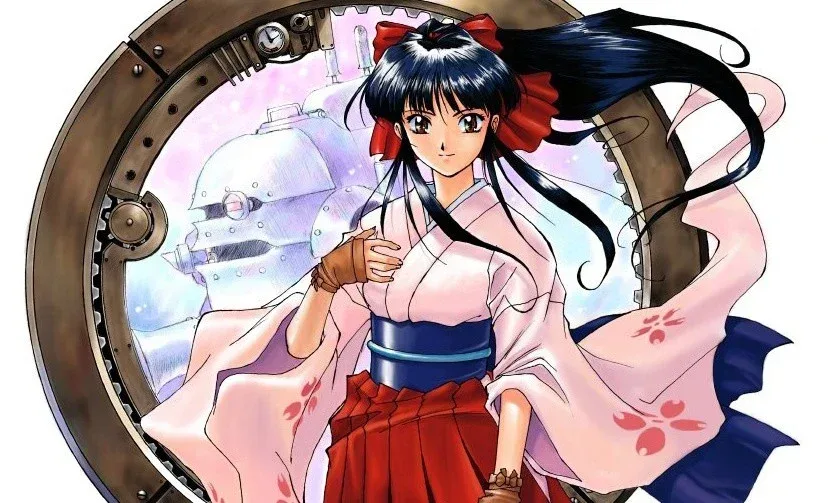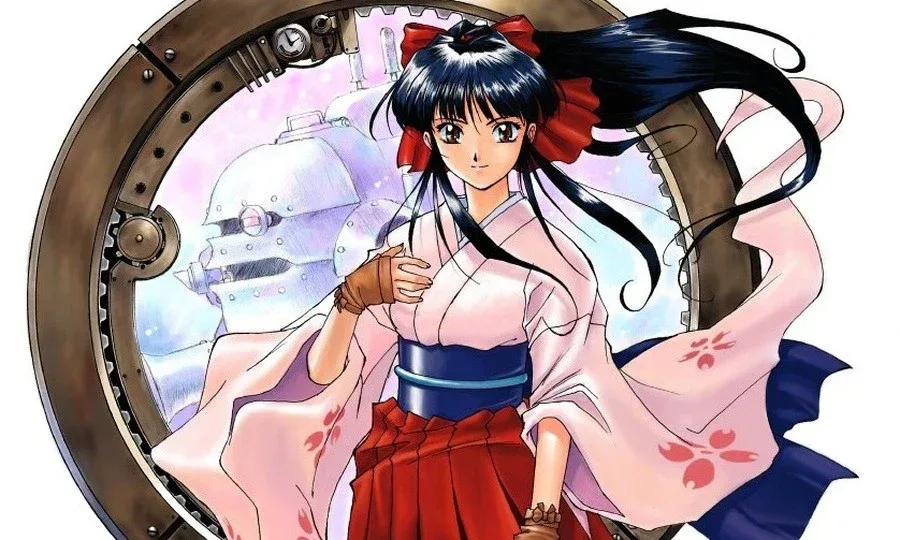
There is no newly announced Sakura Wars game, no platform list, no release window, and no sign that Sega has formally put another mainline installment into production. But the series has received a particularly intriguing vote of confidence from the person best placed to imagine its return: creator Oji Hiroi says he still has a story prepared for a numbered Sakura Wars 6.
Hiroi discussed the possibility during a Sakura Wars 30th-anniversary talk event held as part of Sega Universe Playground in Shibuya in August. Asked whether he had ideas for a continuation, the 72-year-old creator indicated that a sixth numbered game is the direction he has in mind. More importantly, he said the plot was written some time ago and remains in his possession.
“I’m thinking of a numbered title, ‘6’. I still have the plot for ‘6’ I wrote back then.”
That is not the same thing as confirmation that a new Sakura Wars is coming. Hiroi was clear that he does not know whether the concept would fit the present day or whether the opportunity will arise. His comments do, however, establish that the creative starting point is not a blank sheet of paper. If Sega decided that the franchise was worth another mainline attempt, its original creator says he would be ready to participate.
For a series whose identity is built around a distinctive mix of theatrical presentation, character drama, role-playing, and mech action, that willingness matters. A sequel would need more than a recognizable logo and a fresh squad of heroes. It would need to answer the more difficult question of what Sakura Wars should be now, while retaining the qualities that made it unusually memorable in the first place.
A sequel pitch with one major missing ingredient
Hiroi’s position appears straightforward: he has a potential story, he is interested in returning, and he would accept an offer. The missing ingredient is the offer itself.
That distinction is crucial amid understandable fan excitement. A prepared scenario can be an asset in the earliest planning stages, but it does not reveal whether Sega has assessed a budget, selected a development partner, approved a platform strategy, or determined how a modern numbered Sakura Wars could find an audience beyond its committed supporters. None of those details have been announced.
Still, having a creator publicly say that he would “definitely do the job” if the chance came is more substantial than a vague wish to revisit an old favorite. Hiroi is describing an existing creative proposal, albeit one whose age and suitability he openly questions. That caveat may be the most honest part of the whole conversation. A story designed in an earlier period may require revision, restructuring, or a new thematic angle before it can serve a modern game.
It also suggests the sensible route for any hypothetical sequel would not simply be to dust off an old document and press Start. Sakura Wars has always carried a highly specific tone and structure, so the challenge would be preserving its personality without treating time as if it had stood still. A numbered sixth game would naturally invite expectations from longtime fans, while any revival would also need to be legible to players encountering the series for the first time.
The shadow of the 2020 revival effort
The commercial backdrop makes the prospect more complicated. Sega’s most recent mainline release was Sakura Wars, known in Japan as New Sakura Wars, which arrived for PlayStation 4 in 2020. It functioned as a pseudo-reboot rather than a conventional sixth numbered installment. Reception was decent rather than overwhelming, while sales disappointed.
That outcome alone would make a publisher cautious about financing another large-scale sequel. The problem became far sharper later that year with Sakura Kakumei: Hanasaku Otome-tachi, also known as Sakura Revolution: Hanasaki Maidens, a free-to-play gacha game released on Japanese mobile platforms.
The mobile project was positioned as a major step in reviving the wider property, but it did not last. Reports put development and promotion spending at roughly ¥3 billion, around $30 million USD, while launch returns were said to have been below $1 million USD. The servers were closed only six months after release. Those figures are reported estimates rather than a detailed public accounting from Sega, but the basic result is not in doubt: the game failed quickly and badly.
For fans, it is tempting to separate that mobile experiment from the case for a traditional Sakura Wars RPG. They are different formats aimed at different audiences, and the failure of one does not automatically prove that the other cannot work. Yet publishers do not always have the luxury of viewing every project in isolation. When an intellectual property has recently produced disappointing performance in a mainline return and then endured a costly mobile collapse, any proposal for another revival has to clear a very high internal bar.
That is why Hiroi’s comments inspire both hope and realism. The narrative foundation may exist, but a viable project would need to persuade Sega that it can avoid repeating the franchise’s recent commercial troubles. It would likely require a carefully scoped plan, a compelling creative identity, and a convincing answer to the question that always follows a dormant-series comeback: who is it for, and why now?
Why a numbered Sakura Wars still has an appeal
Despite those obstacles, the desire for a proper continuation is easy to understand. A numbered sequel has a different emotional charge from a spin-off, a mobile service, or even a pseudo-reboot. Calling a game Sakura Wars 6 would signal continuity and confidence. It would present the series as something more than a brand being tested in adjacent formats; it would say that the central idea remains worth building on.
Hiroi’s convention appearance reportedly covered the franchise’s music, its stage-show legacy, and his pride in that theatrical side of the property. Those subjects underline why Sakura Wars has retained a devoted niche following. Its appeal is not merely that it contains giant machines or role-playing systems. The theatrical framing and the fusion of performance with adventure give it a flavor that is difficult to replace with a generic successor.
That specificity can be commercially challenging, but it is also an advantage. In an era crowded with familiar genres and enormous franchises, a game with a strong personality has a reason to exist. The current market also contains room for projects that do not try to compete at the same scale as every blockbuster. As the games industry continues to host a broad range of ambitions, the latest indie game roundup is a reminder that distinctive premises still matter—even when they arrive outside the industry’s largest productions.
That does not mean Sakura Wars should become small by default, nor does it provide a simple business case. It does mean that “make it bigger” is not the only possible revival strategy. A future project would need to decide what scale best serves its blend of character-focused storytelling, theatrical spectacle, and combat, rather than chasing a trend that does not suit it.
Could a collection make the return easier?
For now, a new numbered entry remains hypothetical. But Hiroi’s remarks raise another practical possibility: a remastered collection could help establish whether there is renewed demand for the series’ earlier work. Such a release has not been announced, so it should not be mistaken for a plan. It is simply an idea that follows naturally from the current situation.
A collection could introduce the franchise’s history to players who only know the 2020 PlayStation 4 game, while giving established fans a more direct way to revisit earlier entries. It could also help Sega measure interest without immediately committing to the expense and risk of a completely new mainline production. The exact feasibility would depend on issues outside public view, including the condition of older games, rights considerations, localization needs, and the technical work required for contemporary platforms.
There is no guarantee that such a package would happen, and it would not solve every challenge facing Sakura Wars. But it illustrates the middle ground between doing nothing and betting heavily on a full sequel. A publisher considering a return could potentially rebuild visibility step by step rather than asking one new game to carry decades of history, expectations, and financial pressure all at once.
Hope, not a confirmation screen
The immediate takeaway is modest but meaningful. Oji Hiroi has a concept for Sakura Wars 6. He says he still has its plot. He is willing to work on it if asked. Fans at the anniversary event responded enthusiastically, and there is plainly continuing affection for the series.
What remains absent is equally important: Sega has not announced Sakura Wars 6. Until it does, this is a creator expressing readiness, not a publisher revealing a project. The franchise may remain in limbo for some time, especially after the difficult outcomes tied to its 2020 releases.
Yet limbo is not the same as a locked door. If Sega eventually decides that Sakura Wars deserves another turn in the spotlight, Hiroi has made one thing unmistakably clear: the curtain could rise with a sixth story already waiting in the wings.