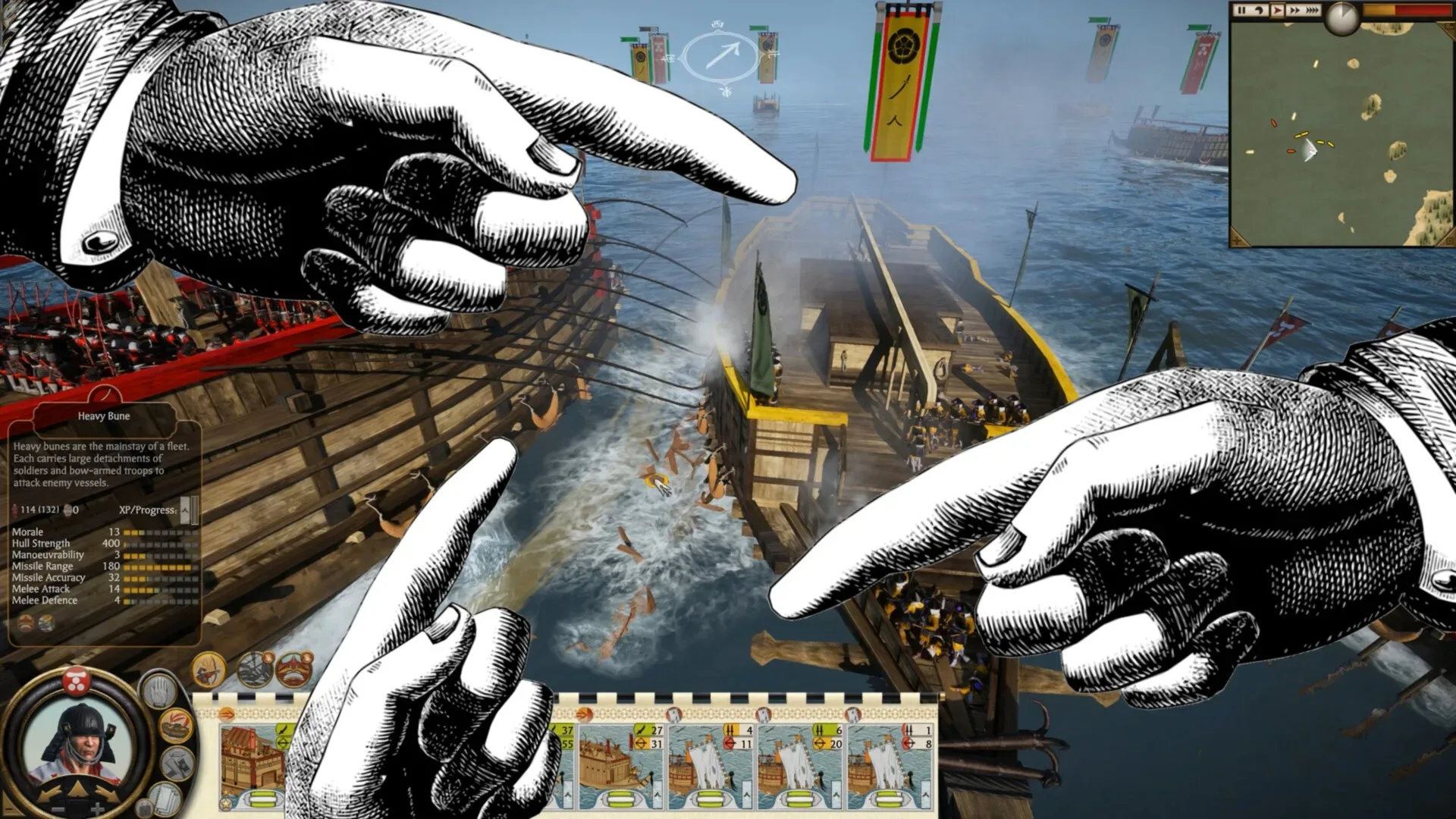
Creative Assembly has addressed the troubled release of Total War: Shogun 2 Complete Edition, the updated version of its celebrated strategy game that was pulled from sale shortly after launch. In a forum statement, Total War vice president Roger Collum said the release “did not meet the bar,” acknowledged player anger and disappointment, and said a small team of senior developers is now working with Sega and the external developer on what happens next.
The response establishes an important fact about the release process: Creative Assembly says the Complete Edition was not developed internally and was not put through its usual internal reviews and quality-assurance procedures. The company accepts that Total War remains its franchise and carries its name regardless of who handled the work, but its explanation leaves major questions about oversight unanswered.
For players, the immediate practical reality is straightforward but incomplete. The Complete Edition is no longer available for sale, and Creative Assembly says a senior group is involved in deciding next steps. The statement does not set out a restoration timetable, specify planned fixes, say when or whether sales will resume, or explain what will happen to the original version that had been removed alongside the replacement. Anyone waiting for a definitive resolution will need more than an acknowledgement: they will need specifics about the version of the game that will ultimately be offered.
What went wrong with the Complete Edition?
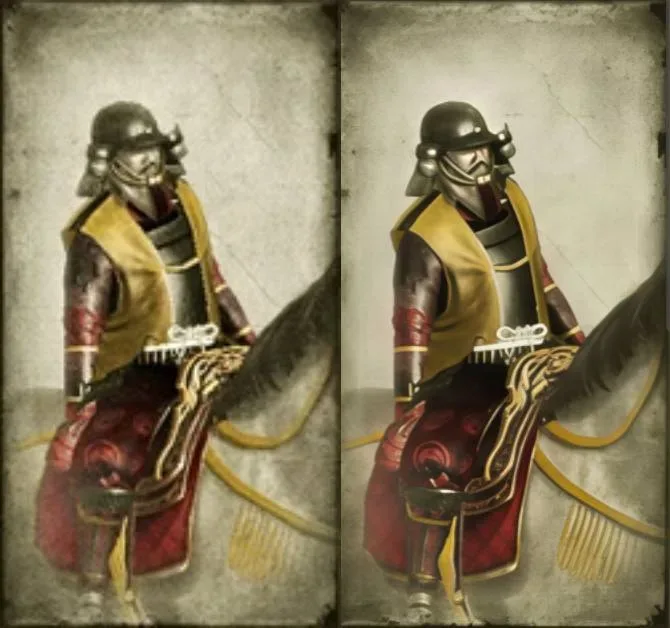
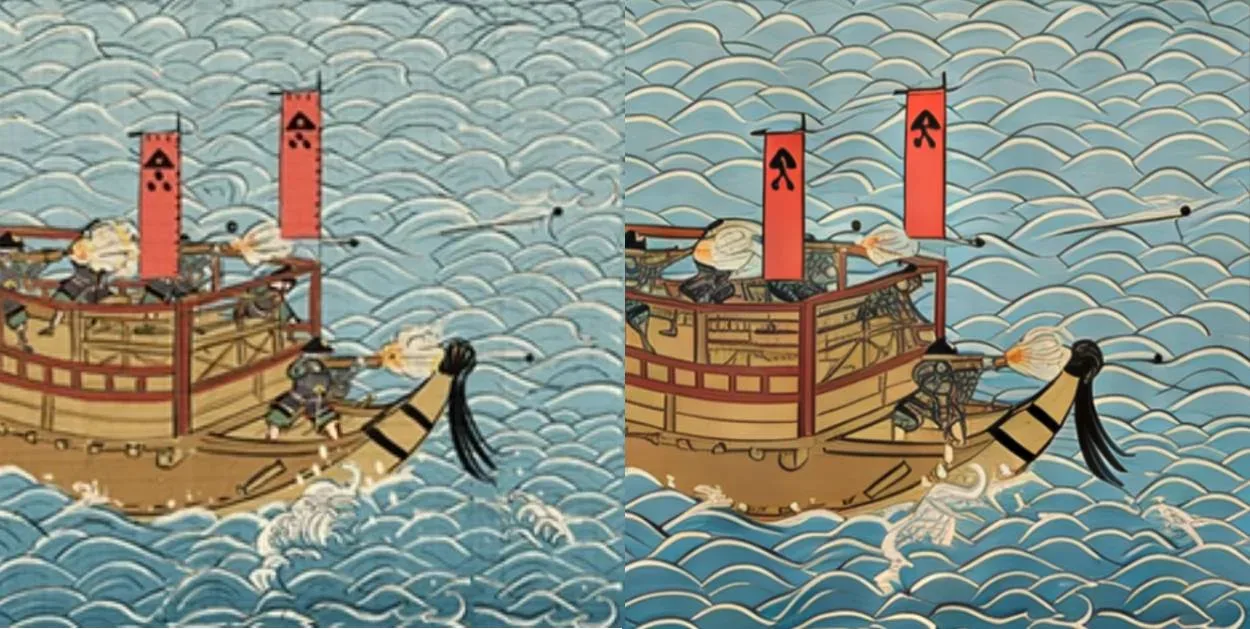
The updated release was presented as an enhanced and complete package for Total War: Shogun 2, a game with a formidable reputation among strategy players. Its launch instead produced overwhelmingly negative Steam user feedback tied to poor performance and an unattractive visual presentation. Players also identified images in the game’s encyclopedia that appeared to have been enlarged through AI upscaling.
Upscaling is the process of enlarging a low-resolution image. Conventional methods estimate and interpolate missing pixels; AI-based approaches use trained models to infer what a larger, sharper image should look like. In the right circumstances, that can be useful for improving an old asset that exists only at a small size. In the wrong circumstances, the process can create distorted details, invented textures, mangled lettering or faces, and a general look that does not fit the original artwork.
That distinction matters here. The concerns described around Shogun 2’s images are not simply a theoretical argument over whether a tool was involved. The visible result was part of a wider release that players felt looked worse and ran worse than it should. Even if the affected encyclopedia art was small in the context of the whole game, its inclusion became a powerful signal that the package had not received the careful review expected of an update to a major strategy title.
There is also an unresolved production question: whether the external team had access to higher-resolution original art, or had the time and resources to create suitable replacement images. No answer has been provided. It would be inappropriate to treat that uncertainty as proof of either technical necessity or negligence by a particular developer. What is clear is that the assets made it into a commercial release under the Total War name.
Creative Assembly accepts responsibility, while stressing outside development
Collum’s statement tries to hold two ideas together. First, he says Creative Assembly took its eyes off the project’s external development. Second, he emphasizes that it was not a Creative Assembly-developed game and that internal teams were concentrated on upcoming projects. The external studio was not named in the statement, although Polish developer Mataboo appears to have been responsible for the update.
That framing explains where the direct work may have been done, but it does not remove the publisher-facing and franchise-facing responsibility. Collum explicitly recognizes this point: the Total War brand is still Creative Assembly’s responsibility. That is the central tension in the response. Outsourcing development is not unusual in games, particularly for remasters, ports, support work and re-releases. But an external production arrangement only works when technical expectations, approval gates and accountability are clear.
Quality assurance, often shortened to QA, is the structured process of checking whether a game works as intended and meets release standards. It can include performance checks, regression testing after changes, compatibility checks, verification of menus and text, visual inspection, and reporting reproducible defects. QA does not mean every bug disappears. It does mean a team has a process for identifying risks, prioritizing them, and deciding what must be fixed before a product is allowed to ship.
Creative Assembly’s statement says the external remaster was not subject to the same internal review and QA processes as its internally made games. That admission may be more consequential than the effort to distinguish internal and outside development. A remaster depends on trust: buyers expect old systems, art and performance to be handled with particular care because the product is being sold in part on its history. If a replacement version receives a weaker review path than a new internally developed release, that is a decision with obvious consequences for player confidence.
The company says senior developers have been assigned to work with Sega and the external developer. That is a meaningful escalation from an entirely hands-off arrangement, but it is still a process update rather than a recovery plan. Players do not yet know which issues will be addressed, who will validate the work, or how Creative Assembly will prevent the same gap from occurring on future externally developed projects.
The AI policy is clearer in principle than in this case
Collum also used the statement to explain Creative Assembly’s broader view on generative AI. He said the studio does not use generative AI to create game assets, including AI-generated art, and expects external developers to follow the same rule. The Shogun 2 situation, he said, is under investigation.
At the same time, the company is not describing a blanket rejection of all AI-related tools. Collum said such tools can assist creators with analysis, debugging and rapid prototyping, provided they support rather than replace human creativity.
Those are different categories of use. Generative AI generally refers to systems that produce new text, images, audio, code or other material from patterns in training data and prompts. AI-assisted analysis or debugging, by contrast, can refer to tools used to examine data, identify errors or accelerate technical tasks. The line can be difficult to communicate because “AI” is often used as a catch-all term, but the stated policy draws a practical boundary: tools may help people make games, while game art itself should not be generated by them.
The Shogun 2 controversy tests how that boundary is applied to upscaling. The concern identified by players was AI-upscaled original art rather than an allegation that entirely new game assets had been generated from prompts. Creative Assembly’s investigation should therefore clarify not only whether its external-development policy was broken, but also how it classifies AI upscaling in a production setting. If an outside team used such a process despite a prohibition, that would point to a compliance failure. If the policy did not clearly account for this kind of upscaling, that would point to a standards and definitions failure. The available information does not establish which explanation is correct.
Either way, the situation illustrates why a policy is only the start. It needs procurement requirements, documented sign-off, asset-review procedures and a route for someone to reject work that does not meet the product’s visual or technical standard. For a remaster, that review is especially important because even a minor altered asset can look conspicuously wrong next to familiar original material.
Why the response needs to become a plan
There is a difference between accepting ownership of an outcome and describing how the outcome will be repaired. Creative Assembly has done the former in explicit terms, saying the franchise and its name remain its responsibility. It has not yet completed the latter. The strongest next communication would be concrete: identify the game’s return path, describe which performance and presentation failures are being tackled, explain how assets will be handled, and state what review process will apply before another release is offered.
That level of detail matters because players are increasingly asked to trust studios not just on a game’s launch day, but on post-launch support, remastered editions and platform updates. The separate debate around how studios explain contested design decisions to their communities reflects the same broad reality: a statement of intent is most convincing when players can compare it with the product and the follow-through.
Collum’s final request is unambiguously reasonable. He asked people not to harass or personally target staff, stressing that individual workers should not be singled out for abuse. Frustration about a flawed release can be direct, detailed and demanding without becoming personal harassment. That distinction is particularly important when the public does not yet know the full chain of decisions behind the release.
The next steps now carry more weight than the wording of the initial response. Shogun 2’s reputation was built over years, while the Complete Edition’s problems were immediately visible enough to prompt a delisting. Creative Assembly has acknowledged a breakdown in oversight and placed senior developers on the response. Restoring confidence will require a repaired product, a credible review process, and a clearer account of how an externally developed remaster avoided the checks that should have protected one of the company’s most valued games.