Editor’s note: The material provided for this report contains serious allegations involving identifiable people, alleged intelligence activity, sanctions violations and private conduct. Those claims cannot be independently verified from the information supplied, so this article will not repeat them as established fact or speculate beyond the stated material.
The supplied material says Nvidia’s board has initiated an independent investigation involving founder and CEO Jensen Huang, with a committee of independent directors and outside counsel said to oversee the work. It also says Huang remains in the CEO role while the matter is examined, and that the company has stated it has no reason to believe national security or company secrets were compromised.
Those are consequential claims, but an investigation is not a finding. It is a governance process intended to establish what happened, what information was available to relevant people, whether company policies were followed and what, if any, response is warranted. Until an investigation produces verifiable conclusions, claims about conduct, motives, compromised information or legal liability should be treated as unproven.
Why an independent investigation matters
“Independent” is an important term in corporate governance. In the supplied description, the board committee is made up of independent directors and supported by outside counsel. In broad terms, independent directors are board members expected to assess issues without being part of the company’s day-to-day executive management. Outside counsel means lawyers from outside the company are engaged to advise or assist the committee.
That structure does not predetermine an outcome. It is designed to create separation between the person or people being examined and the people directing the review. A credible review would typically need to distinguish between a personal matter, a business-policy issue, a possible information-security concern and any question that could require regulatory or legal scrutiny. The supplied material does not establish what evidence exists, what the scope of the review is, or when the process may finish.
For readers, the practical distinction is simple: a board launching an inquiry signals that it considers the reported issues serious enough to examine formally. It does not, on its own, prove the underlying allegations.
Nvidia’s outsized importance raises the stakes
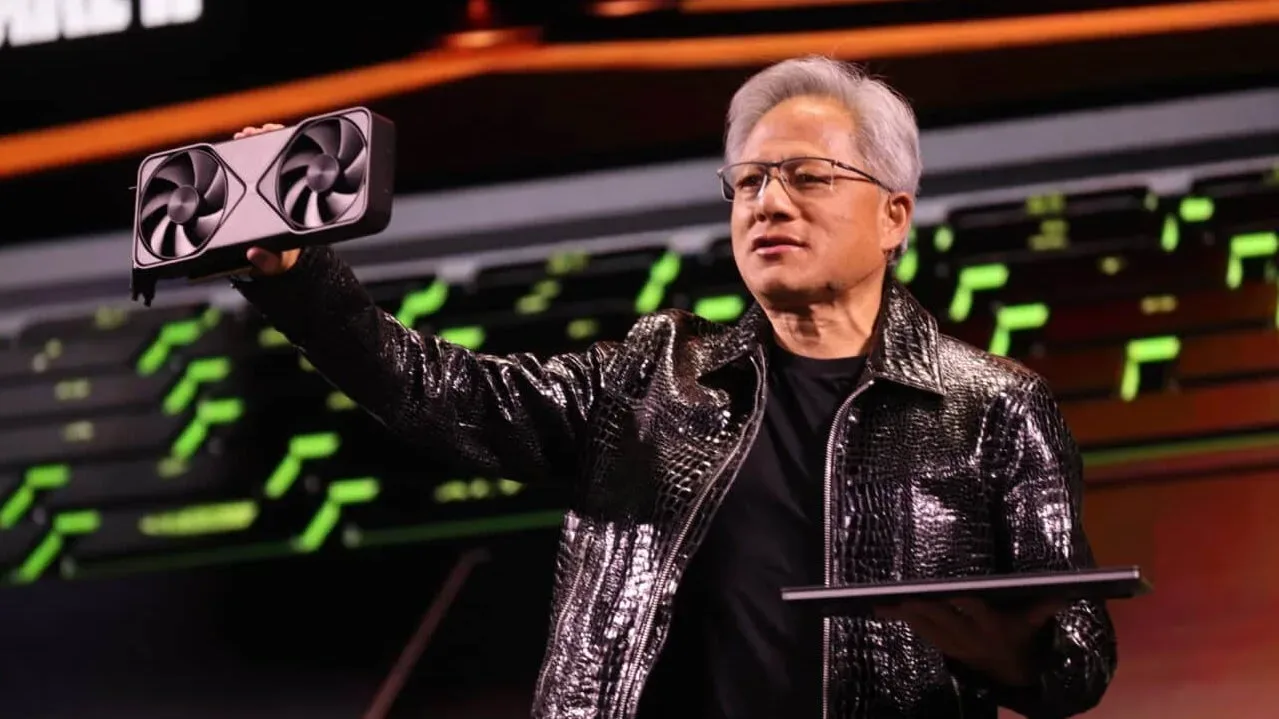
Nvidia is familiar to PC players as a major graphics processing unit, or GPU, maker. A GPU is a processor built to perform many calculations in parallel. That capability helps render game graphics, but it has also made GPUs central to modern artificial-intelligence workloads, where large volumes of calculations can be handled simultaneously.
The supplied material describes Nvidia as a major beneficiary of growing AI demand and notes pressure around the availability of high-performance computing components. That context makes corporate governance, supply-chain controls and information security especially sensitive. When a company sits near the middle of both consumer graphics and AI infrastructure, developments involving leadership can matter to customers, partners, investors and policymakers even before an investigation reaches a conclusion.
For gamers, that does not mean every corporate development has an immediate effect on the next graphics-card purchase. The material provided offers no evidence of a change to products, driver support, pricing, availability or platform plans. It would be a mistake to infer one. Still, Nvidia’s position in the GPU market means major governance news is likely to draw attention well beyond corporate circles.
Security concerns should be discussed precisely
The supplied material connects the allegations to concerns about sensitive information and restrictions on technology reaching China. Those are separate questions that should not be collapsed into one headline-sized claim.
Information security concerns whether confidential business, technical or strategic information was accessed, exposed or improperly shared. Export controls and sanctions compliance concern rules governing restricted trade, transfers or transactions. Either subject may involve complex factual and legal questions; neither is established merely because an inquiry has begun.
The company position described in the supplied text is that it has no reason to believe national security or Nvidia secrets were compromised. That is a statement of the company’s stated assessment, not a substitute for independently established findings. Equally, the existence of allegations does not establish that a breach occurred.
This precision matters because AI hardware has become a major policy issue. Advanced computing parts are valuable not only to game PCs and data centers, but also to organizations building large-scale AI systems. Discussion of controls around such hardware can quickly become entangled with international competition, trade policy and claims about national security. Reporting and commentary need to separate confirmed company actions from allegations that remain unresolved.
What remains unknown
Based on the supplied material, key questions remain unanswered. There is no independently established account here of the investigation’s evidence, its precise remit, a timetable, potential findings or any resulting action. Nor is there enough information to draw conclusions about products, supply arrangements, regulatory consequences or the status of any separate allegations mentioned in the material.
There is also a basic difference between a company saying it has launched a review and a company completing one. The former is an initial governance step. The latter, if publicly disclosed, could potentially provide a more concrete basis for evaluating what happened and whether operational changes are needed.
Until then, the responsible approach is to avoid filling gaps with rumor. High-profile technology companies can generate intense online speculation, especially where AI, international policy and an influential executive are involved. Repetition can make an unverified allegation feel settled even when the available facts do not support that certainty.
The wider AI infrastructure picture
Whatever comes of the claimed inquiry, the broader issue is Nvidia’s centrality to a computing market that now reaches far beyond enthusiast PC hardware. Demand for AI-capable infrastructure has put increased focus on the companies that design the components powering it, as well as on the energy, data-center and policy questions that accompany expansion. For related context on that growth, see the continuing debate over AI data-center expansion, jobs and local benefits.
That environment puts a premium on clear oversight. Boards need reliable processes for reviewing serious concerns. Companies need controls that can be explained credibly to employees, customers and partners. And readers need a firm line between confirmed information, a company’s own statements and claims still awaiting substantiation.
For now, the supplied material supports only a cautious reading: it describes a purported formal investigation and a company position that no compromise is believed to have occurred. It does not provide a verified basis to treat the broader allegations as fact.