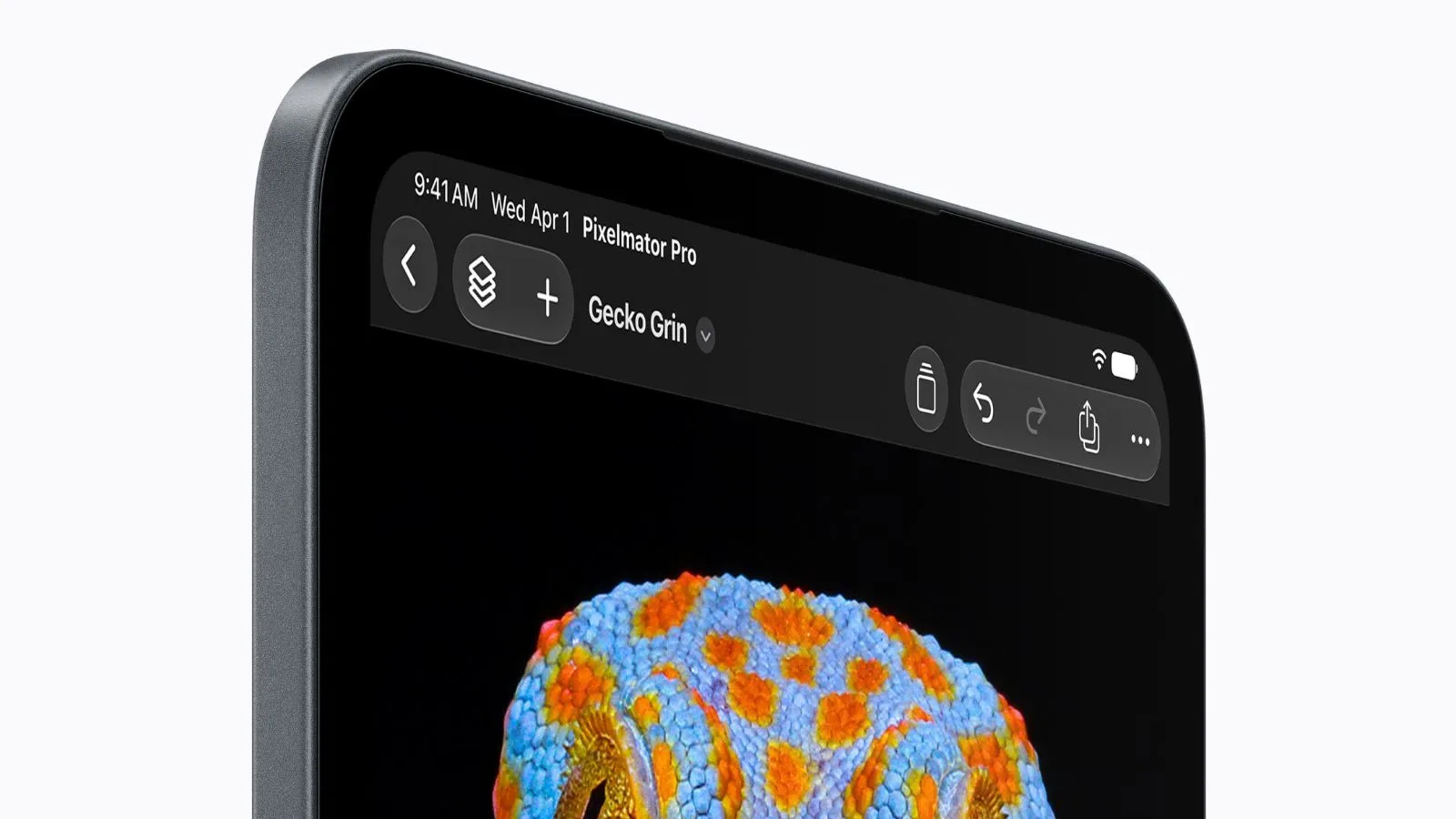
The new iPad mini introduces an audio-design wrinkle with a suitably futuristic name: Acoustic Display. Rather than treating the screen purely as the surface for games, video and apps, the tablet’s speaker design uses the display as part of the sound-producing system.
Apple says the setup is intended to provide stronger bass and increased volume. It combines specially designed woofers that work through the display with separate tweeters hidden in the space between the display glass and the aluminum enclosure. The same sealed design surrounding the system also contributes to the iPad mini’s IP67 rating.
That is a compact package of changes, but it addresses a familiar compromise in small tablets. A device built around a thin slab has limited room for speaker hardware, yet it is regularly used without headphones for quick gameplay, streamed video, calls and casual music. Acoustic Display appears to be Apple’s attempt to make the physical structure already occupying most of the front of the device do double duty.
What Acoustic Display means in this iPad mini
“Acoustic Display” is the name Apple is using for this speaker arrangement, not a suggestion that the display itself replaces every conventional audio component. The description identifies two distinct roles in the system.
- Woofers are the elements dedicated to lower-frequency sound. In this design, they are specially made to work through the display.
- Tweeters cover higher frequencies. They are concealed between the glass display layer and the tablet’s aluminum enclosure.
Separating the work this way matters because low and high frequencies make different demands of an audio system. The supplied details specifically point to the woofer side of the design as the route to punchier bass and higher overall volume, while the tweeters handle the treble range. The headline claim is not merely that the speakers have moved; it is that the display has become part of the acoustic architecture.
There is an important distinction between that description and assumptions about listening results. Apple describes the system as delivering punchier bass and greater volume, but no independent measurements, comparison figures or detailed tuning information are provided here. It would therefore be premature to treat Acoustic Display as proof of a particular loudness level, bass response or game-audio advantage over another tablet. What is known is the layout and the company’s stated goal.
A practical change for handheld play
For games, speakers tend to matter most in the moments when headphones are not convenient: a short session on the couch, local multiplayer around a table, a strategy game playing in the background, or a video-heavy title where dialogue and effects need to remain intelligible at modest volume. A small tablet can be an appealing format for those uses, but it also has less physical space to dedicate to sound than a larger device.
The potential appeal of the new arrangement is therefore straightforward. If the system produces the added volume Apple describes, it could make speaker-based play more workable in environments where the iPad mini is not positioned close to the listener. Likewise, the focus on punchier bass is relevant to effects such as engine noise, impact sounds and music—though whether that difference is meaningful will depend on the software, listening distance and volume level. None of those outcomes can be quantified from the available details.
Placement also has a practical dimension. Tablets are frequently held in ways that can partially cover edge-mounted hardware, especially in landscape orientation. The disclosed design places its tweeters behind the display glass and aluminum enclosure, but the information available does not establish where sound exits the device or how hand placement affects it. Buyers looking for a specific answer on that point should wait for fuller hardware documentation or testing rather than infer it from the Acoustic Display name alone.
Why the sealed enclosure is part of the story
The speaker redesign is tied to durability as well as sound. Apple says Acoustic Display has a sealed enclosure, and that enclosure helps the new iPad mini achieve an IP67 rating.
In plain terms, this means the audio system is not being presented as an exposed, standalone addition. Its enclosure is part of the tablet’s overall sealing strategy. That relationship is notable because speaker designs often have to balance acoustic output against the need to protect the interior of a device. Here, Apple is explicitly presenting the same design decision as supporting both improved audio and the IP67 rating.
The rating should not be turned into claims that have not been made. The supplied information does not detail the testing conditions, repair implications, long-term wear considerations or what the rating means for any particular accident. It does establish that the new iPad mini carries the IP67 designation and that Apple connects this outcome to the Acoustic Display’s sealed construction.
What remains unknown
Acoustic Display is an intriguing technical label, but it does not answer every audio question a prospective buyer might have. There are no supplied specifications for speaker count beyond the stated woofer-and-tweeter components, no measurement of maximum volume, and no details on stereo behavior, supported audio formats, microphones or headphone use.
There is also no basis yet to say that this setup will be better for every kind of game or media. Bigger bass is not automatically the same as clearer voices, more accurate positional cues or better balance at low volume. Those are separate attributes, and the announcement details do not provide the evidence to assess them. The most grounded read is that the iPad mini has a newly engineered speaker system built around a display-linked woofer approach, with high-frequency drivers concealed behind the screen assembly.
For shoppers weighing the broader device, the iPad mini’s audio setup is only one of several reported changes. Readers can also see the related details on the new iPad mini’s display configuration.
Price and release timing
The new iPad mini starts at $699 for the Wi-Fi model. A Wi-Fi and Cellular model starts at $849. Pre-orders begin Wednesday, October 28, and availability begins Friday, November 6.
At those starting prices, Acoustic Display is best viewed as a structural change rather than a standalone add-on buyers can meaningfully price by itself. The relevant question is whether the whole iPad mini package suits someone who expects to use tablet speakers often. Apple’s claims make the new audio system a potentially meaningful consideration for video and casual unheaded play, while the sealed design gives it an additional role in the device’s IP67-rated construction.