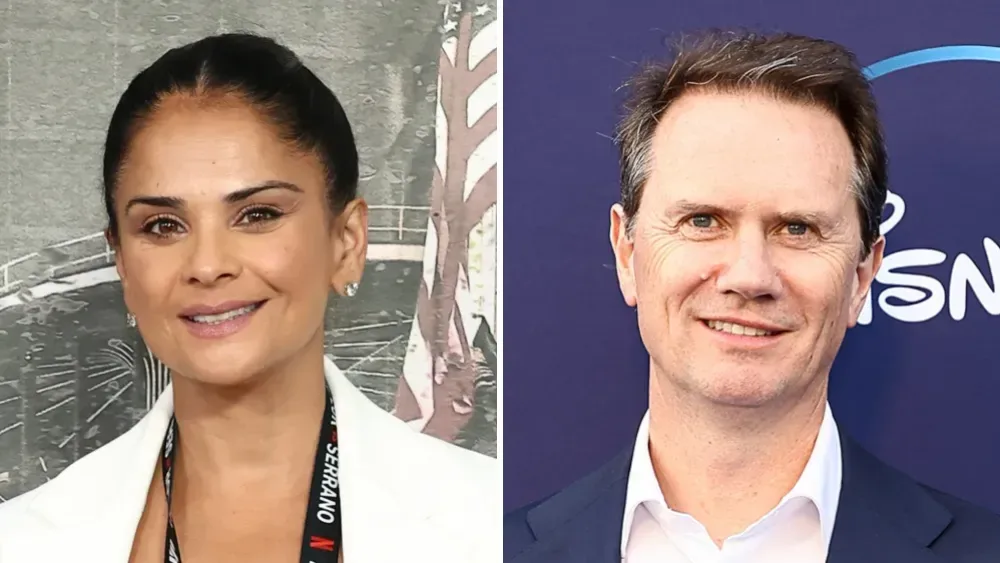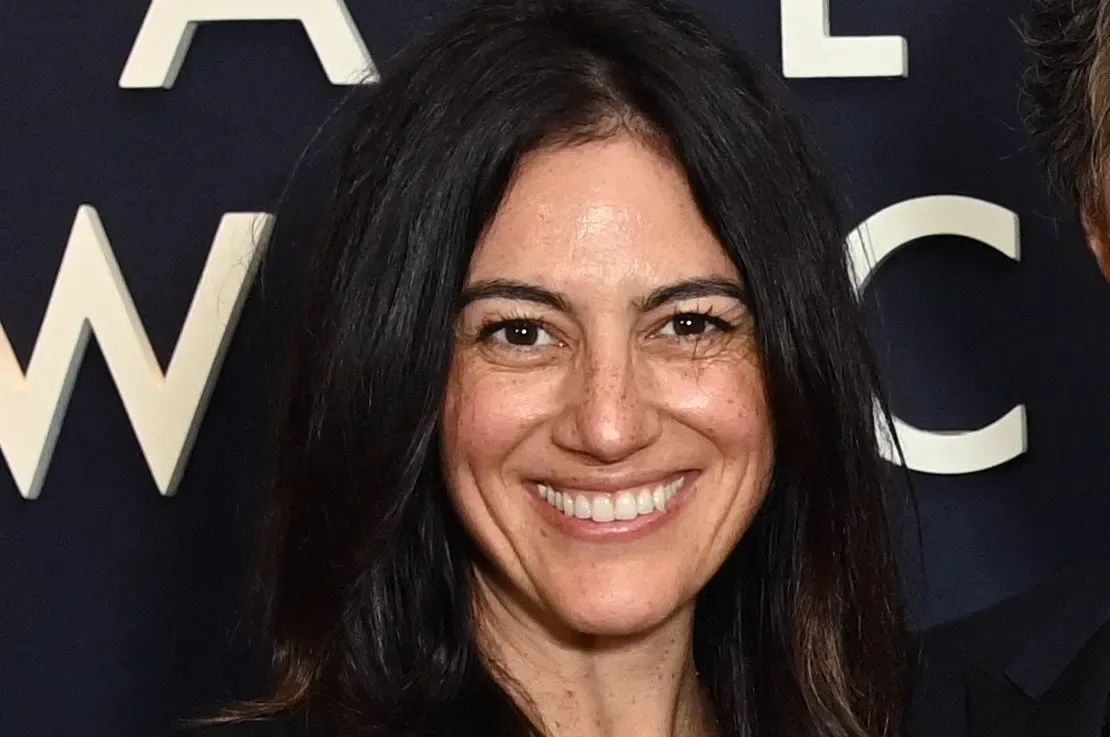
Netflix is changing the executive responsible for its worldwide programming operation at the same time it carries out its largest workforce reduction to date. Bela Bajaria, who most recently served as chief content officer, is leaving after 10 years at the company. Peter Rice, an executive whose career has included senior leadership roles at Disney, Fox and Fox Searchlight, will take over as chief content officer.
The timing makes this much more than a routine succession. Roughly 1,000 Netflix employees, about 6% of the company, were laid off during the same week. Film VP Doug Belgrad and film director Sheroum Kim were among those affected by the restructuring. For the teams that make, buy, schedule and promote what viewers see, a leadership handoff during cuts creates immediate uncertainty alongside the promise of a newly defined strategy.
Rice will lead Netflix’s global content organization. The remit spans scripted and unscripted television, movies, live events and additional programming across every region. That is an enormous portfolio: the chief content officer is not simply a top television programmer, but the executive responsible for coordinating the broad mix of work that turns a streaming service into a destination.
What the chief content officer job covers
In practical terms, scripted programming means series and films built around planned narratives, performers and screenplays. Unscripted programming covers formats such as reality television and other non-fiction-led shows. Live events are programming presented as it happens or around a real-time event, a field Netflix has been expanding through sports and specials.
Leading all three means balancing very different creative and operational needs. A global slate also means programming decisions are made with audiences in multiple territories in mind, not only one domestic schedule. Netflix’s own message to staff specifically pointed to UCAN, shorthand for the United States and Canada, as an area where the company believes it has an outsized ability to create attention-grabbing hits that travel worldwide.
That emphasis is important because “buzzy” entertainment is not merely a marketing label. In this context, it describes shows and movies that generate sustained audience conversation. The company’s leadership is signaling that it wants programming capable of becoming a larger cultural event, especially in a market where Netflix expects its choices to have broad international consequences.
Rice arrives with credentials that fit the scale of that brief. At Disney, he was chairman of Walt Disney Television and chairman of general entertainment. His responsibilities included ABC, Fox Broadcasting, Fox Sports, ABC News, ABC Studios, Disney Channel, Freeform, FX Networks, Hulu, National Geographic, Onyx Collective, Disney Television and Twentieth Century Fox Television. The operation encompassed more than 300 shows and 4,000 hours of television annually.
His tenure covered programming as varied as The Simpsons, American Idol, Modern Family, This Is Us, The Bear, Abbott Elementary, Shogun and Only Murders in the Building, alongside news output and major sporting broadcasts including the Super Bowl, NBA Finals and FIFA World Cup Finals. That background does not guarantee a specific Netflix programming change, but it demonstrates experience supervising a very large collection of brands, formats and audience expectations.
Bajaria’s Netflix tenure reshaped the content mix
Bajaria joined Netflix in 2016 after serving as president of Universal Television at NBCUniversal. Before her Netflix move, she had produced shows that ran on Netflix, including Unbreakable Kimmy Schmidt and Master of None. At Netflix, her first assignment involved helping establish the unscripted division as well as licensing and studio co-productions.
Those areas are worth separating. Licensing involves acquiring rights to present programming made elsewhere. A studio co-production is a project created with outside production partners rather than being wholly generated inside one company’s pipeline. Both are different from commissioning an original title, and together they can provide a streamer with more routes to fill its catalog and build a slate.
Bajaria became head of global in 2020 after Cindy Holland’s departure, then became chief content officer in January 2023. During her time overseeing content, Netflix’s roster included series such as Bridgerton, Squid Game, Adolescence, Beef, Stranger Things and Wednesday, plus films including KPop Demon Hunters and Frankenstein.
Her tenure also encompassed Netflix’s move further into live material. That included The Roast of Tom Brady as well as deals with the NFL and WWE. The combination illustrates how far the content brief extends beyond traditional episodic drama: the same organization must consider prestige series, broad entertainment, films, sports-adjacent programming and major live-event arrangements.
“I want to thank Bela for a decade of dedication, innovation, creativity and leadership,” Netflix co-CEO Ted Sarandos said, crediting her with expanding unscripted programming, launching live events and sports, and shaping a global film and series slate.
The company’s recognition of Bajaria’s work sits beside a harsher business moment. Netflix’s growth has slowed in recent months, while its awards showing has also declined. It won 16 Primetime Emmy Awards in 2026, down from 30 in 2025. The total was its lowest since 2016, and far below 2021, when it tied the record for the most Emmys won by an outlet in a single year with 44.
Emmy totals are not a complete measure of a streaming platform’s health or of viewer enjoyment. They do, however, provide one visible indicator of critical recognition. Combined with the company’s attention to its North American hit-making ability, the figures explain why Netflix’s language around the change focuses on taking the slate “to the next level,” rather than treating the move as a simple continuation of the existing approach.
Why Rice’s background matters to Netflix’s next chapter
Rice’s experience crosses broadcast television, cable-style brands, streaming, sports and film. Earlier in his career, he served as president of 21st Century Fox and CEO of Fox Networks Group, and was Fox’s lead executive on the Hulu board. He also led Fox Searchlight Pictures, where titles during his time included Slumdog Millionaire, Juno, Little Miss Sunshine and Sideways.
Since leaving Disney in 2022, Rice has worked as a producer on films including Jason Reitman’s Saturday Night, 28 Years Later and 28 Years Later: The Bone Temple at Sony, and Warfare and Chris Rock’s Misty Green at A24. He is also producing Alex Garland’s Elden Ring and Sonoya Mizuno’s Stages, as well as the opening and closing ceremonies for the LA28 Olympic and Paralympic Games.
The Elden Ring connection will naturally draw attention from game audiences, but the information available establishes Rice as a producer on the project, not a basis for predicting any Netflix involvement. Its more immediate relevance is that it shows his current work still includes a game-adaptation project, alongside theatrical film and an enormous live-event production.
Game adaptations have become a prominent meeting point between entertainment and game communities, where expectations about a recognizable world, its characters and its tone are unusually intense. Rice’s new Netflix assignment is broader than any one adaptation, yet it puts an executive with active work in that space at the center of a company whose content operation includes film and serialized programming. For a related look at how creative industries are currently dealing with technology and audience scrutiny, see this report on AI claims surrounding Battlefield 6 Season 5 skins.
What viewers can and cannot infer now
The announced facts establish a change in leadership and scope, not a list of cancellations, renewals, release changes or format mandates. There is no stated plan to reduce scripted series, increase sports programming, alter a particular franchise, or redirect Netflix’s game-related work. It would be premature to attach those decisions to Rice’s arrival.
What can reasonably be said is that Netflix has appointed someone with experience overseeing high-volume television, sports and film operations to run an already expansive global programming group. Sarandos characterized Rice as an effective large-scale operator with strong talent relationships and deep experience across television and film. Rice, in turn, said he was enthusiastic about working with Netflix’s team and backing distinctive voices and new ideas.
For creators and viewers, the near-term practical question is less about an instant visible makeover and more about execution. Programming takes time to develop, produce and release, while live deals and global series require coordination across many teams. The layoffs make that transition more consequential internally. Rice inherits not just a recognized slate and a multi-format strategy, but an organization navigating restructuring while being asked to produce the next wave of widely discussed hits.