Battlefield 6’s Season 5, “Siege of Vegas,” has arrived with a split reception. Area 51, one of the season’s additions, has earned broad praise from players. But a set of battle pass character cosmetics is attracting an entirely different kind of attention: scrutiny over a misspelled patch, strange equipment layouts and designs that many players believe resemble generative-AI output.
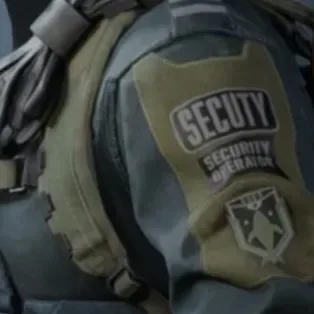
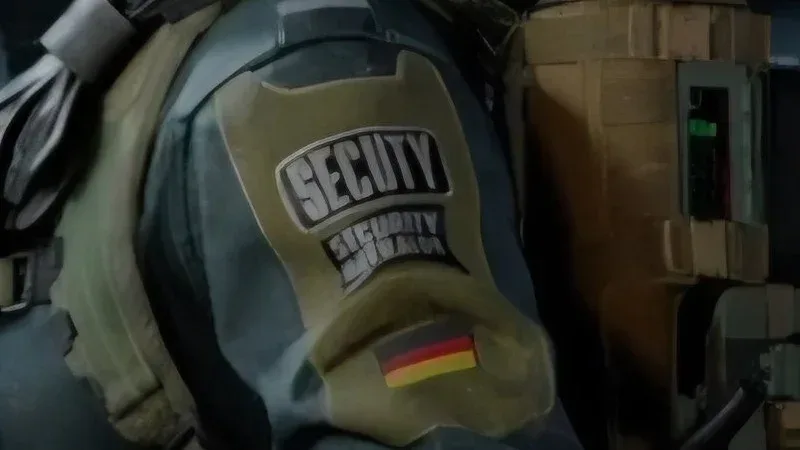
The most eye-catching examples are hard to miss. One character appears to have five identical pistols holstered on their kit. Another has an arrangement of magazines that players say does not make practical sense. A third wears an arm patch reading “Secuty,” directly above the words “security operator.” In a military shooter where uniforms, rigs and readable visual silhouettes help sell the fiction, the typo and the cluttered loadouts have become the details players keep circling back to.
Multiple community posts discussing the cosmetics have gathered thousands of upvotes and comments. The core complaint is not merely that the skins look goofy. It is that they are part of a paid seasonal progression track. For critics, a cosmetic perceived as insufficiently reviewed carries a different weight when it is attached to a season pass rather than appearing as a stray environmental error.
There is an important line to draw: there is no confirmation that these Season 5 designs were created using generative AI. Fans are inferring that possibility from visual oddities including repeated equipment, awkward layouts and the “Secuty” text. Those traits may be reasons to ask questions about a production and approval process, but they are not evidence that establishes what tools were used.
Why the five pistols became the symbol of the backlash
Character cosmetics in a multiplayer shooter do more than provide decorative variation. They are part of the game’s visual language. A player reads a model’s clothing, armor, patches and carried gear in quick glimpses while moving through a match. Even when a game takes liberties with realism, its visual choices still need to look intentional.
The five-pistol setup is attracting ridicule because it appears to fail that basic test. Players are not debating whether every operator needs a perfectly authentic real-world loadout. They are asking why the same handgun seems to be duplicated so many times on one character when the result looks less like a deliberate stylized choice and more like an unchecked error.
The magazine layout has prompted a similar response. Magazine pouches and tactical rigs can be arranged in countless ways, and games frequently prioritize distinctive silhouettes over simulation. Yet a design can be exaggerated without becoming visually incoherent. When individual items seem improperly placed or repeated without a clear purpose, players may interpret the work as rushed, incomplete, or assembled without enough review.
The patch is more direct. “Secuty” is visibly not the intended spelling of “security,” and its placement above “security operator” makes the contradiction especially conspicuous. Text errors are a classic quality-assurance problem, but they are uniquely damaging on a cosmetic item because the text is itself the asset’s focal point. A bad background texture can slip past unnoticed; a large patch designed to be read cannot.
“AI-generated” is a claim, not a synonym for sloppy
Generative AI, often shortened to genAI, refers to systems that generate new text, images, audio or other material from prompts and patterns learned from data. In discussions about game art, the phrase is frequently used more broadly as shorthand for anything that has warped details, repeated objects, garbled writing or an incoherent design.
That shorthand is understandable, but it can flatten several different issues into one accusation. A misspelling can come from a human typo. Duplicate props can be introduced during layout, export or revision. A weak visual concept can receive approval because deadlines are tight or because nobody responsible for review flags it. None of those explanations requires AI.
At the same time, the visual cues players identify are precisely why genAI alarms are so sensitive. Text that is almost correct but not correct, implausible repetitions, and equipment that does not quite connect logically are traits that have become associated with unedited generated images. Once a player sees one such flaw, trust can collapse around every adjacent imperfection.
That is why the most responsible reading of the current dispute is narrower than the community’s loudest rhetoric: the Season 5 cosmetics have features that players regard as suspicious and poorly reviewed; the available information does not verify the method used to create them. Battlefield 6’s developers and publisher have not confirmed that these designs are genAI-made.
The paid-pass problem is about trust as much as art
A season pass typically combines progression with a rotating set of rewards, making its cosmetics part of the ongoing value proposition for dedicated players. The controversy is therefore not just about whether a five-pistol outfit is funny. It is about what players expect when visual rewards are being monetized.
Consumers can reasonably disagree on the style of an outfit. One person may like an exaggerated mask or an unusual kit, while another wants a more grounded Battlefield look. Typos and apparent duplication are less subjective, because they suggest that an item may not have received ordinary polish before it was put in front of paying players.
The practical implication for Battlefield 6 is straightforward: every visible mistake becomes evidence in a larger argument about whether the live-service pipeline has enough time and oversight. A single skin can be fixed, replaced or ignored. But a pattern of seemingly careless releases can make players reluctant to assume that future paid content has been checked to the standard they expect.
That is especially significant because this is not the first Battlefield 6 cosmetic controversy of this kind. The game previously shipped cosmetics that also appeared to players to have been generated with AI, and those items were not patched out until months later. The earlier episode does not prove anything about Season 5, but it gives the present complaints a context that makes players less willing to extend the benefit of the doubt.
How a cosmetic reaches the game matters
Games built around regular seasons require a continuing stream of maps, modes, balance work, events and visual rewards. Cosmetics may not affect a weapon’s damage or a map’s layout, but they still pass through a pipeline: concept, modeling, texture work, implementation and approval. Readable text, consistent props and sensible placement are the kinds of details that a robust review process should catch.
A quality-assurance process is not limited to searching for crashes and broken missions. It also includes checking that an asset displays correctly and matches its approved intent. For text-bearing art, that means confirming wording and placement. For equipment-heavy character designs, it means checking clipping, duplication, readability and whether the final arrangement looks purposeful in the game.
Players cannot see which point in that pipeline produced the “Secuty” patch or the repeated sidearms. They can see only the shipped result. That disconnect feeds the frustration. If an item looks unfinished, consumers may not care whether the cause was a concept mistake, an asset-production mistake, an implementation problem or an abbreviated final review. The item is still part of a paid reward track.
Workforce context has also entered the conversation. Some Battlefield developers were laid off earlier this year, while the publisher’s executives have received millions amid a highly leveraged sale to Saudi Arabia. It would be irresponsible to claim that the layoffs directly caused any one cosmetic error; no such link has been established. Still, players are connecting questions about content quality to concerns about staffing, workload and the ability to maintain a demanding content roadmap.
Area 51 praise shows the season is not being dismissed wholesale
The response to “Siege of Vegas” is not uniformly negative. Area 51 has been one of the season’s most positively received elements, with players generally describing the new map as one of Battlefield 6’s better additions. That contrast matters. The cosmetics issue is not simply a case of a community rejecting every aspect of a new update on arrival.
Instead, the season is producing two conversations at once. One is about a map that is landing well. The other is about battle pass art that has become an emblem of distrust. That kind of split reaction can be more useful than blanket praise or blanket condemnation: it identifies a specific part of the update that players believe needs better care.
The situation also illustrates how rapidly cosmetic missteps can dominate a live-service conversation. A new map asks players to spend time learning lanes, objectives and flow. A misspelled patch requires only a screenshot. The latter is easier to share, easier to mock and easier to turn into a question about the entire game’s standards.
Battlefield is not alone in operating in a multiplayer-shooter market where ongoing content is central to player attention. Squad’s planned PS5 and Xbox Series X|S rollout is another reminder that the genre’s audience is watching both new releases and established games closely. For Battlefield 6, polish on continuing paid content is not separate from the broader competition for that audience.
What players can fairly ask for next
The immediate request does not need to be a verdict on AI. It can be more concrete: acknowledge obvious visible errors, clarify whether the affected cosmetics will be corrected, and show that text and equipment design will receive closer review going forward.
If the “Secuty” patch is changed, that would address one unmistakable mistake. If the five-pistol or magazine-heavy designs remain, a clear indication that they are intentional would at least distinguish a stylized creative decision from a production oversight. Silence leaves the community to interpret the assets on its own, and the present interpretation is overwhelmingly unflattering.
Ultimately, the dispute is about confidence. Players want seasonal rewards to look authored, intentional and checked before they enter a monetized pass. Battlefield 6 does not need every cosmetic to mimic real equipment perfectly. It does need to avoid giving players the feeling that a prominent paid item reached the game without anyone asking the simple question now echoing across community threads: why does this operator need five pistols?