Sports broadcasts are so deeply embedded in modern routines that it is easy to overlook the machinery behind them: the camera placement that makes a pitcher-batter confrontation legible, the theme music that signals appointment viewing, the control-room decisions that protect a live finish, and the production teams that turn a worldwide tournament into a shared local experience. As NBC marks 100 years since its November 15, 1926 debut as a radio network, its sports legacy offers a particularly clear history of that evolution.
Its defining trait has been scale. NBC carried the first live coast-to-coast sporting-event broadcast on January 1, 1927, when it aired the Rose Bowl between Stanford and Alabama. The game ended tied, but the significance was anything but: a sporting contest could now become a simultaneous experience across a national network. That basic promise—bringing people together around events unfolding in real time—remains at the center of sports television, streaming, radio and social-media conversation.
Over the decades, NBC’s coverage has moved through horse racing, baseball, basketball, the NFL and the Olympics, repeatedly treating the broadcast itself as something that can be refined. The competition is the indispensable core, but presentation determines how viewers understand stakes, personalities and even space. For fans who collect sports history in physical form, whether programs, signed memorabilia or cards, broadcasts are part of the same cultural record. A product such as 2012 Panini Golden Age Baseball makes a similar connection, placing athletes and broader pop-culture history in the same collecting conversation.
Radio built the national sports audience
Long before television became the default screen for a big game, national radio taught audiences that sports could be a collective event. NBC’s January 1927 Rose Bowl relay was a foundational example. Two years later, on May 18, 1929, announcer Clem McCarthy called the Kentucky Derby for the network for the first time. His association with the Run for the Roses continued through 1947.
In August 1936, NBC radio carried major portions of the Berlin Summer Olympics, including Jesse Owens’ four track and field gold-medal victories. The historical context of those performances is inseparable from the way mass media carried them beyond the stadium. Sports broadcasting had begun to prove it could preserve a moment, create a national conversation and give a competition meaning far beyond the spectators physically present.
NBC formally established its first sports division in April 1941, led by veteran announcer Bill Stern. That organizational step mattered. Sports was no longer merely programming fitted around the schedule; it had become a specialty requiring dedicated expertise, talent and technical planning. The model is now commonplace, but at the time it helped set a template for a business built around rights, live production and recurring franchises.
Television changed the angle—and the stakes
The television era expanded the network’s reach and raised the creative challenge. NBC aired the first World Series telecast on September 30, 1947. It brought NBA games to television beginning January 1, 1954. Yet the most lasting advances did not always arrive with a massive rights deal or a landmark matchup. Sometimes they began with a better place to put a camera.
On July 12, 1955, during an All-Star Game telecast, NBC used a center-field camera for baseball. Sports director Harry Coyle was credited with the idea. A stadium had to make room for the position, but the payoff was enormous: viewers got a clearer, more direct perspective on the central drama of the sport, the pitcher working against the batter. The center-field view became a standard feature of baseball coverage and remains one of those visual conventions that feels obvious only because it has endured for generations.
That innovation illustrates an essential broadcast principle: a new angle can change the way a sport reads on screen. The camera does not replace the live experience, but it can reveal details viewers in the park might miss—ball movement, defensive positioning, facial reactions and the tension before a pitch. Modern coverage applies that same thinking with super-slow motion, aerial views, immersive audio and data overlays, all descended from the notion that the “best seat” can be designed rather than merely found.
NBC also put historic baseball achievement in front of a national television audience on April 8, 1974, when it telecast Hank Aaron’s 715th career home run. The blast surpassed Babe Ruth’s longstanding record. In the years since, sports collectors have treated such iconic achievements as a major part of hobby history, but the television moment was also an artifact: a live document of a record becoming real.
The Olympics became a laboratory for live television
No sporting event tests a broadcaster’s ambition like the Olympics. The network made an early and consequential commitment in 1963, spending $1 million to win rights to the 1964 Tokyo Summer Games over ABC. Tokyo then produced another milestone in October 1964: NBC aired the first live Olympic opening ceremony, as well as the first live U.S. telecast originating from Japan.
The logistical barriers were formidable, especially when compared with today’s connected production environments. Still, the achievement pointed toward the Olympics’ future as a media event as much as an athletic festival. Decades later, NBCUniversal secured U.S. rights to the Summer and Winter Olympics spanning 2022 through 2032 in a deal valued at $7.75 billion, underscoring the scale of the long-term commitment.
Molly Solomon, president and executive producer of NBC Olympics and Paralympics, has been with NBC Sports for 36 years and assumed her current role in 2019. The 2024 Paris Summer Games were a major recent test of a modern Olympic strategy centered on competition alongside athlete-driven storytelling and accessible explanations of unfamiliar disciplines.
The next enormous assignment is the Los Angeles 2028 Summer Games. The proximity of the event to U.S. audiences removes the recurring obstacle of difficult time zones. The plan has been in development since 2020, and the unusually favorable schedule creates an opportunity for an Olympics built around live programming at a scale rarely possible for American viewers. Baseball’s return also opens the possibility of a gold-medal game at Dodger Stadium, potentially involving stars such as Aaron Judge or Shohei Ohtani—though, naturally, the eventual matchup cannot yet be known.
One infamous interruption reshaped live-game procedure
Broadcast history is not composed only of triumphs. On November 17, 1968, NBC left a New York Jets-Oakland Raiders game with 65 seconds remaining in order to begin the children’s film Heidi. What followed became one of sports TV’s most notorious endings: Oakland scored two touchdowns in the final minute and defeated the Jets 43-32, while many viewers missed the finish.
The incident is remembered as the “Heidi” game, but its importance lies in the procedural change it prompted. NBC Sports established a dedicated hotline to coordinate with network leadership at 30 Rockefeller Plaza when a live contest ran beyond its allotted window. The lesson was enduringly simple: in live sports, schedules are plans, not guarantees. A game is not over because a clock on a programming grid says it should be.
From rivalry television to the Sunday-night destination
NBC’s presentation helped attach a distinctive audiovisual identity to basketball in the 1990s. John Tesh’s “Roundball Rock” debuted as the theme for NBA on NBC on October 1, 1990. The music became inseparable from an era that featured Michael Jordan, Scottie Pippen, Shaquille O’Neal and Kobe Bryant. Earlier, the March 16, 1979 Michigan-Indiana NCAA men’s championship game offered the nationally visible beginning of the Magic Johnson-Larry Bird rivalry that would reshape professional basketball.
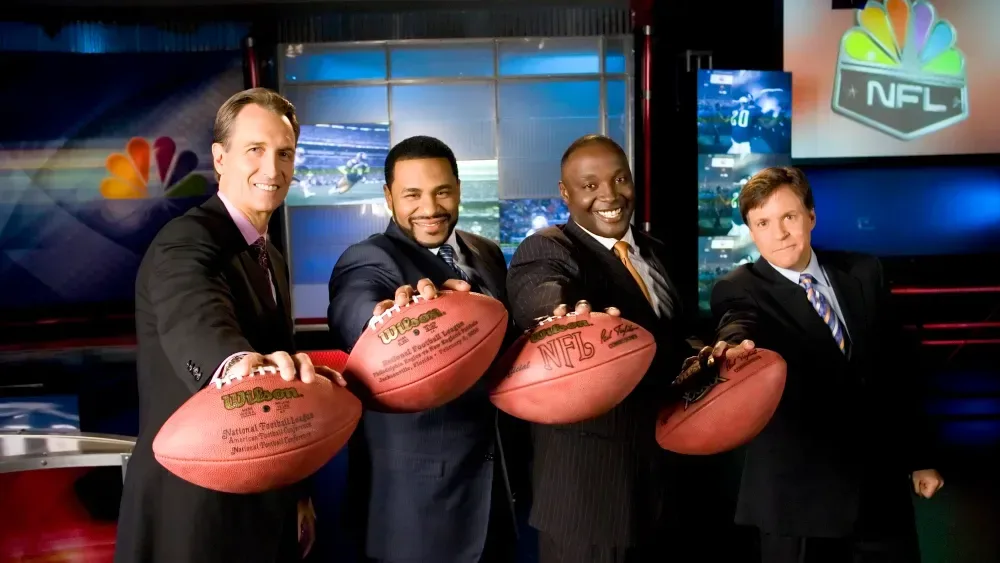
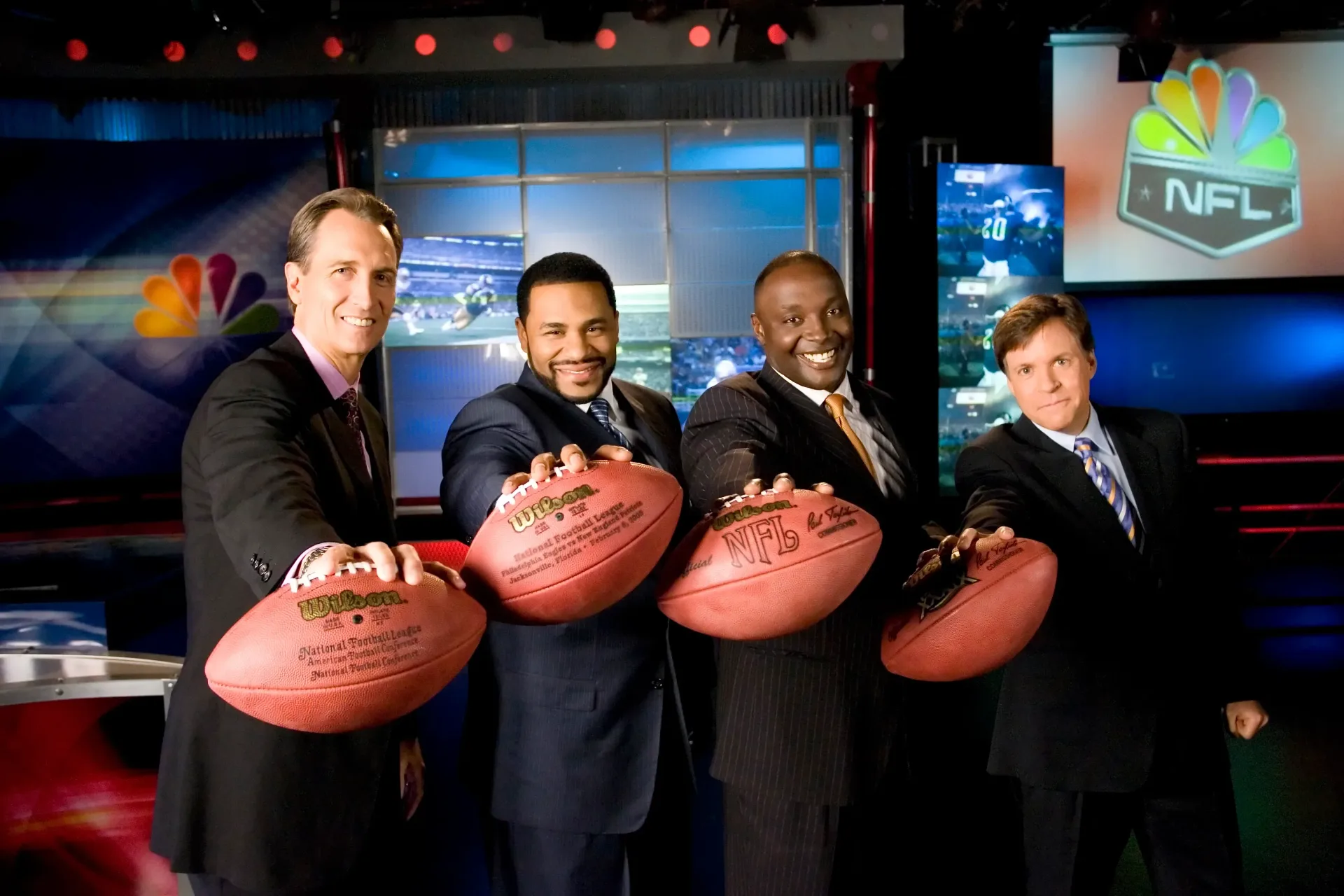
Football later became another major showcase. NBC is celebrating 20 years of Sunday Night Football and companion studio program Football Night in America. Former NBC Sports leader Dick Ebersol envisioned the Sunday evening package as a destination that could appeal beyond the most devoted football audience. Rick Cordella, now president of NBC Sports, and Sam Flood, executive producer and president of production, were part of the original launch group.
The assignment was not just to show a high-profile NFL game. It was to make the program feel like the week’s essential football event through on-air talent, production polish and a commitment to improve after every telecast. That strategy connects the early radio network to the current era: make the event feel bigger, help casual viewers enter the drama, and ensure the technology serves the human story rather than obscuring it.
A century after NBC began broadcasting, the tools have changed almost beyond recognition. The central job has not. Sports coverage still asks audiences to pause, watch together and care about an outcome that cannot be scripted. Whether the occasion is a 1927 Rose Bowl, a center-field camera experiment, an Olympic opening ceremony or a prime-time NFL matchup, the broadcast becomes part of how the game is remembered.